Latest videos
Link Up Podcast — Episode 3 | Featuring Nua Kwaku Obibini
Hosts: Niara Esi Ìjèawelē Ọmọlará Kwento & Bakari Kwadwo Ọbatayé Kwento
* with a special Abibitumi 20 Year Anniversary testimonial from Nua Tamara Kirinatei *
Akɔaba, Woezɔ, Oɔbaake (welcome) to another episode of Link Up Podcast, where we connect with Abibifoɔ doing Black powerful work across Abibiman (the Black Land) and the diaspora.
In this episode, we Link Up with Nua Kwaku Obibini — a serious builder, student, community member, investor, and brother who has been moving with purpose on the path back to Black sanity, Black Power, and Black nationhood. We discuss his journey learning about KMT, studying Black ourstory, connecting with Abibitumi, traveling through the Black Land, experiencing the Sankɔfa Journey, supporting Black land ownership (Black Land Flex), and preparing for repatriation to Ghana.
Stay tuned after the conversation for a special testimonial from Nua Tamara Kirinatei, celebrating Abibitumi’s 20 years of being on the case for the race.
This is a conversation about study, transformation, community, repatriation, land, sanity, and the work required to make KMT Black again.
Feel free to share your thoughts and Link Up!
If you like the music featured during the episode, check out: https://www.abibitumi.com/kwento-xpr/
In the Early Modern Period (around 1500-1800), West Central Africa (modern day Angola, the Congos, and Gabon) was home to a variety of different types of cloth and clothing. In this video, we discuss some of the textiles, jewelry, and other adornment that people in this region wore to cover up or show off status, primarily focusing on the kingdoms of Kongo, Ndongo, and to a lesser extent Loango. Join us as we explore some Central African Fashion History! This video is part of Untold Black History III, a collaboration for Black History Month discussing interesting and positive Black history from around the world. No Generative AI was used in the creation of this video.
Check out the Untold Black History III playlist here: https://www.youtube.com/playlist?list=PLivC9TMdGnL8Nnt6Ra8JPQUzHCPI9tcUE&jct=5s3lCP4eK5V4eiLuTPeFSg
Thank you to the following people for lending their voices to some of the primary source quotes in this video:
@ravinelux
@CivilWarWeekByWeek
Citations:
1. Vansina, 266; Heywood, 12-13
2. Heywood; Fromont
3. Vansina; Gibson and McGurk
4. Vansina, 272; Heywood; Fromont
5. Thornton, 12-13
6. Vansina, 276
7. Vansina, 265
8. Vansina, 267-268
9. Vansina, 263
10. Thornton, 19
11. Fromont, 845
12. Heywood, 22
13. Fromont, 846
14. Heywood, 196
15. Vansina, 272-273
Sources:
Fromont, Cécile. “Common Threads: Cloth, Colour, and the Slave Trade in Early Modern Kongo and Angola.” Art History, Volume 41, Issue 5 (November 2018): 838–867, https://doi.org/10.1111/1467-8365.12400
Gordon D. Gibson and Cecilia R. McGurk, “High-Status Caps of the Kongo and Mbundu Peoples." Textile Museum Journal, Volume 16 (1977) https://archive.org/details/gi....bson-mc-gurk-high-st
Heywood, Linda M. Njinga of Angola: Africa’s Warrior Queen. Cambridge, MA. Harvard University Press, 2017.
Thornton, John. “Precolonial African Industry and the Atlantic Trade, 1500-1800.” African Economic History, no. 19 (1990): 1–19. https://doi.org/10.2307/3601886.
Vansina, Jan. “Raffia Cloth in West Central Africa, 1500-1800.” Essay. In Textiles: Production, Trade, and Demand, 263–82. Ashgate Publishing Limited, 1998.
Clips used:
https://www.youtube.com/watch?v=uhznFtHhkBo
https://www.youtube.com/watch?v=VCpT-4vctNY
https://www.youtube.com/watch?v=oStCNLZBjUM
https://www.youtube.com/watch?v=Y2ADpO6bau8
https://www.youtube.com/watch?v=ijVfGarTEfc
Other Resources:
https://mavcor.yale.edu/mavcor....-journal/nature-cult
https://mavcor.yale.edu/mavcor....-journal/depicting-k
Patreon: https://www.patreon.com/somasacademy
Twitter: https://twitter.com/somas_academy
BlueSky: https://bsky.app/profile/somasacademy.bsky.social
ArtStation: https://www.artstation.com/kalahsoma
00:00 Intro
00:45 Types of Adornment
01:37 Textiles in West Central Africa
03:44 Making Raffia Fabric
06:38 Class and Clothing
11:59 Decline of West Central African Fashion
12:35 Conclusion
"2AM in Venezuela" (OFFICIAL VIDEO): https://youtu.be/GtvkwgbVKF8
BLACK WINTER (Full Album): https://youtube.com/playlist?list=PLJSMFuicKjJ46p1K9TlqZPRGFSd0M5z9U&si=4WG_YXCGJinM6XEN
Join the Patreon for exclusive videos that you won't find on Youtube: https://www.patreon.com/NTD1814
S U P P O R T
Cash App - $NelsonAmadeus
PayPal- GlobalHitsWorld@gmail.com
EMAIL - KingNeferkare@gmail.com
Twitter @NTDessalines
Instagram @NelsonAmadeus
TURN ON POST NOTIFICATIONS.
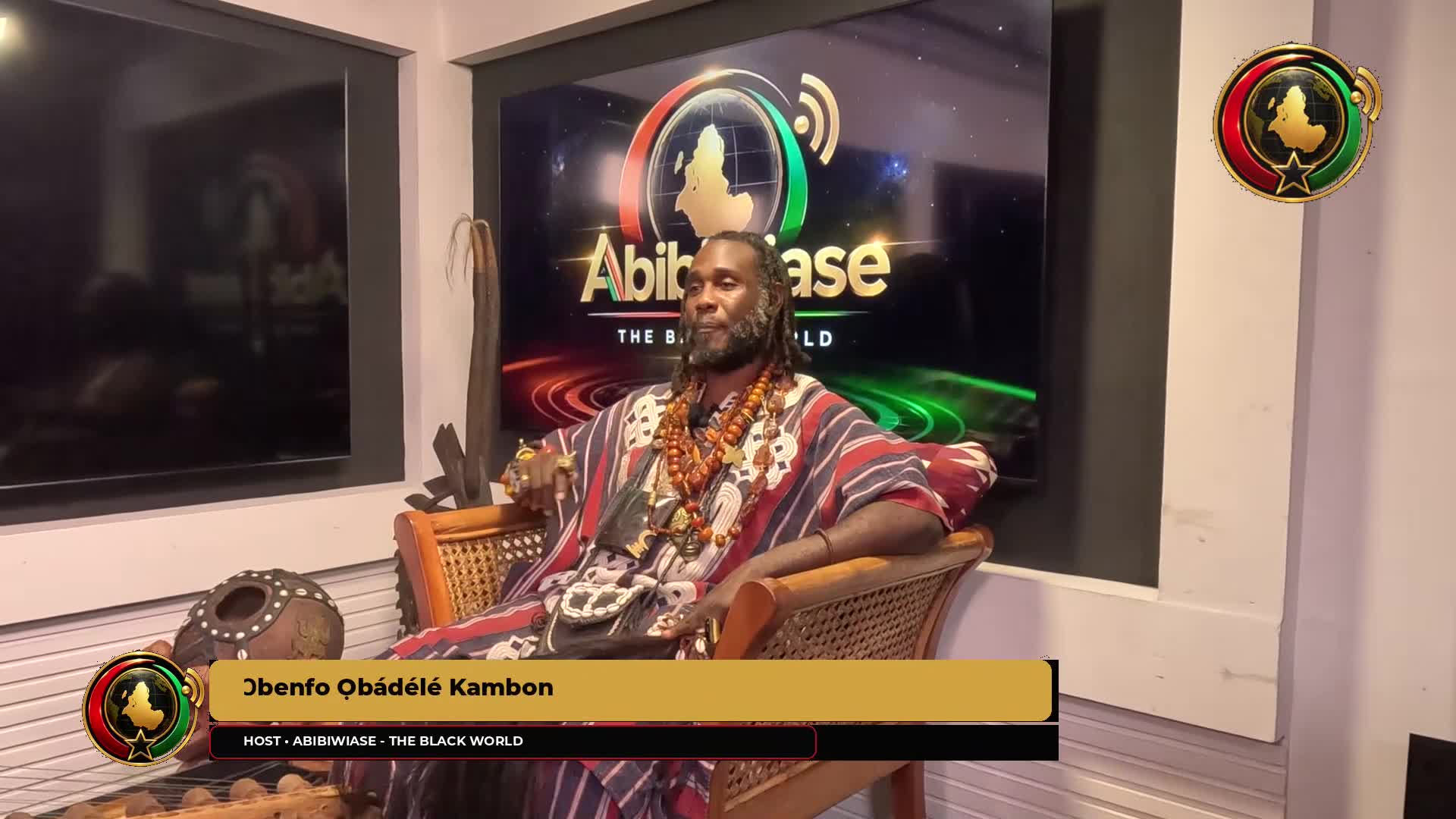
Sign and share the petition:https://www.change.org/ghanacitizenshipƆbenfo Ọbádélé Kambon joins WSYP Sankɔfa Radio to discuss the urgent petition for fair, transparent, accessible, and affordable reparative citizenship for the Historic Diaspora in Ghana.In this wide-ranging interview, Ɔbenfo Ọbádélé Kambon explains how the current citizenship petition grew out of years of organizing, beginning with the 2016 citizenship process that helped 34 Historic Diasporans receive Ghanaian citizenship under President John Dramani Mahama. He recounts how the original process emerged from meetings at the Institute of African Studies, University of Ghana, and how there was no GHS 25,000 citizenship fee, no DNA requirement, and no sudden 48-hour compliance window at that time.The interview breaks down the major concerns raised in the petition, including:The prohibitive GHS 25,000 citizenship application feeThe need to permanently remove DNA as an exclusionary barrierUnclear and rushed application timelinesThe absence of constituency-mandated Historic Diaspora representationThe contradiction between calling the Historic Diaspora Ghana’s “17th Region” while treating reparative citizenship like ordinary immigrationThe need for Ghana to live up to its own Diaspora Engagement Policy and Pan-Afrikan commitmentsƆbenfo Ọbádélé Kambon also explains why this is not anti-Ghana. It is a call for Ghana to live up to the best of what it has already declared. The discussion emphasizes that a huge swath of petition signatories are Ghanaians born and raised in Ghana, showing that this is not a conflict between Ghanaians and the Historic Diaspora. It is Pan-Afrikan solidarity in practice.This conversation also connects the petition to the Decade of Our Repatriation, the Sankɔfa Journey, Abibitumi’s 20th anniversary, and the broader need to keep the door open for Black people seeking repair, repatriation, and restored relationship with Ghana and Abibiman.Sign and share the petition:https://www.change.org/ghanacitizenshipLearn more about Decade of Our Repatriation:https://decadeofourrepatriation.comJoin The Black Agenda GH on Black platforms, beyond the algorithm & blues:Abibitumi Public Group:https://www.abibitumi.com/grou....ps/the-black-agenda- The Black Agenda GH:https://youtube.com/@Blackagen....daghhttps://www.inst @blackagendaghRecorded and transcribed by Ɔbenfo Ọbádélé Kambon.The process must match the promise.#reparativecitizenship #ghanacitizenship #historicdiaspora #theblackagenda #decadeofourrepatriation #wsypsankofaradio #SankɔfaRadio #ghana #panafrikan #rightofreturn #abibifahodie #abibitumi