




Movies

AfroN8V
17 Views · 4 months ago

⁣1994 drama film directed by David C. Johnson and executive produced by Spike Lee via his production company 40 Acres and a Mule Filmworks. The plot depicts a team of Black people who kidnap fellow black people who they feel have betrayed their community and seek to "deprogram" them so that they will change their ways. The acronym DROP stands for "Deprogramming and Restoration of Pride". The film has been described as "[p]art thriller, part social satire".
The film was based in part on The Session, a 45-minute film Johnson produced in 1988 on a $20,000 budget, and ultimately derived from a short story by David C. Taylor titled "The Deprogrammer". Johnson described the differences between the two films as follows: "The short film was basically satire, an absurdist piece .... D.R.O.P. Squad, on the other hand, is realism. The characters have more at stake."

Drama · Political satire about an underground militant group that kidnaps Kmtyu who have sold out their race.

AfroN8V
18 Views · 4 months ago

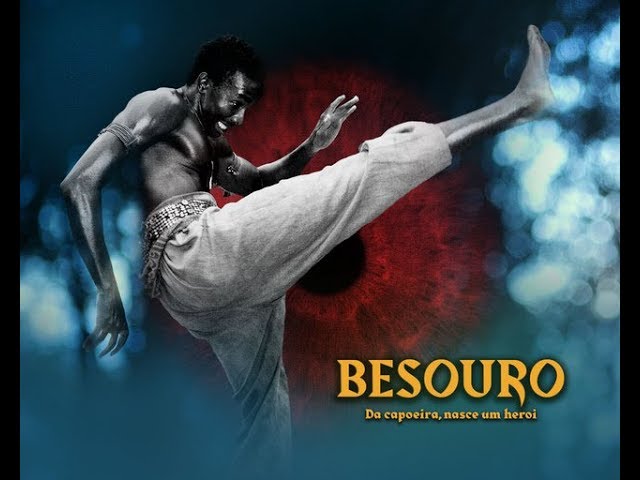
Since he was a young boy, Manuel Henrique, son of Joao Grosso and Maria Haifa, learned the secrets of capoeira in the street, with Mestre Alipio, in Santa Amaro da Purificaçao. He was "baptized" into capoeira with the name "Besouro Mangangá", (a large and dark species of maybug), for his flexibility and the ability to disappear when the time called for it. Strong, black and with an adventurous spirit, he never worked in one place steadily nor had a definitive profession. When the adversities were heavy and the advantage of the fight was with the opponent, Besouro would disappear "flying" without a trace. The belief that he had supernatural powers began to grow.

By train, by horse or on foot, depending on the circumstances, Besouro traveled from Santo Amaro to Maracangalha or vice versa, working on plantations, farms or mills.

Mestre Cobrinha Verde, Besouro's cousin and capoeira student tells a story about him. One day unemployed, Besouro went to Colonia Mill (now called Santa Elizia), in Santa Amaro to look for work. He was authorized to work and became an employee there. One week later, on payday, the boss told all of the employees, that the work contract was "quebrado para São Caetano" (closed or broken for Saint Caetano). This saying was used during this time period to say that no one was going to get paid. Those who dared to challenge the boss were tied to a trunk of a tree, whipped and left there for 24 hours, but with Besouro, it was different. When the boss told him he would not pay him, Besouro grabbed him by the shirt and violently forced him to pay the money he owed him.

Besouro was a revolutionary. He didn't like the police and was always involved in complications with them. More than once he used physical force to disarm policemen. Once armed with their guns, he would use them to lock the policemen up in jail cells meant for criminals.

One time, in Largo de Santa, one of the main squares of Santo Amaro, Besouro forced a soldier to drink such a large quantity of alcohol that he passed out on the ground. When the soldier woke up, he went to his commander, Capitan José Costal, who assigned 10 men to catch Besouro dead or alive. Besouro, hanging out in a local bar, had an intuition that the police were coming. He left the bar and went to the main square. When the police arrived, he walked up to the Christian cross that was in the square. He proceeded to spread his arms out like Jesus Christ and told the police he would not surrender to them. Violent shots were heard and the capoeirista fell to the ground. Capitan José Costa walked up to him and probed him with his gun, thinking the was dead. Besouro, who was very much alive, to the great surprise of the Captain, grabbed his rifle from him. He then ordered all the policemen to put down their guns and leave the square. They left unarmed and to the tune of Besouro singing a cheerful song.

Besouro's fights and revolts were successive and much of the time, he was in opposition with the police and owners of the farms and mill. While Besouro was working on Dr. Zeca's plantation, the father of a young man called Memeu, he was marked to die.

Dr. Zeca was an influential man, who wanted Besouro dead. He ordered Besouro, who didn't know how to read or write, to deliver a piece of mail to the administrator of Maracancalha mill, a friend of his. The piece of mail said, "Kill the man who is delivering this letter." Dr. Zeca's friend said very calmly to Besouro that he would stay the night and return to Dr. Zeca's with a response the following day. Early the next morning Besouro went to look for the man and was surrounded by a group of about 40 soldiers. They shot at him with a violent round of bullets. The capoeirista began to escape, dodging bullets by moving his body to the rhythm of the guns. At this moment, a man arrived called, Eusebio de Quisaba, who violently stabbed Besouro with a knife made out of a special wood called "turcum". This wooden knife has significance in the African tradition of Candomblé. Candomblé is a strong, religious tradition that was established in all Latin countries where there was commercial slave trade of Africans. The folklore says that this wood is the only way to kill a man whose body and spirit are "closed" to death. This idea that a person is unable to die was a characteristic associated with Besouro; a man that no bullet could enter.

Manuel Henrique, Besouro Mangangá, died in 1924, at the young age of 27, but lived on in two of his capoeira students Rafael Alves Franca, Mestre Cobrinha Verde and Siri de Mangue.

Today Besouro is a capoeira symbol throughout all of Bahia. He is well known for his bravery and loyalty. The support he gave to those who were persecuted and oppressed by the police and owners of plantations was not forgotten.

Kwadwo Danmeara Tòkunbọ̀ Datɛ
18 Views · 6 months ago

GUELWAAR aka The Noble One
A film by Osumane Sembene
Country: Senegal
Year : 1993

Kwadwo Danmeara Tòkunbọ̀ Datɛ
13 Views · 6 months ago

A negra de... (1966), de Ousmane Sembene

Título original: Le noire de...

Uma imigrante senegalesa torna-se empregada doméstica de uma família burguesa de França e relembra com dor os eventos que a levaram até o antigo país colonizador. Dirigido por Ousmane Sembene. Com Anne-Marie Jelinek, Mbissine Thérèse Diop e Robert Fontaine.

FILME COMPLETO LEGENDADO EM PORTUGUÊS

Nana Kamau Kambon Archives
1 Views · 12 months ago

The Sophisticated Gents

Nana Kamau Kambon Archives
1 Views · 12 months ago

The Green Mile

Nana Kamau Kambon Archives
1 Views · 12 months ago

Buck and the Preacher

Ọbádélé Kambon
39 Views · 1 year ago

⁣The Art of Healing, a feature documentary that tells the story of transatlantic trade from the Ghanaian perspective, has premiered.
The documentary, which was inspired by the works of Ghanaian sculptor Kwame Akoto-Bamfo, premiered at Silverbird Cinemas in Accra last Sunday, with some attendees from the diaspora and some top personalities gracing the occasion.
Advertisement
The feature documentary themed: "Finding Freedom from the Descendant Pain of Slavery" is a production of V1 Film Studios with Mr. Amar Deep Singh Hari as the Executive Producer and was directed by Yaw Pare and Darius Matheson.
The documentary captures scenes of Akoto-Bamfo's Nkyinkyim museum, which showcases various artistic monuments, including the 1500 concrete life-size heads and 3000 terracotta miniature sculpted heads.
According to Akoto-Bamfo, these installations at his museum represent captive Africans who were abducted and sold forcibly during the transatlantic slave trade.

"The healing from the trauma of the slave trade has not been fully addressed by us. So on my journey in trying to find myself as an African and Ghanaian, I came across all forms of trauma in people and that is why I saw the need to do this documentary so that Africans can heal and move forward, especially considering our dark history," he told pressmen at the documentary premiere.
He added: "The Nkyinkyim museum is a creative space that seeks to contribute to telling our story, and it has over the years incorporated our understanding of what it means to promote and preserve our intangible cultural heritage."
The documentary details the shock, horror, distress, and anger that occurred during the peak of the transatlantic slave trade and also recalls how the slavery phenomenon started.
Mr Yaw Pare, a co-director of the documentary, was elated with the massive turnout of the premiere and stated the commitment of his outfit to make more of such a series.
"This documentary is the beginning of creating a dialogue between the diaspora and also bridging the communication gap so that we can both understand each other about the real happenings of slavery so that we can move forward," he said.
The feature documentary is expected to be made available on Netflix in the coming weeks.

Nana Kamau Kambon Archives
20 Views · 2 years ago

"Catch a Fire" is a South African documentary that delves into the complexities and challenges of apartheid through personal stories and historical context. The documentary features Bonnie Henna, a well-known South African actress, who plays a significant role in narrating and connecting the audience to the themes explored in the film.

The film focuses on the true story of Patrick Chamusso, a South African who became a revolutionary fighter against the oppressive apartheid regime. Chamusso's journey from an apolitical man to a militant in the African National Congress (ANC) is depicted, highlighting the brutal realities of apartheid and the lengths to which individuals were driven to fight for freedom and justice.

Bonnie Henna's involvement brings a relatable and empathetic perspective to the documentary. Her narration and on-screen presence help to humanize the historical events, making the story more accessible and engaging for the audience.

Overall, "Catch a Fire" is a powerful documentary that sheds light on the personal and collective struggles during one of the most tumultuous periods in South African history, with Bonnie Henna playing a crucial role in its storytelling.

Nana Kamau Kambon Archives
33 Views · 2 years ago

"For a Few Dollars More" is a 1965 spaghetti Western film directed by Sergio Leone. It is the second installment in what is commonly referred to as the "Dollars Trilogy," following "A Fistful of Dollars" (1964) and preceding "The Good, the Bad and the Ugly" (1966).


Showing 2 out of 3