- General Videos
- Music
- Economics
- Health
- Travel & Events
- History
- Psychology
- Spirituality
- Movies
- News & Politics
- Kmtyw Combat Sciences
- Ɔbenfo Ọbádélé Kambon Videos
- Ɔbenfoɔ Kamau Kambon: Black Liberation Philosophy
- Science, Tech, Engineering and Math
- Permaculture
- Self-Sustainability
- Living Off Grid
- Yoruba Language Learning
- Education
- Mmɔfra Adesua
- Nana Kamau Kambon Playlist
- Livestream
- Komplementarity Kouples and Revolutionary Singles
- Abibitumi Film Series
- Decade of Our Repatriation
- Kwento xpr
- Live
Latest videos

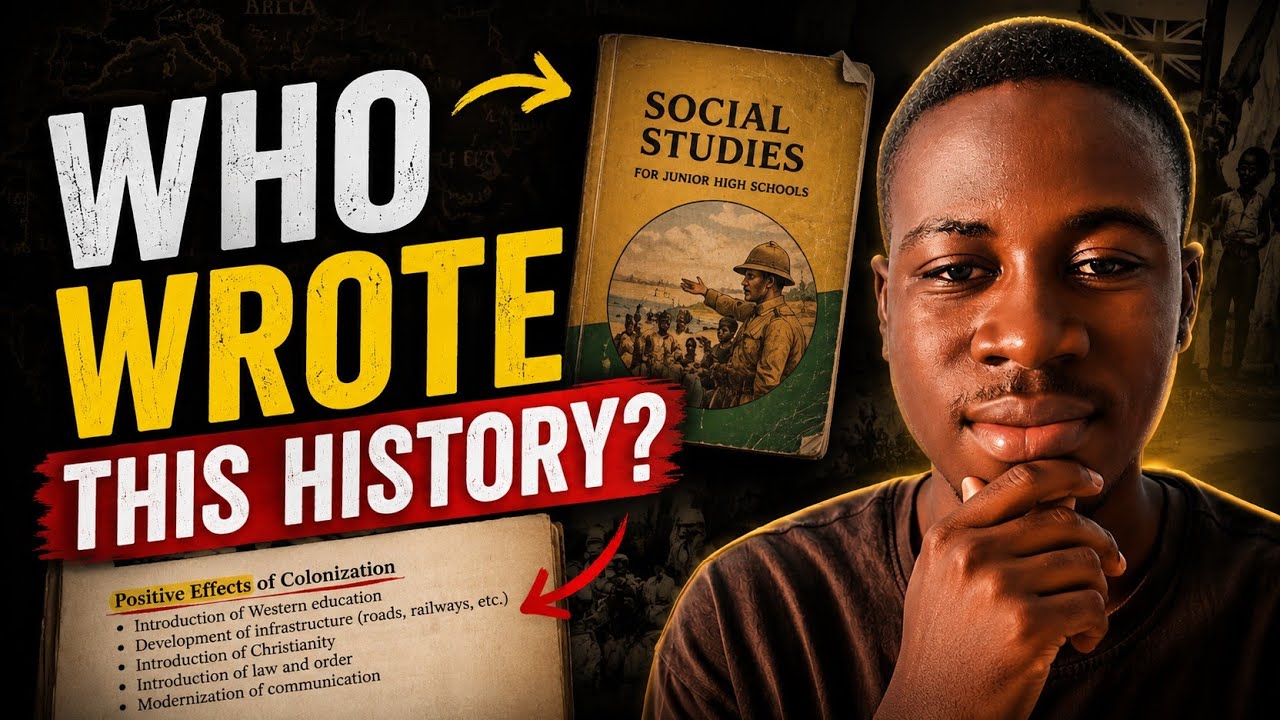

I opened my old Junior High School Social Studies textbook expecting a nostalgic moment. Instead, I found a chapter titled "Positive Effects of Colonization." It made me pause and ask an important question: Positive for whom? In this video, I revisit what I was taught, examine the claims presented, and explain why I began questioning them. This is not about rejecting history—it is about learning to reason through history.
#history
#colonialhistory



On this channel I cover the histories of nations empires and people from all over the world. I especially enjoy focusing on areas that are covered less in the mainstream or examining a familiar topic from a different perspective. Historical topics are combined with animated maps and visuals that I draw, to hopefully condense complicated subjects into a understandable framework that will leave you wanting to learn more. I hope you enjoy these videos as much as I have enjoyed making them :) If you like what you see here then please consider supporting
History of the Ashanti Empire , (Ghana Africa) 2021
This is a Ghanaian Twi Ghallywood 2021 Abibirem Traditional Cultural Movie.
Come in and watch Free HERITAGE Twi Asante ,Ghallywood 2021 African Films And Twi Movies, please subscribe to NYANSAPO TV by clicking on this link: https://www.youtube.com/channe....l/UCRuMsCT-TQ_d3O6Q0
Twi CULTURE and DOCUMENTARY Films And Asante KINGDOM Movies gave their best to offer this Free Ghanaian Twi Asante Ghallywood 2021 Movie which is a must watch for all lovers of Akan Twi Ghallywood, Asante and African 2021 Twi Movies and 2021 Asante Films.
Please subscribe for 2021 Twi hottest, Asante latest and Akan Twi most exciting 2016 free Twi Asante Akan, Ghallywood, Twi 2021 movies and Asante Films.
We promise to bring you interesting 2021 African Twi movies from the best Twi Movies production houses in Ghana, Ghana Twi and Africa Twi Movies.
INFOSOCIALGH Sponsors :NYANSAPO TV
Produced by; Appiah Ebenezer
infor:0249256978
#ghanaculture#akanculture#nyansapotv#story#history#

Four years after stepping up as a 34-year-old army captain to rescue a nation on the brink, Ibrahim Traore has fundamentally transformed Burkina Faso. Marking his milestone fourth anniversary—a tenure echoing the legendary leadership and anti-imperialist defiance of Thomas Sankara—Traore has systematically dismantled neocolonial dependencies, expelled foreign troops, and forged the Alliance of Sahel States to secure true regional sovereignty. Moving far beyond political rhetoric, Traore’s vision is actively reshaping Burkina Faso's economy from the ground up. By inaugurating the country’s first state-owned gold refinery, rolling out massive domestic textile complexes to process local cotton, and manufacturing home-grown defence fleet vehicles, his government is ensuring that national wealth stays firmly in African hands. While facing ongoing security challenges from extremist insurgencies and firmly rejecting external pressures over democratic timelines, Traore has proven to the world that a sovereign, self-reliant revolution is not just a dream of the past—it is happening right now. Alyson Le Grange brings you more on this story on Firstpost Africa.
---
Ibrahim Traore | Burkina Faso | Ibrahim Traore Burkina Faso | Burkina Faso President | Burkina Faso Coup | Ibrahim Traore Revolution | Thomas Sankara | Thomas Sankara Legacy | Burkina Faso Sovereignty | Anti Imperialism Africa | Sahel Alliance | Alliance Of Sahel States | Firstpost Africa | Alyson Le Grange | Africa | Firstpost
#ibrahimtraoré #burkinafaso #thomassankara #sahel #allianceofsahelstates #aes #africanews #firstpostafrica #africa #alysonlegrange #firstpost
firstpost is an Indian news and media website. Get all the incisive opinions, in-depth analyses and other visual stories that matter to you and the world right here on this channel.
Subscribe to Firstpost channel and press the bell icon to get notified when we go live.
https://www.youtube.com/@Firstpost
Follow Firstpost on Website:
https://www.firstpost.com
Follow Firstpost on Instagram:
https://www.instagram.com/firstpost/
Follow Firstpost on Facebook:
https://www.facebook.com/firstpostin/
Follow Firstpost on X:
https://twitter.com/firstpost
Follow Firstpost on WhatsApp:
https://www.whatsapp.com/chann....el/0029Va6zOIrEQIams


"2AM in Venezuela" (OFFICIAL VIDEO): https://youtu.be/GtvkwgbVKF8
BLACK WINTER (Full Album): https://youtube.com/playlist?list=PLJSMFuicKjJ46p1K9TlqZPRGFSd0M5z9U&si=4WG_YXCGJinM6XEN
Join the Patreon for exclusive videos that you won't find on Youtube: https://www.patreon.com/NTD1814
S U P P O R T
Cash App - $NelsonAmadeus
PayPal- GlobalHitsWorld@gmail.com
EMAIL - KingNeferkare@gmail.com
Twitter @NTDessalines
Instagram @NelsonAmadeus
TURN ON POST NOTIFICATIONS.


"2AM in Venezuela" (OFFICIAL VIDEO): https://youtu.be/GtvkwgbVKF8
BLACK WINTER (Full Album): https://youtube.com/playlist?list=PLJSMFuicKjJ46p1K9TlqZPRGFSd0M5z9U&si=4WG_YXCGJinM6XEN
Join the Patreon for exclusive videos that you won't find on Youtube: https://www.patreon.com/NTD1814
S U P P O R T
Cash App - $NelsonAmadeus
PayPal- GlobalHitsWorld@gmail.com
EMAIL - KingNeferkare@gmail.com
Twitter @NTDessalines
Instagram @NelsonAmadeus
TURN ON POST NOTIFICATIONS.