- General Videos
- Music
- Economics
- Health
- Travel & Events
- History
- Psychology
- Spirituality
- Movies
- News & Politics
- Kmtyw Combat Sciences
- Ɔbenfo Ọbádélé Kambon Videos
- Ɔbenfoɔ Kamau Kambon: Black Liberation Philosophy
- Science, Tech, Engineering and Math
- Permaculture
- Self-Sustainability
- Living Off Grid
- Yoruba Language Learning
- Education
- Mmɔfra Adesua
- Nana Kamau Kambon Playlist
- Livestream
- Komplementarity Kouples and Revolutionary Singles
- Abibitumi Film Series
- Decade of Our Repatriation
- Kwento xpr
- Live
OPEN D.O.O.R. • PROGRAMME PROMOTION
Come Home. Stay Home. Build Home.
Watch the President’s Special Envoy to the Caribbean’s promotional video.
Friday, 30 October 2026 · Cedi Conference Centre, University of Ghana, Legon
8 AM Presidential/Royal Panel · 12 noon Debate · 1:30 PM Plenaries (GMT)
History


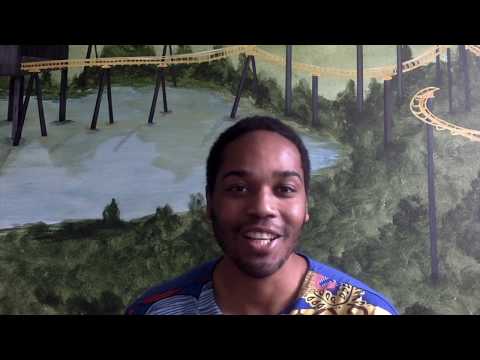

The Ka Institute reads, "Freedom! The Untold Story of Benkos Bioho and the World's First Maroons: A True Story."
#TheKaInstitute
https://www.amazon.com/Freedom....-Untold-Benkos-World
https://www.authorhouse.com/en..../bookstore/bookdetai
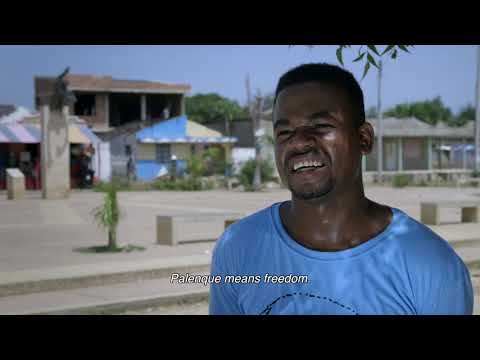
![(Documentary) Nubian Spirit: The African Legacy of the Nile Valley [HD]](https://i.ytimg.com/vi/yQAafY8FcUI/hqdefault.jpg)


A recently donated film to the Public Policy collections of the Mudd Manuscript Library, long thought lost has been digitized and is now viewable online. "Segregation and the South," a film produced in 1957 by the Fund for the Republic, reported on race issues in the South since the 1954 Supreme Court decision in the Brown v. Board of Education case. It examined the slow progress of integration at elementary and secondary schools and colleges, as well as the white backlash to the decision. It also documented the Montgomery bus boycott. Much of the footage came from news organizations like CBS and NBC that was re-packaged, but some original material was filmed in Clarksdale, Mississippi, by writer and director James Peck. Broadcast on June 16, 1957, a Sunday, from 5-6 p.m., it aired on over 30 ABC affiliates, 12 in the South, but none in the Deep South.
This film is detailed in our blog: The entire finding aid for the Fund for the Republic collection can be found here: http://findingaids.princeton.edu/collections/MC059

THANKS FOR WATCHING!! Please LIKE, SHARE
#PanAfricanDailyTV #ProfJamesSmall
Don't forget to SUBSCRIBE and click the notification Bell 🔔 to get instant updates when a video is uploaded.
Follow us on:
YOUTUBE: https://www.youtube.com/channel/PanAfricanDTV
TWITTER : https://twitter.com/panafricanDTV
FACEBOOK: https://www.facebook.com/PanAfricanDailyTV
INSTAGRAM: https://www.instagram.com/panafricandailytv/
WEBSITE: www.afroworld.tv
COPYRIGHT DISCLAIMER: Under Section 107 of the Copyright Act 1976, allowance is made for fair use for purposes such as criticism, comment, news reporting, teaching, scholarship, and research.