








- General Videos
- Music
- Economics
- Health
- Travel & Events
- History
- Psychology
- Spirituality
- Movies
- News & Politics
- Kmtyw Combat Sciences
- Ɔbenfo Ọbádélé Kambon Videos
- Ɔbenfoɔ Kamau Kambon: Black Liberation Philosophy
- Science, Tech, Engineering and Math
- Permaculture
- Self-Sustainability
- Living Off Grid
- Yoruba Language Learning
- Education
- Mmɔfra Adesua
- Nana Kamau Kambon Playlist
- Livestream
- Komplementarity Kouples and Revolutionary Singles
- Abibitumi Film Series
- Decade of Our Repatriation
- Kwento xpr
- Live
Top videos


What does returning to Ghana mean when the journey is about identity, belonging, and reconnecting with your African roots?
Her first visit to Ghana in 1972 began a connection that now spans 54 years. In this Webnation Africa conversation, an African American elder shares how that experience shaped her understanding of home, African heritage, and the work of helping others reconnect with the continent.
Born in New York and raised by her grandparents in North Carolina, she reflects on the family traditions that influenced her journey—from generations of midwives to a grandmother who supported women and children in her community. She explains how her encounters in Ghana deepened that connection and inspired her ongoing work through Sankofa journeys and healing circles.
We explore what African Americans considering moving to Ghana should understand beyond the excitement of relocation: learning the culture, building relationships with Ghanaians, preparing for challenges, and becoming part of a community.
In this episode, we discuss:
• Her first visit to Ghana in 1972 and the experience that sparked her journey
• African American identity and reconnecting with African heritage
• Why relocating to Ghana requires more than money
• The importance of language, cultural understanding, and local relationships
• Her perspectives on African spirituality, ancestry, and traditional practices
• Black women’s roles in family, community, and collective healing
• Education, critical thinking, and cultural identity
• Sankofa journeys and her work supporting diaspora reconnection
• Why she encourages people to experience Ghana without romanticizing it
Chapters:
00:00 Preview: Identity, Heritage & Liberation
01:36 Introducing Our Guest
03:06 Growing Up in America & Her Family Roots
05:02 Midwives, Home Births & Family Traditions
08:49 Why Some Diasporans Struggle to Settle in Ghana
10:33 Education & Understanding African Culture
12:37 Travel with Webnation: Ghana Homecoming
14:11 Language, Education & Critical Thinking
15:28 The Sankofa Journey & Reconnecting with Heritage
17:26 Black Women, Healing & Liberation
18:39 Feeling Called to Africa
21:19 “Who Are We?” Identity & Knowledge of Self
22:44 How Her First Visit to Ghana Changed Her
24:48 Her Beliefs About Ancestors & Rebirth
26:16 Her Perspectives on Spirituality & Healing
27:57 Reconnecting with Ancestral Knowledge
29:52 Slavery, Historical Pain & Diaspora Reconnection
33:39 Religion & Traditional African Spirituality
35:15 Experiencing Ghana Beyond Tourism
36:28 Community, Kindness & Belonging in Ghana
38:51 Preparing for Repatriation: Mindset & Support
41:12 Moving Beyond Diaspora Bubbles
43:20 Cultural Identity & Ghanaian Traditions
46:34 What She Remembers About Ghana
48:21 Her Final Message to the Diaspora
This is a personal conversation about what it means to know where you come from—and how that knowledge can shape where you go next. The guest shares her experiences, beliefs, and interpretations; these should not be taken as medical advice or independently verified historical claims.
💬 What does “home” mean to you: where you were born, where you belong, or where you reconnect with your roots? Share your thoughts below.
Subscribe to Webnation Africa for diaspora stories, conversations with entrepreneurs, and perspectives on life across different African countries.
🇬🇭 EXPERIENCE GHANA WITH WEBNATION
Interested in exploring Ghana’s history, culture, and communities? Learn about our travel experiences:
https://webnationtraveltour.squadtrip.com
📲 Travel enquiries: WhatsApp +233 53 098 1924
#webnationafrica #africanamericansinghana #africandiaspora #sankofa #movingtoghana
join out Ghana trip : https://webnationtraveltour.squadtrip.com/trip/roots-legacy-14-day-ghana-homecoming-15003
For business inquiries and collaborations, reach us at webnation@agecreators.com
Or webnationafrica@gmail.com
For enquiries about our trips email , info@webnationtraveltour.com
Let me know if you're okay with adding this!
Join our waitlist : https://mailchi.mp/a549363e9c39/webnationwaitlist


Stonebwoy Welcomes Spice (Jamaican Dancehall Artist) In Ghana
In this exclusive entertainment update, Ghana’s own Stonebwoy warmly welcomes Jamaican dancehall sensation, Spice, to Ghana! The moment is monumental as these two iconic artists from different parts of the world unite in the name of music, culture, and collaboration. If you’re a fan of Jamaican dancehall, African music, or the global entertainment scene, this video is a must-watch!
Join us as we delve into the exciting arrival of Spice in Ghana, one of the most talked-about events in the Jamaican dancehall and Ghanaian music scenes this year. Watch as Stonebwoy, a leading figure in the Afro-dancehall movement, shows his admiration for Spice’s groundbreaking career and what her visit means for the future of Caribbean-African music collaborations.
Get the latest entertainment updates, celebrity news, and insider info on Jamaican artists, dancehall music, and how Stonebwoy and Spice are making waves in the global music industry. Don’t forget to like, comment, and subscribe for more entertainment news and showbiz updates on your favorite artists and collaborations.
#stonebwoy #spice #jamaicandancehall #ghanamusic #entertainmentnews #dancehall #jamaicaartists #afrodancehall #musiccollaboration #jamaicanartistsinghana #upandrunning6


"2AM in Venezuela" (OFFICIAL VIDEO): https://youtu.be/GtvkwgbVKF8
BLACK WINTER (Full Album): https://youtube.com/playlist?list=PLJSMFuicKjJ46p1K9TlqZPRGFSd0M5z9U&si=4WG_YXCGJinM6XEN
Join the Patreon for exclusive videos that you won't find on Youtube: https://www.patreon.com/NTD1814
S U P P O R T
Cash App - $NelsonAmadeus
PayPal- GlobalHitsWorld@gmail.com
EMAIL - KingNeferkare@gmail.com
Twitter @NTDessalines
Instagram @NelsonAmadeus
TURN ON POST NOTIFICATIONS.


Bioo is generating electricity from the organic matter in soil and creating biological batteries to power agricultural sensors, a growing $1.36 billion global market. Eventually, Bioo envisions a future where biology could help to power our largest cities.
» Subscribe to CNBC: https://cnb.cx/SubscribeCNBC
» Subscribe to CNBC TV: https://cnb.cx/SubscribeCNBCtelevision
» Subscribe to CNBC Classic: https://cnb.cx/SubscribeCNBCclassic
About CNBC: From 'Wall Street' to 'Main Street' to award winning original documentaries and Reality TV series, CNBC has you covered. Experience special sneak peeks of your favorite shows, exclusive video and more.
Connect with CNBC News Online
Get the latest news: https://www.cnbc.com/
Follow CNBC on LinkedIn: https://cnb.cx/LinkedInCNBC
Follow CNBC News on Facebook: https://cnb.cx/LikeCNBC
Follow CNBC News on Twitter: https://cnb.cx/FollowCNBC
Follow CNBC News on Instagram: https://cnb.cx/InstagramCNBC
#CNBC
How Soil Could Be An Untapped Source Of Electricity


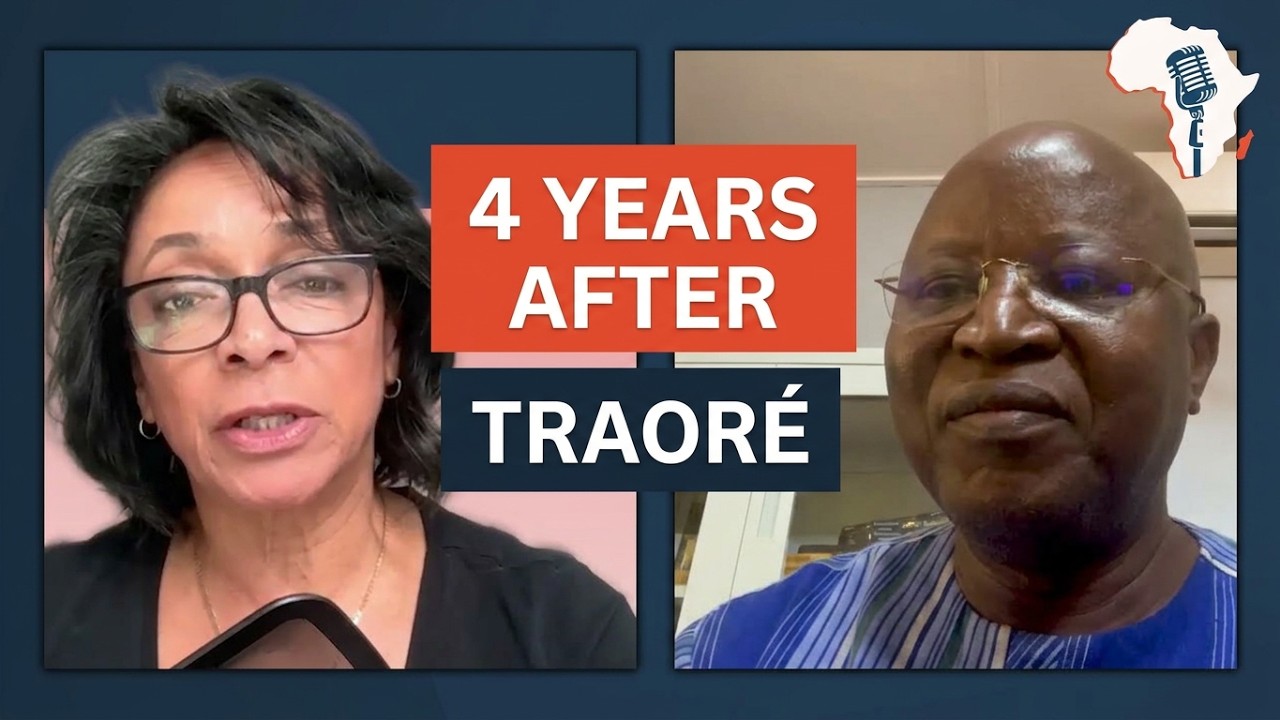
My Burkina Faso, Four Years After Traoré
We look Burkina Faso four years into Captain Ibrahim Traoré’s rule, with a conversation with Dr. Lamourdia Thombiano a soil scientist and writer from eastern Burkina Faso. He's also a member of one of Burkina Faso's royal families.
He give us his account of security in the country, sovereignty, indigenous values, and the political mood in the country, with a strong focus on how many Burkinabe people see the changes firsthand.
Dr. Thombiano argues that the country has more hope, cohesion, and national purpose than it did before Traoré took power, especially outside the cities. He also explains why, in his opinion, many citizens view the current period less through the lens of elections and individual rights, and more through development, social unity, and cultural grounding.
* Dr. Thombiano says Burkina Faso feels more vibrant and politically engaged than it did four or five years ago.
* He links today’s patriotism to the legacy of Thomas Sankara, saying Traoré’s appeal partly comes from continuing Sankara’s unfinished project.
* Security remains a major challenge, but he frames it as part of a broader package that includes peace, social cohesion, development, and public confidence.
*He says the army’s morale has improved because soldiers are better equipped and supported by civilians who share information, food, and water.
* He argues that many Burkinabe people would prefer development spending on health, agriculture, and education over the costs of elections.
*He describes a shift toward indigenous governance, including traditional leaders handling disputes that are then recognized by the Ministry of Justice.
*He says Burkina Faso is moving toward a model where democracy is not only about elections, but about good governance and communal responsibility.
*He highlights concrete agricultural changes, including subsidized fertilizer, government ploughing support, and new crops such as coffee, cacao, plantain, banana plantain, and wheat.
*He says the youth are being trained through “immersion patriotique,” with 65,000 young people reportedly trained this year in values like solidarity, hospitality, fairness, and service.
*On freedoms and repression, he argues that in Burkinabe culture the collective takes priority over the individual, so public speech is judged by whether it helps or harms the community.
Chapters
00:00 — Dr. Thombiano introduces himself and Burkina Faso’s new political reference points
00:56 — Traoré’s rise, his sovereignty message, and the promise to restore security
01:26 — Why many Burkinabe people feel renewed enthusiasm and national momentum
03:50 — Sankara’s influence and Traoré’s revolutionary legacy
04:20 — Security as part of a wider package of peace, cohesion, and development
05:19 — Why Sahel insecurity is viewed as a regional and global problem
06:20 — Improved army morale and stronger public support
07:18 — Dissolving political parties and delaying elections
07:47 — Indigenous values and traditional dispute resolution
09:16 — Democracy through a Burkinabe lens
10:41 — Why many people reportedly prefer development spending over election costs
11:09 — Mobile hospitals, rural healthcare, and agricultural support
12:07 — How Burkina Faso’s agricultural possibilities are changing
13:34 — Innovation, agricultural dynamism, and optimism
14:04 — Why optimism is stronger in rural areas
16:06 — Traoré’s hero status among young people
18:04 — French influence, Russian cooperation, and international alliances
19:59 — Burkina Faso as a country of hope and sovereignty
20:30 — “Immersion patriotique” and training a new generation
21:56 — Personal freedoms, collective responsibility, and cultural perspectives
Notable quotes
Copy
“It’s a country of hope.”
Copy
“The individual is at the service of the community, not the other way round.”
Copy
“People realize the amount of money which is being used to organize elections, they can use it for health, for agriculture, for education.”
For those of you interested in Dr Thiombiano's books:
His writer's name is Prince Lamourd Thiobiany
His website: www.worldrootsacademy.com
1.African Leadership - 25 Principles for Excellent African Leadership
2. Glory to God - The Principles of Animism
3. Let's Be Ourselves - Glory to God. The Practises of Animism
4. Before the Fires I was Black. A Blueprint for a Brighter Future.


The Image of Africa has been distorted around the globe and we are changing the narratives via Youtube videos One Country At Time.Until the history of Africa is told by Africans, the story of greatness will always glorify the imperialists.!It's Time For Africans To Unite, Embrace their Culture and be Proud of their Roots & Tell Their Own Story!-AFRICA TO THE WORLD..Subscribe to unlocked the Real Africa!
Looking for a Short stay place in Ghana?
Book With
https://www.instagram.com/wood....buryluxuryapartments
One On One Consultation With WODEMAYA
https://aiyawodemaya.com/consultation/
We Need Your Support To Make This Project A Successful One
For Sponsorship Advertisement & Business Enquiries
hello@mayaempiregroup.com
Donate & Support the Channel on Patreon:
https://www.patreon.com/wode_maya
Purchase Our T-Shirt To Support Our Journey!
https://teespring.com/proudly-africa
https://teespring.com/wodemaya-africa-to-the-world
https://teespring.com/maya-africa-to-the-world
https://teespring.com/born-afr....ican-in-america-blac
Let's Interract On:
Twitter
https://twitter.com/wode_maya
Instagram:
https://www.instagram.com/mrghanababy/
Like My Facebook page:
https://www.facebook.com/Wodemaya99/
I LOVE YOU

While learning about the changes Burkina Faso is making in education, I was made aware of the severity of the mental colonisation that Africa is currently enduring, and I had to talk about it.
Previous video that was mentioned: https://youtu.be/KuZgNgDBxyA
--------------------------------------------------------------------------------------------------
Sign up for my weekly newsletter: https://mailchi.mp/db95199bf59....2/sign-up-landing-pa
---------------------------------------------------------------------------------------------------
Download the Mara Akuko News Aggregator App:
iOS: https://apps.apple.com/us/app/....mara-ak%E1%BB%A5k%E1
Android: https://play.google.com/store/....apps/details?id=com.
----------------------------------------------------------------------------------------------------
Looking for Black manga, comic, or novel to read? Check out my recommendation list here: https://alllinks.cc/scionofculture
-----------------------------------------------------------------------------------------------------
Follow me on all SOCIALS:
X/Twitter: https://x.com/ScionofCulture
Instagram: https://www.instagram.com/scionofculture/
Threads:https://www.threads.com/@scionofculture?hl=en
TikTok: https://www.tiktok.com/@scionofculture?lang=en
Mastadon: https://mastodon.social/@panafrocore
Facebook: https://www.facebook.com/panafrocore/
Bluesky: https://bsky.app/profile/scion....ofculture.bsky.socia
Check out my website: https://panafrocore.com/


Original Sufferhead (1981) Fela Kuti
From the LP Original Sufferhead (CD release 1999)
http://fela.net/discography/
This video is part of a series of songs being posted on Fela's official YouTube channel (http://www.youtube.com/fela) each featuring, alongside the music, an informative commentary by Afrobeat Historian, Chris May.
The entire catalogue, released on Kntting Factory Records, is available on the Fela website (http://fela.net/), along with documentaries and recorded concerts, CDs and vinyl, tee shirts, posters and many other items.




After Rex, di scruffy mongrel from Country Mungrel TV, bite Charlie pon him foot — chaos bruk loose! 😩
Patsy rush fi carry him go hospital and Charlie bawl out:
“Yu haffi cut off mi foot, Dakta?!” 😱
This is real bush comedy meet real drama — only in Country Mungrel TV.
From red dirt roads to rural hospital beds, dis skit full a patois, pain and pure laugh.
🔥 Don’t miss a single episode from Matty, Rufus, Charlie, Patsy & Rex
🎬 Real Jamaican storytelling powered by AI, patwa, and pure country life.
📲 Connect With Us:
📧 Business Inquiries:
rexdicountrymungrel@gmail.com
📱 TikTok:
https://www.tiktok.com/@rexdicountrymungrel
📸 Instagram:
https://www.instagram.com/rexdicountrymungrel
📘 Facebook Page:
https://www.facebook.com/rexdicountrymungrel
🎧 Stream Rex Music:
https://social.tunecore.com/li....nkShare?linkid=EHJlU
🐾 Subscribe for More Country Mungrel TV Drama
New episodes weekly. Pure patwa. Real laugh. Whole heap a bush mixup!
#comedy #jamaican #funny #jamaicancomedy #jamaica


Songs include Gentleman / Fɛfɛ na ɛyɛ fɛ/ Igbe (Na Shit)
This video is part of a series of songs being posted on Fela's official YouTube channel (http://www.youtube.com/fela) each featuring, alongside the music, an informative commentary by Afrobeat Historian, Chris May.