General Videos

Kwabena Adofo
2 Views · 3 hours ago

Classic lecture by the late Khallid Muhammad covering the topics of Martin Luther King and Malcolm X and much more was recorded on January 20, 1997.
-
YouTube has DEMONETIZED our channel for posting reused content
Allow us to keep the content intact and available on this platform by making a donation.
Any HELP is GREATLY appreciated.

Please support this channel by donating or purchasing merchandise
Cash App $Reelblack
PayPal.me/reelblack
https://www.patreon.com/reelblack
get Reelblack merch at https://shop.reelblack.com
Make sure to follow us on Instagram and Twitter @Reelblack

### posted for historical purposes. I do not own the rights.
Reelblack's mission is to educate, entertain, enlighten, and empower through Black film. If there is content shared on this platform that you feel infringes on your intellectual property, please email me at Reelblack@mail.com and info@reelblack.com with details and it will be promptly removed.

T. Y. Adodo
12 Views · 23 hours ago

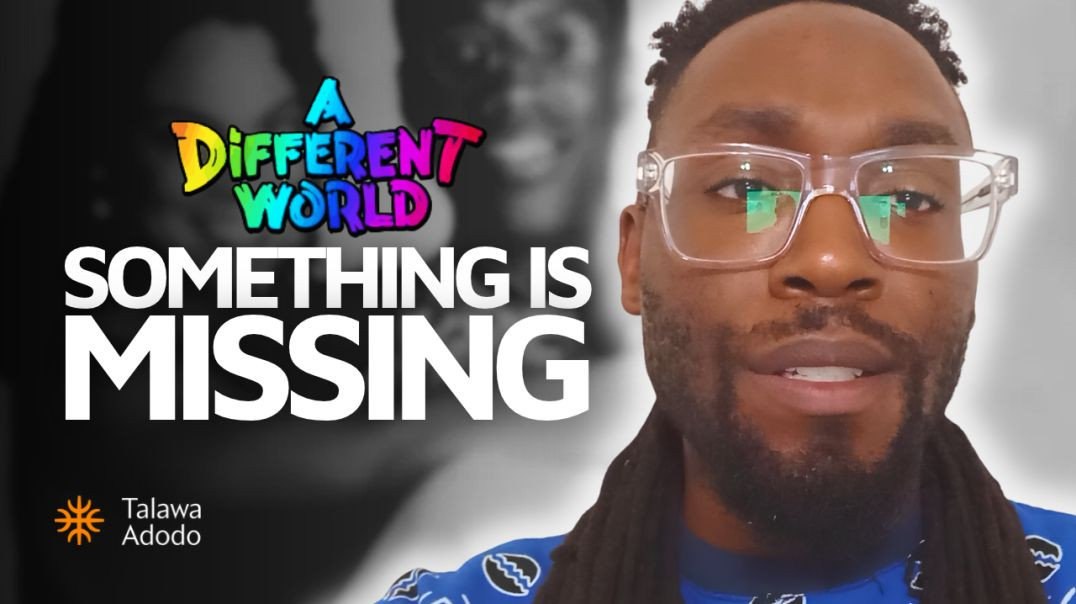
In this video , a Ghanaian finds SHOCKING similarities between Jamaica's Kromanti, Patois and Ghana's Fantse/Twi. Dive into the remarkable life of Nanny of the Maroons, Jamaica's only female national hero.

The Moore Town Maroons of Jamaica - Maroon Kromanti Language

From her early days in Ghana to her legendary leadership of the Maroons, discover the legacy of a woman who fought for freedom against all odds. Don't forget to subscribe for more inspiring stories from history.

Kindly subscribe to this channel.

The Untold Story of Nanny of the Maroons: Jamaica's Fierce Freedom Fighter

PATREON: https://www.patreon.com/ekowsimpson
PAYPAL: https://paypal.me/eegyir

Email: ekespossibilityconsult@gmail.com
WhatsApp/Direct Contact: +233 246 30 2158
Mobile Money or WAVE: +233 246 30 2158

SOCIALS.....................
INSTAGRAM: instagram.com/ekowsimpson_
FACEBOOK: facebook.com/ekowesimpson
TWITTER: https://twitter.com/EkowESimpson

https://www.youtube.com/@kamjiverse


► Subscribe to Transatlantic Productions 💥Smash The LIKE Button👍🏿 Share↗️ & hit the Notifications Bell 🔔

► Donate so we can complete the upload https://www.gofundme.com/tapvideo

► Cash App: $GodKingD91 $BrotherRonn $Moneymark0730
► Share on video on all Social Media.
► Website https://tapvideo.blogspot.com
https://www.facebook.com/Tapvi....deocom-7441435789873

► Back up Channels:
https://www.youtube.com/channe....l/UCs9-wRHfFb7v7RQAi
https://www.youtube.com/user/savejamaica

T. Y. Adodo
16 Views · 10 days ago

Pan-Africanist, Prof PLO Lumumba has lamented the state of the African continent. In a wide ranging public lecture speech at the Rongo University in Kenya, PLO Lumumba says democracy is foreign to Africa and that African must go back to her roots to revive the indigenous forms of government which was practised before Africa became colonised.

Please consider joining this channel to get access to perks:
https://www.youtube.com/channe....l/UCljBfmJffQppZYiX2

https://tiktok.com/@africawebtv
https://instagram.com/africawebtv
https://open.spotify.com/show/....2BBcE6wcpdnBmwsXDWUL
https://threads.net/@africawebtv
https://africawebtv.bsky.social
https://whatsapp.com/channel/0....029VaDAKbj89indJ4hQm
https://facebook.com/webtvafrica
https://twitter.com/africawebtv
https://africawebtv.nl

© Africa Web TV 2026

#africannarratives #plolumumba #kenya

Kwadwo Danmeara Tòkunbọ̀ Datɛ
21 Views · 11 days ago

ABONNEZ-VOUS | LIKEZ | PARTAGEZ
_____________________________________
La première présentation dédicace venait de se faire chez l’éditeur Présence africaine, aussitôt le professeur a été ensuite invité à l’ambassade du Congo en France par l’ambassadeur Rodolphe Adada, pour une deuxième présentation de son ouvrage : Reconstruction du Nilo -Atlantique, le professeur Théophile Obenga a été agréablement surpris par les services de l’ambassade qui ont mis les bouchées doubles en organisant une agréable surprise surprise anniversaire de ses 90 ans.
Un moment plein d’émotions, qui a fait couler les larmes de l’Egyptologue, juste après son exposé sur le concentré comparatif linguistique du Chamito-Semitique à l’afro -Asiatique.
Le nonagénaire infatigable pédagogue, est déjà en route pour Genève pour une autre série de dédicaces .
#ThéophileObenga #cheikhantadiop #reconstructionniloatlantique #PrésenceAfricaine #egypteancienne #afroasiatique #ChamitoSémitique #cultureafricaine #90ansobenga #histoireafricaine rejoignez cette chaîne pour bénéficier d'avantages exclusifs :
https://www.youtube.com/channe....l/UClyc8f5pyYAETKdGv

Ọbádélé Kambon
14 Views · 14 days ago

AAAG President Nana Akosua Seɔyɔ's Abibitumi Twi Class TestimonialFebruary 8, 2026

Nana
16 Views · 15 days ago

Ghana just made $3 billion in only four months—without discovering a single new gold mine. So how did they pull it off? Here's a hint: Captain Ibrahim Traoré had something to do with it. But what’s the real story behind this unexpected windfall? Let’s dive in.

Sitting firmly in Africa's Golden Triangle with South Africa and Sudan, it was a top-tier producer. But in spite of this natural wealth, the nation hardly ever benefited from its hidden gems. Year after year, billions of dollars' worth of gold left Ghana, but only remnants returned to the country's economy.

Lack of ownership was the issue, not a shortage of gold. With everything but no control, this has been the silent tragedy of Ghana's mining industry. Foreign multinational corporations with headquarters in Canada, the UK, South Africa, and Australia were primarily in charge of running the nation's gold mines.

Under private contracts, these businesses extracted the gold, processed it abroad, and then sold it to customers throughout the world. The role of Ghana? Take a little cut, supply the dirt, and avoid the boardrooms where the real money is earned. The gold wasn't the only thing that remained.

It leaves behind data, pricing control, and profit transparency. Numerous mining companies underreported their profits, took use of legal loopholes, or just set up their operations in ways that allowed for tax evasion. The riches had already vanished abroad, concealed in offshore accounts and business spreadsheets, by the time government officials became involved.

Ghanaians pondered for years how we could have so many resources and yet face unemployment, debt, and a weak currency. So far, the response has been silence. Silence thereafter became the norm. Early in 2025, however, numbers—rather than a protest or a politician—broke that stillness.

Silent, emotionless figures. Ghana's gold earnings soared to $2.7 billion between January and April. That is more than three times what it made during the same time frame only two years prior.

Furthermore, in just four months, the quantity of gold exported virtually doubled, rising from about 7,500 kilograms in early 2023 to over 30,000 kilograms. These were neither estimations or optimistic forecasts. These were actual transactions that were documented in Ghana's central bank's books and monitored by the country's customs department.

Naturally, people wanted to know where all of this originated. Was there a fresh gold deposit discovered by Ghana? Did the output of mining suddenly increase overnight? The response was much more significant and fascinating. There was always gold. Ghana simply stopped allowing it to disappear.

It was not the mines that changed. Who was in charge of the exits changed. Ghana wasn't allowing private corporations to control what was left on the ground or where it went for the first time.

Now a gatekeeper was present. A fresh idea that wasn't from Accra was standing outside that fence. It originated in Ouagadougou, a nearby capital.

The Ghanaian government had not simply happened onto a fortunate quarter, you see. They were no longer content to be a passive participant in the mining industry after studying something and observing someone. Motivated by fresh leadership on the continent, they had taken a very conscious decision.

However, we must examine the impact that led to that change in order to comprehend how a silent policy decision generated billions of dollars in unexpected revenue. Not even the African Union, not the International Monetary Fund, and not a think tank. It came from Captain Ibrahim Traoré, a man in a green beret, a soldier rather than a scholar, a leader who had seized a nation that was in disarray and dared to defy the laws of international economics.

The new model was not created in Ghana. But they didn't hesitate when they saw it. They modified it.

Nana
8 Views · 15 days ago

History of what the AU has not done and why it should not exist now.

Nana
9 Views · 15 days ago

Africa's economy is growing faster than Asia in 2026 — and the African geopolitics behind this shift involve China's zero tariff trade deal, AGOA's uncertain future, and a $40 trillion Afri-Caribbean market most people have never heard of.This week on The Strategic Lens, we break down four stories that are quietly rewriting the rules of global trade and African economic power — and what it means for Africans, the diaspora, and anyone paying attention to where real growth is happening right now.TO JOIN OUR MEMBERSHIP CLICK THE LINKhttps://www.patreon.com/AfricaTodayClub763Here is what we cover:The UN, IMF, and African Development Bank all dropped reports this month — and they all agree. Africa is projected to grow at 4.4% in 2026, outpacing Asia at 4.1% and leaving the global average of 2.7% in the dust. Twenty-one African countries are growing above 5%. Four of them — Ethiopia, Rwanda, Senegal, and Niger — are hitting that 7% poverty-reduction threshold economists say actually changes lives. But here is the catch nobody is talking about: African governments are spending 27.5% of their revenue just on debt interest payments. The growth is real. The debt trap is realer.Then there is the avocado. One fruit shipment from Limpopo, South Africa to Shanghai, China — and why it represents something much bigger than fruit. South Africa grows 160,000 tons of avocados a year. For decades, 95% of exports went to Europe, the UK, and Russia. That is changing fast, and the implications for thousands of rural South African farmers are enormous.China just announced zero tariff access for 53 African nations, effective May 1, 2026. No political conditions. No renewal anxiety. Meanwhile, the US renewed AGOA — but only for three years, down from the traditional ten. We break down what this trade war between East and West actually means for African leverage, and why the real danger is not the deal itself but what Africa exports under it.And finally — the $40 trillion Afri-Caribbean market. Africa and the Caribbean share history, culture, and DNA. They barely share trade. Less than 1% of total trade flows between the two regions. But that is starting to change. We cover the Afri-Caribbean Investment Summit, the first ever direct flight from Nigeria to St. Kitts and Nevis, and why this South-South corridor might matter more than any deal with China or America in the long run.⚠️ DISCLAIMERThe Strategic Lens produces content for informational and educational purposes only. Nothing presented in this video or its accompanying materials constitutes financial, investment, legal, or political advice. All statistics, projections, and data cited are drawn from publicly available reports by institutions including the IMF, African Development Bank, UN Department of Economic and Social Affairs, and other named sources at the time of production. Figures are subject to change as new data becomes available. Viewers are encouraged to consult the original source documents — linked in the member resources section — before drawing conclusions or making decisions based on any information presented here. The views expressed are those of the host and do not represent the official position of any government, institution, or organization referenced in this content.


Showing 1 out of 2