
- General Videos
- Music
- Economics
- Health
- Travel & Events
- History
- Psychology
- Spirituality
- Movies
- News & Politics
- Kmtyw Combat Sciences
- Ɔbenfo Ọbádélé Kambon Videos
- Ɔbenfoɔ Kamau Kambon: Black Liberation Philosophy
- Science, Tech, Engineering and Math
- Permaculture
- Self-Sustainability
- Living Off Grid
- Yoruba Language Learning
- Education
- Mmɔfra Adesua
- Nana Kamau Kambon Playlist
- Livestream
- Komplementarity Kouples and Revolutionary Singles
- Abibitumi Film Series
- Decade of Our Repatriation
- Kwento xpr
- Live
OPEN D.O.O.R. • PROGRAMME PROMOTION
Come Home. Stay Home. Build Home.
Watch the President’s Special Envoy to the Caribbean’s promotional video.
Friday, 30 October 2026 · Cedi Conference Centre, University of Ghana, Legon
8 AM Presidential/Royal Panel · 12 noon Debate · 1:30 PM Plenaries (GMT)




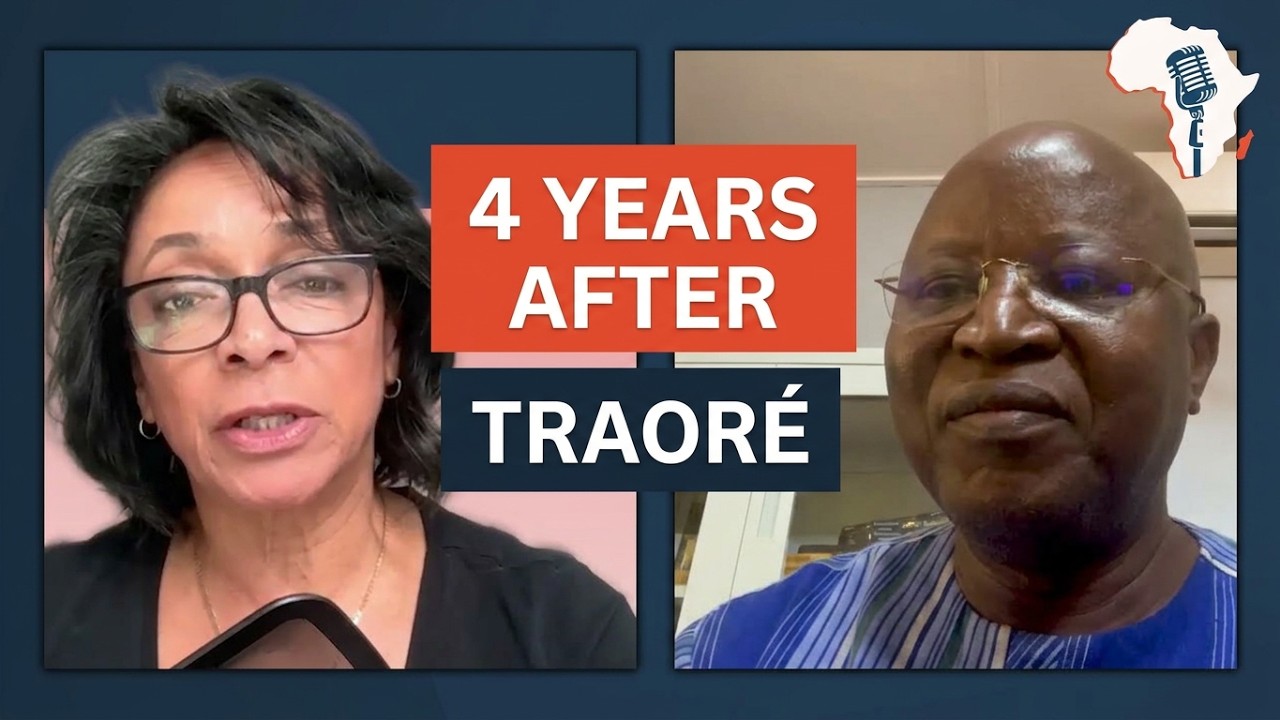





Traore just helped Ghana make $12 Trillion by Collecting Their Gold from The West

Ghana just made $3 billion in only four months—without discovering a single new gold mine. So how did they pull it off? Here's a hint: Captain Ibrahim Traoré had something to do with it. But what’s the real story behind this unexpected windfall? Let’s dive in.
Sitting firmly in Africa's Golden Triangle with South Africa and Sudan, it was a top-tier producer. But in spite of this natural wealth, the nation hardly ever benefited from its hidden gems. Year after year, billions of dollars' worth of gold left Ghana, but only remnants returned to the country's economy.
Lack of ownership was the issue, not a shortage of gold. With everything but no control, this has been the silent tragedy of Ghana's mining industry. Foreign multinational corporations with headquarters in Canada, the UK, South Africa, and Australia were primarily in charge of running the nation's gold mines.
Under private contracts, these businesses extracted the gold, processed it abroad, and then sold it to customers throughout the world. The role of Ghana? Take a little cut, supply the dirt, and avoid the boardrooms where the real money is earned. The gold wasn't the only thing that remained.
It leaves behind data, pricing control, and profit transparency. Numerous mining companies underreported their profits, took use of legal loopholes, or just set up their operations in ways that allowed for tax evasion. The riches had already vanished abroad, concealed in offshore accounts and business spreadsheets, by the time government officials became involved.
Ghanaians pondered for years how we could have so many resources and yet face unemployment, debt, and a weak currency. So far, the response has been silence. Silence thereafter became the norm. Early in 2025, however, numbers—rather than a protest or a politician—broke that stillness.
Silent, emotionless figures. Ghana's gold earnings soared to $2.7 billion between January and April. That is more than three times what it made during the same time frame only two years prior.
Furthermore, in just four months, the quantity of gold exported virtually doubled, rising from about 7,500 kilograms in early 2023 to over 30,000 kilograms. These were neither estimations or optimistic forecasts. These were actual transactions that were documented in Ghana's central bank's books and monitored by the country's customs department.
Naturally, people wanted to know where all of this originated. Was there a fresh gold deposit discovered by Ghana? Did the output of mining suddenly increase overnight? The response was much more significant and fascinating. There was always gold. Ghana simply stopped allowing it to disappear.
It was not the mines that changed. Who was in charge of the exits changed. Ghana wasn't allowing private corporations to control what was left on the ground or where it went for the first time.
Now a gatekeeper was present. A fresh idea that wasn't from Accra was standing outside that fence. It originated in Ouagadougou, a nearby capital.
The Ghanaian government had not simply happened onto a fortunate quarter, you see. They were no longer content to be a passive participant in the mining industry after studying something and observing someone. Motivated by fresh leadership on the continent, they had taken a very conscious decision.
However, we must examine the impact that led to that change in order to comprehend how a silent policy decision generated billions of dollars in unexpected revenue. Not even the African Union, not the International Monetary Fund, and not a think tank. It came from Captain Ibrahim Traoré, a man in a green beret, a soldier rather than a scholar, a leader who had seized a nation that was in disarray and dared to defy the laws of international economics.
The new model was not created in Ghana. But they didn't hesitate when they saw it. They modified it.

SORT BY-
Top Comments
-
Latest comments
8 months ago
In 2 years, I will be home in Mama Afrika...cant wait to get out the United Snakkkes of a Murder.