Live

Ambakisye-Okang Dukuzumurenyi
41 Views · 5 years ago

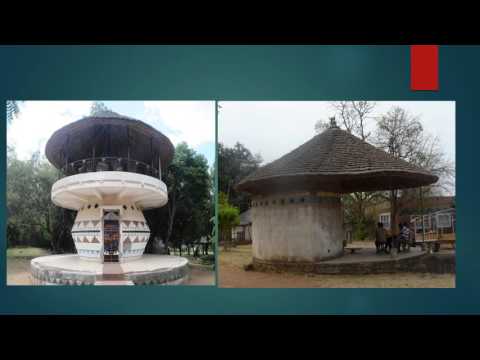
African architecture should stop copying the West, engage the real needs of the people and regard the environment, says Diébédo Francis Kéré.

Looking at the housing situation in West Africa, architect Diébédo Francis Kéré (Kéré Architecture) says that Africans should stop imitating the Western way of building and rather adapt it to their own needs – and the needs of the community – in order to cope better with the weather patterns in the region.

Due to the lack of a secure income, people build their houses themselves... and as models, they just copy the neighbouring house. In this part of the world, we only have one school for architecture, says Kéré.

Kéré believes the built environment in Africa should adapt to nature, while maintaining the cultural richness of the people.

He talks about his dream to make things better in his home country of Burkina Faso and tells how he has been introducing traditional building techniques that allow for natural ventilation to the communities in West Africa. By giving the community a framework within which to work, he encouraged the people of Burkina Faso to build houses that breathe.

Looking at various architectural projects in West Africa, Kéré points to the merits of clay building techniques.

Ambakisye-Okang Dukuzumurenyi
41 Views · 5 years ago

⁣Thatching specialists! Wonders of Africa thatching services! whatsap +263772979136


We do wonders with gum poles and grass! We supply thatching grass in the Southern Africa and locally in Zimbabwe! We promise to do our best! +26773600541/+263779600513/+263784187043

Ambakisye-Okang Dukuzumurenyi
35 Views · 5 years ago

Thatched houses plans and gazebo in Zimbabwe 0773974777 or 0772389998
⁣We don't build the houses and offer plans , we just roof and thatch.


Facebook: http://www.facebook.com/framew....orkthatchzimbabweTwi http://www.twitter.com/frameworkthatc1visit our website on : http://frameworkthatcherszimbabwe.wordpress.comor email us at frameworkthatch@gmail.com

Ambakisye-Okang Dukuzumurenyi
85 Views · 5 years ago

We thatch round kitchens and rural huts in Zimbabwe for more contact 0773974777 or 0772389998

Facebook: http://www.facebook.com/frameworkthatchzimbabwe

Twitter: http://www.twitter.com/frameworkthatc1


visit our website on : http://frameworkthatcherszimbabwe.wordpress.com

or email us at frameworkthatch@gmail.com

Ambakisye-Okang Dukuzumurenyi
26 Views · 5 years ago

We offer thatching services in Harare Zimbabwe for more call Gama on 0773974777 or 0772389998

Facebook: http://www.facebook.com/frameworkthatchzimbabwe

Twitter: http://www.twitter.com/frameworkthatc1


visit our website on : http://frameworkthatcherszimbabwe.wordpress.com

http://frameworkthatchers.blogspot.com

Pinterest: www.pintrest.com/frameworkthatchers

linkedin: http://www.linkedin.com/Frameworkthatchers


or email us at frameworkthatch@gmail.com

Ambakisye-Okang Dukuzumurenyi
62 Views · 5 years ago

Bamboo is an important building material in many parts of the world. Nowhere are the builders more skilled than among the Dorze in the Rift Valley Mountains in Southern Ethiopia. They have learned to split it and weave it into fantastic beehive houses which will last their occupants a whole lifetime. We have recorded the complete process of harvesting, preparing and building these amazing houses.

Order our new book and help us to continue with this important research. UK and international postage options are available here https://www.nomads.org/Books.html.

Ambakisye-Okang Dukuzumurenyi
64 Views · 5 years ago

Searching for the "Secrets of an African Jungle Forest" in Korup, a Cameroonian rain forest. Observed: the pygmy chameleon; the drill, a rare baboon species; the pygmy flying squirrel; and the crowned eagle.

Ambakisye-Okang Dukuzumurenyi
50 Views · 5 years ago

At the end of the April 2012 ADRA-Uganda made an evaluation and assessment of Batwa Pygmies in Kisoro District searching how the previous initiatives influenced the Batwa and what their present challenges are. This is what we discovered.

Ambakisye-Okang Dukuzumurenyi
16 Views · 5 years ago

"The pygmies traditionally lived in the forest. They were mobile, semi-nomadic and relatively far from the tracks while farmers had chosen to develop their villages along the tracks. Then because of the attraction of the tracks, the pygmies finally arrived along the road too and their numbers increased. So their habitat finally became structured and developed. Moangue-Le Bosquet, which interests us because of the large population, is also interesting as regards cultural evolution. We're in a town! There's a school, a hospital, shops... So tomorrow's way of life is already starting here."
Alain Froment – Doctor of Medicine, Anthropologist - IRD Director of Research.

"It is agreed that growth is similar in all modern populations of humans. It must be remembered that growth is a change in dimensions until the adult size is attained. If the size differs between populations, this means that the processes responsible for this size are also different.
This difference in size and difference in growth reveal very rich and substantial human biological diversity.
In the case of the Pygmies, we assume that small size is an adaptation to their environment, to the forest. But what interests us is how adult size becomes established.
Six years of data gathering means that we can now sketch a growth curve for the Baka. And its immediate usefulness—seen very clearly this year—is proof that all the data that we are collecting are applicable."
Fernando Ramirez Rozzi – Anthropologist, Biologist – CNRS Director of Research.
-------------------
http://maget.maget.free.fr/A-K....ALO/Baka-cueillette.

Ambakisye-Okang Dukuzumurenyi
58 Views · 5 years ago

Documentary looks at the traditional lifestyle of a hunter gatherer society - the Mbuti. Deep in the Ituri Rainforest (Congo). Sangoo and his fellow villagers live a life untouched by outside influences - a life as close to the earliest humans as possible.


Showing 33 out of 34