- General Videos
- Music
- Economics
- Health
- Travel & Events
- History
- Psychology
- Spirituality
- Movies
- News & Politics
- Kmtyw Combat Sciences
- Ɔbenfo Ọbádélé Kambon Videos
- Ɔbenfoɔ Kamau Kambon: Black Liberation Philosophy
- Science, Tech, Engineering and Math
- Permaculture
- Self-Sustainability
- Living Off Grid
- Yoruba Language Learning
- Education
- Mmɔfra Adesua
- Nana Kamau Kambon Playlist
- Livestream
- Komplementarity Kouples and Revolutionary Singles
- Abibitumi Film Series
- Decade of Our Repatriation
- Kwento xpr
- Live
Latest videos




PEACE AND LOVE TO ALL! Be inspired and share in your networks - also private and public screenings are highly welcome. Guidance and itection to all
Like us on Facebook: https://www.facebook.com/rasta....farisustainablelifes
Description:
“Through its inside, personal and genuine view on the movement the documentary aims to inspire people worldwide on a more sustainable lifestyle embedded in the context of Rastafari.”
The documentary film “Rastafari as a sustainable Lifestyle: Messages from Jamaica” aims to show an in-depth inside view on how the philosophy of Rastafari offers a sustainable lifestyle. The need for a sustainable lifestyle is as global as the movement’s principles of “equal rights and justice for all”. Due to the movement’s global spread (particularly through Reggae) and influence (particularly on Africa and marginalized people), there is a lot of potential in convincing more and more people to live more sustainable and to educate them about sustainability.
The film tries in every aspect to be of anthropological nature: At no time, ‘outside’ voices on Rastafari about Rastafari can be heard. Instead, only the inside perspectives from people of the movement are expressed. Also, the film is inspired by Rastafari, and therefore it is supposed to not only entertain, but educate! It therefore merges into a piece of ‘EDUtainment’. The educational part about the need for a sustainable lifestyle gets highlighted through the only non-Rastafari character in the film, Dr. Kevon Rhiney (Geography Department, UWI), who is educating the audience about climate change, it’s drivers, possible projections and behaviors of a more sustainable lifestyle. This lays the foundation for anyone not aware of the seriousness of climate change and the urgent need for people to live more sustainable.
The choice of the rest of the characters in the movie tries to reflect the diversity of the Rastafari movement regarding social background, age and occupation: Amongst others the Social Entrepreneur specialist Dr. Kadamawe Knife (39), Kemetic Yoga teacher Iyabinghi Ashanti Tafari (50), music producer Jamal Layne (23), and Singer Kiddus I (68) all have an urgent concern about mother earth and the future of humanity. Throughout the movie the Rastafari characters ‘reason’ on nature, community, ‘Livity’ - approach to work and life - and the current wrongs of Babylon. At the same time they stand as specific examples of people who live in harmony with nature and who develop sustainable businesses ideas and concepts. By teaching ‘peace, love, and unity’, Rastafari promotes the unification of all people to work together for a balanced world.
*we don't agree with burning techniques to clear land or fertilize it for agricultural purpose. please stay away from burning your land as this causes far more damage then good. rather stick to e.g. composting and mulching to fertilize your land, and also check out PERMACULTURE for a holistic design system*

#UTVNews #UTVGhana #DespiteMedia
PLEASE NOTE: Unauthorized upload of this video unto any YouTube channel is prohibited. (C) United Television
Subscribe to our YouTube Channel
Follow us on Twitter - https://twitter.com/utvghana
Like our Facebook Page - https://www.facebook.com/utvghana/
Follow us on Instagram - https://www.instagram.com/utvghana/


Patreon:
https://www.patreon.com/HomeTeamHistory
Our Black Truth Website:
https://social.ourblacktruth.com/
Afrographics:
http://afrographics.com
Resources:
List of African history books for Beginners:
https://bit.ly/2XgzSnd
How to teach you children African History: A Guide:
https://bit.ly/2V3V8L6
How the African Continent fell before Colonialism:
https://bit.ly/2ZqZjne
A timeline of Ancient African History:
https://bit.ly/2VhRdOC

How to grow top quality melons? Senegal's melon story reveals the secrets of success in Africa for producing and then shipping delicious fruits to Europe. French fruit company Soldive has brought great benefits to the local farming community and they share how their lives have improved.
This film was made with support of the UK Department for International Development (DFID) through their Food Retail Industry Challenge (FRICH) Fund as part of a project with Waitrose, LEAF (Linking Environment and Farming), Green Shoots Productions and suppliers of African fresh produce to Europe - Blue Skies, British and Brazilian, Sunripe and Wealmoor.
http://www.soldive-producteur.com/
http://www.dfid.gov.uk/Work-wi....th-us/Funding-opport
http://www.leafuk.org
http://www.green-shoots.org
http://www.blueskies.com
http://www.britishandbrazilian.com
http://www.sunripe.co.ke
http://www.wealmoor.co.uk
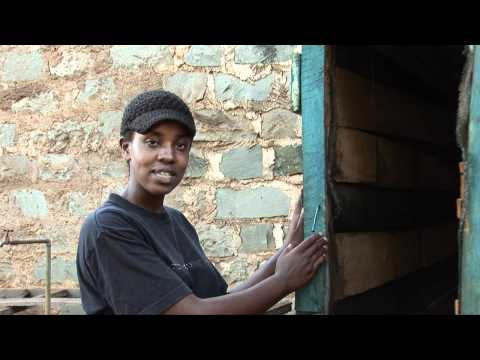
Fresh-picked vegetables and fruits last longer if they can be kept cool. African farmers use 'charcoal coolers' to store their crops before packing. Could you make a fridge with pieces of wood, some netting, a length of pipe and some charcoal? Find out who does and how the technology works.
Find out more about farming on the LEAF Virtual Farm Walk website, www.virtualfarmwalk.org

Pumping water to irrigate, or water, crops in fields can be expensive, even when there is a river nearby. In Africa farmers are using the sun to provide the power to deliver just what the plant needs - one drip at a time.
Find out more about farming on the LEAF Virtual Farm Walk website, www.virtualfarmwalk.org

Water is precious. Using water wisely on farm is essential, believes Benson Njoroge from Kenya. In this film he explains how and why managing water wisely matters.
This film, one of eleven, is being used to share good agricultural practice in Africa.
LEAF (http://www.leafuk.org), Waitrose, African fresh produce exporters and Green Shoots Productions (http://www.green-shoots.org) have been working with support of the UK Department for International Development's Food Retail Industry Challenge (FRICH) fund to share good agricultural practice between African farmers.