#blackpower
What does it really mean for Ghana to welcome the historic diaspora home?In this powerful town hall discussion, speakers address the urgent need to remove the financial and bureaucratic barriers standing in the way of citizenship and repatriation, including the GHS 25,000 processing fee, DNA testing requirements, and the lack of direct historic diaspora representation in decision-making spaces. The conversation goes beyond policy to deal with dignity, self-respect, self-repair, and the deeper question of what it means for Black people to reconnect, rebuild, and reclaim place, purpose, and pride.This video explores:• the call to scrap costly and tedious citizenship requirements• why return should not be treated as a privilege only for those who can afford it• the importance of representation for the historic diaspora in national policy• reparations, self-repair, and practical steps toward healing and reconnection• how Ghana can move from symbolic statements to concrete actionThis is not just about economics. It is about restoring dignity, removing obstacles, and creating real pathways home.Watch, share, and join the conversation.#ghana #diaspora #citizenship #repatriation #blackpower #historicdiaspora #returnhome #reparations #selfrepair #abibitumi
Ghana Citizenship Emergency Town Hall & Press Conference | 100 Years of Black History MonthHundreds of members of the Black diaspora—both in-person and online—gathered at the Institute of African Studies, University of Ghana to mark the 100th anniversary (centennial) of Black History Month with a Diaspora Town Hall + Press Conference focused on citizenship in Africa (especially Ghana) and what it means for diasporans.Organized by Decade of Our Repatriation (DOOR) in collaboration with the African-American Association of Ghana, Ghana Caribbean Association, and the Central Region African Ascendants Association of Ghana, the event opened with ancestral acknowledgements and moved into a press conference where organizers and stakeholders presented a joint resolution addressing concerns affecting diaspora applicants.Key issues raised include:DNA requirements and “proof burdens”High fees and fee reform (reductions/waivers)Compressed timelinesThe 2-year residence permit prerequisiteCalls for diaspora representation in institutions shaping diaspora policySpeaking at the engagement, Ɔbenfo (Professor) Ọbádélé Bakari Kambon emphasized moving from commemoration to practical action, linking citizenship discussions to historical knowledge, identity, and the ongoing struggle against miseducation.📌 Theme: “What does citizenship in Africa mean to me?”🎥 Report by Panafrican TV / Panaffrican News (Prosper Amedas)Timestamps0:00 Introduction0:07 Diaspora Town Hall & Press Conference (UG – Institute of African Studies)1:13 Key concerns from diasporans1:40 Action steps & government engagement plans1:46 Ɔbenfo (Professor) Ọbádélé Bakari Kambon on centennial Black History Month & practical action3:41 Stakeholders on clarity, fairness, and a workable pathway4:58 Resolution demands & reforms🔔 Subscribe for more diaspora news, repatriation updates, and on-the-ground coverage from Ghana.#blackhistorymonth #ghana #diaspora #citizenship #repatriation #panafrican #universityofghana #instituteofafricanstudies #door #blackpower
Start here → Book your consultation: https://www.r2gh.com/quiz
Ghana Citizenship Testimonial: “They showed me the path home.”
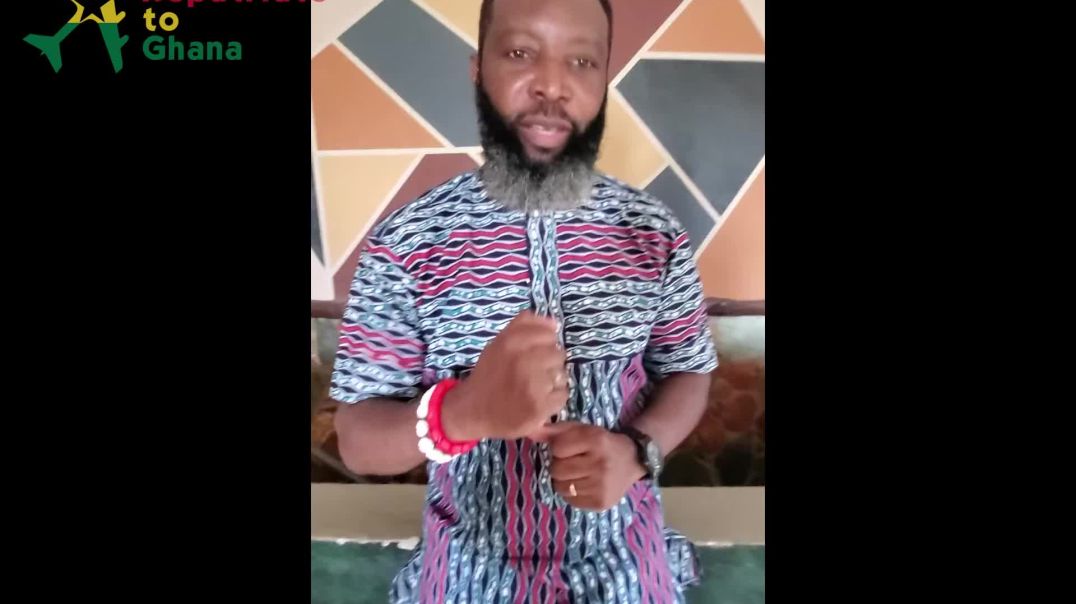
In this short testimonial, Kwadwo Clyde Waterman thanks Abibitumi and RepatriateToGhana.com (R2GH) for guiding him through his repatriation—culminating in Ghanaian citizenship. He shares how becoming a citizen means he can live freely in Ghana, avoid overstay fees, and move through customs with confidence as a Ghanaian.
What you’ll hear
How Abibitumi + R2GH “showed the path” back home
The relief of no more visa overstays or penalties
The difference citizenship makes at customs and everyday life
A heartfelt “medaase” (thank you) to the team that made it possible
Timestamps
0:10 Appreciation for Abibitumi & R2GH
0:26 Using the services to secure citizenship
0:32 Living in Ghana freely without visa stress
0:39 Avoiding overstay fees
0:45 Moving through customs as a citizen
0:50 Final thanks
Mid-video reminder: Ready to begin your own journey? Sign up for a consultation now: https://www.r2gh.com/quiz
Ready to start your journey?
Learn more support & services: RepatriateToGhana.com (R2GH)
Community & education: Abibitumi (Abibitumi.com)
If this helped you, like, comment, and share with someone who’s ready to come home. Subscribe for more real stories, guidance, and step-by-step support.
Final call to action: Your path starts today—book your consultation: https://www.r2gh.com/quiz
Hashtags
#repatriatetoghana #abibitumi #ghanacitizenship #returnhome #abibifahodie #blackpower #ghanalife #diasporatoghana #citizenshipjourney
https://www.decadeofourrepatriation.comIn this recorded emergency Zoom meeting, organizational leaders across Ghana and the historic diaspora come together to give clear, up-to-date guidance on the Ghana diaspora citizenship process following the January 30 policy announcement, the February 2 suspension, and the February 11 restart.You’ll hear directly from leaders connected to DOOR (Decade of Our Repatriation), RepatriateToGhana, the Rastafari Council of Ghana, the Ghana Caribbean Association, AAA Ghana, Real Repatriation Consultant, Ministry of the Future, and other community partners—sharing what applicants can do right now to move forward, and how we continue advocating for a fair and workable process for our people.What you’ll learn in this videoKey guidance discussed includes:The 3 core pillars being used in vetting (as shared by officials in direct conversations with leadership):Cumulative time in Ghana (1 year or more)Strong ties to Ghana (examples discussed: land/home, business, NGO/community impact, Ghanaian language ability, etc.)Background checks (Ghana + home country)Why vetting before payment matters (to avoid risking fees before qualification)How applicants are being asked to demonstrate time in GhanaPractical notes on police clearance and typical turnaround expectationsWhy community and organization membership matters for support, accurate info-flow, and safetyUpdates on upcoming citizenship timelines/ceremony expectations (as discussed in the meeting)Note: Processes can change quickly. This discussion reflects what was shared and discussed during this live meeting and should not be treated as legal advice.Helpful linksRepatriateToGhana: https://repatriatetoghana.comDOOR (Decade of Our Repatriation): https://decadeofourrepatriation.comAbibitumi: https://abibitumi.comAbibitumi Conference: https://conference.abibitumi.comSankɔfa Journey: https://www.sankofajourney.comChapters0:00 – Greetings from Ghana + why this matters now3:30 – What the old process looked like5:45 – Timeline recap: Jan 30 announcement → Feb 2 pause → Feb 11 restart9:22 – Vetting pillar #1: 1 year cumulative time in Ghana (not necessarily continuous)12:00 – Vetting pillar #2: Strong ties to Ghana (what counts)14:20 – Vetting pillar #3: Background checks (Ghana + home country)15:40 – Fee discussion: 25,000 GHS + clarification on paying after vetting21:10 – Live Q&A: proof of time in Ghana, background checks, FBI/local checks, documents31:47 – Fairness concerns + why legal clarity matters for background checks41:38 – Real applicant walkthrough: what vetting looked like in practice54:22 – Why joining an organization matters (community, safety, support, info access)1:00:08 – Language as “strong ties” + learning options1:07:22 – How to get updates + next meeting plans1:10:24 – Recap: the 3 key pillars again1:16:11 – Dual citizenship considerations (as discussed)1:51:15 – Organization introductions + collaboration moving forward2:09:39 – DOOR overview: vetted resources + on-the-ground support2:14:22 – Closing remarks + next stepsIf this helped you✅ Like the video✅ Subscribe for updates✅ Share with someone preparing for Ghana✅ Comment where you’re tuning in from (and your repatriation timeline)#ghanacitizenship #repatriation #door #repatriatetoghana #diaspora #blackpower #abibitumi #abibifahodiehttps://www.decadeofourrepatriation.com
What are historic diasporans actually doing in Ghana?In this powerful visit to Brother Calvin Daniels’ moringa and agriculture farm, Ɔbenfo Ọbádélé Bakari Kambon shows what repatriation looks like on the ground: farming, investment, job creation, worker care, food production, and long-term development.This is bigger than a farm. It is a vision for Black repatriation, economic growth, nutritional security, and building institutions that benefit both returnees and Ghanaians. From moringa cultivation and snail production to employee housing and large-scale expansion plans, this conversation highlights the real impact of the Decade of Our Repatriation (D.O.O.R.).If you have been wondering whether repatriation to Ghana is possible, practical, or transformative, this video gives you a firsthand look.Learn more:https://www.r2gh.comhttps://ww....w.decadeofourrepatri #door #ghana #moringa #repatriation #blackpower #diasporareturn #agriculture #foodsecurity #investmenthttps://decadeofourrepatriatio....n.com/shai-hills-sna
Ghana UN Slave Trade Resolution Passed | BBC Interview w/ Ɔbenfo Ọbádélé Kambon [Complete Uncut]
Register for today’s comprehensive presentation: https://www.abibitumi.com/crimeagainsthumanity Before today’s presentation, “Ghana’s UN Resolution: Transatlantic Slave Trade a Crime Against Humanity,” this BBC interview with Ɔbenfo Ọbádélé Bakari Kambon offers important context on the stakes of the moment: the significance of Ghana’s UN resolution, the limits of symbolic recognition alone, the implications for reparations, and why DOOR points toward self-reparations through repatriation and rebuilding. The event page describes today’s session as a discussion of the resolution’s historical, legal, political, and global implications, tied directly to DOOR as a concrete form of self-reparations. In this BBC interview conducted on Thursday, March 26, Ɔbenfo Ọbádélé Bakari Kambon discusses the significance of Ghana’s push for international recognition of the transatlantic slave trade as a crime against humanity, the limits of UN resolutions, and why self-reparations through repatriation must remain central to the work ahead.This interview explores:• the symbolic and diplomatic importance of the UN resolution• why recognition alone is not enough• the ongoing realities and effects of enslavement• the distinction between state reparations and self-reparations• why repatriation is a practical pathway forward right nowToday’s presentation begins at 7pm GMT / 3pm EST on March 28, 2026 and is presented by Ɔbenfo Ọbádélé Kambon through Abibitumi. Register for today’s presentation:https://www.abibitumi.com/crimeagainsthumanityLearn more:https://www.decadeofourrepatri....ation.comhttps://www #door #repatriation #ghana #diaspora #reparations #selfreparations #blackpower #abibitumi
What happens when decisions are being made about historic diasporans without historic diasporans in the room?In this powerful interview, Ɔbenfo Ọbádélé Bakari Kambon, Founder and Official Spokesperson of the Decade of Our Repatriation (D.O.O.R.) and Associate Professor at the University of Ghana Institute of African Studies, lays out the real issue at the heart of citizenship, repatriation, and reparative justice in Ghana: lack of representation.He explains why the ultimate goal is not just to talk about the challenges, but to secure a real seat at the table for historic diasporans through systems, structures, infrastructure, and processes that allow the people most affected to select or elect their own representatives based on a clear mandate.This discussion also addresses:citizenship hurdles facing diasporansthe burden of high fees and DNA requirementsthe gap between global reparations talk and local lived realitythe importance of self-reparations in smoothing the path homewhy representation matters in shaping policyAs Ghana speaks boldly on reparative justice on the world stage, this conversation asks an urgent question: what does justice look like in practice for those seeking repatriation, citizenship, and belonging right here at home?Watch, share, and join the movement toward real representation and meaningful change.#door #decadeofourrepatriation #repatriation #citizenship #historicdiasporans #ghana #reparativejustice #blackpower #representationmatters
Our heroes are their enemies and their heroes are our enemies. Who decides which heroes we honor? Who decides what films we will watch? Who decides who we will look up to? Who decides whose statues stand on our campuses, whose stories are told on screen, and whose images shape the minds of our children?In this powerful conversation, Ɔbenfo Ọbádélé Bakari Kambon breaks down the politics of soft power, from the Gandhi Must Fall movement at the University of Ghana to the deeper question of why Black people must choose, honor, document, and project our own heroes.This discussion moves through statues, murals, film, Kmt, Nana Amanirenas, Nana Malcolm X, Nana Nat Turner, Nana Yaa Asantewaa, Nana Marcus Garvey, Nana Kwame Nkrumah, Nana Thomas Sankara, Nana Patrice Lumumba, Nana Harriet Tubman, Nana Jean-Jacques Dessalines, and the ongoing work of building institutions that tell our stories for ourselves.The message is clear: those who control images control minds. If we want our stories told truthfully, we must document our own grandmothers, grandfathers, artists, builders, freedom fighters, healers, teachers, and visionaries.Learn more about the mural project: https://www.abibitumi.com/traoreLearn more about repatriation support:https://www.r2gh.comWatch and upload Black-centered content:https://www.abibitumitv.comJoin the Abibitumi community:https://www.abibitumi.comTopics covered:Gandhi Must Fall, soft power, statues, Black heroes, Abibifahodie Film Festival, Ibrahim Traoré mural, Black storytelling, Kmt, Abibitumi, repatriation, documentaries, Ghana, Burkina Faso, cultural memory, and why we must give our people their flowers while they are still here.Hashtags:#abibitumi #blackpower #abibifahodie #gandhimustfall #blackheroes #africanfilm #ghana #burkinafaso #repatriation #blackstorytelling #softpower #kmt #abibitumitv
At the 3rd Abibitumi Awards, Kwame Akoto-Bamfo is honored for his outstanding contributions as a Ghanaian multidisciplinary artist, educator, and cultural activist whose work preserves memory, confronts historical injustice, and creates spaces for healing.Kwame Akoto-Bamfo is widely known for his commitment to cultural preservation and historical truth. He is the founder of the Ancestor Project and the Nkyinkyim Museum in Ghana. His sculptural work has gained international recognition for documenting African historical experience and confronting the enduring legacies of enslavement, colonialism, war, genocide, and displacement. Through art, symbolism, and public memory, he has helped create powerful spaces for reflection, restoration, and consciousness.In this moving moment from the 3rd Abibitumi Awards, Kwame Akoto-Bamfo reflects on nearly two decades of activism and explains why this recognition is especially meaningful. Though he has received awards before, he makes clear that honor carries its deepest significance when it comes from home. His remarks offer a powerful reminder that being recognized by one’s own people means more than prestige, visibility, or outward display.This clip captures both the award presentation and Kwame Akoto-Bamfo’s heartfelt words on home, belonging, activism, and the importance of community-rooted recognition.Thinking about moving back home? We have already helped hundreds secure citizenship, housing, relocation, driver’s licenses, and business setup. Endorsed by Ghana’s Office of the President, we help make your move seamless.Learn more:https://www.r2gh.comFor more powerful lectures, interviews, and Black-centered content:https://www.abibitumi.com#KwameAkotoBamfo #abibitumiawards #nkyinkyimmuseum #blackpower #culturalactivism #ghana #repatriation #r2gh #abibitumi #africanart
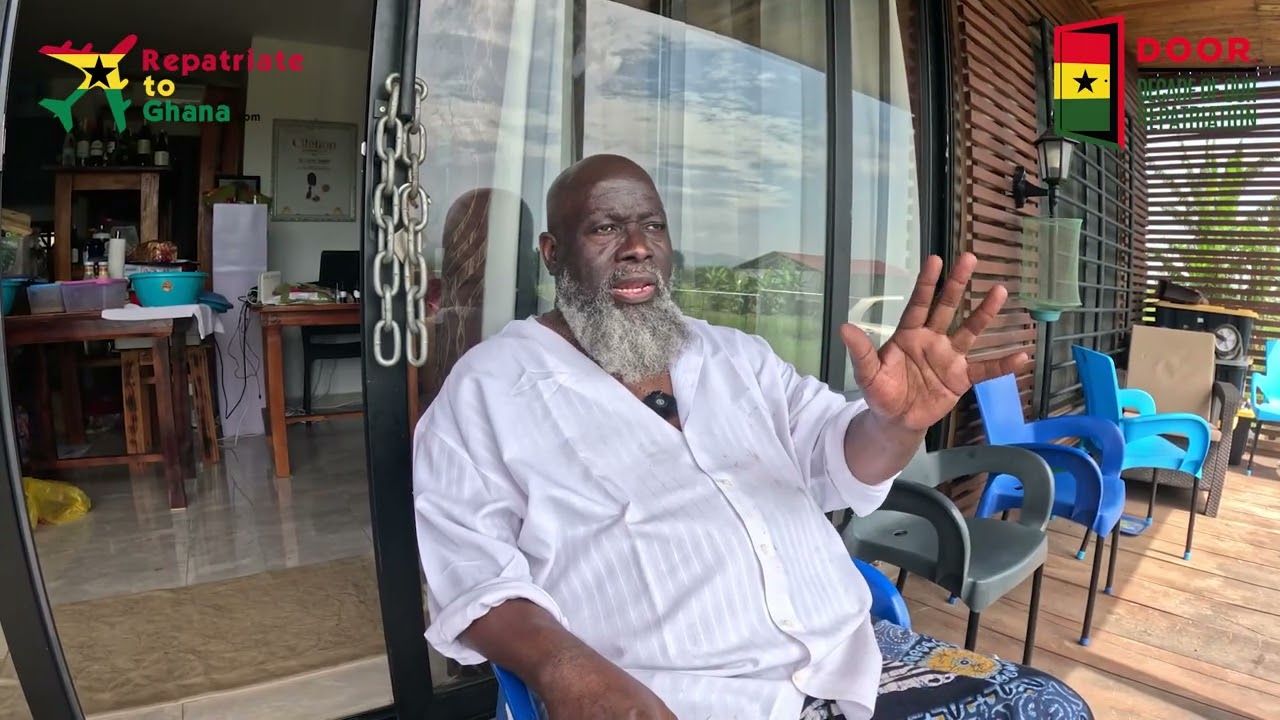
Ɔbenfo Ọbádélé Bakari Kambon sits down with Dre Taylor at The Beyond View in Ɔbosomase, Ghana, for a powerful conversation on repatriation, land, development, community-building, and what it means to stop funding the system that oppresses us.This is not just a property tour. This is a conversation between two brothers who “escaped the plantation” and are now focused on demonstration over conversation: building homes, creating community, employing people, supporting local development, and opening pathways for Abibifoɔ serious about repatriation.They discuss Ghana, the Decade of Our Repatriation, Black Power, land, manufacturing, education, identity, miseducation, historical sellouts, and why consciousness without application is not enough.The DOOR is open. Walk through it.Learn more about repatriation support, citizenship, housing, relocation, driver’s licenses, and business setup:https://www.r2gh.com#Repatriation #ghana #blackpower #abibifahodie #decadeofourrepatriation #r2gh #thebeyondview #abibitumi