#historicdiaspora
ABIBITUMI! ABIBIFAHODIE!This live community briefing brings on-the-ground updates on Ghana’s citizenship vetting (interview) process for historic diasporans—including what changed, what the vetting panel is actually looking for, what documents to bring, and how to prepare strategically (financially, legally, and organizationally).Panel representatives include leaders connected to:DOOR (Decade of Our Repatriation)RepatriateToGhana.comAfrican-American Association of Ghana (AAAG)Real Repatriation ConsultationRastafari Counciland other community partners working together to advocate for a clearer, fairer process.Key Updates Shared in This Session✅ Vetting is in-person (not virtual) — you must be physically in Ghana for the interview/vetting stage.✅ Vetting happens BEFORE payment — you can complete vetting first, and only proceed to upload/pay after confirmation.✅ Core focus areas being assessed (case-by-case):Time in Ghana (cumulative) — guidance shared that 1 year cumulative may be acceptable (not necessarily continuous), and panelists may consider less depending on the case.Strong ties to Ghana — examples discussed include business activity, land/home building, community/NGO contributions, speaking a Ghanaian language, and other measurable social/economic impact.Background checks — home-country background check + Ghana police clearance.✅ Items reportedly removed/softened vs earlier portal requirements: DNA test requirement (removed), and other prior portal demands were described as no longer central in the updated flow.💰 Fee discussed: GHS 25,000 (current as stated in the call) after vetting confirmation; leaders emphasized ongoing advocacy framed as restoration of birthright / reparative justice, not “pay-to-belong.”What to Bring to Vetting (As Emphasized in the Call)Bring multiple copies (the recommendation shared was 3 copies):Birth certificate (copy)Passport bio-data page (copy)Passport photo (red background mentioned in the call)Home-country background check (recent)Ghana police clearance/background check (CID HQ at Nima Police Station mentioned)Evidence of strong ties (bring “more rather than less”): business documents, land paperwork, building documentation, language/community work proof, etc.Important Notes & Warnings DiscussedDeadlines & scheduling may shift. The call noted uncertainty about the final day of vetting beyond the dates being circulated.Avoid scams and “cash-grab” operators. The panel emphasized using vetted organizations and trusted networks.Citizenship is not the end of the journey. Repatriation requires planning—housing, health, income strategy, and realistic budgeting.Financial strategy matters. Leaders stressed thinking beyond the passport: sustainable income, emergency funds, and not moving “on vibes alone” without a plan (even while respecting spiritual conviction).Featured Voices (As Heard in the Call)Shannan Nana Akosua McGee — President, African-American Association of Ghana (AAAG)Ɔbenfo (Professor) Ọbádélé Bakari Kambon — DOOR / RepatriateToGhana.com / AbibitumiNataki Kambon — DOOR (Decade of Our Repatriation)Yazid Muhammad — Real Repatriation Consultation (Eastern Region / Akosombo area)Mama One Africa — One Africa Health Resort / CRAAG elder councilRas Aswad — Rastafari Council (plus community activism and business work referenced)Chapters / Timestamps00:08 – Welcome, recording confirmation, opening context01:45 – Panel introductions (AAAG, DOOR, repatriation support leaders)09:39 – Summary of updated vetting guidance (time in Ghana, strong ties, background checks)12:42 – Portal changes and what’s no longer emphasized15:01 – “One year cumulative” clarification + what interviewers are saying on the ground19:18 – Documents to bring + vetting flow explained20:49 – Confirmation after vetting + payment follows later27:21 – Next rounds & scheduling uncertainty45:36 – Fee discussion + advocacy framing (restoration/birthright)49:11 – Strategic narrative: avoid framing as indigence; center reparative justice51:36 – Repatriation is bigger than citizenship (housing, income, stability)1:23:14 – Warning about misunderstandings, scams, and “buying citizenship” talk1:26:10 – Why joining trusted organizations matters2:01:56 – Closing notes: follow-up email with org contacts + next stepsLinks & ContactDOOR (Decade of Our Repatriation): https://decadeofourrepatriation.comRepatriation services: https://repatriatetoghana.comSupport email: support@repatriatetoghana.comAbibitumi: https://abibitumi.comSankɔfa Journey: https://www.sankofajourney.comAbibitumiTV: https://abibitumitv.com#DOOR #repatriatetoghana #ghanacitizenship #historicdiaspora #blackliberation #abibifahodie #abibitumi #repatriation #ghana
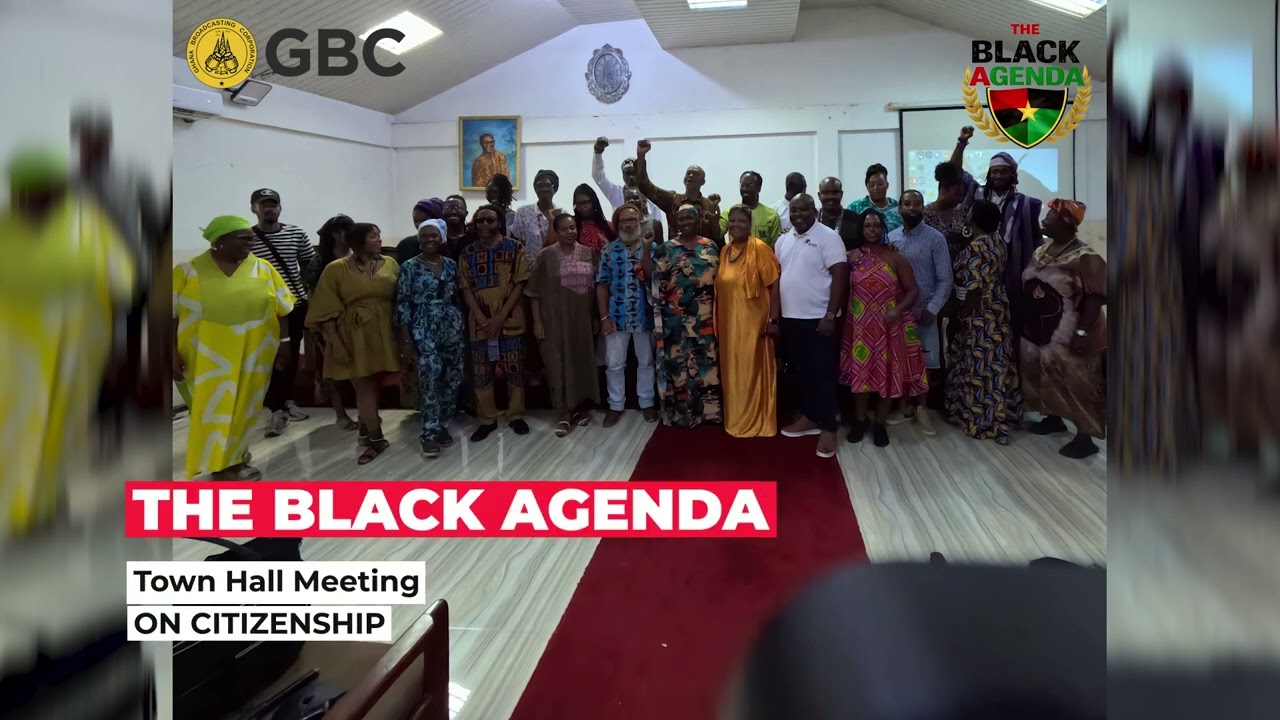
What does it really mean for Ghana to welcome the historic diaspora home?In this powerful town hall discussion, speakers address the urgent need to remove the financial and bureaucratic barriers standing in the way of citizenship and repatriation, including the GHS 25,000 processing fee, DNA testing requirements, and the lack of direct historic diaspora representation in decision-making spaces. The conversation goes beyond policy to deal with dignity, self-respect, self-repair, and the deeper question of what it means for Black people to reconnect, rebuild, and reclaim place, purpose, and pride.This video explores:• the call to scrap costly and tedious citizenship requirements• why return should not be treated as a privilege only for those who can afford it• the importance of representation for the historic diaspora in national policy• reparations, self-repair, and practical steps toward healing and reconnection• how Ghana can move from symbolic statements to concrete actionThis is not just about economics. It is about restoring dignity, removing obstacles, and creating real pathways home.Watch, share, and join the conversation.#ghana #diaspora #citizenship #repatriation #blackpower #historicdiaspora #returnhome #reparations #selfrepair #abibitumi