- General Videos
- Music
- Economics
- Health
- Travel & Events
- History
- Psychology
- Spirituality
- Movies
- News & Politics
- Kmtyw Combat Sciences
- Ɔbenfo Ọbádélé Kambon Videos
- Ɔbenfoɔ Kamau Kambon: Black Liberation Philosophy
- Science, Tech, Engineering and Math
- Permaculture
- Self-Sustainability
- Living Off Grid
- Yoruba Language Learning
- Education
- Mmɔfra Adesua
- Nana Kamau Kambon Playlist
- Livestream
- Komplementarity Kouples and Revolutionary Singles
- Abibitumi Film Series
- Decade of Our Repatriation
- Live
Top videos
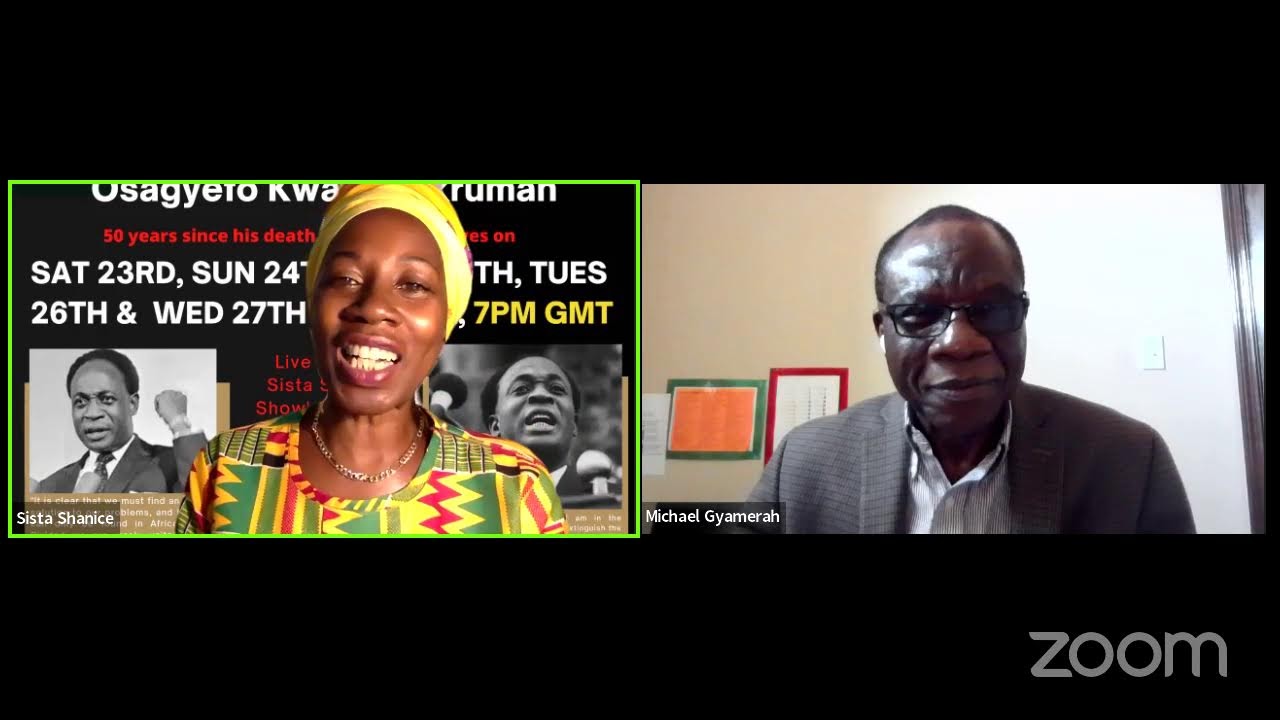

#KwameNkrumah Nkrumah's scientific, engineering, technological and industrial road map for advancing Ghana and Africa in to an advanced society was sabotaged. Learn about his African road map to success and the difference he was making in Ghana prior to his neo-colonial successors collaborating with his enemies to overthrow and arrest Ghana's developmentIf you would like to support the works of Sista Shanice you can do so via Patreon. Heres the link https://www.patreon.com/SistaShaniceIf you would like to join Sista Shanice on her weekly radio shows at 10am GMT every Wednesday, then heres the link to listen live https://zeno.fm/radio/galaxyafiwe-net/ Here's the tel no to call in and join the debate +44 20 3289 6504
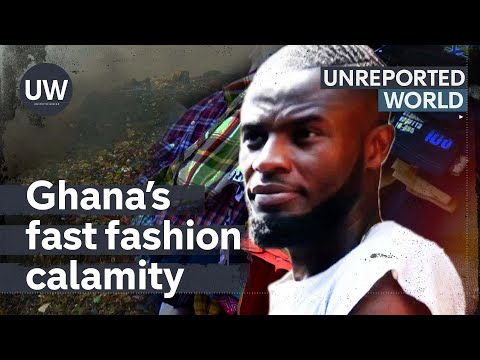
Unreported World is in Ghana which is suffering an environmental disaster caused by the fast fashion items we give away. Reporter Ashionye Ogene travels to the bustling market of Kantamanto in the capital city Accra to meet the traders struggling to sell the disposable clothes we no longer want.
Kantamanto was once home to textile traders making a good living from so-called ‘Dead White Man’s Clothes’, items donated from the West believed to be so good that only dead people would part with them. But the arrival of fast fashion is changing that. In 2019 around 63 million kilograms of clothes were imported into Ghana from the UK, much of it cheap and damaged fast fashion donated by us.
But campaigners are deeply concerned about the impact of plastics found in much of our fast fashion. On the beaches of Accra, Ogene discovers a waterfall of mangled clothing flowing from the city’s sewers straight into the ocean. We meet scientists who believe that well known brands now embedded in the sand shed microfibres into the water. Their research has found clothing related plastics in seafood along the west coast of Africa.
While creative solutions are being found, we meet the government minister tasked with finding a balance between banning imports to safeguard the environment, and protecting the livelihoods of thousands of traders.
Producer/Director: Toby Bakare
Series Producer: Andy Lee
Executive Producer: Ed Fraser
Production Company: Channel 4 News
Subscribe to our channel for more Unreported World episodes https://www.youtube.com/unreportedworld.


To Purchase Dr. T'Shaka's Books and DVD use link below
https://gumroad.com/drobatshaka
Part III of the Twa Series. This Show will examine the culture or way of life of the ancient Kemites, showing how the Twa, the Masters of Supernatural Powers, created a civilization that was Religious or Spirit-Based, where Black Women were the source of mainly male Pharaonic Political Power, and Black Women were the wielders of economic power. There is much we can learn from the world's first Civilizational Model for rebuilding Black families, communities, and nations today.

#UTVNews #UTVGhana #DespiteMedia
PLEASE NOTE: Unauthorized upload of this video unto any YouTube channel is prohibited. (C) United Television
Subscribe to our YouTube Channel
Follow us on Twitter - https://twitter.com/utvghana
Like our Facebook Page - https://www.facebook.com/utvghana/
Follow us on Instagram - https://www.instagram.com/utvghana/

These circular gardens can withstand drought and harsh desert conditions.
» Subscribe to NowThis: http://go.nowth.is/News_Subscribe
» Sign up for our newsletter KnowThis to get the biggest stories of the day delivered straight to your inbox: https://go.nowth.is/KnowThis
The drought-resistant, circular formations are known as Tolou Keur. They’re gardens made up of edible vegetation & medicinal plants. Their circular shape helps with water retention and composting, allowing the roots to grow toward the center, as well as trap bacteria.
For more world news and sustainability videos, subscribe to NowThis News.
#Senegal #Farming #Sustainability #Africa #News #NowThis
Connect with NowThis
» Like us on Facebook: http://go.nowth.is/News_Facebook
» Tweet us on Twitter: http://go.nowth.is/News_Twitter
» Follow us on Instagram: http://go.nowth.is/News_Instagram
» Find us on Snapchat Discover: http://go.nowth.is/News_Snapchat
NowThis is your premier news outlet providing you with all the videos you need to stay up to date on all the latest in trending news. From entertainment to politics, to viral videos and breaking news stories, we’re delivering all you need to know straight to your social feeds. We live where you live.
http://www.youtube.com/nowthisnews
@nowthisnews

www.Farmers.co.ke is the site for authoritative multimedia agricultural and agribusiness content.
#FarmKenya
Visit us today for farming news, agribusiness tips, practical expert advice and industry updates.
SMS: 22071
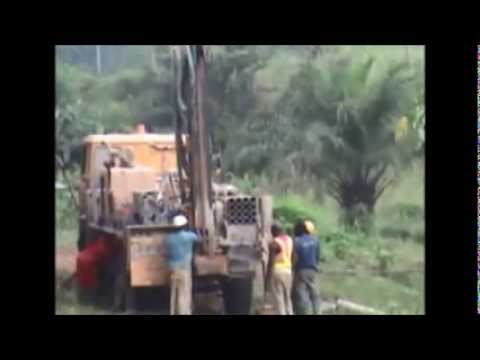
Using a manual method of borehole drilling, USAID's Ghana WASH Project is able to reach more remote communities with a low-cost, locally feasible method of improving water access.
The Ghana WASH Project is a USAID-funded project to improve rural water, sanitation and hygiene in five regions. The project is implemented by Relief International, Winrock International and ADRA International. The technical expertise in manual drilling is thanks to Relief International/EnterpriseWorks.
Learn more: www.ghanawashproject.org