Top videos
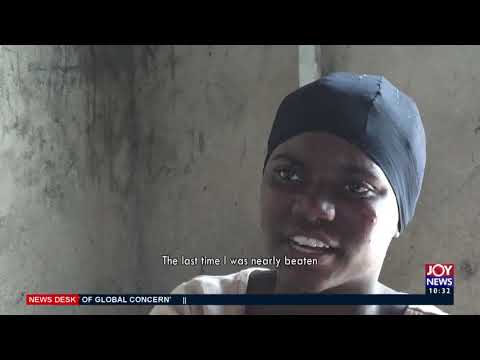
Note: Per text on video, i disagree with the usage of "Broken English" as that reduces our Black Languages and takes away our agency. It has a eurasian colonialist and racist origin. It's their perspective on how they look down on our languages, and we need to stop using their concepts as that has us self-discriminate. That aside, this is a great song covering the injected oppression of destroying one's melanin through skin lightening cancer creams.
original video info:
Yellow Fever (1976) Fela Kuti
From the LP Yellow Fever (CD release 1997)
http://fela.net/discography/
This video is part of a series of songs being posted on Fela's official YouTube channel (http://www.youtube.com/fela) each featuring, alongside the music, an informative commentary by Afrobeat Historian, Chris May.
The entire catalogue, released on Kntting Factory Records, is available on the Fela website (http://fela.net/), along with documentaries and recorded concerts, CDs and vinyl, tee shirts, posters and many other items.
AAAG President Nana Akosua Seɔyɔ's Abibitumi Twi Class TestimonialFebruary 8, 2026
Negropeans and Psuedo Pan Africans came to my page Amos Magazine, they became upset with the vision and plan I had for a small group of Africans who understood...this group has arisen this group the AES has arrived.
1804 -1824 Haiti was the greatest nation the earth has ever seen a nation that truly wanted to free and liberate people not like these fraud Americans, fraud Russians or fraud Chinese...true authentic African people are the standard of what a human is suppose to be.
In this video , a Ghanaian finds SHOCKING similarities between Jamaica's Kromanti, Patois and Ghana's Fantse/Twi. Dive into the remarkable life of Nanny of the Maroons, Jamaica's only female national hero.
The Moore Town Maroons of Jamaica - Maroon Kromanti Language
From her early days in Ghana to her legendary leadership of the Maroons, discover the legacy of a woman who fought for freedom against all odds. Don't forget to subscribe for more inspiring stories from history.
Kindly subscribe to this channel.
The Untold Story of Nanny of the Maroons: Jamaica's Fierce Freedom Fighter
PATREON: https://www.patreon.com/ekowsimpson
PAYPAL: https://paypal.me/eegyir
Email: ekespossibilityconsult@gmail.com
WhatsApp/Direct Contact: +233 246 30 2158
Mobile Money or WAVE: +233 246 30 2158
SOCIALS.....................
INSTAGRAM: instagram.com/ekowsimpson_
FACEBOOK: facebook.com/ekowesimpson
TWITTER: https://twitter.com/EkowESimpson
From... A Great and Mighty Walk.
Videos on Youtube
https://tapvideo.blogspot.com/....2019/06/all-videos-o
Instagram: https://www.instagram.com/tran....satlanticproductions
Donate so we can complete the upload
https://www.gofundme.com/tapvideo Share on Facebook.
Compilation of Dr Amos Wilson lectures on the origins of crime in this society
Abibifahodie Asako End of Class Roda 9 21 2019
La ” Nkoumba ” appelée plus tard à Cuba Rumba est une danse de nombril qui prend sa source en l’Afrique Centrale, plus précisément dans le Royaume Kongo et en République Centrafricaine chez ” Mbati “, un groupe ethnique du sud ouest du pays. En ” Mbati “, tout comme en ” Moukongo “, ” Nkoumba ” désigne le nombril. Chez les “Bakongo” groupe ethnique situé au sud du Congo Démocratique de l’Angola et chez les ” Mbati ” de Centrafrique, la danse de nombril est une expression folklorique charnelle permettant à un couple de danseurs de se produire nombril contre nombril.
Lorsque les esclaves noirs Africains débarquent à Cuba il y a 5 siècles avec la danse ” Nkoumba “, le colonisateur Espagnol supprime l’Africanité de cette expression culturelle, populaire et la baptise Rumba pour l’approprier. Du point de vue linguistique, Cuba conserve à ce jour plusieurs mots d’origine Africaine, et ce en dépit de nombreuses transformations constatées dans l’héritage culturel des anciens esclaves. La Rumba conserve à ce jour quelques mots bantou et yoruba dont on entend dans certaines chansons Cubaines. Lorsque la Rumba est revenue en Afrique entre les années 40 et 50, après avoir été longtemps un moyen d’expression artistique et de revendication des noirs qui dénoncent l’injustice dont ils sont victimes à Cuba, elle a été réappropriée par les Africains. Avec l’évolution du temps, les musiciens Africains intègrent leur folklore dans ce riche patrimoine culturel et l’enrichissent d’autres courants musicaux.