







- General Videos
- Music
- Economics
- Health
- Travel & Events
- History
- Psychology
- Spirituality
- Movies
- News & Politics
- Kmtyw Combat Sciences
- Ɔbenfo Ọbádélé Kambon Videos
- Ɔbenfoɔ Kamau Kambon: Black Liberation Philosophy
- Science, Tech, Engineering and Math
- Permaculture
- Self-Sustainability
- Living Off Grid
- Yoruba Language Learning
- Education
- Mmɔfra Adesua
- Nana Kamau Kambon Playlist
- Livestream
- Komplementarity Kouples and Revolutionary Singles
- Abibitumi Film Series
- Decade of Our Repatriation
- Kwento xpr
- Live

AfroN8V
SubscribersLatest videos
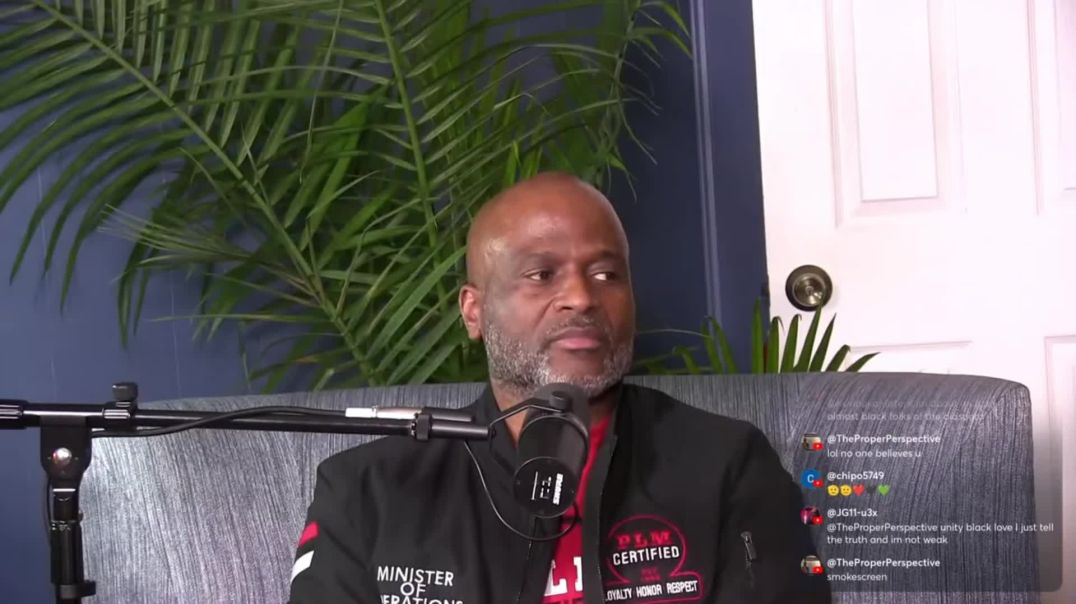
Baba Imhotep Fatiu & Dr. Dennis “Ausar” Winkler (DAW) discuss Worldview and Culture
full video source: https://www.youtube.com/watch?v=uZ0pz588n7E
Source excerpt from: "Pan-Africanism, FBA, Do We Need Leaders in the Black Community? | w/ Baba Imhotep Fatiu"

Join the #wearereading family at elywananda.substack.com to view the full discussion and the entire live stream archives and to help support this African Centred Education project.
African Cosmology of the Bantu-Kongo (Fu-Kiau) Chapter 4 #wearereading African Philosophy. Bunseki Fu-Kiau, Ph.D. is one of the great scholars of the African religion, and the leading authority on the Bantu-Kongo civilization. He is also a genuine practitioner of the Kongo spiritual tradition. He is initiated into the three "secret societies" Lemba, Khimba and Kimpasi. Lemba is the foundation for several African based religious practices including Palo Mayombe (Cuba), Vodou Petro (Haiti) and Candomble Angola (Brasil). African cosmology of the Bantu-Kongo explores the Bantu-Kongo religious and philosophical teachings, as well as concepts of law and crime. It connects the reader with one of the most ancient and powerful spiritual traditions-explore "seven-direction walk" of our origin and links to society, nature and the universe.
Timestamps:
2:33 Reading begins "The V basis of all realities"
2:56 What does Bantu mean?
3:29 Cultural Institutes of Ancient Kongo
6:54 Colonialists persecuted the institutions
10:11 Bantu-Kongo cosmology only revealed to world in 1966
#wearereading live every weekend reading African Philosophy books. Check my channel playlists tab: https://www.youtube.com/@elywananda/playlists to see our previous in-depth studies covering the likes of Amos Wilson, Marimba Ani and Oyeronke Oyewumi. Upcoming authors include Frantz Fanon and Kwame Nkrumah.
It's been said that Black people don't read. Well, I am building a comprehensive African-centred education library called #wearereading of in-depth and interactive studies into African Philosophy, African Culture and African History.
If you like what you see, please subscribe and join us live next time, leave lots of comments and like and share widely. After each live stream finishes, the full session is archived for patrons. To become a patron and help support this mission, please go here: https://elywananda.substack.com or https://www.patreon.com/ElyWananda 🙏🏿. See you soon!
#africanphilosophy #africanculture
![African Cosmology of the Bantu-Kongo (Fu-Kiau) Chp 3 #wearereading African Philosophy [PREVIEW]](https://i.ytimg.com/vi/U5C_XuP_ybw/sddefault.jpg)
Join the #wearereading family at elywananda.substack.com to get full access to all live stream archives and to help support this African Centred Education project. This is a preview of the full live stream which is available for patrons only.
African Cosmology of the Bantu-Kongo (Fu-Kiau) Chps 3 #wearereading African Philosophy. Bunseki Fu-Kiau, Ph.D. is one of the great scholars of the African religion, and the leading authority on the Bantu-Kongo civilization. He is also a genuine practitioner of the Kongo spiritual tradition. He is initiated into the three "secret societies" Lemba, Khimba and Kimpasi. Lemba is the foundation for several African based religious practices including Palo Mayombe (Cuba), Vodou Petro (Haiti) and Candomble Angola (Brasil). African cosmology of the Bantu-Kongo explores the Bantu-Kongo religious and philosophical teachings, as well as concepts of law and crime. It connects the reader with one of the most ancient and powerful spiritual traditions-explore "seven-direction walk" of our origin and links to society, nature and the universe.
Check the playlist for all episodes of the book: https://www.youtube.com/playli....st?list=PLb1pL6id3Sn
#wearereading live every weekend reading African Philosophy books. Check my channel playlists tab: https://www.youtube.com/@elywananda/playlists to see our previous in-depth studies covering the likes of Amos Wilson, Marimba Ani and Oyeronke Oyewumi. Upcoming authors include Frantz Fanon and Kwame Nkrumah.
It's been said that Black people don't read. Well, I am building a comprehensive African-centred education library called #wearereading of in-depth and interactive studies into African Philosophy, African Culture and African History.
If you like what you see, please subscribe and join us live next time, leave lots of comments and like and share widely. After each live stream finishes, the full session is archived for patrons. To become a patron and help support this mission, please go here: https://www.patreon.com/ElyWananda 🙏🏿. See you soon!
#africanphilosophy #africanculture
![African Cosmology of the Bantu-Kongo (Fu-Kiau) Chp 3 #wearereading African Philosophy [PREVIEW]](https://i.ytimg.com/vi/HoySM_nMdf0/sddefault.jpg)
Join my Substack https://elywananda.substack.com to get full access to all live stream archives and to help support this African Centred Education project. This is a preview of the full live stream which is available for patrons only.
African Cosmology of the Bantu-Kongo (Fu-Kiau) Chp 3 #wearereading African Philosophy.
Fu-Kiau Bunseki, Ph.D. is one of the great scholars of the African religion, and the leading authority on the Bantu-Kongo civilization. He is also a genuine practitioner of the Kongo spiritual tradition. He is initiated into the three "secret societies" Lemba, Khimba and Kimpasi. Lemba is the foundation for several African based religious practices including Palo Mayombe (Cuba), Vodou Petro (Haiti) and Candomble Angola (Brasil). African cosmology of the Bantu-Kongo explores the Bantu-Kongo religious and philosophical teachings, as well as concepts of law and crime. It connects the reader with one of the most ancient and powerful spiritual traditions-explore "seven-direction walk" of our origin and links to society, nature and the universe.
Check the playlist for all episodes of the book: https://www.youtube.com/playli....st?list=PLb1pL6id3Sn
#wearereading live every weekend reading African Philosophy books. Check my channel playlists tab: https://www.youtube.com/@elywananda/playlists to see our previous in-depth studies covering the likes of Amos Wilson, Marimba Ani and Oyeronke Oyewumi. Upcoming authors include Frantz Fanon and Kwame Nkrumah.
It's been said that Black people don't read. Well, I am building a comprehensive African-centred education library called #wearereading of in-depth and interactive studies into African Philosophy, African Culture and African History.
If you like what you see, please subscribe and join us live next time, leave lots of comments and like and share widely. After each live stream finishes, the full session is archived for patrons. To become a patron and help support this mission, please go here: https://elywananda.substack.com or https://www.patreon.com/ElyWananda 🙏🏿. See you soon!
#africanphilosophy #africanculture
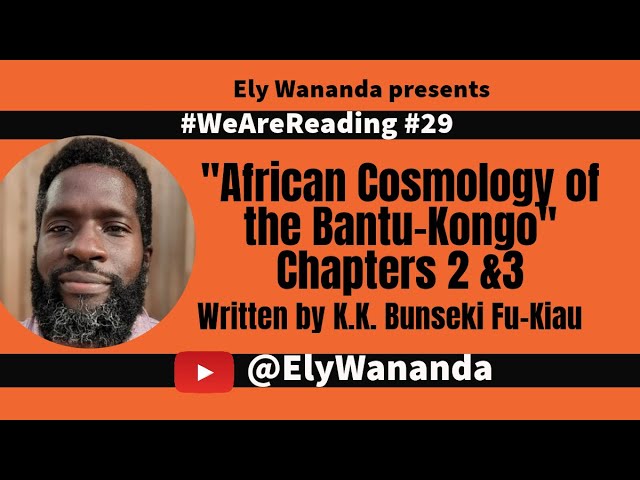
Join the #wearereading family at elywananda.substack.com to get full access to all live stream archives and to help support this African Centred Education project. This is a preview of the full live stream which is available for patrons only.
African Cosmology of the Bantu-Kongo (Fu-Kiau) Chp 3 #wearereading African Philosophy.
Fu-Kiau Bunseki, Ph.D. is one of the great scholars of the African religion, and the leading authority on the Bantu-Kongo civilization. He is also a genuine practitioner of the Kongo spiritual tradition. He is initiated into the three "secret societies" Lemba, Khimba and Kimpasi. Lemba is the foundation for several African based religious practices including Palo Mayombe (Cuba), Vodou Petro (Haiti) and Candomble Angola (Brasil). African cosmology of the Bantu-Kongo explores the Bantu-Kongo religious and philosophical teachings, as well as concepts of law and crime. It connects the reader with one of the most ancient and powerful spiritual traditions-explore "seven-direction walk" of our origin and links to society, nature and the universe.
Check the playlist for all episodes of the book: https://www.youtube.com/playli....st?list=PLb1pL6id3Sn
#wearereading live every weekend reading African Philosophy books. Check my channel playlists tab: https://www.youtube.com/@elywananda/playlists to see our previous in-depth studies covering the likes of Amos Wilson, Marimba Ani and Oyeronke Oyewumi. Upcoming authors include Frantz Fanon and Kwame Nkrumah.
It's been said that Black people don't read. Well, I am building a comprehensive African-centred education library called #wearereading of in-depth and interactive studies into African Philosophy, African Culture and African History.
If you like what you see, please subscribe and join us live next time, leave lots of comments and like and share widely. After each live stream finishes, the full session is archived for patrons. To become a patron and help support this mission, please go here: https://elywananda.substack.com or https://www.patreon.com/ElyWananda 🙏🏿. See you soon!
#africanphilosophy #africanculture

Join the #wearereading family at elywananda.substack.com to get full access to all live stream archives and to help support this African Centred Education project. This is a preview of the full live stream which is available for patrons only.
African Cosmology of the Bantu-Kongo (Fu-Kiau) Chp 3 #wearereading African Philosophy.
Bunseki Fu-Kiau, Ph.D. is one of the great scholars of the African religion, and the leading authority on the Bantu-Kongo civilization. He is also a genuine practitioner of the Kongo spiritual tradition. He is initiated into the three "secret societies" Lemba, Khimba and Kimpasi. Lemba is the foundation for several African based religious practices including Palo Mayombe (Cuba), Vodou Petro (Haiti) and Candomble Angola (Brasil). African cosmology of the Bantu-Kongo explores the Bantu-Kongo religious and philosophical teachings, as well as concepts of law and crime. It connects the reader with one of the most ancient and powerful spiritual traditions-explore "seven-direction walk" of our origin and links to society, nature and the universe.
Check the playlist for all episodes of the book: https://www.youtube.com/playli....st?list=PLb1pL6id3Sn
#wearereading live every weekend reading African Philosophy books. Check my channel playlists tab: https://www.youtube.com/@elywananda/playlists to see our previous in-depth studies covering the likes of Amos Wilson, Marimba Ani and Oyeronke Oyewumi. Upcoming authors include Frantz Fanon and Kwame Nkrumah.
It's been said that Black people don't read. Well, I am building a comprehensive African-centred education library called #wearereading of in-depth and interactive studies into African Philosophy, African Culture and African History.
If you like what you see, please join us live (see the "upcoming live streams" section) leave lots of comments and like and share widely. After each live stream finishes, the full session is archived for patrons. To become a patron and help support this mission, please go here: https://elywananda.subtack.com or https://www.patreon.com/ElyWananda 🙏🏿. See you soon!
African Cosmology of the Bantu-Kongo #wearereading28 African Philosophy [PREVIEW]
#africanphilosophy #africancosmology

#fukiau #bunsekifukiau #blackpsychology
in this fascinating presentation Dr. Mark Bolden honors Tata K.K. Bunseki Fu-Kiau with a wide-ranging and powerful look at African perspectives on health, hip-hop and community.
Kotuswa mu Bukulu: The ancestralization of Tata Kimbandwe Kia Bunseki Fu-Kiau*
by Mark A. Bolden, Ph.D. Washington DC Metro Chapter ABPsi The Fanon Project
Trinity Washington University
The passing of an elder is like the burning of a library according to Amadou Hampate Ba. Tata (Baba/father) Fu-Kiau informs us that the transition process is the setting of a sun from the upper world of the living, Ku Nseke, to the lower world of Ku Mpemba (Fu-Kiau, 1991, p. 8). One, particularly a master (fundi), becomes an nkulu (ancestor) by the virtue of leading a balanced life, which is evaluated by the bukulu (ancestors) and the living who choose to elevate the recent ancestor to the status of an nkulu (balanced ancestor). These proverbs fit well for our recent beloved Nkulu (ancestor) Tata K. K. Bunseki Fu-Kiau who went “on vacation” at the ripe age of 7 million and some seventy-odd years in December 2013. Dr. Fu-Kiau was an nganga (healer) initiated into the highest KiKongo systems of learning. He came to ABPsi formally through the conference in 2008 for our 40th anniversary celebration of ABPsi, on a panel devoted to the wisdom of traditional African religions along with Oulimata Seck, daughter of the ancestor Maam Fatou Seck and head ndeppkatt (practitioner of Ndepp) of the Sengelase tradition of Ndepp. It was there where he instructed us from the panel to protect the children, imploring elder Dr. Robert L. Williams to encircle the organization and to bestow his blessings and protection. It was a profound ritual to restore order in the moment of unrest within the audience and looming confusion. Moreover, it taught us that it is our responsibility to protect the children in our role as healers/therapists (mfied’i) of our community (boko) and patients (mbèvo).
Continue Reading...
https://imixwhatilike.org/2014..../03/25/tatafukiauwdr
NEW DISCORD!
https://discord.gg/TDP9a4f5Ez
Jared A. Ball is a Professor of Communication and Africana Studies at Morgan State University in Baltimore, MD. and author of The Myth and Propaganda of Black Buying Power (Palgrave, 2020). Ball is also host of the podcast “iMiXWHATiLiKE!”, co-founder of Black Power Media which can be found at BlackPowerMedia.org, and his decades of journalism, media, writing, and political work can be found at http://www.imixwhatilike.org
____________________________________
Follow BPM:
JOIN - Click the "JOIN," Subscribe, and Like buttons!
WEBSITE - https://www.blackpowermedia.org/
TWITTER - https://twitter.com/BlackPowerMedi1
INSTAGRAM - https://www.instagram.com/black.power.media/
FACEBOOK - https://www.facebook.com/Blackpowermedia
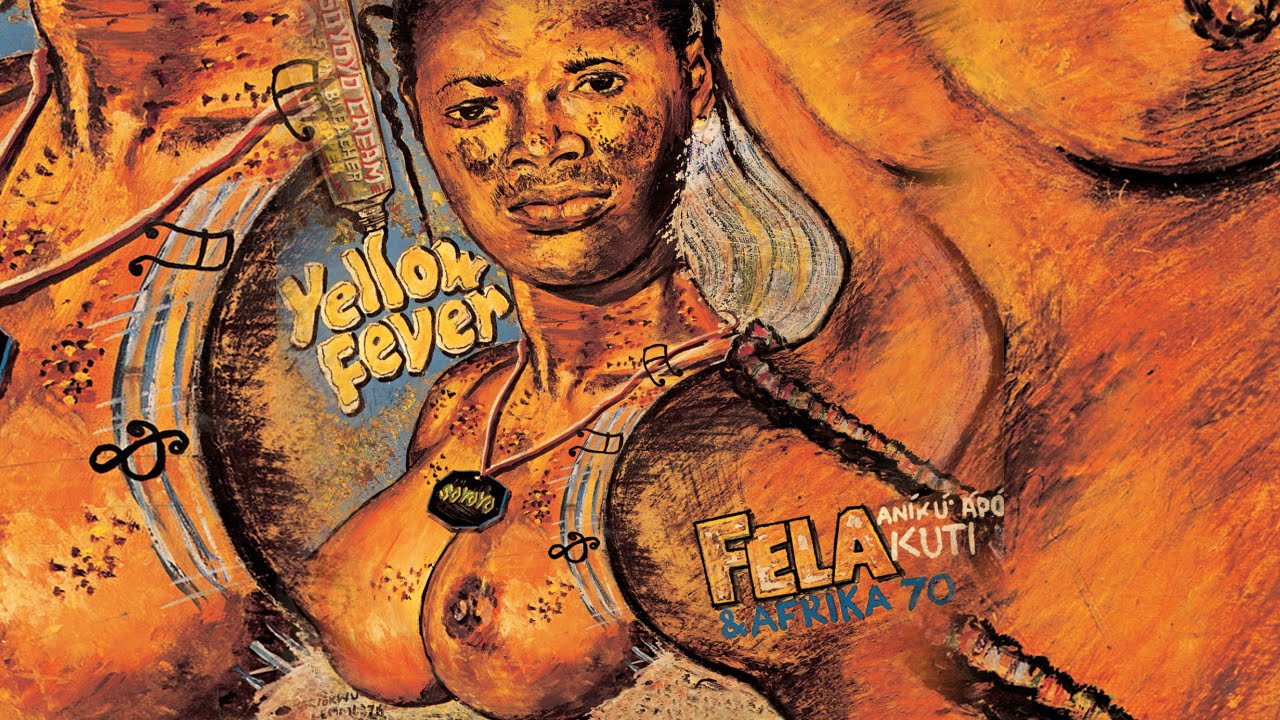
Note: Per text on video, i disagree with the usage of "Broken English" as that reduces our Black Languages and takes away our agency. It has a eurasian colonialist and racist origin. It's their perspective on how they look down on our languages, and we need to stop using their concepts as that has us self-discriminate. That aside, this is a great song covering the injected oppression of destroying one's melanin through skin lightening cancer creams.
original video info:
Yellow Fever (1976) Fela Kuti
From the LP Yellow Fever (CD release 1997)
http://fela.net/discography/
This video is part of a series of songs being posted on Fela's official YouTube channel (http://www.youtube.com/fela) each featuring, alongside the music, an informative commentary by Afrobeat Historian, Chris May.
The entire catalogue, released on Kntting Factory Records, is available on the Fela website (http://fela.net/), along with documentaries and recorded concerts, CDs and vinyl, tee shirts, posters and many other items.

SUPPORT KIMBUNGA MEDIA: https://www.patreon.com/kimbungamedia//
Join WhatsApp: https://whatsapp.com/channel/0....029VaXt3adHwXb8Yt44J
Join Telegram: https://t.me/kimbungamedia//
THE BLACK SECRET Join the finest Black History Course Online Learn the true histories of Africa's Great Civilisations With world renowned historian Robin Walker - author of When We Ruled
JOIN THE BLACK SECRET - https://www.theblacksecret.co.....uk/a/2147508849/yKro
GET YOUR FREE BOOK - 100 Black History Facts - https://www.theblacksecret.co.....uk/a/2147626266/yKro
• SUBSCRIBE • LIKE • COMMENT • SHARE
••••••••••••••••••••••••••••••••••••••••••••••••••
Greetings & Welcome to Kimbunga Media - Your Premiere Universal Afrikan Nationalist Media Institution
Find Kimbunga Medai on:
► Instagram: http://instagram.com/kimbungamedia//
► https://www.facebook.com/kimbungamedia//
► Twitter: https://twitter.com/kimbungamedia//
► SignUp for Newsletter: https://kimbungamedia.com///

Presenter: Prof. Rupert Lewis
Author, Professor Emeritus - University of the West Indies, Mona
Dr Rupert Lewis is Professor Emeritus of Political Thought in the Department of Government, University of the West Indies, Jamaica. Among his books published in the UWI Press Caribbean biography series are Marcus Garvey in 2018 and Walter Rodney in 2024. He is also author of Walter Rodney’s Intellectual and Political Thought and has edited books on George Padmore, the Trinidadian-born Pan-Africanist and Richard Hart, the Jamaican Marxist. He is a member of Jamaica’s
National Council on Reparation. He played an important role in the restoration and development of “Liberty Hall: the Legacy of Marcus Garvey” working with a team led by Ms. Elaine Melbourne, Mr Vivian Crawford, and Liberty Hall’s founding director, Dr Donna McFarlane. He was a member of the Council of the Institute of Jamaica and chair of the ACIJ JMB.
📚 Amy Jaques Garvey, 1896-1973: Black Revolutionary Mothering
Abstract: Interpreting letters written by Amy Jacques Garvey in the 1950s, I discuss her parenting of Marcus Garvey Jnr, an
engineer and scientist, and Dr. Julius Garvey, surgeon, and how she singlehandedly guided their Pan-Africanism. I also discuss the role she played in shaping Marcus Garvey’s legacies in the early stages of African and Caribbean decolonization and extract lessons for Pan-African struggles today.
Whether you're a student, researcher, cultural practitioner, or simply curious about Jamaica’s heritage, this session will deepen your understanding of the African elements that continue to enrich our culture.
🎥 Tune in for a thought-provoking and culturally grounding presentation.
👉 Subscribe to the channel and click the notification bell so you won't miss this or future episodes of Curating Culture.
#curatingculture #acijjmb #rupertlewis #jamaicanculture #africandiaspora #culturalheritage #jamaicahistory


5 BRANCHES OF KONGO SPIRITUALITY ~ Iya J.
🙍🏽♀️ 🌍 🙍🏽♂️If you're serious about investing in your spiritual development and wellbeing... wanting to elevate, I invite you to learn directly from me and apply to one of my Coaching Programs 👇🏽👇🏽👇🏽
https://www.iyajthehighpriestess.com/coaching
Want my assistance with your Spiritual Business? Receive a FREE consultation
https://www.iyajthehighpriestess.com/coaching
Want to study at your own pace via my online portal? 🙋🏽♀️ 🙋🏽
https://www.iyajthehighpriestess.com/courses
FOLLOW ME/SHARE/LIKE 💫:
Instagram: https://www.instagram.com/isismoon_org
Facebook: https://www.facebook.com/isismoonorg
TikTok: https://www.tiktok.com/
Isis Moon's Website: https://www.isis-moon.com
Iya J's personal Website: https://www.iyajthehighpriestess.com
Donations: https://www.isis-moon.com/donations
#spiritualguidance #spiritualcoaching #iyaj #Isismoonorg
#kongo #congo #kongospirituality #africandiaspora #kongoancestors #palomayombe #candomble #hoodoo

Malcolm X took an uncompromising stand against the injustices in this world. He is an inspiration, to this day, for millions.Hope these words from Malcolm will inspire you to do your bit for humanity.For more information on the life of Malcolm X. Please read 'The Autobiography of Malcolm X as told to Alex Haley' #meaningful and #fiery #speeches from #revolutionary #malcolm X.
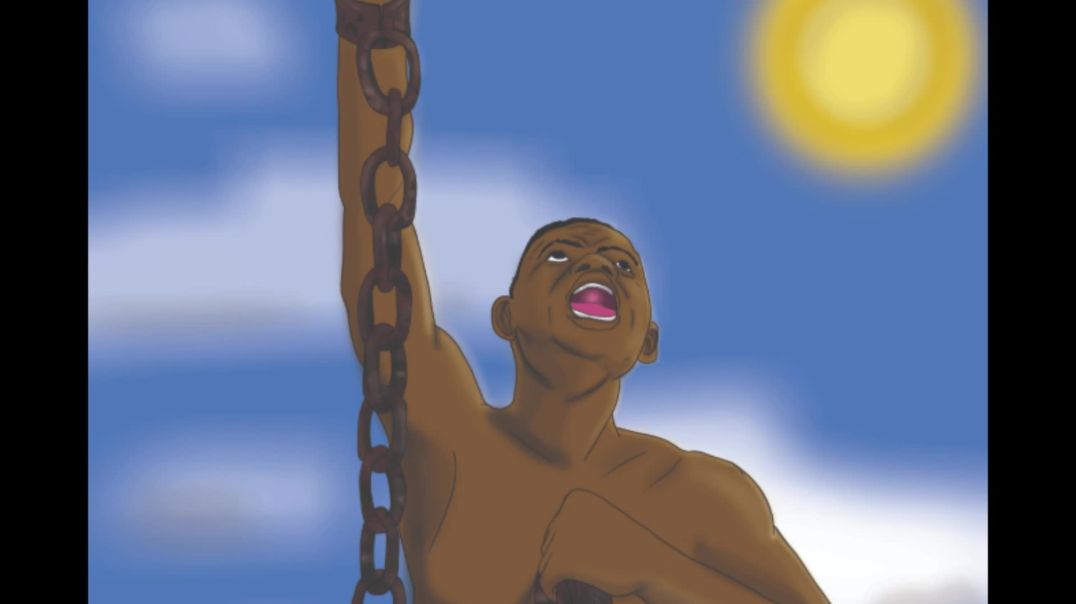

#yowa #kongocosmogram #maa_aankh
in this video, Derric "Rau Khu" Moore discusses the connection he discovered between the BaNtu-Kongo cosmogram and the Kemetic lore, which led to a closer connection with the Ancestors.
I do not own the copyright of the music.
Song: Sending All My Love by Phonte of Little Brother
https://twitter.com/phontigallo
Foreign Exchange Music: http://www.theforeignexchangemusic.com/
===========================================
About Derric "Rau Khu" Moore
I practice Kamta, a form of Kemetic (Ancient Egyptian) Shamanism that draws from the Kemetic theology and the Kongo-Angolan dikenga (Kongo Cross) philosophy. That has been combined with African American Spiritualism and Afro-Cuban Espiritismo Cruzado (Crossed Spiritism). My goal is to normalize the Kemetic Way of Life by providing practical adaptations to our ancient ancestral way of living.
===========================================
Books:
https://thelandofkam.com/books/
For affordable ebooks:
https://www.1solalliance.com/1solebooks/
For herbs, crystals, shamanic, spiritual, and other metaphysical supplies, visit: https://www.1solalliance.com/
Thank you for your support.
CashApp: $RauKhu

#thelandofkam #therealankh #maa_aankh
what does the Ankh or Aankh cross really mean? In this video, I give a more esoteric explanation about the ankh, how it relates to Kongo Spirituality, the dikenga dia Kongo (Kongo Cross) and how the aankh can be used as a talisman that empowers true Kemetic followers.
*****************************************************************
I do not own the copyright of the music.
Song: Sending All My Love by Phonte of Little Brother
https://twitter.com/phontigallo
Foreign Exchange Music: http://www.theforeignexchangemusic.com/
===========================================
Books:
https://thelandofkam.com/books/
Affordable audio and ebooks on spirituality, metaphysics, meditation:
https://www.1solalliance.com/1solebooks/
For herbs, crystals, shamanic, spiritual, and other metaphysical supplies, visit: https://www.1solalliance.com/
Thank you for your support.
CashApp: $RauKhu
XXXXXXXXXXXXXXXXXXXXXXXXXXXXXXXXXXXXXXXXXXXXXXXXXXX
About Derric "Rau Khu" Moore
I practice Kamta, a form of Kemetic (Ancient Egyptian) Shamanism that draws from the Kemetic theology and the Kongo-Angolan dikenga (Kongo Cross) philosophy. That has been combined with African American Spiritualism and Afro-Cuban Espiritismo Cruzado (Crossed Spiritism). My goal is to normalize the Kemetic Way of Life by providing practical adaptations to our ancient ancestral way of living.
===========================================


Our steamed elder, Mama Marimba Ani addresses the crowd during the closing remarks of the National Race 1st Convention in Baltimore, Maryland, 2025.
In this powerful address, Mama Marimba Ani calls us to recapture the tradition of African sovereignty that was lost when leadership lost vision and accommodation replaced determination.
She reminds us that:
𓅃𓇴 We are at war for our people — a matter of life and death.
𓅃𓇴 African people cannot find safety in systems built by our oppressors — true security is only through African power.
𓅃𓇴 Our children must be raised as leaders, visionaries, and protectors, prepared for sovereignty worldwide.
𓅃𓇴 Liberation is not a weekend activity — it must become a way of life.
This message is more than words — it’s a call to organize, unify, and build systems that ensure our future. 💚❤🖤
🌍 African sovereignty is not optional — it is our path to survival and victory.
#iloveplm #blackhistory #panafricanism #blackliberation #fatiuforever #scientificpanafricanism #urbanphilosophy #baltimore #africansovereignty #blackliberation #blacknationalism #ancestors

A song documenting the life of Kmtyu in a global eurasian economic system - everything has gone up.
Official Music Video for Gone Up by CapletonGone Up is a track performed by reggae / dancehall music recording artist Capleton. Produced by: Produced by: Control Tower SquadDownload/Stream: https://Hapilos.lnk.to/Capleton-GoneUp#capleton #goneup #controltowersquad #dancehall #reggae@capleton @controltowersquadStream:Apple Music: https://music.apple.com/us/alb....um/gone-up-single/17 Follow:Instagram: https://www.instagram.com/capletonmusic/Instagram: https://www.instagram.com/cont....rol_tower_squad/?hl= https://www.tiktok.com/@caplet....onmusichttp://vevo.l

Bomba is a traditional Black music genre made by the Abibifoɔ on the island of Boriken (aka puerto rico).
Original title: Choco Orta & Chamir Bonano - De Bandazo "Especial Banco Popular de PR (2018), Más De Un Siglo"
Tema: De BandazoVoces: Choco Orta & Chamir BonanoProducción: Más De Un Siglo (BPPR 2018)Poducción (Visual): CinetrixDirector (Visual): Ari ManielProdución Musical: Pasillo Sonoro (Luis Amed Irizarry, Antonio Caraballo, Diego Centeno)Sigueme @https:www.instagram.com/chamirbonano..../https:www.facebook.