- General Videos
- Music
- Economics
- Health
- Travel & Events
- History
- Psychology
- Spirituality
- Movies
- News & Politics
- Kmtyw Combat Sciences
- Ɔbenfo Ọbádélé Kambon Videos
- Ɔbenfoɔ Kamau Kambon: Black Liberation Philosophy
- Science, Tech, Engineering and Math
- Permaculture
- Self-Sustainability
- Living Off Grid
- Yoruba Language Learning
- Education
- Mmɔfra Adesua
- Nana Kamau Kambon Playlist
- Livestream
- Komplementarity Kouples and Revolutionary Singles
- Abibitumi Film Series
- Decade of Our Repatriation
- Kwento xpr
- Live
Top videos


![Faces of Africa - Nigeria's Lost Generation [Pt 2]](https://i.ytimg.com/vi/CvJYpGRmaVE/hqdefault.jpg)

NEW HIP HOP - Peace and Blessings Beloved!!!
It's your comrade and word-warrior Jah-I-Witness Emcee reaching out once again to ask for your help in spreading a higher level consciousness in hip hop music and our community. This time I'm tackling a topic that has received much attention, dialogue, and controversy within the black community, as well as American culture (or the lack thereof depending on your perspective) for many years. That topic is NIGGAS, rather the use of the term nigger/nigga to refer to individuals who are descended from black, African ancestry.
Long considered a derogatory term used by the white ruling class to belittle members of the oppressed black populace, the term has been morphed into a term of endearment, which the once ridiculed now use freely and affectionately among each other. Some argue that this is a result of generations of brainwashing and conditioning. Others argue that the adoption and acceptance of the term, somehow decreases the power and negative stigma of the controversial "N-Word".
Recently with the increasing listenership of hip hop music, there has been an observed phenomenon of individuals who have begun to incorporate the "N-Word" into their everyday vernacular, and even go as far as to affectionately refer to each other as "Niggas", worldwide. Once a term exclusively used by the descendants of enslaved African kings, is now uttered from the mouths of white, Latino, Asian, and many other ethnicities worldwide.
Well before things get too out of hand... I wanted to make sure that everyone remembers without question, where it all began (or at least perfected). So after divine inspiration in the wee hours of the morning, I created this video for my song "MADE IN THE USA" to give visual support to this edgy S.L.G track.
The track itself was produced by my bredren St. Paul and is featured on my last project entitled "The Struggle, The Love, The Glory". The track also features verses from my long time Simply Laced collaborator, Kinetic. As stated previously, the video was directed and edited by myself, and was shot on location in my studio, The King's Chamber, with a flip cam and two cigarette lighters (believe it or not...lol!!!).
Take a second to check out and enjoy the video and please do not hesitate to join in the dialogue. Also share this video with those that you know would enjoy it, or those that you know need it.
As always give thanks and praises for supporting the artists that support the culture!!!
For anyone searching for a reason to love Hip Hop again, Simply Laced Music Group is the destination for that Hip Hop fix...
http://simplylaced.com/blog/
The track "Made In The USA" is featured on Jah-I's "The Struggle, The Love, The Glory" which is available for download at the following link:
http://jah-i-witness.bandcamp.....com/album/the-strugg
![Sand Dam Transforms Lives in Lomuria Village, Karamoja Region, Uganda [2015]](https://i.ytimg.com/vi/8noytnIUeZU/hqdefault.jpg)


"Our goal is to show Africa as it really is: The good, the bad, the ugly, the potential," says John Allan Namu, an investigative journalist in Nairobi, Kenya.
He co-founded Africa Uncensored, an investigative journalism collective that works to hold the government accountable and cover stories often unreported by the media.
They are working on a massive story: The government is believed to have misappropriated millions of dollars after Kenya's health minister signed a multi-million dollar deal in 2015 for what he said was much-needed hospital equipment. The government also promised to invest in the improvement of Kenya's medical services, which were seen to be especially failing the poor.
Namu had received a tip-off from a source, leading him onto the case.
"The data set that we received showed us that there are corrupt networks in many, many places. But the place we chose to focus our attention on was on the ministry of health because this is one of the president's key pillars for delivery to the public," he says.
"And it seems as if it's either has been hijacked or it was formulated to steal from this country."
They carry out their investigation, using hidden cameras to confront an official, despite fears of reprisal.
Meanwhile they feel the urgency to publish as they speak to those most affected by failures in the health system, including a mother who could not afford her cancer treatment.
Still, the team maintains their faith in the power of journalism.
"I think that they key role of journalism is that we publish the things that some people don't want published, even if that means that we are scared. Because at the moment that citizens have the information that they require to live their lives, that's when positive change happens," Namu says.
- Subscribe to our channel: http://aje.io/AJSubscribe
- Follow us on Twitter: https://twitter.com/AJEnglish
- Find us on Facebook: https://www.facebook.com/aljazeera
- Check our website: https://www.aljazeera.com/
![Dr. Yosef Ben-Jochannan – Blackman, Wake Up! [1972]](https://i.ytimg.com/vi/s1eke0mRbqw/hqdefault.jpg)


HAPI Talks with Dr. Runoko Rashidi about the African presence in Early Europe.
Please visit www.hapifilm.com to get a copy of the Groundbreaking documentary film HAPI and all the latest HAPI gear.
Don't forget to LIKE, SHARE & SUBSCRIBE to our channel so that we can continue to bring you excellent programming.
Cash app: $hapifilm


The brutal legacy of European colonial empires is often hidden from mainstream history. From mass atrocities to economic exploitation, these empires reshaped the world through violence and oppression. In this video, we expose the darkest crimes committed by European colonial powers, their long-lasting effects, and how their influence still lingers today. Watch now to uncover the truth!
Please SUPPORT Our African Journal Channel
https://www.youtube.com/@TheAfricanJournal/videos
🤗 Powerful Asian spring water juice dissolves “prostate clog” fast and gets you soothing relief from swollen prostate - https://bit.ly/unclogprostate
👉 US Scientist: Do This Purple Peel Exploit To 3X Calorie Burning - https://bit.ly/3XCalorieBurning
👉 Tired of spending hours crafting engaging video scripts? Wish creating quality content was quicker and easier? https://subscribr.ai/?via=writelikeapro
🤝 We need your support! Please consider buying us a coffee to help sustain and grow our content. Your contribution directly fuels our work, and motivates us to deliver high-quality content 🙏
🤗 https://www.buymeacoffee.com/blackjournals
👉 Visit Our Merch Store: https://black-journals.myspreadshop.com/
💰 Make Money Buying and Selling Social Media Accounts
For Safe Transactions, visit: https://swapd.co/ref/27832
Follow Us On Twitter And Facebook 🤗
👉 https://twitter.com/blackJournals01
👉 https://www.facebook.com/theblackjournal/
👉 Visit our website: https://theblackjournals.com/
👉 Unlock exclusive content YouTube usually censors by joining our YouTube membership. As a member, you'll access exclusive videos, personalized shoutouts, and more. Don't miss out – click "Join" now!
Join me on a transformative journey as we honour our black ancestors and reclaim our world through the lens of Africa. Through engaging dialogue, we will explore the rich tapestry of African history, culture, and worldview, discovering their profound relevance in our lives today. Together, we will share our thoughts and knowledge, fostering a new culture of awareness and reclaiming our collective narrative.
Let's celebrate the vibrant heritage and enduring legacy of Africa, forging a path of enlightenment and unity. Together, we can shape a future rooted in understanding, respect, and shared heritage.
👇 Watch more fascinating videos about Black Cultures and history 👇
--------------------------------------------------------------------------------------------------------------------------------------
Sources:
https://www.rmg.co.uk/stories/....topics/john-hawkins-
https://en.wikipedia.org/wiki/....Balangiga_massacre?w
https://www.khanacademy.org/hu....manities/us-history/
https://education.nationalgeog....raphic.org/resource/
https://www.britannica.com/top....ic/Western-coloniali
https://www.britannica.com/top....ic/Western-coloniali
https://uca.edu/politicalscien....ce/home/research-pro
https://theconversation.com/co....ncentration-camps-in
https://nzhistory.govt.nz/medi....a/photo/south-africa
https://en.wikipedia.org/wiki/....Italian_colonization
https://en.wikipedia.org/wiki/....Battle_of_Gasr_Bu_Ha
https://uca.edu/politicalscien....ce/home/research-pro
https://uca.edu/politicalscien....ce/home/research-pro
https://ojs.library.ubc.ca/ind....ex.php/clogic/articl
https://historymatters.gmu.edu/d/58/
--------------------------------------------------------------------------------------------------------------------------------------
#africanhistory #blackhistory #blackculture
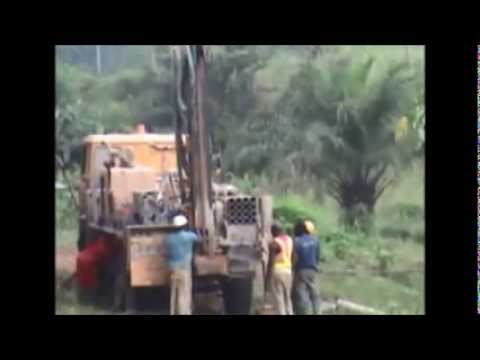
Using a manual method of borehole drilling, USAID's Ghana WASH Project is able to reach more remote communities with a low-cost, locally feasible method of improving water access.
The Ghana WASH Project is a USAID-funded project to improve rural water, sanitation and hygiene in five regions. The project is implemented by Relief International, Winrock International and ADRA International. The technical expertise in manual drilling is thanks to Relief International/EnterpriseWorks.
Learn more: www.ghanawashproject.org