Top videos
KOUMEN
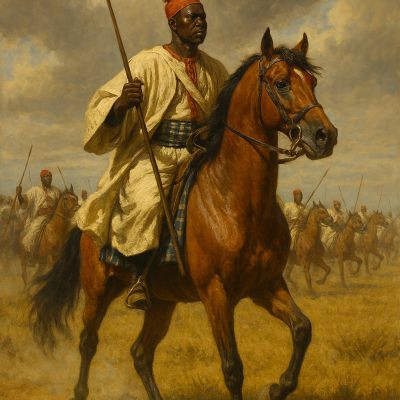
an oral history of the west african fulani/pulaar people as told by the sage amadou hampate ba.
kemet black west africa pastoralism history egypt nile river cheick anta diop "black egypt" koumen fulani pulaar senegal mauritania niger mali cattle herder griot
Egbe Abantu Cieng Li Mbog.
The most widely dispersed African Communities/Nations on the Continent. Banta Fulbe. Pulaaku (Ma'at).
This is an Afrometrics News, A Research-Based News Podcast, upload covering emerging research from the previous week. You may visit Afrometrics at Afrometrics.org for more.
This episode is another special one, we have a special guest, Dr. Kendall Ware who is a Professor of Mathematics. He joined me for a discussion of his very interesting study titled "The Effect of Black Educators on Black Students' Beliefs Towards Mathematics."
"The Effect of Black Educators on Black Students' Beliefs Towards Mathematics" Paper Link:
https://link.springer.com/arti....cle/10.1007/s43545-0
We will be having more guests on our podcast segment of our research based news show to discuss their studies that have been previously presented on the show.
Please subscribe and like the video! And come back weekly, new research based news uploads will be available weekly on Mondays and podcast uploads featuring guests will be available on Sundays at 4PM EST.
Let's Connect on my Socials!
_____________________________
Instagram: https://www.instagram.com/seriemcdoug...
Facebook:https://www.facebook.com/serie.mcdoug...
TikTok: https://vm.tiktok.om/ZMey6pfUT/
Twitter: https://twitter.com/seriemcdougal
Courtesy of King Lo The Rastar
How three smallholder farmers in Tanzania and Kenya escaped poverty, hunger and diminishing yields through learning organic farming practises.
A documentary made for IFOAM by Maweni Farm in collaboration with the national organic agriculture movements in Kenya, Tanzania, Uganda, Burundi and Rwanda.
Climate change is increasingly posing a challenge to agriculture development in Africa. The destruction caused by floods and the devastation by droughts across the continent demonstrate the threat posed by the unpredictable weather patterns.
This year, Zimbabwe is expecting its biggest harvest of maize in 20 years, a sign that the country could be ending its cycle of food deficits due to successive droughts and a troubled land reform program undertaken in the early 2000's.
Official data shows the country will harvest about 2.7 million metric tons of the staple grain. This would be almost 200 percent higher than last year.
Maize is a staple crop across much of eastern and southern Africa - and it's not just climate change that's causing problems, the Fall Army Worm is too. It's actually the caterpillar of a moth, native to the US. But it hasn't stayed there - the pest is spreading around the world, ruining harvests, like in southern Africa in 2017. But one project in Ghana is helping farmers to fight back against the hungry caterpillars with a smartphone app.
The Global Hunger Index says the western African country of Cameroon experiences moderate levels of hunger - but here conflict is the main reason for food insecurity. Farming has been greatly disrupted in the country’s Far North region where the army is fighting against a Boko Haram insurgency and the West where English speaking separatists are trying to create a breakaway state.
Subscribe: https://www.youtube.com/user/d....eutschewelleenglish?
For more news go to: http://www.dw.com/en/
Follow DW on social media:
►Facebook: https://www.facebook.com/deutschewellenews/
►Twitter: https://twitter.com/dwnews
►Instagram: https://www.instagram.com/dwnews
Für Videos in deutscher Sprache besuchen Sie: https://www.youtube.com/dwdeutsch
#Africa #ClimateChange #Agriculture
Among the thousands of hunters enlisted by the Nigerian army to track and capture Boko Haram fighters, one stands out from the crowd.
Aisha Bakari Gombi towers over her band of hunters, one of the few women who has joined the fight against one of the deadliest armed groups in Africa.
With her shotgun slung over her shoulder, she ventures into the scrub of Borno, the northeastern province of Nigeria long plagued by Boko Haram attacks, hunting down their fighters.
Her bravery and keen hunting abilities have earned her the title of 'Queen Hunter'.
Government troops are quick to call on Aisha for her skills but slow to reward her efforts financially.
While she is unable to liberate many more captives held by Boko Haram due to a lack of resources, she will never stop trying.
Dive into the multiple worlds of Aisha, a commander, a hunter and a wife.
More from Witness on:
YouTube - http://aje.io/witnessYT
Facebook - https://facebook.com/AJWitness
Twitter - https://twitter.com/AJWitness
Instagram - https://instagram.com/ajwitness/
Website - http://aljazeera.com/witness
- Subscribe to our channel: http://aje.io/AJSubscribe
- Follow us on Twitter: https://twitter.com/AJEnglish
- Find us on Facebook: https://www.facebook.com/aljazeera
- Check our website: https://www.aljazeera.com/
The webinar will discuss the opportunities, constraints, prospects and limitations of agroecology in Africa. It will explore exactly what agroecology is, the ongoing efforts to popularize it in Africa, the likely positive and negative impacts of its widespread adoption, and its intersection with modern agricultural methods, among other topics.
Panelists include: Irene Egyir, an associate professor in the University of Ghana’s Agricultural Economics Department; Nassib Mugwanya, a Ugandan agricultural communications specialist and PhD candidate at North Carolina State University; Bernard Guri, executive director of the Center for Indigenous Knowledge and Organizational Development, in Ghana; Pacifique Nshimiyimana, an agribusiness entrepreneur in Rwanda, and Charles Nyaaba, head of programs and advocacy for the Peasant Farmers Association. Moderator: Joseph Opoku Gakpo, a journalist from Ghana currently enrolled in a master’s program at North Carolina State University.
Cantave Jean-Baptiste of Partenariat pour le Développement Local (PDL) in Haiti and Steve Brescia of Groundswell International will share strategies and lessons from rural Haiti.
Haiti is one of the world's most vulnerable countries to climate change.
What is working to strengthen farmer organizations to build resilience and wellbeing through agroecology? How can we spread these successes?
Speakers:
Cantave Jean-Baptiste, Executive Director, PDL
Steve Brescia, Executive Director, Groundswell International
Endorsed by: The Casey and Family Foundation; the Ansara Family Fund; Haiti Development Institute; the Agroecology Fund
Groundswell International and PDL were awarded a grant by the New England International Donors (NEID) Climate Change Giving circle in support of this work in 2018.
Agroecology Grassroots Solutions to Global Crises