- General Videos
- Music
- Economics
- Health
- Travel & Events
- History
- Psychology
- Spirituality
- Movies
- News & Politics
- Kmtyw Combat Sciences
- Ɔbenfo Ọbádélé Kambon Videos
- Ɔbenfoɔ Kamau Kambon: Black Liberation Philosophy
- Science, Tech, Engineering and Math
- Permaculture
- Self-Sustainability
- Living Off Grid
- Yoruba Language Learning
- Education
- Mmɔfra Adesua
- Nana Kamau Kambon Playlist
- Livestream
- Komplementarity Kouples and Revolutionary Singles
- Abibitumi Film Series
- Decade of Our Repatriation
- Live
Top videos


The founder of Chicago's pioneering Digital Youth Network (DYN) describes how the organization empowers young people with critical digital literacy skills that make them academically and professionally competitive.
For more resources, visit: http://www.edutopia.org/nichol....e-pinkard-digital-li
Subscribe to the Edutopia Weekly newsletter: https://www.edutopia.org/go/edutopia-weekly
*Follow us here:*
Official Website: https://edutopia.org
YouTube: https://www.youtube.com/c/edutopia
Facebook: https://www.facebook.com/edutopia
Twitter: https://twitter.com/edutopia
Instagram: https://www.instagram.com/edutopia/
© 2013 George Lucas Educational Foundation


Okuninibaa Ma'at & Okunini Kmt Shockley: Black Students Are Being Violated| Should Other Groups of People Educate Our Youth?STEAM PROGRAM FOR BLACK CHILDREN https://consciousingenuity.com/MANHOOD TRAINING CAMP FOR BLACK BOYShttp://asafocamp.com/THE MELTREK PROGRAM https://edanimeproductions.com/shopBEST ONLINE SCHOOL FOR BLACK CHILDREN https://www.uhuruacademy.com/ EMAIL ME:dr.maat.msu@gmail.com


2nd Channel:
https://www.youtube.com/@LateNiteGnosis
Follow me on Twitter:
https://twitter.com/NealSendlak1
Discord:
https://discord.com/invite/uWBZkxd4UX
Lucy, the discovery of this 3.2 million-year-old fossil skeleton was such a monumental
breakthrough and what it meant for our understanding of human evolution.
In 1974, a team of researchers led by the renowned paleoanthropologist Dr.
Donald Johanson made a groundbreaking find in the Afar region of Hadar,
Ethiopia. They unearthed an almost complete fossil skeleton belonging to an early
human ancestor of our species, whom they affectionately named Lucy after the
Beatles' song "Lucy in the Sky with Diamonds."
The oldest known religion in Ethiopia is a traditional belief system called "Ethiopian
Traditional Religion" or "Ethiopian indigenous faith." This religious practice
predates the arrival of Christianity and Islam in the region by thousands of years. It encompasses a wide
range of spiritual beliefs and practices that have been passed down through
generations and are deeply rooted in Ethiopian culture and heritage.
Ethiopian Religion is characterized by its strong connection to nature,
ancestral worship, and the belief in supernatural forces and spirits. It incorporates
elements of animism, where various aspects of the natural world, such as rivers,
mountains, and trees, are considered to possess spiritual essence and are revered
accordingly.
The practice of Ethiopian Traditional Religion involves rituals, ceremonies, and
offerings to appease and seek blessings from ancestral spirits and deities. These
rituals often take place in sacred sites, such as forests, mountains, or ancient
stone structures known as "mazgabas."
The Aksumite religion, also known as the Aksumite Polytheism, refers to the
religious practices and beliefs of the Aksumite Empire, an ancient kingdom located
in present-day Ethiopia and Eritrea.
The primary deity of the Aksumite religion was the god Mahrem, also known as
Astar, who was considered the supreme god and the protector of the Aksumite
kingdom. Mahrem was associated with the sky, rain, and fertility. The Aksumite
kings, who held significant religious and political authority, were believed to be
direct descendants of Mahrem, solidifying their divine status and legitimacy.
In addition to Mahrem, the Aksumite pantheon included other gods and
goddesses, such as Astar, Beher, Meder, and Waraqa. Each deity had specific
domains and was worshipped for various purposes, including fertility, protection,
agriculture, and prosperity.
The Aksumites also practiced ancestor worship, believing that deceased ancestors
played a role in the spiritual well-being and guidance of the living. They would
honor and venerate their ancestors through rituals and offerings, seeking their
blessings and assistance.
The Aksumite religion was closely intertwined with the political and cultural
aspects of the empire. Temples and religious structures, such as the famous
Stelae of Aksum, were erected to honor the gods and commemorate the rulers.
Ritual ceremonies, sacrifices, and festivals were held to celebrate important
events, agricultural cycles, and religious observances.
With the spread of Christianity in the 4th century CE, the Aksumite religion began
to decline. Christianity eventually became the dominant religion in the region and
played a significant role in shaping Ethiopian culture and identity.
Today, remnants of the Aksumite religion can still be found in Ethiopian Orthodox
Christianity, which incorporates some elements and practices from the ancient
Aksumite belief system. However, the original Aksumite religion, as a distinct and
separate faith, ceased to exist as Christianity took root in the region. And by the 7th and 8th centuries, Islam would take over as the dominant religion of Africa. Which continues today.
The history of Africa begins with the emergence of hominids, archaic humans and — around 300,000–250,000 years ago — anatomically modern humans (Homo sapiens), in East Africa, and continues unbroken into the present as a patchwork of diverse and politically developing nation states. The earliest known recorded history arose in Ancient Egypt, and later in Nubia, the Sahel, the Maghreb, and the Horn of Africa.
Following the desertification of the Sahara, North African history became entwined with the Middle East and Southern Europe while the Bantu expansion swept from modern day Cameroon (Central West Africa) across much of the sub-Saharan continent in waves between around 1000 BC and 1 AD, creating a linguistic commonality across much of the central and Southern continent.
#gnosticinformant #documentary #africa
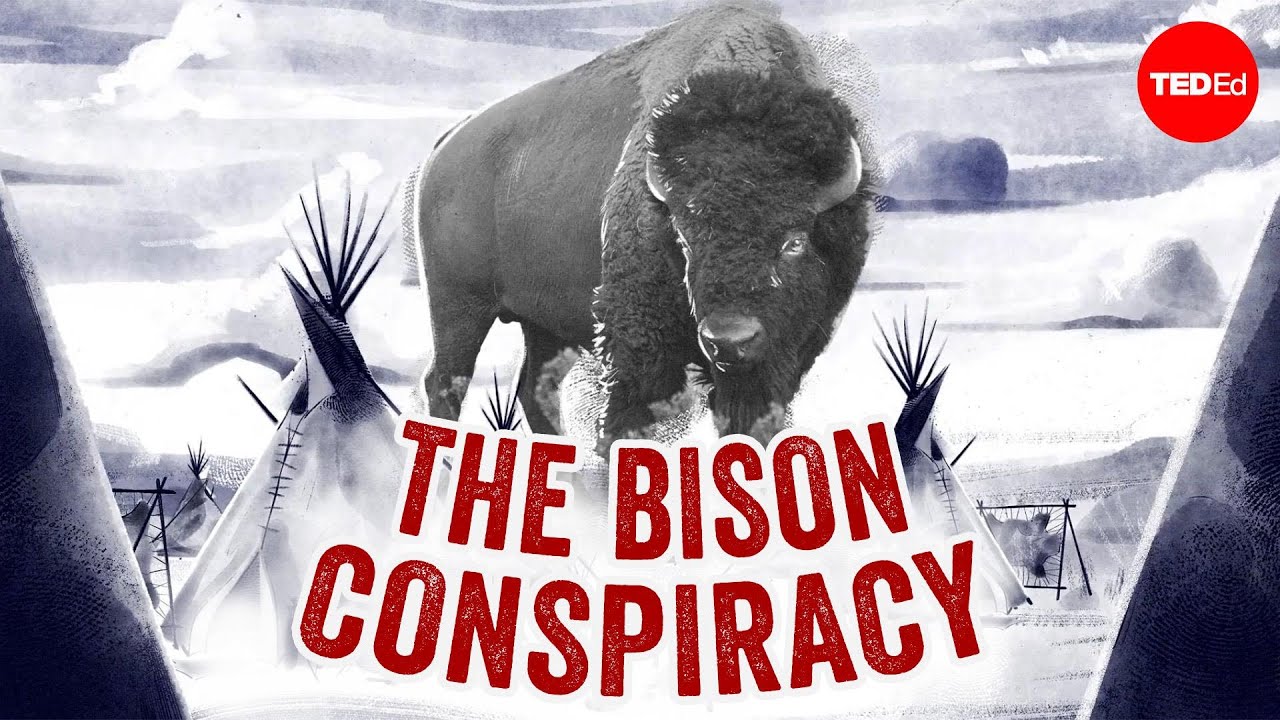
Explore how the US government hunted bison to near-extinction in the 1800s to force Native Americans onto reservations.
--
By the mid-1700s, many Plains nations survived on North America’s largest land mammals: bison. They ate its meat, made the hides into winter coats and blankets, and used the bones and horns for tools. But in the following decades, millions of bison would be deliberately slaughtered, threatening the survival of Plains societies. Andrew C. Isenberg shares what led to the animal's near-extinction.
Lesson by Andrew C. Isenberg, directed by Rémi Cans, Atypicalist.
Support Our Non-Profit Mission
----------------------------------------------
Support us on Patreon: http://bit.ly/TEDEdPatreon
Check out our merch: http://bit.ly/TEDEDShop
----------------------------------------------
Connect With Us
----------------------------------------------
Sign up for our newsletter: http://bit.ly/TEDEdNewsletter
Follow us on Facebook: http://bit.ly/TEDEdFacebook
Find us on Twitter: http://bit.ly/TEDEdTwitter
Peep us on Instagram: http://bit.ly/TEDEdInstagram
----------------------------------------------
Keep Learning
----------------------------------------------
View full lesson: https://ed.ted.com/lessons/why....-did-the-us-try-to-k
Dig deeper with additional resources: https://ed.ted.com/lessons/why....-did-the-us-try-to-k/digdeeper
Animator's website: https://www.atypicalist.com
----------------------------------------------
Thank you so much to our patrons for your support! Without you this video would not be possible! Angel Alberici, Minh Quan Dinh, Sylvain, Terran Gimpel, Talia Sari, Katie McDowell, Allen, Mahina Knuckles, Charmaine Hanson, Thawsitt, Jezabel, Abdullah Abdulaziz, Xiao Yu, Melissa Suarez, Brian A. Dunn, Francisco Amaya, Daisuke Goto, Matt Switzler, Peng, Tzu-Hsiang, Bethany Connor, Jeremy Shimanek, Mark Byers, Avinash Amarnath, Xuebicoco, Rayo, Po Foon Kwong, Boffin, Jesse Jurman, Scott Markley, Elija Peterson, Ovidiu Mrd, paul g mohney, Steven Razey, Nathan Giusti, Helen Lee, Anthony Benedict, Karthik Balsubramanian, Annastasshia Ames, Amy Lopez, Vinh-Thuy Nguyen, Liz Candee, Ugur Doga Sezgin, Karmi Nguyen, John C. Vesey, Yelena Baykova, Nick Johnson, Carlos H. Costa, Jennifer Kurkoski, Ryan B Harvey and Akinola Emmanuel.
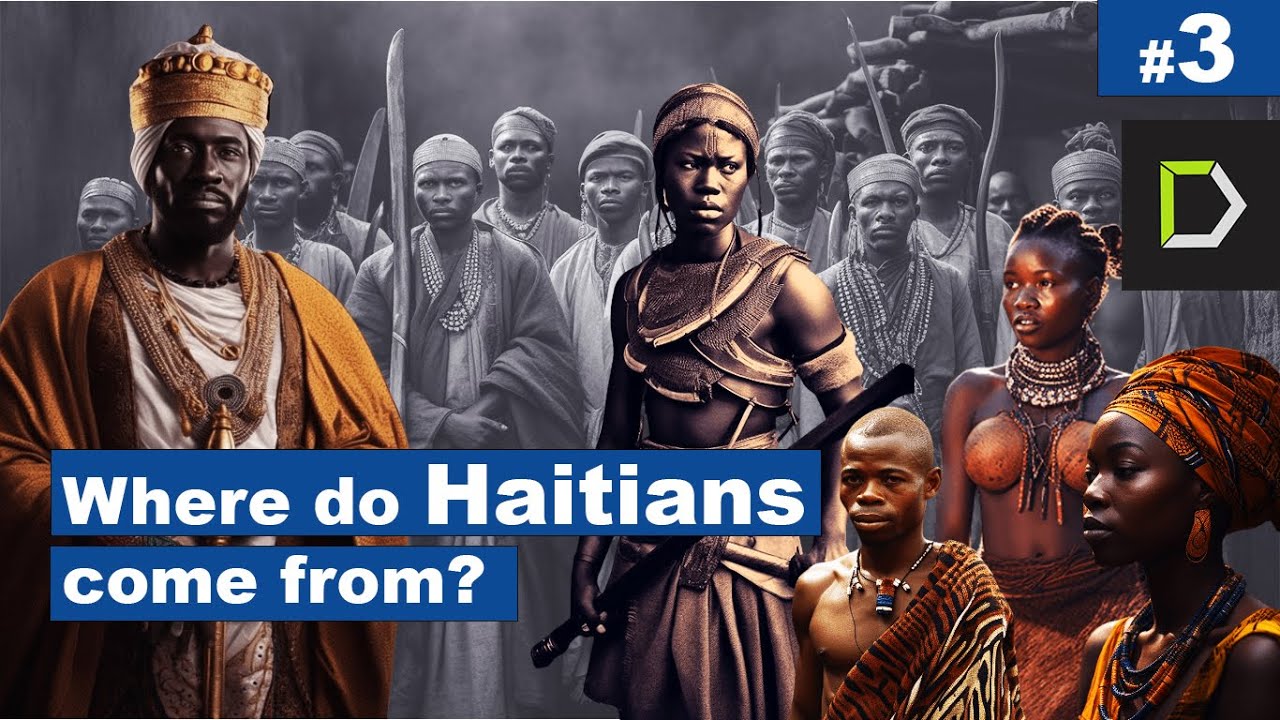
Episode #3
the History of Haiti: Roots
by Mikelson Toussaint-Fils
After the arrival of the Spaniards in 1492, the native Taino population dwindled due to the hard work and diseases brought by the Europeans. To exploit the island's resources, the Spanish and French forcibly brought African slaves to Haiti. The slaves rebelled and in 1804 declared their independence, founding the world's first black republic. The majority of black Haitians today are of West African descent, with significant roots among the Fon, Akan, Yoruba, Igbo, Kongo, and Mandinka peoples.
In this episode, we will take a detour through Africa to better understand the ethnic origins and history of the Africans who will take possession of the island of Haiti after the Battle of Vertière.
Home and office decor, visit: https://bitcanvas.net
Follow us on Instagram: https://www.instagram.com/mikelsontf/

Unreported World investigates how one influential preacher in Kenya could have led hundreds of men, women and children to their deaths. Symeon Brown tracks down the survivors and the families searching for loved ones to find out if this was mass suicide, or mass murder.
So far 429 bodies have been exhumed from graves in Shakahola forest where Pastor Paul Mackenzie’s followers are believed to have starved to death. The leader of the so-called death cult is said to have promised his followers protection from the 'coming apocalypse'. Mackenzie denies any wrongdoing.
Meanwhile another church, Rainbow Ministries, is facing a crackdown for cult-like behaviour. But where is the line between faith and extremism?
Producer/Director: Tom Besley
Series Producer: Andy Lee
Executive Producer: Ed Fraser
Production Company: Channel 4 News
Subscribe to our channel for more Unreported World episodes https://www.youtube.com/unreportedworld.

Big Nuz bring you their new smash record music video titled "Ngeke" taken from their latest project titles R Mashesha which is available across all digital music stores.
Thank you for watching, please subscribe to support the channel.
Connect on other platforms:
Website: http://www.afrotainment.co.za/
Facebook: https://www.facebook.com/afrotvchannel/
Instagram: https://www.instagram.com/afrotainmentsa/
Twitter: https://twitter.com/afrotainmentsa/
TikTok: https://www.tiktok.com/@afrotainmentstudio?lang=en
Beatport: https://www.beatport.com/label/afrotainment/99268
Bookings: samkelo@afrotainment.co.za
#afrotainment


How Did France Colonise Niger and West Africa? | Flashback with Palki Sharma
Dozens of French flags were burnt by supporters of the recent military coup in Niger. Anti-France rhetoric has been the go-to strategy for the new junta. What explains this animosity towards France? The answer lies in France's brutal colonial occupation of western Africa and Niger. Catch the story on Flashback with Palki Sharma.
--
France | Niger Coup | West Africa | Niger Military Coup | Macron | Firstpost | World News | Latest News | Global News | International News | Trending News
#france #niger #westafrica #nigercoup #macron #firstpost #worldnews #latestnews #globalnews #internationalnews #trendingnews
firstpost is an Indian news and media website. Get all the incisive opinions, in-depth analyses and other visual stories that matter to you and the world right here on this channel.
Subscribe to Firstpost channel and press the bell icon to get notified when we go live.
https://www.youtube.com/@Firstpost
Follow Firstpost on Instagram:
https://www.instagram.com/firstpost/
Follow Firstpost on Facebook:
https://www.facebook.com/firstpostin/
Follow Firstpost on Twitter:
https://twitter.com/firstpost
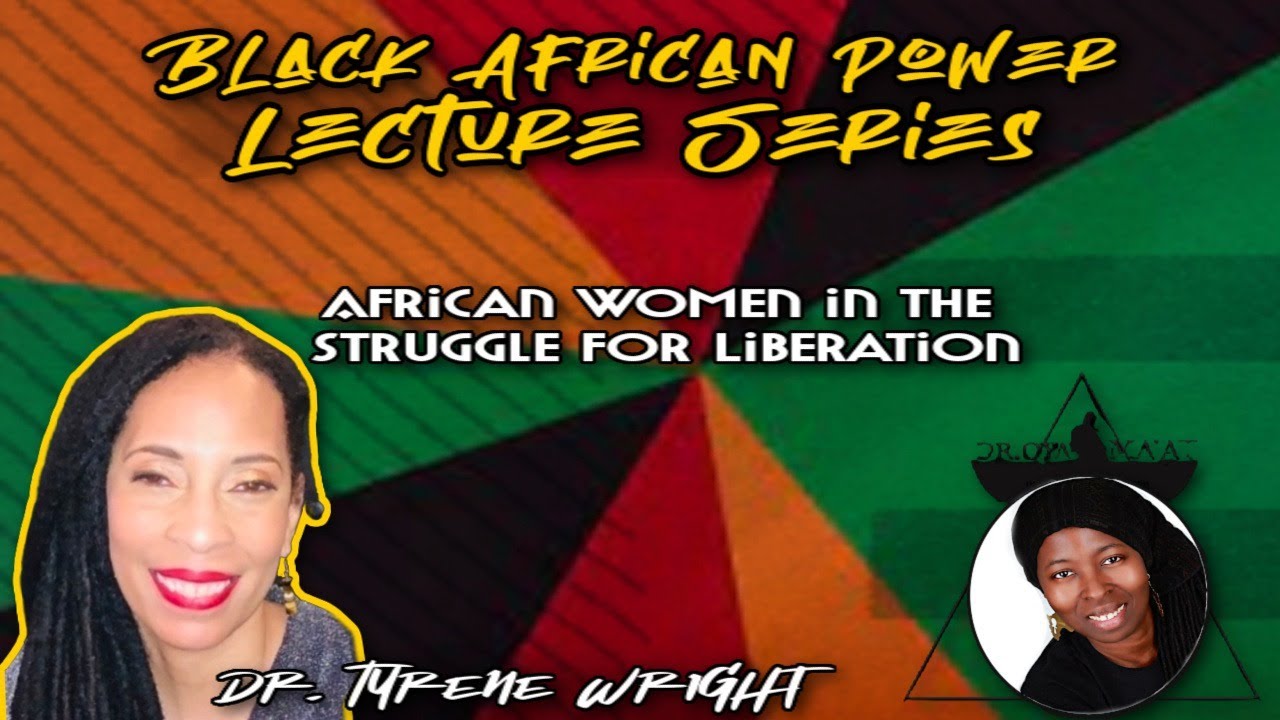
Okuninibaa Ma'at Presents: Black African Power Lecture Series. Tomorrow at 7pm EST Master Teacher Okuninibaa Tyrene Wright will be providing a historical analysis of the role of Black/African Women played in liberation struggle. You don't want to miss this! Spread the word!STEAM PROGRAM FOR BLACK CHILDREN https://consciousingenuity.com/MANHOOD TRAINING CAMP FOR BLACK BOYShttp://asafocamp.com/THE MELTREK PROGRAM https://edanimeproductions.com/shopBEST ONLINE SCHOOL FOR BLACK CHILDREN https://www.uhuruacademy.com/ EMAIL ME:dr.maat.msu@gmail.com#drmaat #truthtopowertalkwithdrmaat #tyrenewright #femalewarriors #blackwomen #africanwomen #freedomfighters #revolutionaries #blackpeople #blackunity #africanpeople #africanunity #africanhistory #africancivilization #africanpeople #africanempires #blackhistory #blackpeople #blackexcellence #blackconsciousness #africanhistory