- General Videos
- Music
- Economics
- Health
- Travel & Events
- History
- Psychology
- Spirituality
- Movies
- News & Politics
- Kmtyw Combat Sciences
- Ɔbenfo Ọbádélé Kambon Videos
- Ɔbenfoɔ Kamau Kambon: Black Liberation Philosophy
- Science, Tech, Engineering and Math
- Permaculture
- Self-Sustainability
- Living Off Grid
- Yoruba Language Learning
- Education
- Mmɔfra Adesua
- Nana Kamau Kambon Playlist
- Livestream
- Komplementarity Kouples and Revolutionary Singles
- Abibitumi Film Series
- Decade of Our Repatriation
- Kwento xpr
- Live
Top videos


Konchuz presents: Love Like Fire ( Official Visual)__________________________________________ This video was directed by: Taslan Graham/UADILI STUDIOS©Stream Love Like Fire: https://soundcloud.com/konchuz..../fire?in=%2Fkonchuzm for more official content from KONCHUZ: https://www.youtube.com/channel/UCE0v... Follow KONCHUZ konchuzsongz: https://heyl.ink/5X8TS Instagram: https://instagram.com/konchuzmuzik?ig... Facebook: https://m.facebook.com/INSIGHTZENT/ Listen to KONCHUZ Soundcloud: https://m.soundcloud.com/konchuzmuzik... Spotify: https://open.spotify.com/artist/2Gvim... Deezer: https://www.deezer.com/en/artist/1528... Apple Music: https://music.apple.com/us/artist/kon... KONCHUZ performing "Love Like Fire". © 2021 Insightz Movement


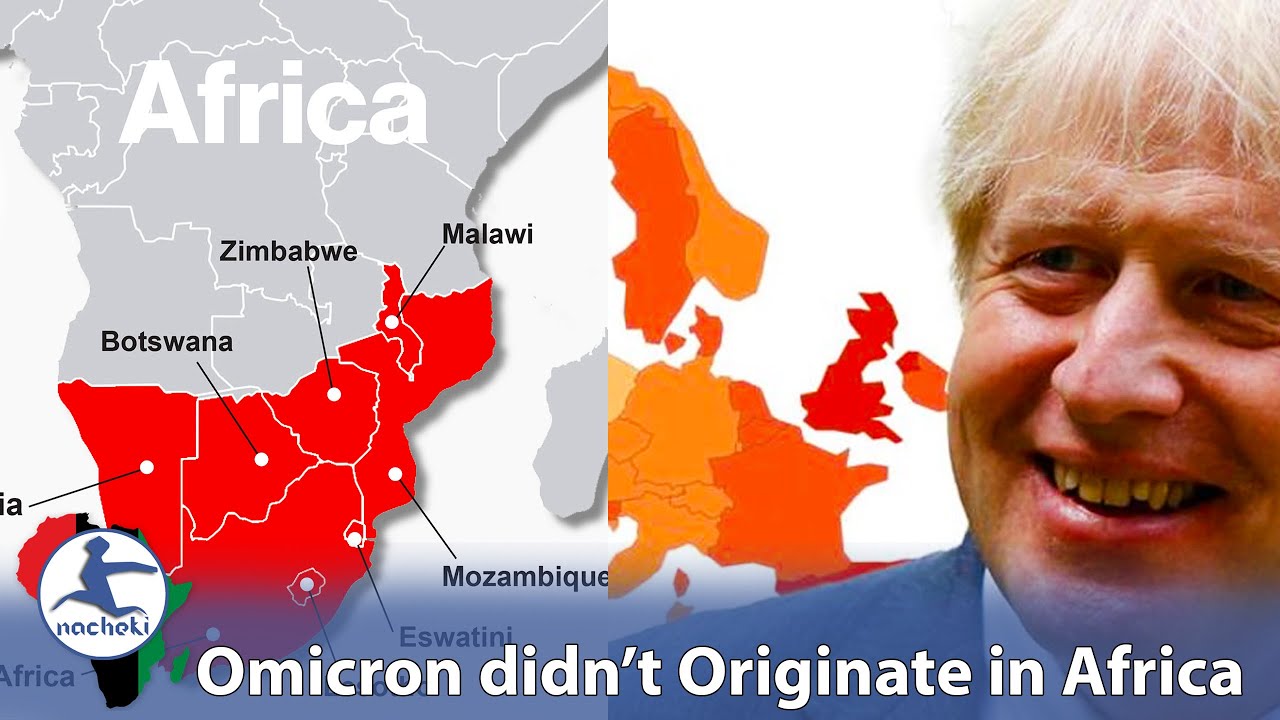

Welcome back to 2nacheki’s #Africa in the news. Today we will look at how the new #Covid 19 variant #Omicron is unfairly being blamed on South Africa by almost all western media news organizations to further racist policies by their western governments.
Thank you for watching!
Have you liked this video yet? This is the greatest thing you can do to support our channel. Also please subscribe and share this video with friends and family.
Buy our Official Merchandise here https://www.2nacheki.shop/
Visit our Links: https://linktr.ee/2nacheki
2nacheki pronounced tunacheki which means 'We Are Watching ' in Swahili slang. Our goal is to educate, inform & entertain you all about the real Africa while showing the World that Africa is Watching.
We create numerous videos every day on African topics like Africa Lists Africa News Africa Music Africa Dances Africa Speeches Africa Entertainment Africa History Africa Interviews Africa Documentaries Panafricanism Africapop-culture African culture African Politics and more
Please contact us for tips, content submission, Ads, Takedowns, Collabos, Complaints, Reporting, and Inquiries #Africa #Africanews #2nacheki

Slave codes were a method of protecting the investment of white enslavers in the Colonies by restricting the lives of enslaved people in almost every imaginable way. The codes restricted enslaved people’s ability to move around, or engage in commerce that could make them financially independent - they restricted the very opportunities that would allow them to live with even relative freedom. Today, we'll learn about how Colonies put laws in place to restrict the movement and freedoms of both enslaved people and free Black people alike.
Watch our videos and review your learning with the Crash Course App!
Download here for Apple Devices: https://apple.co/3d4eyZo
Download here for Android Devices: https://bit.ly/2SrDulJ
Crash Course is on Patreon! You can support us directly by signing up at http://www.patreon.com/crashcourse
Check out Clint's book: https://bookshop.org/books/how....-the-word-is-passed-
Thanks to the following patrons for their generous monthly contributions that help keep Crash Course free for everyone forever:
Alexis B, Rene Duedam, Burt Humburg, Aziz, Nick, DAVID MORTON HUDSON, Perry Joyce, Scott Harrison, Mark & Susan Billian, Junrong Eric Zhu, Alan Bridgeman, Jennifer Smith, Matt Curls, Tim Kwist, Jonathan Zbikowski, Jennifer Killen, Sarah & Nathan Catchings, Brandon Westmoreland, team dorsey, Trevin Beattie, Eric Koslow, Indika Siriwardena, Khaled El Shalakany, Shawn Arnold, Siobhán, Ken Penttinen, Nathan Taylor, William McGraw, Laura Damon, Andrei Krishkevich, Sam Ferguson, Eric Prestemon, Jirat, Brian Thomas Gossett, Wai Jack Sin, Ian Dundore, Jason A Saslow, Justin, Jessica Wode, Mark, Caleb Weeks
__
VIDEO SOURCES
-Ira Berlin, Many Thousands Gone: The First Two Centuries of Slavery in North America (Cambridge: Harvard University Press, 1998).
-John Hope Franklin, From Slavery to Freedom: A History of Negro Americans (New York: Knopf, 1967).
-Claude M. Steele, Whistling Vivaldi: How Stereotypes Affect Us and What We Can Do (Reprint Edition ed. 2011).
-Black Codes and Slave Codes, Colonial, , Oxford African American Studies Center , http://oxfordaasc.com/view/10.....1093/acref/978019530
-Peter H. Wood, Black Majority: Negroes in Colonial South Carolina from 1670 through the Stono Rebellion (New York: W.W. Norton, 1974).
-Jennifer L. Morgan, Partus sequitur ventrem: Law, Race, and Reproduction in Colonial Slavery, 22 Small Axe: A Caribbean Journal of Criticism 1–17 (2018).
Want to find Crash Course elsewhere on the internet?
Facebook - http://www.facebook.com/YouTubeCrashCourse
Twitter - http://www.twitter.com/TheCrashCourse
Tumblr - http://thecrashcourse.tumblr.com
Support Crash Course on Patreon: http://patreon.com/crashcourse
CC Kids: http://www.youtube.com/crashcoursekids
#crashcourse #history #slavery


Author/Creator
Interviewee: Smith, Harriet
Interviewer: Faulk, John Henry
Created/Published
1941
Notes
Disc is cracked causing some loud ticks.
Recorded by John Henry Faulk, Hempstead, Texas, 1941.
Sound Recording, Non-Music.
Subjects
Plowing--Texas--History
Slave narratives--Texas
Slaves--Texas--Religious life
United States--History--Civil War, 1861-1865--African Americans
Women slaves--Texas--Biography
Texas--Waller County--Hempstead
Medium
12" acetate disc, 33 1/3 rpm
Call Number
AFS 5499A
LWO 4872, reel 381
Repository
Library of Congress, Archive of Folk Culture, American Folklife Center, Washington, D.C. 20540
Digital Id
afc9999001-5499a
http://hdl.loc.gov/loc.afc/afc9999001.5499a


ORFC Global 2021 Session
Land theft is not a thing of the past. Samwel, Kathryn, Angie and June will be talking about the different ways communities are discriminated against through land theft and dispossession. Their conversation will focus on understanding that true food sovereignty demands local control of land. Samwel’s Maasai community has faced illegal sales of their land to foreign companies; Kathryn, representing KMP (the Peasant Movement of the Philippines), has been on the frontlines of organizing to gain land rights for the nine out of ten Filipino farmers that do not own the land they till. The Provosts have been the target of predatory loans, historical deprivation and racial discrimination. Together, they will explain how ownership of land is not a narrative around regeneration or sustainability. It is an argument around sovereignty over the very land they and their ancestors tended. To be truly food sovereign, the land must be in the hands of the local communities.
Speakers:
Samwel Nangiria
Kathryn Manga
June and Angie Provost
Chair:
Freya Yost
#ORFCGlobal
https://orfc.org.uk/