Top videos
![De Klerk - Mandela Pre-election Debate [14 Apr 1994] Rebroadcast [14 Apr 2019]](https://i.ytimg.com/vi/oTIeqLem67Q/hqdefault.jpg)
To mark 25 yrs of democracy, SABCNews rebroadcasts its first-ever pre-election debate, between Nelson Mandela & FW De Klerk on 14 April 1994. In studio are Profs @somadodafikeni and Susan Boysen with Freek Robinson who facilitated the debate. #SABCNewsChannel
For more news, visit: sabcnews.com
![Plateau on the Move - Nigeria 2017 [English]](https://i.ytimg.com/vi/OZbUalUeNuY/hqdefault.jpg)
Project film, 60 minutes.
Nigeria 2017.
European Union (EU) and Gesellschaft für Internationale Zusammenarbeit (GIZ).
PLATEAU ON THE MOVE derives its messages from the project “Deepening Economic Development for Peace and Stability in Plateau State, Nigeria”, financed by the EU and implemented by GIZ. The spotlight is turned on dedicated people working towards peace and economic progress in a crisis-ridden region.
Directed, produced and edited by: Johannes Preuss
Camera: Twamsan Danaan, George Joel
Music and Narration: Jeremiah Gyang
Animation: Oleg Kauz
Location Sound: Twamsen Danaan, Hirse Dalaham
Executive Producer: Sylvia Hoster
![Blood Diamonds Forever (UK) Angola [2003]](https://i.ytimg.com/vi/5oSmwyWBwQs/hqdefault.jpg)
Blood Diamonds Forever (UK) Angola [2003]
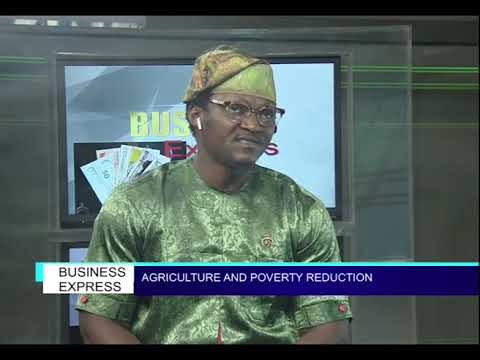
Live News Broadcast from Nigerian Television Authority.
Abuja, Nigeria
More from NTA at
Website: http://www.nta.ng/
Twitter: http://www.twitter.com/NTANewsNow
Facebook:
http://www.facebook.com/NTANetworkNews
Email: enquiries@nta.ng
To license this and other NTA content,
e-mail :licensing@nta.ng, info@nta.ng
And Remember to SUBSCRIBE to our Channel to get updates on Live Streams

SELLING THE NEGRO.. {1954}
![Israelis to Expel Dozens of African Hebrews Prompting Community to Appeal Decision [29 Apr 2021]](https://i.ytimg.com/vi/iRAXJjA181E/hqdefault.jpg)
Articles: https://www.i24news.tv/en
Live:http://i24ne.ws/4GMK30qJn0A
Facebook: https://www.facebook.com/i24newsEN/
Twitter: https://twitter.com/i24NEWS_EN
Instagram: https://www.instagram.com/i24news/
#i24NEWS #GlobalEye
GLOBAL EYE |

Live News Broadcast from Nigerian Television Authority.
Abuja, Nigeria
More from NTA at
Website: http://www.nta.ng/
Twitter: http://www.twitter.com/NTANewsNow
Facebook:
http://www.facebook.com/NTANetworkNews
Email: enquiries@nta.ng
To license this and other NTA content,
e-mail :licensing@nta.ng, info@nta.ng
And Remember to SUBSCRIBE to our Channel to get updates on Live Streams

Ted Vincent explores the work of Harry Haywood (born Haywood Hall), who, in addition to being a member of the African Blood Brotherhood, also initiated the Black Belt Republic scheme into the Communist Party, and continued as a Black Nationalist theorist
Credit To: Pacifica Radio Archives

Kabza De Small & DJ Maphorisa – Thula Nana ft. Njelic. Following the success of the gig at Zone 6 last night, Kabza De Small alongside DJ Maphorisa come correct with a new scorcher tagged Thula Nana. The Amapiano release features the vocals of Njelic.

BREAKING_ Adv. Dali Mpofu leaves EFF joins the uMkhonto weSizwe Party

Welcome back to ABIBITUMI TV, your trusted source for unfiltered news and analysis on African affairs.
I'm your host, and today we are going to be talking about, whst does Donald Trump presidency means for Afrika and Afrikan people.
S U P P O R T
Cash App - $NelsonAmadeus
PayPal- GlobalHitsWorld@gmail.com
EMAIL - KingNeferkare@gmail.com
Twitter @NTDessalines
Instagram @NelsonAmadeus
TURN ON POST NOTIFICATIONS.

Amilcar Cabral and the Liberation Struggle: Education as the Corners for Revolution
Join militant historian Sónia Vaz Borges for a lecture on the revolutionary struggle of the PAIGC and life and legacy of Amilcar Cabral.
“The people of ‘Portuguese’ Guinea took up arms to free their country from colonial domination in 1963, under the leadership of the Partido Africano da Independencia da Guiné e Cabo Verde (PAIGC). Amilcar Cabral, the founder of the PAIGC, saw the necessity of freeing their country from Portuguese colonial domination. The experiences of other liberation movements, the growth of neo-colonialism in the newly ‘independent’ African countries, and above all the development of the movement within Guinea itself made clear the necessity of a true socialist revolution if any real change was to be made.
To revolutionary movements throughout the world, the struggle in Guinea is of prime importance as an outstanding illustration of the need to study one’s own concrete conditions and to make the revolution according to these conditions, rather than relying on the experience of others, valuable as this may be.”
-From Amilcar Cabral – Revolution in Guinea Bissau. An African People’s Struggle. London: Stage 1. 1969
Sónia Vaz Borges is a militant interdisciplinary historian, social and political organizer. She has B.A. in Modern and Contemporary History, Politics and International Affairs from ISCTE -University Institute of Lisbon, and a M.A. in African History from the Faculty of Humanities of the University of Lisbon. She received her Ph.D. in Philosophy from Humboldt University of Berlin, and a postdoctoral from the Center for Place, Culture and Politics (CPCP) at the Graduate Center City University of New York. She is also the editor of the booklets Cadernos Consciência e Resistência Negra (2007-2011) and author of the book Na Pó di Spéra. Percursos nos Bairros da Estrada Militar, Santa Filomena e Encosta Nascente (2014). Along with filmmaker Filipa César, Sónia Vaz Borges co-authored the short film Navigating the Pilot School (2016). Sónia Vaz Borges lives in Berlin and is a researcher at the Humboldt University of Berlin, and its currently working on a new project and a second film together with Filipa César.
For readings and study materials, go to: https://politicaleducation.peo....plesforum.org/lectur

This video was built as part of the learning resources provided by the Western Canadian Learning Network (a non-profit collaboration).
Arithmetic and Geometric Sequences

Come venture deep inside the world’s biggest physics machine, the Large Hadron Collider. This extraordinary feat of human engineering took 16 years and $10 billion to build, and just weeks ago began colliding particles at energies unseen since a fraction of a second after the big bang. We’ll explore this amazing apparatus that could soon reveal clues about nature’s fundamental laws and even the origin of the universe itself. John Hockenberry moderates a discussion among physicists including Marcela Carena, Monica Dunford, Jennifer Klay and Nobel laureate Frank Wilczek.
This program is part of The Big Idea Series, made possible with support from the John Templeton Foundation.
The World Science Festival gathers great minds in science and the arts to produce live and digital content that allows a broad general audience to engage with scientific discoveries. Our mission is to cultivate a general public informed by science, inspired by its wonder, convinced of its value, and prepared to engage with its implications for the future.
Subscribe to our YouTube Channel for all the latest from WSF.
Visit our Website: http://www.worldsciencefestival.com/
Like us on Facebook: https://www.facebook.com/worldsciencefestival
Follow us on twitter: https://twitter.com/WorldSciFest
Original Program Date: June 5, 2010
MODERATOR: John Hockenberry
PARTICIPANTS: Marcela Carena, Monica Dunford, Jennifer Klay, Frank Wilczek
John Hockenberry Introduction 00:14
What is the LHC? 04:57
Participant Introductions. 08:30
Where are we now with the LHC? 11:58
By smashing particles this creates a mini big bang? 16:58
What can the LHC do beyond Fermilab 21:30
How do you calculate the probability's that these particles are going to occur? 25:52
If you can create this mini big bang the energy changes are observable? 32:00
The search for the Higgs. 38:30
The standard model, Cosmological molasses, and Higgs. 44:25
How will you detect and confirm all of the predictions. 52:51
Departing form experimental evidence with super symmetry. 01:00:08
Are there places in space that have these particles? 01:07:07
Is there a limit to the number of particles you can expect? 01:13:50
Is there a possibility that the cosmological molasses is just a crutch? 01:22:16
The life of a LHC physicist. 01:26:49

The Chinese Automaker Changing the Market in Africa | China/Africa Big Business | ENDEVR Documentary
The Chinese Automaker Changing the Market in Africa | China/Africa Big Business | Business Documentary from 2013
Episode 5: Moving Africa
In this fourth episode, we look into how Chinese automaker BAW is changing the market in South Africa. In the second part of the video, we follow how Chinese companies are working on rebuilding infrastructure in Angola.
This series looks at how big Chinese enterprises have found a foothold in Africa, how they’ve often had to adapt their approach and strategies to fit the African market, and how Chinese and African employers, employees and business partners have learned from and influenced one another.
▬▬▬▬▬▬▬▬▬
Subscribe ENDEVR for free: https://bit.ly/3e9YRRG
Join the club and become a Patron: https://www.patreon.com/freedocumentary
Facebook: https://bit.ly/2QfRxbG
Twitter: https://bit.ly/2QlwRiI
▬▬▬▬▬▬▬▬▬
#FreeDocumentary #ENDEVR #ChinaAfrica
▬▬▬▬▬▬▬▬▬
ENDEVR explains the world we live in through high-class documentaries, special investigations, explainers videos and animations. We cover topics related to business, economics, geopolitics, social issues and everything in between that we think are interesting.

Why are tropical fruits important to our diet in Trinidad & Tobago?
Dr. Laura Roberts-Nkrumah gives us key insight into why it is important for us to include more tropical fruits in our everyday diet. Dr. Roberts-Nkrumah also expressed a need for increased awareness and education in schools and community engagement in promoting more consumption of our local fruits like West Indian Cherries, Five Fingers or Carambola, Pommecythere, Pommerac and Mangoes to name a few.
#fruits #caribbean #tropical
▼WEBSITE:
http://www.eatahfoodtt.com
▼INSTAGRAM:
https://www.instagram.com/eatahfoodtt
▼FACEBOOK:
https://www.facebook.com/eatahfood
▼TWITTER:
https://www.twitter.com/eatahfood

Alkebulan Nation TV is honored to sit down with Baba and Mama Kwesi after their lecture. This was their first lecture in over a year (pandemic) and they were in rare form!

Excellent video demolishing the psuedo historian Metatron by the late Mr Imhotep

📢 “In my community, I advise colleagues to produce organically so that the families who buy from us can be sure their food is healthy.” Meet Antonio, an organic farmer from São Tomé and Príncipe 🇸🇹 working with nature to grow our food.
Find out more about #IGrowYourFood: https://campaigns.ifoam.bio/igrowyourfood
🤗 Support our ORGANISATION:
https://ifo.am/Donate
🤝 Become our PARTNER:
https://ifo.am/JoinIFOAM
📩 Sign up to our NEWSLETTER:
https://ifo.am/Newsletter
▶️ Subscribe to our YOUTUBE channel:
https://ifo.am/YouTube
👍 Stay connected on FACEBOOK:
https://ifo.am/Facebook
👩💻 Join the conversation on TWITTER:
https://ifo.am/Twitter
👨💻 Follow us on LINKEDIN:
https://www.linkedin.com/compa....ny/ifoamorganicsinte

Agro processing in Nigeria involves adding value to Nigeria agricultural produce. Value-added agriculture generates several billions in economic impact of a country. In fact, adding value to agricultural products beyond the farm gate usually has several times the economic impact of the agricultural production alone.
Agricultural producers receive a much smaller portion of the consumer’s naira than do food processors, especially processors who produce brand name items. Capturing those additional naira by adding value to farm or ranch products is a goal of many producers.
Agro processing in Nigeria today can act as a catalyst towards starting or commencing your own value added business. Visit www.exportbusiness.com for more information