- General Videos
- Nnwom
- Sikas?m
- Akwahosan
- Travel & Events
- Abak?s?m
- Adwene mu Nhwehw?mu
- Honhom fam nne?ma
- Fim
- News & Politics
- Kmtyw Combat Sciences
- Ɔbenfo Ọbádélé Kambon Video ahorow
- ?benfo? Kamau Kambon: Black Liberation Philosophy
- Science, Tech, Engineering and Math
- Permaculture
- Self-Sustainability
- Living Off Grid
- Yoruba Language Learning
- Nhomasua
- Mmɔfra Adesua
- Nana Kamau Kambon Playlist
- Livestream
- Komplementarity Kouples and Revolutionary Singles
- Abibitumi Film Series
- Decade of Our Repatriation
- Live
Video a ɛwɔ soro


By 1967, war, racism, and poverty had become the dominant issues confronting America and the Freedom Movement. On April 4, Dr. King forcefully speaks out against the Vietnam War with "Beyond Vietnam: A Time to Break Silence," delivered at Riverside Church in New York City. Ten days later, in a speech at Stanford University titled "The Other America," Dr. King addresses race, poverty and economic justice. (At various times in 1967 and '68 he gave slightly different versions of "The Other America" to other audiences. - www.crmvet.org


Thank you for watching, and for your support.
Please continue to support me.
Link to this channel: youtube.com/yorubalessons
Email: yorubarelated@gmail.com
My Intro: https://youtu.be/TU-BSdybVM8
Writing: https://highpriestesswords.com/
2nd Channel - The High Priestess: https://www.youtube.com/channe....l/UCF4YyBWtXnqXP3SJ7
CHANNEL ADOPTION/SUPPORT:
To adopt and/or help me grow my channel, you may click on the 👍 button, share my videos, sponsor me on Patreon- https://patreon.com/yorubalessons, or send me monetary gifts via PayPal- https://paypal.me/aderonkebabajide.
It will mean a lot to me, and the funds will be put to good use, especially towards the upgrading and promotion of this channel, the promotion of the Yorùbá culture at large, and charity.
CHARITY SUPPORTED:
Preauthorized monthly donations are made to:
SickKids Foundation
Toronto, Ontario
August 2019 - Present
For more details: http://freshwaters.website2.me/
YORUBA SOCIAL MEDIA:
Facebook: https://www.facebook.com/yorubalessonsaderonke/
Instagram:
Yorùbá Lessons: https://www.instagram.com/yorubalessons/
Yorùbá Music: https://www.instagram.com/yorubamusic/
Yorùbá Hairstyles: https://www.instagram.com/yorubahairs...
Yorùbá Clothes: https://www.instagram.com/yorubaclothes/
Yorùbá Dancers: https://www.instagram.com/yorubadancers/
Twitter: https://twitter.com/yorubalessons/
COPYRIGHT DISCLAIMER:
All songs, images, narratives, and performances in any of my videos that were not created by me remain the sole properties of their respective artists, artistes, and/or copyright holders, known or unknown. They do not imply a challenge to intellectual property/ownership. They are intended strictly for entertainment, educational, and historical purposes only. My apologies if any creative is offended by the use of their work prior to express permission granting.
RULE:
Your participation on this platform is allowed, encouraged, and highly appreciated, as long as you warrant that you will not post any messages that are harmful to young people (especially children), disrespectful, actively or passively aggressive, hateful, hurtful, racist, deliberately offensive, homophobic, threatening, defamatory, damaging or otherwise violative of any laws. Comments that do not align with the previously-stated expectations will be deleted swiftly.
E̩ je̩ èbùré̩, awo olùgbe̩bè̩.
K E Y W O R D S
Yoruba | Yoruba Lesson | Learn Yoruba | Yoruba Class | Yoruba Course | Yoruba People | Yoruba Culture | Yoruba Tradition | Yoruba Dressing | Yoruba Lessons with Aderonke | Yoruba Teacher | Yoruba Lessons for Beginners
T A G S
#Yoruba #YorubaLesson #LearnYoruba #YorubaClass #YorubaCourse #YorubaPeople #YorubaCulture #YorubaTradition #YorubaDressing #YorubaLessonsWithAderonke #YorubaTeacher #LearnYorubaWithAderonke #BasicYoruba #YorubaLessonsforBeginners

👉🏿 INVEST IN INDEPENDENT BLACK MEDIA → Watch the FULL UNCENSORED interview with Dr. Mawiyah Kambon at https://ineverknewtv.com/premium/📍Missed Pt.1 https://youtu.be/Bp8sTbw2NaUMissed Pt.3 https://youtu.be/0ctKiGvbiMUMissed Pt.4 https://youtu.be/Q0wT5Xfr7J8Missed Pt.5 https://youtu.be/r3BBI4bOTcwIn Part 2 of this powerful reasoning, Mawiyah Kambon breaks down how Black men have been conditioned to suppress and disconnect from their pain. She explains how this emotional restriction shapes behavior and impacts both individual well-being and the broader community.Dr. Kambon also explores how reconnecting to ancestral practices can help men identify their wounds, begin the healing process, and ultimately become better brothers to themselves and to the collective.Please click the link below to learn more about Dr. Mawiyah Kambon and her work: https://www.onipa.com/about-dr-mawiyah-kambon/🎧 Catch 'I NEVER KNEW RADIO for Roots, Rock, Reggae Music!Hosted by Jr a.k.a 'The Bald Head' of 'I Never Knew TV'📅 Sundays: 9 - 11 AM EST📅 Wednesdays: 8 - 10 AM EST📅 Thursdays: 10 AM - Noon ESTListen live: https://wloy.org/listen/#ineverknewtv

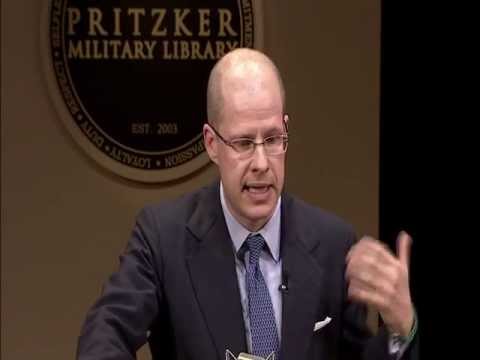
Max Boot discusses his new book, "Invisible Armies: An Epic History of Guerrilla Warfare From Ancient Times to the Present," as part of the Pritzker Military Library Presents series.
SPEAKER:
Max Boot
INTRODUCTORY SPEAKER:
Nancy Houghton
http://www.cfr.org/wars-and-wa....rfare/history-future


![Akon: 'America was never built for Black People' | Talk to Al Jazeera [4 Jan 2015]](https://i.ytimg.com/vi/KBxIhGqVl6E/hqdefault.jpg)
Senegalese-American artist Akon is a five-time Grammy nominee who has sold over 35 million records worldwide and has collaborated with some of the biggest names in popular music, such as Michael Jackson, Snoop Dogg, Lady Gaga and David Guetta.
The musician, songwriter, and producer, who was born in the US but spent much of his childhood in Senegal, is also an activist and a philanthropist - and he has turned his sights on helping Africa.
How many African-Americans do you know actually consider Africa as a vacation spot? Not one... Even just for knowledge, just to know where they came from, just to get an idea of what that is; there is so much fear instilled in them that they wouldn't even want to go there to visit. You mention Africa, they start shaking.
Akon
His current ambitious project, "Akon Lighting Africa," is working to bring solar-powered electricity to Africans in 49 countries by the end of 2020.
Akon is also an ambassador for the non-profit organisation Peace One Day. Last year, he and actor Jude Law brought their celebrity power to Goma to a concert to promote peace in the Democratic Republic of Congo.
But Akon has also caused controversy through his performance style and his lyrics.
Akon talks to Al Jazeera about running his musical career as a business; his projects - both philanthropic and artistic; singing songs for peace and whether he thinks it can really make an impact; and being an African in the US.
Subscribe to our channel: http://bit.ly/AJSubscribe
Follow us on Twitter: https://twitter.com/AJEnglish
Find us on Facebook: https://www.facebook.com/aljazeera
Check our website: http://www.aljazeera.com/
#AlJazeeraEnglish #Akon #TalkToAlJazeera