- General Videos
- Music
- Economics
- Health
- Travel & Events
- History
- Psychology
- Spirituality
- Movies
- News & Politics
- Kmtyw Combat Sciences
- Ɔbenfo Ọbádélé Kambon Videos
- Ɔbenfoɔ Kamau Kambon: Black Liberation Philosophy
- Science, Tech, Engineering and Math
- Permaculture
- Self-Sustainability
- Living Off Grid
- Yoruba Language Learning
- Education
- Mmɔfra Adesua
- Nana Kamau Kambon Playlist
- Livestream
- Komplementarity Kouples and Revolutionary Singles
- Abibitumi Film Series
- Decade of Our Repatriation
- Live
Top videos



Kabza drops a duo project with Mthunzi titled Isimo . Hope you're well wherever you are and God bless you . SIT TIGHT AND ENJOY THIS AMAZING MIXTAPE.
DON'T FORGET TO LIKE, SHARE, SUBSCRIBE AND MOST IMPORTANTLY ENJOY!!!!!!!! :)
CONTACT INFO:
Instagram: https://www.instagram.com/austin_confiar/
Email: ontongaustin70@gmail.com
#kabzadesmall #amapiano #amapiano2023
🔺 DISCLAIMER 🔺I hereby declare that I do not own the rights to this music. All rights belong to the owner. NO COPYRIGHT INFRINGEMENT. If there is a copyright issue and you would like me to take it down please feel free to reach out to me through email @ ontongaustin70@gmail.com .Thank you

This devoted father saves his chicks by tucking one under each wing.
Please LIKE and SUBSCRIBE if you enjoyed! http://bit.ly/1Adl6ht
**More info & videos below**
“Okavango: River of Dreams - Paradise“ premieres Wednesday, October 23 at 8|7c on PBS
---------------
For full NATURE episodes, check out http://www.pbs.org/wnet/nature/episodes/
Facebook: https://www.facebook.com/PBSNature
Twitter: https://twitter.com/PBSNature
TikTok: https://www.tiktok.com/@pbsnature
Instagram: https://www.instagram.com/pbsnature/
-----------------
Nature is a production of THIRTEEN for PBS. Throughout its history, Nature has brought the natural world to millions of viewers. The PBS series has been consistently among the most-watched primetime series on public television.
-----------------
Explore the landscape and wildlife of the Upper Okavango River, where the deep water shows elephants swimming and carving channels through the reeds and papyrus, setting small birds afloat to drift past hippos and crocodiles. A lioness severely injured by a buffalo is left for dead by her pride. Now disabled, she must survive in the swamp alone, hunting to feed her little cubs.
-----------------
More videos:
How an Egg Hatches - https://bit.ly/2J2TfLB
Bear Cub Check Up - https://bit.ly/3063a8H
Meet One of the Rarest Frogs on Earth - https://bit.ly/2XkSztD
The Wild Horses that Beat Extinction: https://bit.ly/2XiysaK
Studying Tree Kangaroos - https://bit.ly/2YnAveR

Christianity in Africa is a Cargo Cult
Christianity is a Cargo Cult
Islam is a Cargo Cult
Judiasm is a Cargo Cult
Religion is a Cargo Cult
Support me on Patreon http://www.patreon.com/baud2bitsFollow me on Facebook https://www.facebook.com/baud.bits& Twitter https://twitter.com/baud2bitsA Note on Cargo Cults and Cultural Constructions of Changehttps://ojs.lib.byu.edu/spc/in....dex.php/PacificStudi lives for old; cultural transformation: Manus, 1928-1953 (1956)https://archive.org/details/ne....wlivesforoldcu00inme New Guinea Villagerhttp://www.papuaweb.org/dlib/b....k1/rowley/Forerunner of melanesian nationalismhttp://horizon.documentation.i....rd.fr/exl-doc/pleins AND THE VAILALA MADNESShttp://www.isca.ox.ac.uk/filea....dmin/ISCA/JASO/Archi Missionary Voyage To The Southern Pacific Ocean Performed In The Years 1796 1797 1798 In The Ship Duff 1799https://archive.org/details/mi....ssionaryvoyage00lond around the world by Lewis de Bougainville 1766-9https://archive.org/details/Vo....yageAroundTheWorldBy and its possibilitieshttps://archive.org/details/fi....jiitspossibili00grim three voyages of Captain James Cook round the worldhttps://archive.org/details/th....reevoyagesofca04cook of discoveries around the world successively undertaken by Byron 1764 Wallis Carteret 1766 Cook 1768https://archive.org/details/vo....yagesofdiscove00wils experiences of a New Guinea resident magistratehttps://archive.org/details/someexperienceso00monc


PBS Member Stations rely on viewers like you. To support your local station, go to http://to.pbs.org/DonateEons
↓ More info below ↓
Check out our other journeys through geologic time here :
https://www.youtube.com/playli....st?list=PLi6K9w_UbfF
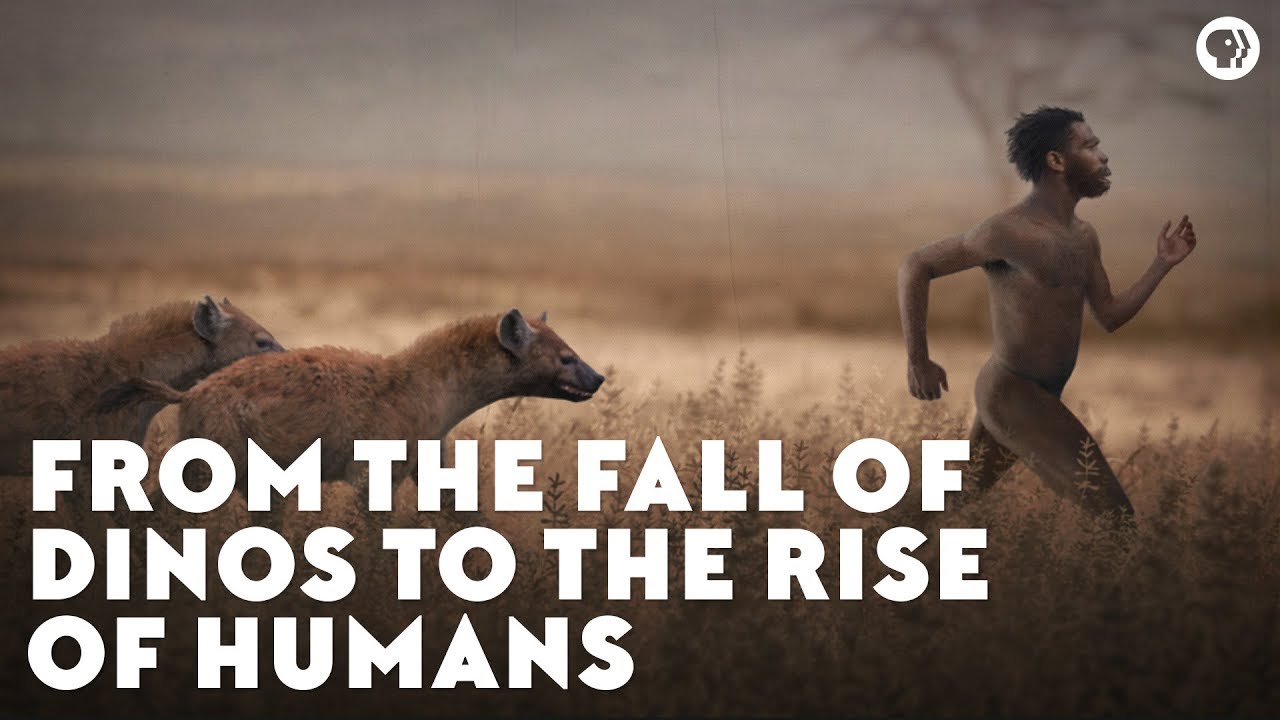
After taking you on a journey through geologic time, we've arrived at the Cenozoic Era. Most of the mammals and birds that you can think of appeared during this era but perhaps more importantly, the Cenozoic marks the rise of organisms that look a lot like us.
Thanks to Sean Murtha for the wonderful illustration of Tsidiiyazhi. Check out more of Sean's work here: http://www.seanmurthaart.com
And thanks to Ceri Thomas for the very cool Titanoboa reconstruction. Check out more of Ceri's paleoart at http://alphynix.tumblr.com and http://nixillustration.com
And as always thanks to Nobumichi Tamura for allowing us to use his wonderful paleoart: http://spinops.blogspot.com/
Thanks to Studio 252mya for their illustrations. You can find more of their work here: https://252mya.com/licensing
Produced for PBS Digital Studios.
Want to follow Eons elsewhere on the internet?
Facebook - https://www.facebook.com/eonsshow
Twitter - https://twitter.com/eonsshow
Instagram - https://www.instagram.com/eonsshow/
References:
http://www.ucmp.berkeley.edu/e....ducation/events/cowe
http://science.sciencemag.org/....content/327/5970/121
https://www.sciencedaily.com/r....eleases/2010/01/1001
https://www.sciencedaily.com/r....eleases/2009/01/0901
http://journals.plos.org/plosb....iology/article?id=10
http://www.paleocene-mammals.de
http://www.paleocene-mammals.de/primates.htm
http://www.paleocene-mammals.de/condylarths.htm
http://www.pnas.org/content/114/30/8047
http://www.sciencemag.org/news..../2017/07/tiny-fossil
https://books.google.com/books?id=9GXdGiZyzNAC&pg=PA52
https://www.nature.com/scitabl....e/knowledge/library/
http://citeseerx.ist.psu.edu/viewdoc/download?doi=10.1.1.502.8153&rep=rep1&type=pdf
http://sp.lyellcollection.org/content/101/1/401
https://agupubs.onlinelibrary.....wiley.com/doi/pdf/10
https://www.geolsoc.org.uk/Geo....scientist/Archive/Ju
https://research.amnh.org/pale....ontology/perissodact
https://www.britannica.com/science/Eocene-Epoch
https://paleonerdish.wordpress.....com/2015/08/17/clim
http://www.donaldprothero.com/files/47440402.pdf
http://palaeos.com/cenozoic/ol....igocene/oligocene.ht
http://journals.plos.org/ploso....ne/article?id=10.137
http://www.jstor.org/stable/2407816
http://www.pbs.org/wgbh/evolut....ion/change/deeptime/
https://www.nature.com/scitabl....e/knowledge/library/
https://www.britannica.com/science/Miocene-Epoch
https://sciencing.com/climate-....miocene-period-4139.
http://www.pbs.org/wgbh/evolut....ion/change/deeptime/
http://www.pbs.org/wgbh/evolut....ion/change/deeptime/
https://www.nature.com/scitabl....e/knowledge/library/
http://www.pnas.org/content/104/4/1159&sa=D&ust=1525092391891000&usg=AFQjCNGJNeJxKQiON8lkDaW_nB3kCbtUSg
https://www.researchgate.net/p....ublication/234272869
https://www.nature.com/scitabl....e/knowledge/library/
https://openscholarship.wustl.edu/etd/95/
http://www.pnas.org/content/103/12/4381
https://www2.palomar.edu/anthr....o/earlyprimates/earl
http://rspb.royalsocietypublis....hing.org/content/276
http://www.pnas.org/content/105/32/11093 oldest simian
https://pubs.geoscienceworld.o....rg/geology/article-l
https://www.sciencedirect.com/....science/article/pii/
https://www.ncbi.nlm.nih.gov/p....mc/articles/PMC42640
http://www.pnas.org/content/96/25/14664
https://www.nature.com/scitabl....e/knowledge/library/
https://www.researchgate.net/p....ublication/262563845
https://www.scientificamerican.....com/article/planet-
http://www.latimes.com/science..../sciencenow/la-sci-s
http://rstb.royalsocietypublis....hing.org/content/365
https://www.nature.com/scitabl....e/knowledge/library/

Learn more about Surfshark VPN at: https://surfshark.deals/pbseons
To get fire, which exists only on Earth, it took billions of years of photosynthesis – which means fire can’t exist without life. And fire and life have been shaping each other ever since.
*****
PBS Member Stations rely on viewers like you. To support your local station, go to http://to.pbs.org/DonateEons
*****
Produced by Complexly for PBS Digital Studios
Super special thanks to the following Patreon patrons for helping make Eons possible:
Collin Dutrow, Pope John XII, Steven Kern, Aaditya Mehta, AllPizzasArePersonal, John H. Austin, Jr., Alex Hackman, Amanda Ward, Stephen Patterson, Karen Farrell, Trevor Long, Jason Rostoker, Jonathan Rust, Mary Tevington, Bart & Elke van Iersel - De Jong, Irene Wood, Derek Helling, Mark Talbott-Williams, Nomi Alchin, Duane Westhoff, Hillary Ryde-Collins, Yu Mei, Albert Folsom, Heathe Kyle Yeakley, Dan Caffee, Jeff Graham, Tony Broussard
If you'd like to support the channel, head over to http://patreon.com/eons and pledge for some cool rewards!
Want to follow Eons elsewhere on the internet?
Facebook - https://www.facebook.com/eonsshow
Twitter - https://twitter.com/eonsshow
Instagram - https://www.instagram.com/eonsshow/
#eons #fire
References: https://docs.google.com/docume....nt/d/1uSWNH7yiMlGZMc


🌟 Join the 'I Never Knew TV' Community!Become a member today: https://www.youtube.com/channe....l/UCwZ2vurIl_X8rv0Dv this insightful clip from the holistic health conference, "Groundings With My Brothers and Sisters, 2024" Okuninibaa Dorothy Adamson Holley—affectionately known as Drum Okuninibaa Dot—shares her expert perspective on self-love and the importance of not internalizing untrue messages about ourselves.Join her as she explores how embracing self-care can lead to profound self-acceptance and personal growth. Discover actionable tips and empowering insights that encourage you to prioritize your well-being and silence the negativity from others.⬇︎Please support Okuninibaa Dorothy Adamson Holley and purchase her book and album⬇︎📚 Talk Therapy (Alone) Is Not Enough: Creative Practices for Trauma Treatment 📚https://www.amazon.com/dp/B09MYWWT82?ref_=pe_3052080_397514860&fbclid=IwAR0A-JuQ9t7e8ECOv9mRiOvA-ag3xUCL1hjKgUK6-3Ri8BdJ0ae281j9psk🎤 Drumetry Unleashed! Medicinal Music on a Missionhttps://drumdrdot.bandcamp.com🎧 Catch 'I NEVER KNEW 📻' for Roots, Rock, Reggae Music!Hosted by Jr of 'I Never Knew TV'📅 Sundays: 9 - 11 AM EST📅 Wednesdays: 8 - 10 AM EST📅 Thursdays: 10 AM - Noon ESTListen live: https://wloy.org/listen/#selflove #ineverknewtv

#thenewblackmind
► Subscribe to Transatlantic Productions 💥Smash The LIKE Button👍🏿 Share↗ & hit the Notifications Bell 🔔
► Donate so we can complete the upload https://www.gofundme.com/tapvideo
► Cash App: $Tapvideo $GodKingD91 $BrotherRonn $Moneymark0730
► Share on video on all Social Media.
► Website https://tapvideo.blogspot.com
https://www.facebook.com/Tapvi....deocom-7441435789873
► Back up Channels:
https://www.youtube.com/channe....l/UCs9-wRHfFb7v7RQAi
https://www.youtube.com/user/savejamaica