- General Videos
- Music
- Economics
- Health
- Travel & Events
- History
- Psychology
- Spirituality
- Movies
- News & Politics
- Kmtyw Combat Sciences
- Ɔbenfo Ọbádélé Kambon Videos
- Ɔbenfoɔ Kamau Kambon: Black Liberation Philosophy
- Science, Tech, Engineering and Math
- Permaculture
- Self-Sustainability
- Living Off Grid
- Yoruba Language Learning
- Education
- Mmɔfra Adesua
- Nana Kamau Kambon Playlist
- Livestream
- Komplementarity Kouples and Revolutionary Singles
- Abibitumi Film Series
- Decade of Our Repatriation
- Kwento xpr
- Live
Top videos

👉🏿 INVEST IN INDEPENDENT BLACK MEDIA→ Uncensored, Ad-Free & Exclusive Content
https://ineverknewtv.com/premium/
📍OUR SPONSOR: Maroon Productions
We help brands grow through strategic video, design, and content that actually attracts attention, builds trust, and converts.
If you’re looking to elevate your brand or content, learn more here:
👉🏿 [a]www.maroonproduction.com[/a]
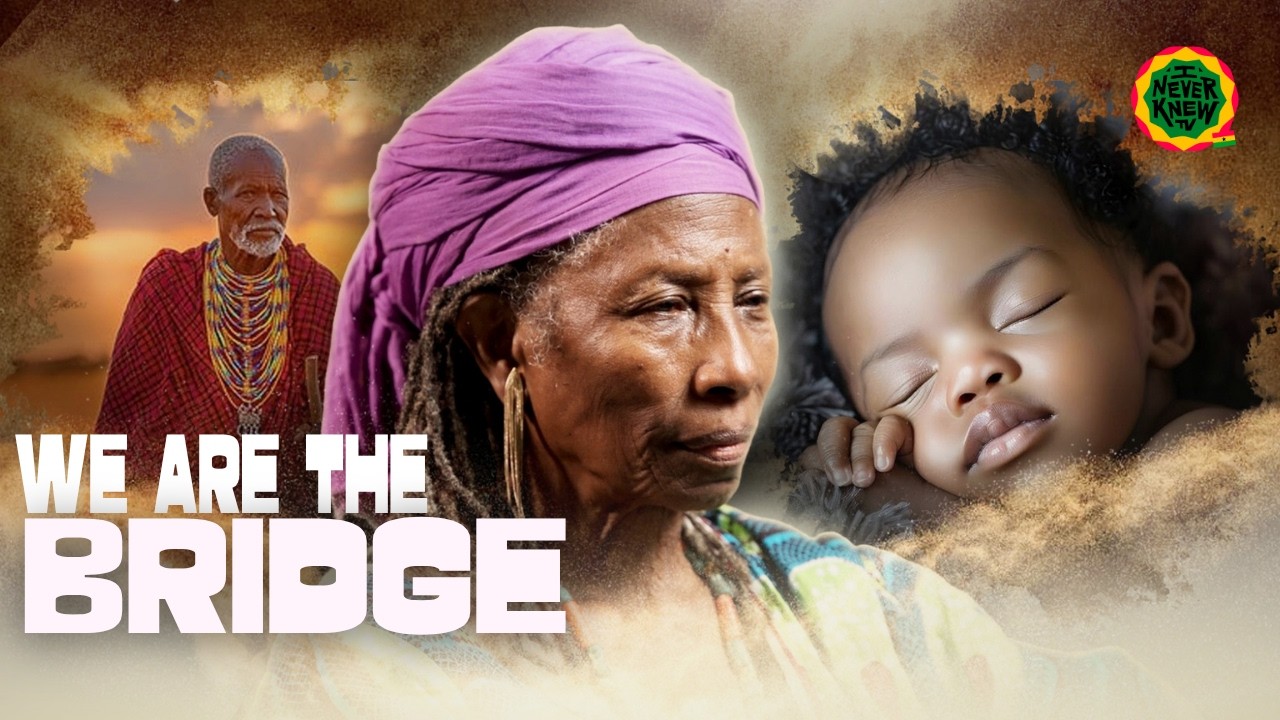
Are you coping or are you healing?
In this profound reasoning, Mawiyah Kambon, a psychologist, cultural scholar, and educator, explores the spiritual and psychological journey of Black men and women.
From unaddressed trauma and the impact of seeking white validation, to the deeper spiritual responsibilities within relationships and the sacred bond between mothers and daughters, this conversation offers a powerful path toward healing and self-understanding.
It serves as a roadmap for those seeking to reconnect with their ancestral roots—revealing why you are the critical link between your ancestors and the unborn, and how to move from survival mode into a life of purpose, clarity, and peace.
00:00 – The danger of listening to "his story" instead of our own
01:05 – Signs of unaddressed trauma vs. "normal" stress in Black men
02:41 – Why "coping" isn't healing: Addressing substances and distractions
06:02 – Realistic steps for men to break unhealthy patterns
08:06 – A 3-step spiritual process: Naming, Stillness, and Cleansing
11:07 – The high cost of seeking white validation in modern society
12:02 – Reclaiming ancestral "ways of knowing" over modern religion
16:10 – The Diaspora’s return: Moving beyond the pursuit of money
19:18 – The truth about Polygamy: Spiritual responsibility vs. sexual desire
23:19 – Healing the friction between Black mothers and daughters
29:18 – Lessons from a "Quiet Warrior": Building a marriage on unadulterated love
36:20 – The ultimate principle: Being the link between Ancestors and the U
Please click the link below to learn more about Dr. Mawiyah Kambon
and her work: https://www.onipa.com/about-dr-mawiyah-kambon/
📍OUR SPONSOR: Maroon Productions
We help brands grow through strategic video, design, and content that actually attracts attention, builds trust, and converts.
If you’re looking to elevate your brand or content, learn more here:
👉🏿 [a]www.maroonproduction.com[/a]
🎧 Catch 'I NEVER KNEW RADIO
for Roots, Rock, Reggae Music!
Hosted by Jr a.k.a 'The Bald Head' of 'I Never Knew TV'
📅 Sundays: 9 - 11 AM EST
📅 Wednesdays: 8 - 10 AM EST
📅 Thursdays: 10 AM - Noon EST
Listen live: https://wloy.org/listen/
#ineverknewtv #therapy


"2AM in Venezuela" (OFFICIAL VIDEO): https://youtu.be/GtvkwgbVKF8
BLACK WINTER (Full Album): https://youtube.com/playlist?list=PLJSMFuicKjJ46p1K9TlqZPRGFSd0M5z9U&si=4WG_YXCGJinM6XEN
Join the Patreon for exclusive videos that you won't find on Youtube: https://www.patreon.com/NTD1814
S U P P O R T
Cash App - $NelsonAmadeus
PayPal- GlobalHitsWorld@gmail.com
EMAIL - KingNeferkare@gmail.com
Twitter @NTDessalines
Instagram @NelsonAmadeus
TURN ON POST NOTIFICATIONS.
Thank you for watching my videos. I hope you've subscribed, and also thank you very much to the people that drop donations in the comment section!
If you'd like to get a hold of me via private message, please, visit my Facebook:
https://www.facebook.com/IndigenousAmerican
My TikTok can also be found under my name "Ricardo Ignacio" where I do livestream sessions and viewers can join the conversations in real-time!
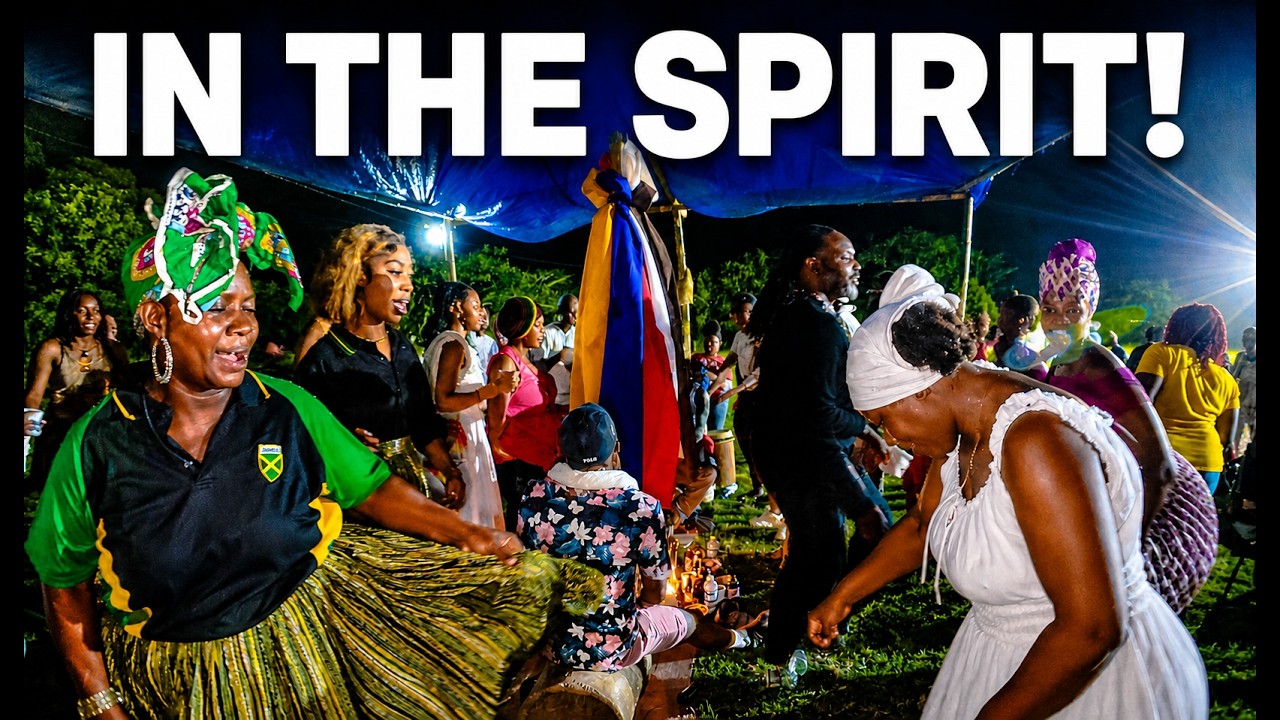

#jamaica #jamaicaculture #kumina #jamaicahistory #maroons
Kumina is one of Jamaica's most powerful and least understood African-derived traditions — a religion, a music form, and a way of speaking to the ancestors that has survived nearly 200 years. In this video, we trace Kumina's true origin story, break down the music and movement behind the ceremony, and take you inside the annual Rebirthday ceremony held in Fairy Hill, Portland — an all-night ritual of drumming, dance, and ancestral connection that most Jamaicans have never witnessed firsthand.
Unlike many Afro-Jamaican traditions, Kumina was not brought to Jamaica through slavery. It arrived after emancipation, carried by free Kongo people from Central Africa who came to Jamaica as indentured laborers in the 1840s–1860s. What they brought with them — the drumming, the language, the belief system — remains almost entirely intact today, still practiced in communities across St. Thomas, Portland, St. Mary, and St. Catherine.
In this video you'll learn:
🥁 The real origin of Kumina and its connection to the Kongo Kingdom
🥁 How the bandu and playing kyas drums carry Kumina's rhythm and history
🥁 Why one of Kumina's drums was disguised as a rum cask
🥁 What "myal" possession means within the ceremony
🥁 What happens during the Rebirthday ceremony in Fairy Hill, Portland
🥁 How Kumina shaped Nyabinghi drumming and modern reggae and dancehall
Thank you for watching this video. Please like, share and subscribe for more video on all things Jamaican. Please also turn on post notification so you don't miss out when we post.
==========================
Share and Subscribe
https://www.youtube.com/channe....l/UCSvEjat9kDIunEnwh
Follow us on Instagram:
https://www.instagram.com/onelovejamaica_/
Follow and like us on FaceBook
https://www.facebook.com/onelovejamaica1
One Love Jamaica


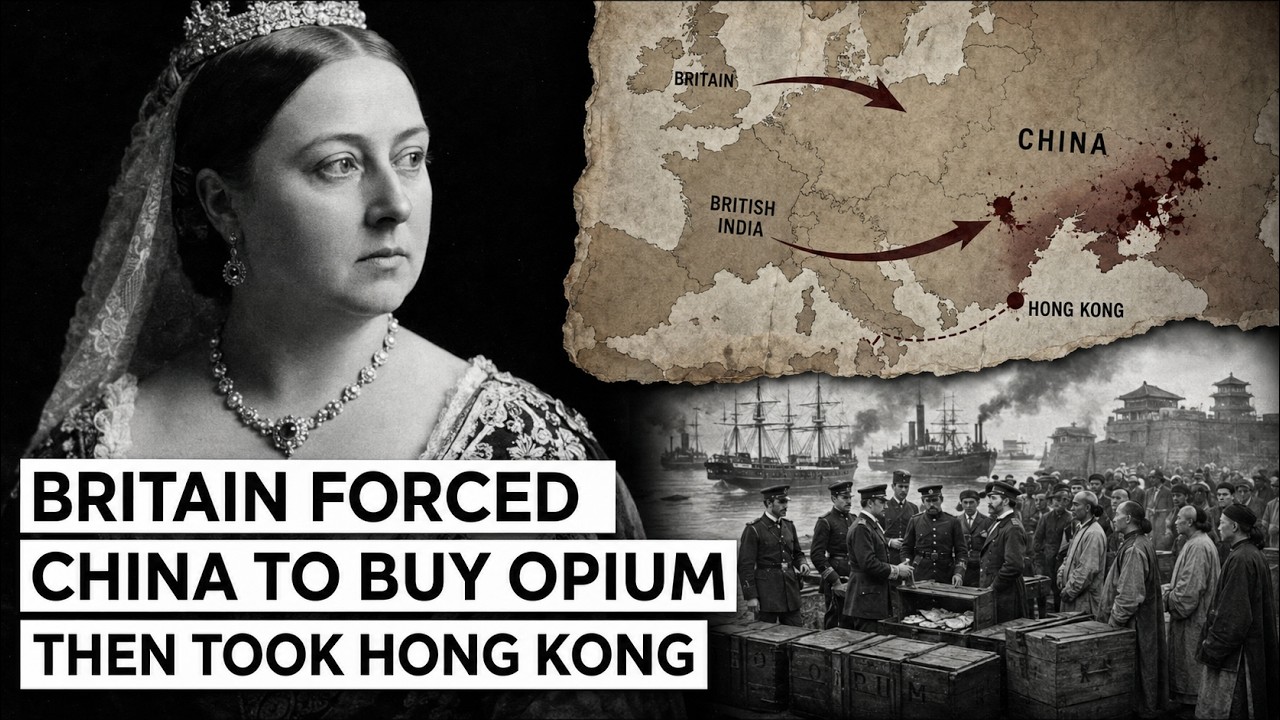
Britain didn't go to war over territory, ideology, or assassination. It went to war because China refused to buy drugs. In this video, we uncover the full story of how the British Empire engineered a narcotics pipeline from the poppy fields of Bengal to the harbors of Canton, addicted millions of Chinese citizens to opium, and then launched two devastating wars when China tried to shut the trade down. The result? Unequal treaties, the seizure of Hong Kong, the burning of the Summer Palace, and the beginning of what China still calls its Century of Humiliation — a wound that shaped the modern world and still echoes in geopolitics today.
We cover the East India Company's calculated monopoly on opium production, the chronic British trade deficit that started it all, Commissioner Lin Zexu's dramatic destruction of 20,000 chests of opium, the military campaigns that shattered the Qing Dynasty, the Treaty of Nanking and the cession of Hong Kong, the Second Opium War and the destruction of the Yuanmingyuan, the 99-year lease of the New Territories, Margaret Thatcher's negotiations with Deng Xiaoping, and the 1997 handover that marked the symbolic end of the British Empire.
This is the story of what happens when profit overrides sovereignty, and when the language of free trade is used to justify the most unfree of outcomes.
🔔 Subscribe and turn on notifications so you never miss a video.
#opiumwars #britishempire #hongkong #china #history #qingdynasty #eastindiacompany #colonialism #tradewar #centuryofhumiliation #linzexu #treatyofnanking #geopolitics #economichistory #imperialism #documentary #finance #globalhistory



When Stress Takes Over - How do you find a way to enjoy the sweetness of life? A reminder you don't need alcohol to slow down and get in the zone to enjoy the sweetness of life and recalibrate in ways that soothe the soul. Check it out on www.AsAboveSobolo.com