







- General Videos
- Music
- Economics
- Health
- Travel & Events
- History
- Psychology
- Spirituality
- Movies
- News & Politics
- Kmtyw Combat Sciences
- Ɔbenfo Ọbádélé Kambon Videos
- Ɔbenfoɔ Kamau Kambon: Black Liberation Philosophy
- Science, Tech, Engineering and Math
- Permaculture
- Self-Sustainability
- Living Off Grid
- Yoruba Language Learning
- Education
- Mmɔfra Adesua
- Nana Kamau Kambon Playlist
- Livestream
- Komplementarity Kouples and Revolutionary Singles
- Abibitumi Film Series
- Decade of Our Repatriation
- Kwento xpr
- Live
Top videos
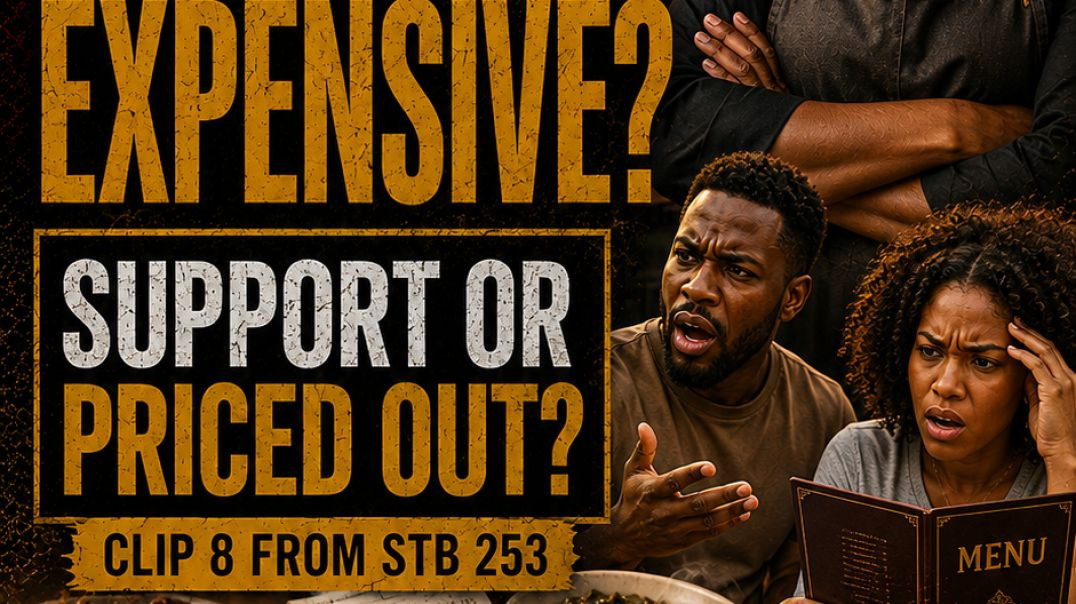

African, Caribbean, and soul food spots are catching heat over prices. Are we supporting Black business — or being priced out? Full episode: https://youtube.com/live/F4QM_Ze6OsI
#blackbusiness #africanfood #soulfood #blackeconomics #ShootTheBreeze
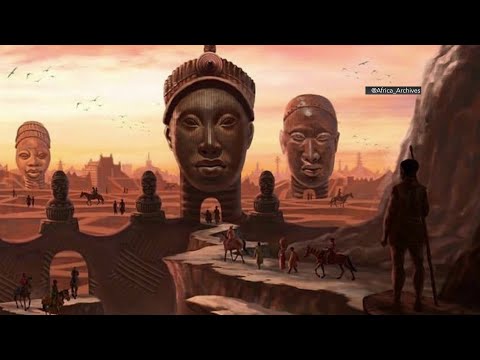

News Central travels to ancient Oyo town to understand and share the almost forgotten history.
.......................................
Don't forget to subscribe to our channel: https://bit.ly/2J1dFFf
Watch more amazing videos about #Africa: https://bit.ly/2J1
Watch News Central TV live: https://www.youtube.com/embed/....live_stream?channel=
Get social with News Central TV:
Twitter: https://twitter.com/NewsCentralTV
Instagram: https://www.instagram.com/newscentraltv/
Read more news on our website: https://www.newscentral.africa/

Nelplast Ghana Ltd is an Industrial Processing Company that specializes in recycling all kinds of plastic waste into different varieties of products. From Recycling of plastic waste in to Biodegradable plastic products, Manufacturing of Plastic Pavement blocks to Consultancy in setting up recycling companies... DENTAA VISITS Nelplast Ghana Ltd and speaks to the CEO, Nelson Boateng on how they use their local manufactured machinery and technology to recycle plastic waste into high-quality plastic products for both industrial and domestic use…
Address: P.O. BOX 2340, Tema – Ghana
Phone: Tel. +233 303 970873, +233 303970879
Mobile: +233 241 324 176
E-mail: info@nelplastgh.com or boatnel@gmail.com
http://www.nelplastgh.com/
#RECYCLING #WASTEmanagement #dentaaSHOW
OTHER INTERESTING 'DENTAAvisits' VIDEOS TO WATCH ON ODANA NETWORK...
My Bamboo wooden bike business in Africa
https://youtu.be/3UnwWeuBH_o
HOW I STARTED BUSINESS FROM A SINGLE TABLE IN A ROOM
https://youtu.be/O_qkIuQG3Wk
NANA KWAME BEDIAKO aka CHEDDA | Shares his humble beginnings to success
https://youtu.be/pECDw_u6Vuw
Growing up in Tottenham **LONDON**
https://youtu.be/1W5m-XjLZIs
PLEASE NOTE: Unauthorized upload of this video unto any YouTube channel is prohibited. (C) ODANA NETWORK
Subscribe to our YouTube Channel: ODANA NETWORK https://www.youtube.com/channe....l/UCqfgSR_n-fW58IXwy
Follow DENTAAshow on Twitter: https://twitter.com/dentaa_show
Like DENTAAshow Facebook Page: https://www.facebook.com/dentaashow/
Follow DENTAAshow on Instagram: https://www.instagram.com/dentaa_show/
waste management, recycling plastic, life hacks, recycling paper, recycling business, accra, zoomlion, ghana, plastic bottles

What Is The Significance Of The Haitian Revolution and Haitian Flag Day w/ Professor Bello
Please Subscribe.
Cash App: $amirdynast
Patreon: https://www.patreon.com/searchforuhuru
Instagram: Searchforuhuru
Instagram: Africapersonified
Facebook: https://www.facebook.com/searchforuhuru
Facebook: https://www.facebook.com/Africapersonified/
Twitter: https://twitter.com/searchforuhuru/
https://www.dynastamir.com


This video explains the concept of family in the African culture with an example from my Kikuyu (a tribe in Kenya) extended family comparing it with Western nuclear family.
#identity #kenya #communication #culture #westernculture #communication #family

Subscribe to Transatlantic Productions 💥Smash The LIKE Button👍🏿 Share↗️ & hit the Notifications Bell 🔔
Donate so we can complete the upload
https://www.gofundme.com/tapvideo
Cash App: $tapvideo
Share on video on all Social Media.
Videos on Youtube
https://tapvideo.blogspot.com/....2019/06/all-videos-o
Tapvideo Instagram: https://www.instagram.com/tran....satlanticproductions

If you’re ever injured in an accident, you can check out Morgan & Morgan. You can start your claim in just a click without having to leave your couch: https://ForThePeople.com/PBS
Ona Judge was born into slavery on George Washington's Mount Vernon plantation. After her escape in 1796, Washington became obsessed with recapturing her. His relentless pursuit reveals the profound contradiction of his views of slavery and freedom.
This episode of In The Margins is part of PBS’ America@250 collection, celebrating the country’s 250th anniversary. Democracy is built on participation. Get involved at https://vote.org/pbs
In The Margins is a series that covers the history they didn’t teach in school, exploring obscure, yet captivating tales that offer unique insights into their time and place.
*****
Want to learn more? Check out:
Never Caught: The Washingtons’ Relentless Pursuit of Their Runaway Slave Ona Judge by Erica Armstrong Dunbar
*****
PBS Member Stations rely on viewers like you. To support your local station, go to: http://to.pbs.org/DonateORIG
*****
Subscribe to PBS Origins so you never miss an episode! / @pbsorigins
And keep up with In the Margins and PBS Origins on:
Facebook: / pbsdigitalstudios
Instagram: www.instagram.com/pbsds



Become a Patron: https://www.patreon.com/TheMedicineShell
(We now have an in-house dibia for Eze-tier patrons!)
Subscribe if you want in-depth, weekly videos on Igbo spirituality, cosmology and culture (Odinala/Odinani).
This Video: Nsibidi is an ancient African writing system from the cross rivers region. What few know is that Nsibidi is also a sign language, spoken language, and sacred divination tool for our ancestors. In this video a explain what Nsibidi is, how it was used, as well as hidden secrets behind the spiritual power of the script.
Have personal questions? DM me on Twitter, I'll answer right away.
Twitter: www.twitter.com/shellmedicine
Business Inquiries: Derickofod@gmail.com
Video Features Art by:
Victor Ekpuk
Abakua (de)coding of a symbol - Roman Andres Torres Zayas
Baboon - Kristen Allen
Belkis Ayon - Abkua Art
Ken Nwadiogbu
Chilada - Baboon - Akilas Yemane

tts donations here/ https://streamlabs.com/ishowspeed
FOLLOW ME 👀 http://link.me/ishowspeed
MERCH 👕 - https://speed.store/
MEMBERSHIPS ✅ - https://www.youtube.com/c/IShowSpeed/join
for donations tts/ Media Request here
https://streamlabs.com/ishowspeed/tip
IG: https://www.instagram.com/isho....wspeed?igsh=MXNveXVu
X: https://x.com/ishowspeedsui?s=21
Snap : https://snapchat.com/t/IeuoJ50Y
Discord: https://discord.gg/ishowspeed
JOIN MY OTHER CHANNELS
YT Live speedy: https://youtube.com/@LiveSpeed....y?si=Sd4QiWsrk-iGX7f
YT Speedy Boykins: https://youtube.com/@speedyboy....kins7869?si=0jMDTQQs
YT Speeduniverse : https://youtube.com/@SpeedUniv....erse?si=XUMYeIWoUY4T
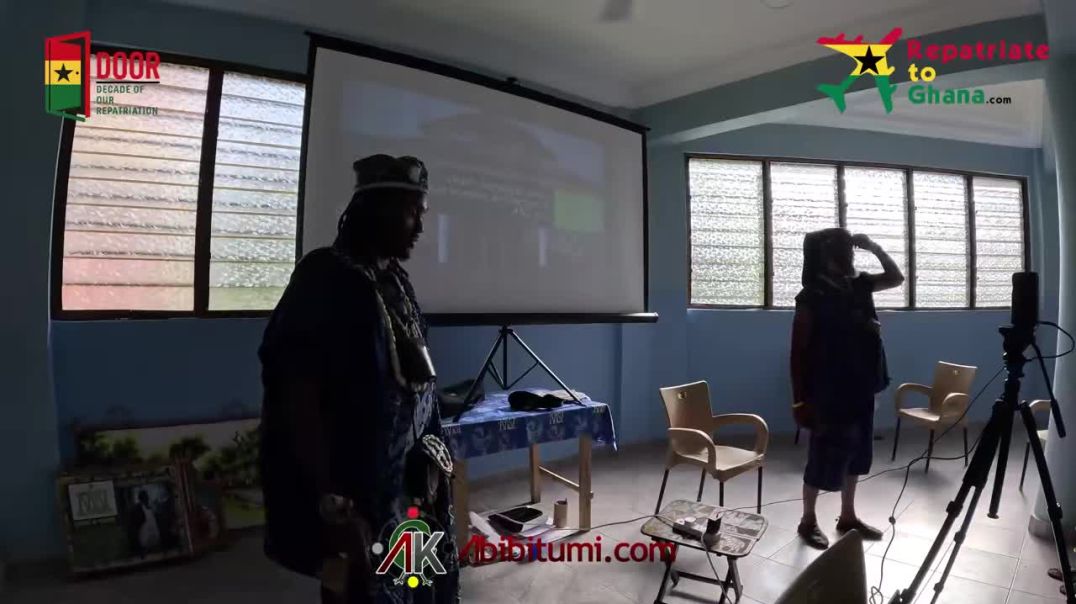

First 10 minutes preview.
Get the complete presentation for $20:
https://www.abibitumi.com/prod....uct/aligning-with-ma
#abibitumi #obadelekambon #blackstudies #door

We thatch round kitchens and rural huts in Zimbabwe for more contact 0773974777 or 0772389998
Facebook: http://www.facebook.com/frameworkthatchzimbabwe
Twitter: http://www.twitter.com/frameworkthatc1
visit our website on : http://frameworkthatcherszimbabwe.wordpress.com
or email us at frameworkthatch@gmail.com


Can collective economics transform the Black Community for good?
Tune in as Shareef Abdul Malik owner of We Buy Black, the largest online marketplace for Black owned product based businesses, is no stranger to the “For Us, By Us” model of entrepreneurship and continues to fulfill his mission of circulating the black dollar within the community.
Learn how working together can help unlock the economic opportunities available in Black-owned businesses, and help reshape the future for generations to come.
________________________________
Follow Our Guest:
https://www.instagram.com/shareefabdul_malik/
Get MORE of Inside The Vault:
LISTEN ON iTunes: https://podcasts.apple.com/us/....podcast/inside-the-v
FOLLOW us on Instagram: https://instagram.com/insideth....evault?igshid=NzAzN2
FOLLOW ASH CASH: https://instagram.com/iamashca....sh?igshid=NzAzN2Q1NT
LIKE us on Facebook: https://m.facebook.com/InsideTheVaultShow/
Inside The Vault w/ Ash Cash - The Greatest Money Mindset Show On The Planet!
#wealth #money #success #business #entrepreneur #motivation #investing


www.MelaninDVDS.com 25 New Films
OVER 3000 Films of Wisdom
RIP to All The Scholars who have passed.
30 DVDS for $100
SPEND OVER $100 AND GET 10 DVDS FREE
DVDS we have: Bro. Polight, Sa Ra Suten Seti, Sa Neter, Dr. Umar Johnson, Bobby Hemmitt, Dr. Jewel Pookrum, Dr. Sebi, Dr. Llaila O. Afrika Black Scholars, Dell Jones, Rudra, Runoko Rashidi, Dr. Frances Cress Welsing, Leonard Jeffries, Naim Akbar, Dick Gregory, Booker T. Coleman, Amos Wilson, Ashra Kwesi, William Mackey, Ishamakusa Barashango, Steve Cokely,James Smalls, Molefi Asante, Dr. Ray Hagin, Bobby Hemmitt, Phil Valentine, Dr. Del Blair, Bro. Dawud Bailey, Dr. John Henrik Clarke, Dr. Yosef Ben Yochannan, Dr. Ben & Dr Clarke, Claude
Anderson, Dr. Ivan Van Sertima, Cheikh Anta Diop, Bro. amar, House of Consciousness, Black Dot, Prof. Griff, Dr. Malachi Z. York, Anthony Browder, Wayne Chandler, Muslim Scholars, Louis Farrakhan, Hon. Elijah Muhammad, Malcolm X, Khalid Muhammad, Wesley Muhammad, ISLAM, Muslim, Sunni, Hittite, Shia, NOI, FOI, Khalid Muhammad, Minister Fard, Noble Drew Ali, Sharazhad Ali, Mecca, Ramadan, Bro. Mahir, Marcus Garvey, Halie Selassie
The Moor Scholars: Taj Tarik Bey, Sabir Bey, Queen Mother, Azzaziel Bey, A.A. Rashid, law, Sovereignty, Quballah, metaphysics, Alim Bey, Azzaziel Bey, Sister Myra – El, Dr. Jose Pimenta Bey, Taj Tarik Bey,TrueMaster, Aseer the Duke of Tiers, A.A Rashid, Alim Bey, C. Freeman-El, , Queen Mother, Ali Muhammad Sabir Bey, Yaffa Bey, Hakim Bey, Bro. Anpu
@twitter @netflix @vimeo @youtube @snapchat @vine @hotmail.com @msn @yahoo @aol @nytimes@latimes