Top videos
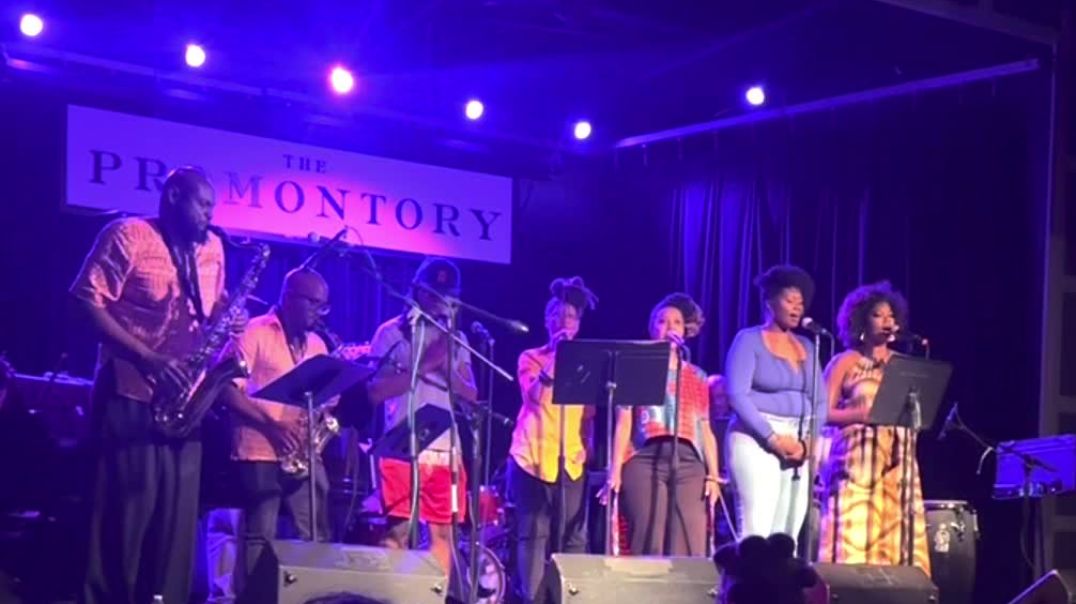
de la soul
Chef Ama's As Above Sobolo vending launch thank you video.
The Vision of Ibrahim Traoré, The Young Leader of Burkina Faso - French Speech translated in English
Dive into the inspiring world of Ibrahim Traoré, the dynamic young leader at the helm of Burkina Faso's journey towards progress and prosperity. In this video, we delve into one of Traoré's insightful speeches, translated from French to English, shedding light on his visionary thoughts and unwavering commitment to uplifting his nation.
Witness Traoré's impassioned rhetoric as he articulates his vision for Burkina Faso's future, tackling pressing issues with wisdom and clarity. Through this unbiased translation, we aim to amplify the voice of a promising leader whose ideas resonate not only within his country but across the globe.
Join us on this enlightening journey as we uncover the essence of Ibrahim Traoré's leadership and explore the transformative potential he holds for Burkina Faso and beyond. Let's embark together on a path of understanding, empowerment, and hope.
Affirming Black Manhood
Tickets & Info: https://www.shakaraspeaks.com/
It has almost become unpopular to talk about what it means to be a man, to deal with the concept of Manhood. You’ve got to deal with it.
About this event.
WE ARE BLACK MEN!
“It has almost become unpopular to talk about what it means to be a man, to deal with the concept of Manhood. You’ve got to deal with it. You can’t get around it.” – Nana Amos Wilson
“Affirming Black Manhood” attempts to contribute to the process of Black man taking back the power to define, develop & project what it means to be a Black Man. Our facilitators approach Black Manhood from varying perspectives, with an emphasis on promoting the values, principles & ideals that represent the best of who we be... And need to become.
We will engage a series of workshops on various aspects of Black Manhood, including space for general discussion. Our special guest facilitators are all Black Afrikan Men with a proven track record of sustained work with Black Men; addressing issues pertaining to Black Manhood!
We feature:
BABA MWALIMU BARUTI • DEFINING PRINCIPLES OF BLACK MANHOOD
ROBIN WALKER • THE ECONOMICS OF BLACK MANHOOD
IFAYOMI GRANT • CHALLENGING MISOGYNY: REBUILDING AFRIKAN MANHOOD
BRO. LDR. MBANDAKA • BLACK MANHOOD, FATHERHOOD & RITES OF PASSAGE
BABA BUNTU • THE POWER OF BLACK BROTHERHOOD
+more
20th june 2021 • 12pm-8pm GMT •Tickets £10 • available from ShakaRaSpeaks.com
"Mi Nah Wait Till Mi Rich Mi A Grow Mi Natty now
A Long Time Mi Deh Fi Mi Nazarene Vow
Nicess Ting A When Your Shanty A Flow
You Feel It Pon Ya Shoulda Wherevah You A Go
Let Mi Tell You Someting Incase You Never Know
A Rasta Run De Earth Spragga Dat A True
Gwaan Bun De Fayah You De Dragon Weh A Slew
Grow Ya Natty Don Plat It Seet'yah Now
No Hair-Dresser Cya Comb Mi Hair,
Mi Husban Stop Sidung Inna Barber Chair...You Hear
De People Seh You No Fi Use Nor Share
A Dass Why Mi A Bun It One Pastor Pair"
An agricultural development in Taraba, Nigeria. Growing quality vegetables for the Nigerian market.
The Black Blockchain Summit 2020 presents the following open ended discussion regarding the listed topic. All discussions were presented via live stream on September 12-13, 2020. Traditionally, the annual Black Blockchain Summit is an in-person and ticketed event held on the campus of Howard University.
To provide wider access, and to accommodate for the 2020 COVID-19 pandemic , all Summit activities were convened online and content provided for free to all registered participants of the Summit and to the global community via YouTube, Facebook, and Whova.
All opinions, ideas, and, references to intellectual property expressed in the following video are those of the individual speakers. Information shared should in no way be considered and endorsement by The Black Blockchain Summit. It is the mission of the Summit to provide access for conversation and convening, with the aim of ensuring a safe space for information sharing, education, and as our theme states, Global Black Survival!
If you would like to learn more about the panelists (in alpha order) please see below:
Alakanani Itireleng, Founder Satoshicenter and Plaas Farmer's Chain
Twitter: @bitcoinlady
Facebook: https://www.facebook.com/motherPkay
Instagram: https://www.instagram.com/satoshicentrebw/
LinkedIn: https://www.linkedin.com/in/bitcoinlady/
Colin C. Thompson, Founder xChainz.io and Thrive, Inc.
Website: www.xchainz.io
Website: https://thriveglobal.com/authors/colin-thompson/
John Wainaina Karanja, Founder - BitHub Africa and Melanin Academy
Twitter: @bithubafrica
Website: https://bithub.africa/
Trekk, Storyteller
Twitter: @SmartTrekken
Website: www.trekksmartconsulting.com
IG: https://www.instagram.com/trekkencryptos2connect
LinkedIn: https://www.linkedin.com/in/trekkwith2ks/
Valerie "Telly" Onu, Co-Founder& Governance Partner - Beyond Capital Markets
Facebook: https://www.facebook.com/pg/Qu....intessence-Consultin
CEADA y José Eulícer Mosquera Rentería: Los Grandes Retos Que Debe Resolver El Pueblo Afrocolombiano
El Ciclo de Conferencias de Estudios africanos y de la Diáspora Africana [CEADA] invitan a la conferencia “Los grandes retos que debe resolver el pueblo Afrocolombiano” presentada por José Eulícer Mosquera Rentería.
Al estudiar las causas de la problemática de los Afrocolombianos, encontramos que básicamente está determinada por una dinámica que ha prevalecido en la sociedad colombiana, desde la colonia hasta nuestros días, mediante la cual, producen capital para otros y no les permite producir capital para sí mismos, manteniendo a estas comunidades en un proceso de descapitalización permanente y en los límites de la marginalidad social. Lo que preocupa no solo es la pobreza marginal del pueblo afrocolombiano, y la discriminación a que son sometidas sus gentes, la cual no sólo se manifiesta en actitudes de las mayorías de las otras etnias o grupos sociales blanco - mestizos colombianos, sino, además en las escasas y restringidas posibilidades ofrecidas tanto por el Estado, como por la empresa privada; esto aun cuando han pasado más de dos siglos de ruptura con la colonia y de nacimiento de la República.
De manera documentada, desde la trata de personas y su esclavización hasta la colonia, desde las campañas independentistas hasta la formación de la República, desde los albores de la República hasta la situación contemporánea del estado colombiano. José Eulicer se embarca en un diagnóstico y nos cuenta sobre los grandes desafíos que debe resolver el pueblo afrocolombiano.
José Eulícer Mosquera Rentería, es un docente-investigador en las áreas de ciencias sociales, economía y filosofía, con más de 30 años de experiencia, con entidades estatales, privadas y ONGs. Es director del Centro de Estudios e Investigaciones Sociales Afrocolombianas, CEISAFROCOL, desde 1988. Ha realizado estudios universitarios en economía, educación para la interculturalidad, ciencias Sociales y Filosofía en Colombia, Rusia y España (Escuela de Economía de Moscú, Universidad Cooperativa de Colombia, Universidad de la Sabana, Bogotá, Universidad Complutense de Madrid). Ha publicado 23 libros y folletos y más de un centenar de artículos, entrevistas y conferencias en periódicos, revistas, la Internet, radio y televisión. Nació en Andagoya, Chocó, Colombia y actualmente es Candidato al Congreso de la República.
[ENGLISH]
“The great challenges that the Afro-Colombian people must solve” presented by José Eulícer Mosquera Rentería.
When studying the causes of Afro-Colombians' problem(s), we find that it is basically determined by a dynamic that has prevailed in Colombian society, from the colony to the present, through which they produce capital for others but do not allow them to produce capital for themselves, keeping these communities in a process of permanent decapitalization and the limits of social marginalization. What is worrying is not only the extreme poverty of Afro-Colombians and the discrimination to which their peoples are subjected, which is not only manifested in the attitudes of other ethnic groups or social groups such as whites and mestizos but also the scarce and restricted possibilities offered by both the State and the private sector; even when more than two centuries have passed since the break-up with the Spanish Empire and the birth of the Republic.
Documenting, from the trafficking of persons and enslavement to the colony, from the independence campaigns to the formation of the Republic, from the dawn of the Republic to the contemporary situation of the Colombian state. José Eulicer embarks on a diagnosis and tells us about the great challenges that the Afro-Colombian people must solve.
José Eulícer Mosquera Rentería is an educator-researcher in social sciences, economics, and philosophy, with more than 30 years of experience, with state and private entities and NGOs. He is the director of the Center for Afro-Colombian Social Studies and Research, CEISAFROCOL, since 1988. He holds degrees in economics, education for interculturality, Social Sciences, and Philosophy from universities in Colombia, Russia, and Spain (Moscow School of Economics, Cooperative University of Colombia, Universidad de la Sabana, Bogotá, Complutense University of Madrid). He has published 23 books and brochures and more than a hundred articles, interviews, and lectures in newspapers, magazines, the Internet, radio, and television. He was born in Andagoya, Chocó, Colombia, and is currently a candidate for the Congress of the Republic.
They must have a democratic system; if they don’t, it will cause them more problems, which will, in turn, exacerbate our security issues.
General Christopher Musa, Chief of Defence Staff
Afrika is home and I need to be there soon.
I will be joining the RTG global community as soon as I am able and I just want to start documenting my process of repatriation to Afrika.
For myself, for others who are hoping to achieve the similar things one day, or just for future generations to see.
I didn't go back to edit the video, so if some of my thoughts seem scattered and whatnot, I just want it to be known that I am humbled by the resources that have been created by my fellow Afrikans and look forwards to networking and getting to know more people soon.
Speech by Mhenga Maurice Bishop
UNIAACL-EACL Uwa Abantuum
uqobo ndiisioji itutu aluuja abantu cieng Limbog
egbe Abantu Cieng Limbog
Uwaabantuum.org/register
"When one thinks of contemporary African pop, the kora isn't the first instrument that comes to mind. A string instrument with a harp-like sound, the it has been a part of traditional African tribal music for centuries -- and for the most part, traditional settings are where you can expect to find it. Nonetheless, the kora hasn't been excluded from African pop, and it is used for both traditional and more modern sounds on this rewarding album by Malian kora virtuoso Mamadou Diabate. Coming from a family of Manding griots, Diabate is well schooled in traditional tribal music but is also open to more modern elements. Much of Tunga is quite traditional -- "Djanjo," for example, is a piece that goes back to the 13th century -- but "Dounuya" has strong blues leanings, and it is among the tracks that employs an electric bassist, Cheick Barry. The other bass player heard on this album is Ira Coleman, an acoustic jazz bassist who has played with such greats as Joe Henderson, Herbie Hancock, and the late Betty Carter, and joins Diabate on five of Tunga's nine tracks. Whether he is incorporating Western elements or favoring a traditional approach, Diabate brings a lot of charisma to this engaging, mostly instrumental album." - Alex Henderson
Buy the digital album here : http://www.qobuz.com/es-en/alb....um/tunga-mamadou-dia
Buy the album (CD format) here : http://www.africantreasures.co....m/product/tunga-cd-m
1 - Dagna 0:00
2 - Dounuya 4:58
3 - Tunga 10:01
4 - Larsidan 16:32
5 - Soutoukou 21:06
6 - Mamadou Diawara 24:44
7 - Djanjo 30:10
8 - Djelimory 34:56
9 - Mande 39:53
Subscribe to my channel : https://www.youtube.com/channe....l/UCM-AWvXvybgrQi6lo
_ _ _ _ _ _ _ _ _ _ _ _ _ _ _ _ _ _ _ _ _ _ _ _ _ _ _ _ _ _ _ _ _ _ _ _ _ _ _ _ _ _
Copyright Disclaimer Under Section 107 of the Copyright Act 1976, allowance is made for "fair use" for purposes such as criticism, comment, news reporting, teaching, scholarship, and research. Fair use is a use permitted by copyright statute that might otherwise be infringing. Non-profit, educational or personal use tips the balance in favor of fair use.
Mk Party National Organizer Floyd Shivambu Calls for Unity at UMkhonto Wesizwe Gala Dinner (𝐅𝐮𝐥𝐥 𝐒𝐩𝐞𝐞𝐜𝐡)
@MkhontoweSizwex Gala Dinner held on October 18, 2024, at Durban's Umhlanga Rocks, National Organizer Floyd Shivambu emphasized the party's role in unifying progressive forces
Farming the Desert - How To Turn The Desert Green
For once there is some good news from Africa. Farmers are reclaiming the desert, turning the barren wastelands of the Sahel region on the Sahara’s southern edge into green, productive farmland.
Satellite images taken this year and 20 years ago show that the desert is in retreat thanks to a resurgence of trees. They are mainly ana trees (Faidherbia albida), a type of acacia. Wherever the trees grow, farming can resume.
Tree planting has led to the re-greening of as much as 3 million hectares of land in Niger, enabling some 250,000 hectares to be farmed again. The land became barren in the 1970s and early 1980s through poor management and felling of trees for firewood, but since the mid-1980s farmers in parts of Niger have been protecting them instead of chopping them down.
The results have been staggering, says Chris Reij of the Free University Amsterdam in the Netherlands, who presented the results at the From Desert to Oasis symposium in Niamey, Niger, last month. In areas where 20 years ago there was barely a tree, there are now between 50 and 100 per hectare. The change is particularly striking in the previously barren Zinder region to the south.
“Where 20 years ago there was barely a tree, there are now 50 to 100 per hectare. Production of cereals has soared”
Trees create a virtuous circle of benefits. Leaves and fruits provide food, fodder and organic matter to fortify the soil. More livestock means more manure, which further enriches the soil enabling crops to be grown, and spreads tree seeds so new trees grow. The trees also provide shelter for crops and help prevent soil erosion. In times of drought, firewood can be sold and food purchased to tide families over.
Coupled with simple measures such as ditches and holes to catch scarce rainwater and save it for irrigation, the programmes are helping communities in Niger re-establish control over their fate, simultaneously halting the march of the desert and helping to prevent famines like the one that hit Niger in July 2005.
“The spiral of degradation has been reversed,” says Reij. “Since the middle of the 1980s, at least 250,000 hectares of strongly degraded land have been rehabilitated.” Production of cereals such as millet and sorghum have soared by between 20 and 85 per cent since 1984 as a result, Reij says, and vegetable production has quadrupled.
Growing desertification caused by climate change is eating into agricultural land across the world, threatening the communities depending on crops to survive. In Mali, an initiative is trying to turn deserts green again.
The “Great Green Wall” Didn’t Stop Desertification, but it Evolved Into Something That Might
The Sahel spans 3,360 miles from the Atlantic Ocean to the Indian Ocean, a belt stretching across the southern edge of the Sahara. Rainfall is low, from four to 24 inches per year, and droughts are frequent. Climate change means greater extremes of rainfall as the population skyrockets in the region, one of the poorest in the world. Food security is an urgent concern. By 2050, the population could leap to 340 million, up from 30 million in 1950 and 135 million today.
Reij, now based in Amsterdam, began working in the Sahel when the soil literally was blowing away during dust storms. After years away, Reij returned to Niger and Burkina Faso in the summer of 2004. He was stunned by what he saw, green where there had been nothing but tan, denuded land. He quickly secured funding for the first of several studies looking at farming in villages throughout Burkina Faso and Niger.
For help, he called on another veteran of Africa, Gray Tappan, a geographer with the U.S. Geological Survey's West Africa Land Use and Land Cover Trends Project. Flying over villages and then driving from one to the other, Tappan says they were “charmed” by what they saw. On the ground, they couldn’t see villages from a distance because there was too much vegetation.
Over two years traveling through Burkina Faso and Niger, they uncovered a remarkable metamorphosis. Hundreds of thousands of farmers had embraced ingenious modifications of traditional agriculture practices, transforming large swaths into productive land, improving food and fuel production for about 3 million people.
"This regreening went on under our radar, everyone's radar, because we weren't using detailed enough satellite imagery. We were looking at general land use patterns, but we couldn't see the trees," Tappan says. "When we began to do aerial photography and field surveys, then we realized, boy, there is something very, very special going on here. These landscapes are really being transformed."
Yacouba Sawadogo, the African farmer who stopped the desert
Reforestation and soil conservation. This is how Yacouba Sawadogo, a simple farmer, and his family solved the desertification crisis in his village.
Threats to the forest haven’t stopped hope
.............................................
Become a Patron: www.patreon.com/ceada
Donate at cashapp: $DiaspAfro
Dr. Amara Enyia, Ph.D. Increasing Interconnectedness of the Global Black Diaspora: the United Nations Permanent Forum on People of African Descent
Thousands of Beta Israel Jews in the Ethiopian city of Gondar are living in limbo while waiting to emigrate to Israel. Their chances of leaving Ethiopia and joining relatives who have already made the move to Israel are being complicated by religious factors: Israel doesn't recognize them as true Jews and won't let them immigrate into the country.
Martin Luther King Jr. talks about leadership, his childhood, and the civil rights struggle in America. This amazing recording of King from 60 years ago is just as relevant today as it was then. This BBC interview was recorded about seven years before MLK's death in 1961.
Part of the proceeds from this video with be donated to The Martin Luther King, Jr. Center for Nonviolent Social Change: https://thekingcenter.org/about-king-center/
If you enjoyed this video please support us by sharing the video and leaving a comment below!
Speaker: Martin Luther King Jr.
Interview: Martin Luther King Jr. & John Freeman
1961
BBC Face to Face
To learn more about Martin Luther King Jr.
https://en.wikipedia.org/wiki/....Martin_Luther_King_J
https://thekingcenter.org/about-king-center/
https://www.history.com/topics..../black-history/marti
►Follow T&H:
Facebook: https://www.facebook.com/THinspirationMotivation/
YouTube: https://www.youtube.com/user/tradgedyandhope
Join Lupita on a voyage to discover the Amazon fighting women of Dahomey
This video highlights the enduring legacy of Garveyism in Port Limon, Costa Rica and interviews elders who kept the movement moving for nearly 100 years.