







- General Videos
- Music
- Economics
- Health
- Travel & Events
- History
- Psychology
- Spirituality
- Movies
- News & Politics
- Kmtyw Combat Sciences
- Ɔbenfo Ọbádélé Kambon Videos
- Ɔbenfoɔ Kamau Kambon: Black Liberation Philosophy
- Science, Tech, Engineering and Math
- Permaculture
- Self-Sustainability
- Living Off Grid
- Yoruba Language Learning
- Education
- Mmɔfra Adesua
- Nana Kamau Kambon Playlist
- Livestream
- Komplementarity Kouples and Revolutionary Singles
- Abibitumi Film Series
- Decade of Our Repatriation
- Kwento xpr
- Live
Top videos


👉🏿 INVEST IN INDEPENDENT BLACK MEDIA → Watch the FULL UNCENSORED interview with Dr. Mawiyah Kambon at https://ineverknewtv.com/premium/📍Missed Pt.1 https://youtu.be/Bp8sTbw2NaUMissed Pt.2 https://youtu.be/Jo4H_6Qxao4Missed Pt.3 https://youtu.be/0ctKiGvbiMUMissed Pt.4 https://youtu.be/Q0wT5Xfr7J8In Part 5 of this compelling reasoning, Mawiyah Kambon breaks down the systemic reasons why many Black people and Black men in particular feel that traditional "talk therapy" fails them.Kambon explores the Eurocentric roots of modern psychology and how those foundations often exclude non-Western perspectives on healing.Please click the link below to learn more about Dr. Mawiyah Kambon and her work: https://www.onipa.com/about-dr-mawiyah-kambon/🎧 Catch 'I NEVER KNEW RADIO for Roots, Rock, Reggae Music!Hosted by Jr a.k.a 'The Bald Head' of 'I Never Knew TV'📅 Sundays: 9 - 11 AM EST📅 Wednesdays: 8 - 10 AM EST📅 Thursdays: 10 AM - Noon ESTListen live: https://wloy.org/listen/#ineverknewtv #therapy


This video explains the concept of family in the African culture with an example from my Kikuyu (a tribe in Kenya) extended family comparing it with Western nuclear family.
#identity #kenya #communication #culture #westernculture #communication #family


When Cynthia flings a stone and hits Rex fi no reason, she never expected the mongrel would remember. But trust and believe… Rex planned his revenge — and it come hot! From the gate clash with Miss Patsy to a full plate of oxtail gone missing, this episode is pure country drama and laughter.
🔥 Who was really wrong? Cynthia or Rex?
💬 Drop your thoughts in the comments and don’t forget to subscribe for more Rex di Country Mungrel stories straight outta yard!
👵🏾 Featuring: Miss Patsy
🐶 Starring: Rex
💥 Special Guest: Cynthia
#countrymungrel #rexthedog #jamaicancomedy #misspatsy #cynthiaandrex #cookshopclash #viralyarddrama #mungreltingz #yardvibes #funnydogvideos





Check Out Yanas Channel & Subscribe
https://www.youtube.com/watch?v=ZXglCbBIxUs
The Image of Africa has been distorted around the globe and we are changing the narratives via Youtube videos One Country At Time.Until the history of Africa is told by Africans, the story of greatness will always glorify the imperialists.!It's Time For Africans To Unite, Embrace their Culture and be Proud of their Roots & Tell Their Own Story!-AFRICA TO THE WORLD..Subscribe to unlocked the Real Africa!
Looking for a Short stay place in Ghana?
Book With
https://www.instagram.com/wood....buryluxuryapartments
One On One Consultation With WODEMAYA
https://aiyawodemaya.com/consultation/
We Need Your Support To Make This Project A Successful One
For Sponsorship Advertisement & Business Enquiries
hello@mayaempiregroup.com
Donate & Support the Channel on Patreon:
https://www.patreon.com/wode_maya
Purchase Our T-Shirt To Support Our Journey!
https://teespring.com/proudly-africa
https://teespring.com/wodemaya-africa-to-the-world
https://teespring.com/maya-africa-to-the-world
https://teespring.com/born-afr....ican-in-america-blac
Let's Interract On:
Twitter
https://twitter.com/wode_maya
Instagram:
https://www.instagram.com/mrghanababy/
Like My Facebook page:
https://www.facebook.com/Wodemaya99/
I LOVE YOU

At the 3rd Abibitumi Awards, Kwame Akoto-Bamfo is honored for his outstanding contributions as a Ghanaian multidisciplinary artist, educator, and cultural activist whose work preserves memory, confronts historical injustice, and creates spaces for healing.Kwame Akoto-Bamfo is widely known for his commitment to cultural preservation and historical truth. He is the founder of the Ancestor Project and the Nkyinkyim Museum in Ghana. His sculptural work has gained international recognition for documenting African historical experience and confronting the enduring legacies of enslavement, colonialism, war, genocide, and displacement. Through art, symbolism, and public memory, he has helped create powerful spaces for reflection, restoration, and consciousness.In this moving moment from the 3rd Abibitumi Awards, Kwame Akoto-Bamfo reflects on nearly two decades of activism and explains why this recognition is especially meaningful. Though he has received awards before, he makes clear that honor carries its deepest significance when it comes from home. His remarks offer a powerful reminder that being recognized by one’s own people means more than prestige, visibility, or outward display.This clip captures both the award presentation and Kwame Akoto-Bamfo’s heartfelt words on home, belonging, activism, and the importance of community-rooted recognition.Thinking about moving back home? We have already helped hundreds secure citizenship, housing, relocation, driver’s licenses, and business setup. Endorsed by Ghana’s Office of the President, we help make your move seamless.Learn more:https://www.r2gh.comFor more powerful lectures, interviews, and Black-centered content:https://www.abibitumi.com#KwameAkotoBamfo #abibitumiawards #nkyinkyimmuseum #blackpower #culturalactivism #ghana #repatriation #r2gh #abibitumi #africanart


From simple alphabets to secret symbolic languages, graphic designer Saki Mafundikwa celebrates the many forms of written communication across the continent of Africa. He highlights the history and legacy that are embodied in written words and symbols, and urges African designers to draw on these graphic forms for fresh inspiration. It's summed up in his favorite Ghanaian glyph, Sankofa, which means "return and get it" -- or "learn from the past."
TEDTalks is a daily video podcast of the best talks and performances from the TED Conference, where the world's leading thinkers and doers give the talk of their lives in 18 minutes (or less). Look for talks on Technology, Entertainment and Design -- plus science, business, global issues, the arts and much more.
Find closed captions and translated subtitles in many languages at http://www.ted.com/translate
Follow TED news on Twitter: http://www.twitter.com/tednews
Like TED on Facebook: https://www.facebook.com/TED
Subscribe to our channel: http://www.youtube.com/user/TEDtalksDirector

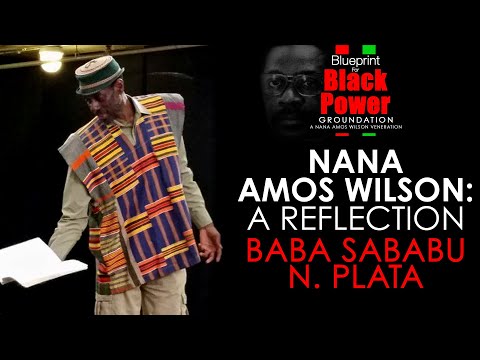

This is a clip from the Blueprint for Black Power Groundation - Nana Amos Wilson Veneration
To watch in FULL, click the following link: https://abibitumitv.com/v/GKyUOu
KEYNOTE ADDRESSES:
BRO. LDR. MBANDAKA - Spiritual Leader of the Alkebu-Lan Revivalist Movement. Political-Cultural Scientist/veteran activist.
IS AFRIKA REALLY RISING?: DISSECTING THE PROPAGANDA
QUEEN TAESE - Queen of Homeschooling, founder of Liberated Minds Black Homeschool & Educational Institute
EDUCATING OUR CHILDREN: THE POWER IS IN THE ACTIVATION
SABABU N. PLATA - Co-Founder of Afrikan World Info Systems
Hosted By: ShakaRa
Nana Amos Wilson is the Author of:
• The Developmental Psychology of the Black Child
• Awakening the Natural Genius of Black Children
• Blueprint for Black Power
He also established @Afrikan World Info Systems, a publishing company dedicated to knowledge production, specific to the needs of the Global Afrikan Community. Few, if any, were more prolific in providing a more scientific analysis of the plight of Black people, and putting forward tangible programmes. Shortly before the publishing of Blueprint for Black Power, Nana Wilson passed away - 14th January 1995. He was on the verge of developing a credit union and other institutions around the community businesses and organisations he was involved in.
Nana Amos Wilson laid a Blueprint. He did his work. Now we honour him the best way we know how - profiling those who are building on this illustrious legacy, engaging the Blueprint in thought and action.


https://www.youtube.com/@kamjiverse
► Subscribe to Transatlantic Productions 💥Smash The LIKE Button👍🏿 Share↗️ & hit the Notifications Bell 🔔
► Donate so we can complete the upload https://www.gofundme.com/tapvideo
► Cash App: $GodKingD91 $BrotherRonn $Moneymark0730
► Share on video on all Social Media.
► Website https://tapvideo.blogspot.com
https://www.facebook.com/Tapvi....deocom-7441435789873
► Back up Channels:
https://www.youtube.com/channe....l/UCs9-wRHfFb7v7RQAi
https://www.youtube.com/user/savejamaica
#unitedstatesofafrika #theunitedstatesofafrika #thinkbigforafrica #africanunity #reggae
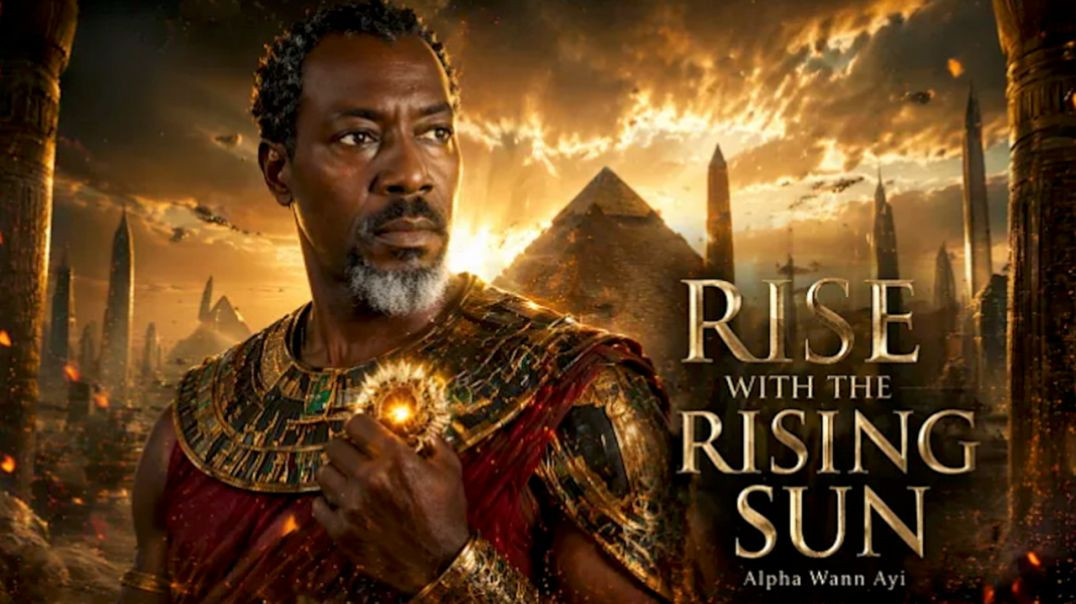
This video song tells the story of a rising African people through each and every African, regardless of where we are.
It is also a powerful message that Africa is greater than most think because it is the only continent of people capable of recreating its self.
It was at the very root of things, so will rebirth the very greatness it started off with.
Watch how we rise from dust to our greatness again.
This is not just music.
This is a declaration!
Today, at the heart of a world that is going crazy, where sovereign leaders are being kidnapped right from their sovereign countries and wars being perpetrated through false pretence and condemnations, resulting in innocent human beings loosing their lives, we are taking our responsibility. We are calling for all our African leaders to make The United States of Afrika a reality.
So from today, March 4th (march forth) we are calling on all African consciences, whether at home or abroad to engage and ask our African leaders to STAND UP and DO THE RIGHT THING to save Africa and Africans from the madness and actual real threat to life anywhere on the planet,, let alone Africa.
So we here present an instrumental anthem — a proposed future national anthem for the upcoming United States of Afrika, that is now more than a must. IT IS URGENTLY A MUST!.
We have created an anthem, sound that represents OUR DEMANDS from all our African leaders:
We demand:
• One Nation
• One Economy
• One Army
• One Passport
• One Shared Currency
• One Voice in Global Policy
• One Flag
• One National Anthem
• Free Movement Across All Union States
• Free Movement of Goods within all Union States
Africa stands at a historic crossroads. With over 1.4 billion people, the youngest population in the world, and the largest emerging free trade zone under the African Continental Free Trade Area, the structural foundations for continental unity already exist.
The framework is present through the African Union.
What remains is collective will.
This instrumental piece is offered as an example — a sound that could one day represent a united, sovereign, powerful continental federation.
If you believe in:
A borderless Africa.
An economically integrated Africa.
A politically coordinated Africa.
A globally respected Africa.
Subscribe. Share. Participate.
Comment your country and write: ONE AFRICA.
The future is CONTINENTAL.
The time is NOW!
Follow us on social media
X
https://x.com/AfricansRising
Linkedin
https://www.linkedin.com/company/africansrising
Instagram
https://www.instagram.com/africans_rising/
YouTube https://www.youtube.com/@AfricansRising
TikTok https://www.tiktok.com/@africans_rising
#unitedstatesofafrika #oneafrica #panafrican #africanunity #africarising #futureofafrica
#unitedstatesofafrika #oneafrica #panafrican #africanunity #africarising #futureofafrica
#unitedstatesofafrika #abibitumitv #oneafrica #panafrican #africanunity #africarising #futureofafrica
#unitedstatesofafrika #oneafrica #panafrican #africanunity #africarising #futureofafrica

Malcolm X - Return From Mecca Interview - May 21, 1964
Watch our independent film: Message to the People A Story of Malcolm X available Here: https://www.melaneyesmedia.com/
Message to the People: A Story of MALCOLM X is a historical dramatization of the life and words of, Malcolm X. This one-hour movie which portrays his image and presents his words as performed by Baba Aundar, is based on the theatrical play which bears the same name.
This film introduces us to the great legacy of a cultural Icon: Malcolm X also known as El Hajj Malik El Shabazz. It shows the life journey and powerful transformation of Malcolm Little to Malcolm X; spanning his childhood in Omaha, NE to adulthood as the National Spokesperson for the Nation Of Islam and founder of the Muslim Mosque Incorporated. Message to the People shows the evolution of the man himself. It sheds light on his upbringing, his travels to the Middle East and Africa while emphasizing his commitment to Black pride, self reliance, human rights and the liberation of African peoples all over the globe.
An International figure, Malcolm’s message of Black Nationalism challenged and shifted the views of many people around the world. There can be an argument made that his views and social commentary are more relevant now than ever. To hear Malcolm in the film speak about the disproportionate number of African Americans locked up in prison, the “House Negro” mentality, and the black struggle for human rights, only reaffirms that many things have changed since the Civil Right’s movement; while other issues that have plagued our society have remained the same.
The views of Malcolm expressed in the film, challenge the notion that integration was the best solution for Black Americans. A story of Malcolm X encourages viewers to take a look in the mirror and ask hard questions about the choices we make as individuals as well as a community. One of our goals with this film is to provoke dialogue and spark conversation amongst those who see it. With so many culturally conscious movies and documentaries by black film makers exploding onto the marketplace, we want to take the torch and fuel to the fire of knowledge and awareness! True conversation and dialogue will help our community to heal and begin to implement solutions for positive change, socially, culturally, economically and psychologically and we want Message to the People to be one of the catalysts for this growth and healing.
We want you to see this film and get a better understanding of Malcolm X, the man. Know that he was more than the picture of him gazing out the window armed with an assault rifle bolstering “By any means necessary.” He was a complex individual, with strong opinions, a passionate and eloquent speaker who devoted his life to uplifting his people. Malcolm was a son, a father, a husband, a teacher, a statesman, a visionary, he was the voice of a people. Oder this movie, download it, purchase the DVD, borrow it from a friend, rent it online, but by all means SEE this movie!

The Image of AFRICA has been DISTORTED around the WORLD & We are CHANGING the NARRATIVES via YOUTUBE videos One Country At Time.Until the HISTORY of AFRICA is told by AFRICANS, the story of GREATNESS will always GLORIFY the IMPERIALISTS!.
Check Out Jean Youtube Channel
https://www.youtube.com/@LInvestisseurAfricain
HAVE YOU SUBSCRIBED YET?
https://www.youtube.com/c/WODEMAYA
BOOK ONE on ONE CONSULTANCY WITH WODEMAYA
https://wodemaya.me/consultation/
Support Our Africa Travels
https://www.patreon.com/wode_maya
Paypal
https://paypal.me/mayaempire
OUR OFFICE CONTACT
+233591519551
SHOP YOUR AFRICAN WEARS FROM MY SISTER
https://dukezfashionline.com/
FOR ENQUIRIES & SPONSORSHIP
hello@wodemaya.africa
FOLLOW ME ON TWITTER
https://twitter.com/wode_maya
INSTAGRAM
https://www.instagram.com/mrghanababy
FACEBOOK
https://www.facebook.com/Wodemaya99/
We Love You!

In my household, we pride ourselves in the work of our hands. We believe that for as long as the rain falls and our health does not fail us, we will work and we will not go a day hungry because our fields will provide.
From a young age, we are introduced to the daily chores at home and are taught how to work the fields, when to plant and sow, when to plough and repeat. I am forever grateful for my upbringing and I will always be grateful to my mom for instilling our ways in us, from a young age and for being able to house and take care of all 27 of us. #thegreatharvest #villagelife #namibia
🎥 WATCH more of my exciting village content ⇩
Defying Cultural Beliefs| Fetching Water on My Head |Collecting Firewood in a Creepy Forest ://www.youtube.com/watch?v=674Kx2R8khw&t=28s
Visiting My Only Grandmother | She Brewed Traditional Beer For Me: https://www.youtube.com/watch?v=0-Rcqk8ydDw&t=346s
LET'S CONNECT ⇩
Follow me on instagram: https://www.instagram.com/wov3nn
Twitter: https://twitter.com/wov3nn