Top videos
![Nelson Mandela Released [11 Feb 1990]](https://i.ytimg.com/vi/F37UPYyvl4I/hqdefault.jpg)
On February 11, 1990 Nelson Mandela was released from prison after 27 years. Watch the in-depth reporting from CBC News: The National on that historic day.
»»» Subscribe to CBC News to watch more videos: https://www.youtube.com/user/c....bcnews?sub_confirmat
Connect with CBC News Online:
For breaking news, video, audio and in-depth coverage: http://www.cbcnews.ca
Find CBC News on Facebook: https://www.facebook.com/cbcnews
Follow CBC News on Twitter: https://twitter.com/cbcnews
For breaking news on Twitter: https://twitter.com/CBCAlerts
Follow CBC News on Google+: https://plus.google.com/+CBCNews/posts
Follow CBC News on Instagram: http://instagram.com/cbcnews
Follow CBC News on Pinterest: https://www.pinterest.com/cbcnews//
Follow CBC News on Tumblr: http://cbcnews.tumblr.com
»»»»»»»»»»»»»»»»»»
For more than 75 years, CBC News has been the source Canadians turn to, to keep them informed about their communities, their country and their world. Through regional and national programming on multiple platforms, including CBC Television, CBC News Network, CBC Radio, CBCNews.ca, mobile and on-demand, CBC News and its internationally recognized team of award-winning journalists deliver the breaking stories, the issues, the analyses and the personalities that matter to Canadians.

To donate to our course
Buy us a coffee https://www.buymeacoffee.com/africanbuzz
Senegalese youths take to the streets demanding for the withdrawal of French military from their country
#senegal #traoré #traoré #burkinafaso #traoré #senegal #sonko #diomayefaye #diomayepresident #niger #tiani #burkinafaso #mali #niger #g5 #france #ibrahim #tchiani #mali #assimi #goita #burkinafaso #africa #african #kenya #africanclimatesummit #climatechange #climate #carbondioxide #china #africa #african #niger #france #french #france24 #ambassador #africanamerican #nigeria #gabon #ecowas #chad #congo #africaunite
Please SUBSCRIBE, LIKE, COMMENT and Share, Thank for Watching
#Love
#Peace
#theafricawewant

The Doctrine of Discovery and the Papal Bull
A law from 1455 still has
importance today in the legal system of the United States.
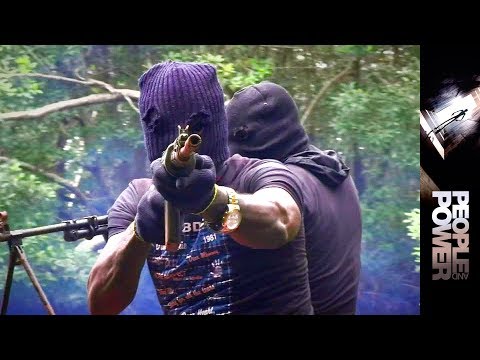
The event followed a now familiar pattern: a small convoy of dusty 4x4 vehicles drove on to the edge of the airstrip at Galkayo in Puntland, north-central Somalia; armed security guards took up watchful positions nearby and a number of bemused-looking men stepped gingerly from the cars and lined up to have their photographs taken by the media.
On this occasion there were 11 of them; all had been hostages until that morning. They were sailors from a Malaysian cargo vessel that had been hijacked by Somali pirates a few years ago and held until a ransom was paid for their release.
One of them gave a brief account of what had happened. "On November 26, 2010 our ship was hijacked in the Indian Ocean. Their demand was 20 million. After that, they threatened the owner. You now increase money or we will shoot the crew. The owner didn't increase the money and then one Indian is shot with just three bullets. Then they hit us and tortured us. Tell your family to bring us money, otherwise we will kill you!"
The crew had been held for three and a half years but they were the fortunate ones. Five of their crew mates had died in that time. Now the survivors were going home and a UN plane with two envoys on board was flying in to see them to safety.
Such scenes have become relatively commonplace in Galkayo in recent times. Eighty percent of global trade is carried by sea and Somalia sits on a key maritime route linking Europe and Asia. More than 18,000 ships pass its shores every year. Over the past decade, Somali pirates, often former fishermen whose traditional livelihoods have been destroyed by foreign trawlers and toxic waste dumping, have attacked more than 300 vessels and kidnapped 700 people.
Faced with such a threat, the international community responded aggressively. In 2008, European states, the US and others began sending naval forces to these seas. They are still there today - warships, planes and helicopters patrolling thousands of square miles and doing a fair job of keeping the hijackers at bay. The UN and others have also played an increasing role in facilitating negotiations for the release of hostages - such as those set free at places such as Galkayo - for whose liberty large ransoms have been paid.
But if the problem is now slowly coming under control in Somalia, the same cannot be said for other parts of the world where piracy is on the increase. Lawlessness, desperation, poverty, greed and even political radicalism have brought the phenomenon to the waters of South America, Asia and, perhaps most aggressively, to West Africa.
In an effort to understand the reasons why, Bertrand Monnet, a French academic and filmmaker, has been travelling to piracy hot spots around the coast of Africa. In an extraordinary and very tense series of encounters, he came to face to face with heavily armed pirate gangs operating in and around the Niger Delta, where Nigeria's huge offshore oil industry, which employs thousands of expatriates, offers rich ransom pickings. It gradually became clear that piracy in West Africa has many of the same root causes as piracy in Somalia and elsewhere, not least of which is that those who don't share in the benefits and profits of global trade have ever fewer reasons these days to respect the security of those who do.
Source: Al Jazeera
- Subscribe to our channel: http://aje.io/AJSubscribe
- Follow us on Twitter: https://twitter.com/AJEnglish
- Find us on Facebook: https://www.facebook.com/aljazeera
- Check our website: http://www.aljazeera.com/

If you enjoy this content, please 👉🏿 Subscribe for more: https://www.youtube.com/c/Mind....fulBlackDad?sub_conf
and consider ⚡ Buying Me a Coffee: https://www.buymeacoffee.com/mindfulblackdad and becoming a patron https://elywananda.substack.com/
Continue watching:
https://youtu.be/nyVDO4WWHgI
https://youtu.be/3meSs7J9I70
https://youtu.be/tVTJ2NfI-5k
https://youtu.be/QiMYV82TGAI
https://youtu.be/cP74-cW-0Bs
Support:
⚡ Sign up to Freetrade and get a free share worth up to £100: https://freetrade.app.link/5Sz....OR8TEGKb?_p=c81229c1

What we need now us Black People is power to control everything we can. Watch different views around the globe. come 2025 Abibitumi comes back again.
https://conference.abibitumi.com

From the archives of the UCLA Communications Studies Department. Digitized 2013.
The views and ideas expressed in these videos are not necessarily shared by the University of California, or by the UCLA Communication Studies Department.
![Ancient Construction Tech Adopted by High End Architects [2019]](https://i.ytimg.com/vi/X-d_9-uXLNA/hqdefault.jpg)
(13 Jan 2019) LEADIN:Rammed earth is a construction method that has been around for millennia, but it's attracting renewed interest in countries like the USA and Australia. In Ghana a construction company is returning to the technique of rammed earth building, promoting its eco-friendly and economical technique. STORYLINE: This construction worker is part of a team building an eco-friendly house near Ghana's capital city, Accra.He is compressing a mixture of raw materials mostly sourced from within two kilometres.When the temporary structure is later removed it will reveal a solid wall – the beginning of a house. The technique is called rammed earth, as co-founder of Hive Earth Kwame de Heer explains."Rammed earth is a really old technique. Here in Ghana we have always built houses using mud, but here we have modernised it. We use a mixture of laterite which contains sand, a bit of silt, clay and some stones. We pour this into a temporary structure after being mixed. After pouring in eight inches we compress it to about four inches. We are mimicking a sedimentary rock, but speeding up the process. It's man-made stone."About five percent of the raw materials used in this method requires imported cement, which is necessary as a stabiliser.As well as being more eco-friendly, Hive Earth says it costs a third less than building with sandcrete blocks, commonly used in Ghana. Foster Osae-Akonnor heads up Ghana's Green Building Council:"Once you can get materials from the locality that you are working, then it helps to reduce the carbon footprint. In addition, comparing rammed earth to concrete, you save all the embodied energy that will be required in the manufacturing of cement."Compared to other building materials, a very high amount of energy is consumed to produce cement. In addition cement is imported into Ghana. Another of Hive Earth's rammed earth projects, in Accra, reveals its interesting aesthetic, which is the result of the ramming process.The technique is well suited to the hot climate of Ghana as it keeps the room temperature cool, says co-owner of Hive Earth, British-Ghanaian entrepreneur Joelle Eyeson."Rammed earth is sound proof, it's termite proof, it's thermally insulative – so it regulates the internal room temperature. Because the walls are so thick it takes a while for the heat to penetrate through to the internal room. Our walls can be anything from 12 to 15 inches thick. It's earthquake resistant as well, due to the monolithic nature of the walls as compared to sandcrete blocks, because the walls are monolithic. With sandcrete blocks you have the mortar joints so it's easier for the wall to shake and become disinbursed, whereas with rammed earth it's just one straight monolithic wall. It's as strong as concrete as well – it can last for hundreds of years." A long-standing example of rammed earth is the Great Wall of China.Williams Nimailo from the Ghana Bureau of Standards helped draw up the country's new building code.Allowance is made for rammed earth under both traditional and green building construction methods. Provision is made for modern materials such as clay-fired bricks or cement blocks. Akosua Obeng is an architect who contracted Hive Earth to build the external walls of a luxury complex in Accra.Obeng believes using rammed earth techniques in a high-end development will help to change perceptions about how earth materials can enhance design and architecture.Hive Earth have produced eight rammed earth projects since starting up in 2016, and have many more projects planned in Ghana and regionally.Find out more about AP Archive: http://www.aparchive.com/HowWeWork Twitter: https://twitter.com/AP_Archive Facebook: https://www.facebook.com/APArchives Instagram: https://www.instagram.com/APNews/You can license this story through AP Archive: http://www.aparchive.com/metad....ata/youtube/7a9be64b
A homage to the Spiritual Expressions of our Ancestors

➡️ Watch the full interview ‼️UNCENSORED‼️ with Zen The Herbalist NOW as an 'I Never Knew Tv' YouTube Member -https://www.youtube.com/channe....l/UCwZ2vurIl_X8rv0Dv
Watch more reasonings from Zen The Herbalist:
Pt.2 https://youtu.be/unfQVypYGVE
Pt.3 https://youtu.be/DMcjlbXemq4
In Part 1 of this insightful reasoning, Zen The Herbalist delves into the crucial topic of insulin resistance and its impact on weight loss. Discover how this often-overlooked condition can be a significant barrier for many individuals trying to shed pounds.
Please click link below to learn more about Zen The Herbalist and his work:
https://buymeacoffee.com/zenwithme
➡️ Tune into 'I NEVER KNEW 📻'
🇲🇱Roots, Rock, Reggae Music🇲🇱
Hosted By : Jr of 'I Never Knew Tv'
https://www.WLOY.org
Sunday 9 -11 AM EST
Wednesday 8- 10 AM EST
Thursday 10- Noon AM EST
#ineverknewtv

From the archives of the UCLA Communications Studies Department. Digitized 2013.
The views and ideas expressed in these videos are not necessarily shared by the University of California, or by the UCLA Communication Studies Department.

Kilimo na Biashara: Herbs farming - Kenya | 4 June 2021

This is a step by step instructional video on how to make a Micro Home/Kitchen garden. It is one in a series of videos produced under the 1 Million Home/Kitchen Garden Initiative by the Ministry of Agriculture, Livestock Fisheries and Cooperatives in Kenya. The initiative is part of Government of Kenya's response to the global outbreak of the COVID-19 Corona Virus.

These are the places I’m stumble upon here in Ghana. Nicely designed and fully accommodating with internet and amenities.

In this 17 minute film on plant and seed propagation, Tholina shares her lifelong knowledge and skills on how to set up an efficient nursery. She tells us about her techniques for seed selection, storage and propagation. And shows us some tricks on taking vegetative cuttings for vegetables, herbs and other hard wood species, as well as the different soil preparations and watering approaches to be considered – all using what we have available to us.

How to grow top quality melons? Senegal's melon story reveals the secrets of success in Africa for producing and then shipping delicious fruits to Europe. French fruit company Soldive has brought great benefits to the local farming community and they share how their lives have improved.
This film was made with support of the UK Department for International Development (DFID) through their Food Retail Industry Challenge (FRICH) Fund as part of a project with Waitrose, LEAF (Linking Environment and Farming), Green Shoots Productions and suppliers of African fresh produce to Europe - Blue Skies, British and Brazilian, Sunripe and Wealmoor.
http://www.soldive-producteur.com/
http://www.dfid.gov.uk/Work-wi....th-us/Funding-opport
http://www.leafuk.org
http://www.green-shoots.org
http://www.blueskies.com
http://www.britishandbrazilian.com
http://www.sunripe.co.ke
http://www.wealmoor.co.uk

Subscribe to Transatlantic Productions 💥Smash The LIKE Button👍🏿 Share↗️ & hit the Notifications Bell 🔔
Donate so we can complete the upload
https://www.gofundme.com/tapvideo
Cash App: $tapvideo
Share on video on all Social Media.
Videos on Youtube
https://tapvideo.blogspot.com/....2019/06/all-videos-o
Tapvideo Instagram: https://www.instagram.com/tran....satlanticproductions

What is Wrong With Nigeria | Part 2 | Pan African Talks | Nigerian Problems Today |
Dr Bunmi Oyinsan talks further about the problems Nigeria is facing today.
Find out in this video to know what ails the country.
#NigerianProblems #NigerianHistory #AfricanSeries

USA Has Angrily Replied President Mahama — Here’s the Shocking Reason Why!President John Dramani Mahama has ignited a revolution with one bold declaration: “Africa must unashamedly take advantage of the natural resources God has given us.” But the Western powers—especially the United States—are not happy.Just days after Mahama’s fiery speech and his push to reclaim Ghana’s gold through the GoldBod initiative, the U.S. Department of State issued a travel advisory that paints Ghana as dangerous, violent, and unstable. But is this truly about safety—or is it a strategic move to sabotage Ghana’s rising independence?In this explosive exposé, we break down:The real reasons behind the U.S. travel advisory.How Mahama’s alliance with Burkina Faso’s President Ibrahim Traoré threatens neocolonial interests.The GoldBod gold deal and why it shook the West.The psychological war now being waged on Ghana.Why the West is scared of a united Africa.This is not just a news report — it is a warning, a prophecy, and a call to every African

Afro-Ecuatorianos y Participación Política presentada por Paola Cabezas, Asambleísta Nacional del Ec
El Ciclo de Conferencias de Estudios africanos y de la Diáspora Africana, ha sido creado para difundir el pensamiento africano-centrado y panafricanista a través de las experiencias y los aportes de los africanos y sus descendientes alrededor de mundo. Es un espacio abierto y permanente, donde se invitan expertos en diferentes áreas del conocimiento y donde el dialogo circunda en temas de interés colectivo y desde la perspectiva centrada en África, panafricana y anti-colonial.
Afro-ecuatorianos y participación política
En septiembre de 2008, los ciudadanos ecuatorianos votaron para adoptar una nueva constitución que reconocía a su país como una nación plurinacional, intercultural e inclusiva. Muchos celebraron la nueva constitución por sus disposiciones progresistas sobre los derechos indígenas y afroecuatorianos. Por primera vez, el Estado identifica a las comunidades afroecuatorianas con territorio colectivo como una forma ancestral de organización territorial y reconoce a los afroecuatorianos como pueblos, crea disposiciones para proteger sus tierras comunales y ancestrales, su cultura, su organización social y participación en la política en la vida, del país... al menos en el papel. Si bien esta constitución ofrece al gobierno y a la ciudadanía la oportunidad de abordar la invisibilidad multifacética, marginación y pobreza que los afroecuatorianos han vivido durante siglos, el desafío que enfrentan los afroecuatorianos es cómo lograr que los compromisos agrupados en la Constitución de 2008 se traduzcan en práctica.
Según el Instituto Nacional de Estadísticas y Censos (INEC), el 7,2% de los habitantes del país son afroecuatorianos. Se encuentran principalmente en la región costera noroeste del país, en la provincia de Esmeraldas y el Valle del Chota en la provincia de Imbabura, su territorio ancestral. En esta zona del país son el 70% de la población. También se pueden encontrar en cantidades importantes en Guayaquil, donde son mayoría en algunos sectores.
Con la constitución de 2008, los ciudadanos ecuatorianos se embarcaron en un pacto social progresista. Renovaron su compromiso de asegurar que los afrodescendientes sean parte integral e igualitaria de la sociedad ecuatoriana. Por otro lado, el proceso organizativo afroecuatoriano ha tenido como objetivo reconocer los derechos individuales y colectivos de los afroecuatorianos, así como exigir reparaciones por los daños ocasionados por el racismo y la esclavitud; Sin embargo, satisfacer estas demandas depende de la capacidad de incidencia. En este sentido, el acceso a la participación política del pueblo afroecuatoriano ha sido mediado por la violencia, el racismo estructural e institucional, y del cual se han derivado otras manifestaciones que han incidido en el acceso al poder político de los afrodescendientes en Ecuador. Hoy el consenso es que no ha cambiado mucho. Siguen siendo discriminados por el color de su piel, son marginados, no tienen oportunidades educativas y laborales en relación con otros grupos étnicos, y son invisibles a las políticas gubernamentales.
CONSTITUCIÓN DE LA REPÚBLICA DEL ECUADOR (2008),
Capítulo cuarto
Derechos de las comunidades, pueblos y nacionalidades
Art. 56.- Las comunidades, pueblos, y nacionalidades indígenas, el pueblo afroecuatoriano, el pueblo montubio y las comunas forman parte del Estado ecuatoriano, único e indivisible.
Art. 58.- Para fortalecer su identidad, cultura, tradiciones y derechos, se reconocen al pueblo afroecuatoriano los derechos colectivos establecidos en la Constitución, la ley y los pactos, convenios, declaraciones y demás instrumentos internacionales de derechos humanos.
Paola Cabezas Castillo es una política y periodista ecuatoriana, y actual asambleísta nacional de Ecuador. Desde muy temprana edad, comenzó a trabajar en la radio como conductora de radio y luego como reportera de noticias para el canal de televisión ecuatoriano RTS. En 2009 se incorporó a Ecuador TV, donde se desempeñó como la primera presentadora de noticias afroecuatorianas en la historia del canal.
Su vida política comenzó en 2010 cuando ocupó el cargo de especialista en interculturalidad en la Secretaría Nacional de Gestión Política y la Secretaría de Pueblos. En 2013 fue nombrada gobernadora de la Provincia de Esmeraldas por el presidente Rafael Correa. Para las elecciones legislativas de 2017 fue elegida diputada nacional suplente (asambleísta nacional alterna). En las elecciones legislativas de 2021, fue elegida asambleísta nacional principal por la alianza UNES (Unión por la Esperanza). Paola tiene un título (licenciatura) en Ciencias de la Comunicación de la Universidad de Guayaquil y una maestría en marketing político de la Universidad del Salvador en Buenos Aires, Argentina.