- General Videos
- Music
- Economics
- Health
- Travel & Events
- History
- Psychology
- Spirituality
- Movies
- News & Politics
- Kmtyw Combat Sciences
- Ɔbenfo Ọbádélé Kambon Videos
- Ɔbenfoɔ Kamau Kambon: Black Liberation Philosophy
- Science, Tech, Engineering and Math
- Permaculture
- Self-Sustainability
- Living Off Grid
- Yoruba Language Learning
- Education
- Mmɔfra Adesua
- Nana Kamau Kambon Playlist
- Livestream
- Komplementarity Kouples and Revolutionary Singles
- Abibitumi Film Series
- Decade of Our Repatriation
- Kwento xpr
- Live
Top videos


Visit the Liberation Station Site: https://liberationstationbookstore.com/
Goals For 2024:
▪️Relaunch The BP App (Test it now in the Apple App store and Google Play)
▪️100+ Videos Posted
▪️10K Subscribers
▪️10K Followers on IG
___________________
Support the channel, or buy me a drink! ✊🏾(Thank you in advance!)
▪️Cash App | https://cash.app/$Reeezy
▪️PayPal | https://www.paypal.com/donate/....?hosted_button_id=3F
___________________
Website: Blackprimacy.com
Support a Black owned business near you today. Get the Black Primacy app from the Apple App Store and Google Play: https://blackprimacy.app.link/2pRalEBUjqb
___________________
Stay Connected:
▪️Instagram: https://www.instagram.com/blxckprimacy/
▪️Twitter: https://twitter.com/black_primacy
▪️Facebook: https://www.facebook.com/BlackPrimacyOfficial/
▪️TikTok: https://www.tiktok.com/@blackprimacy
▪️Ricky Rich- https://www.instagram.com/blackandbeardedtho
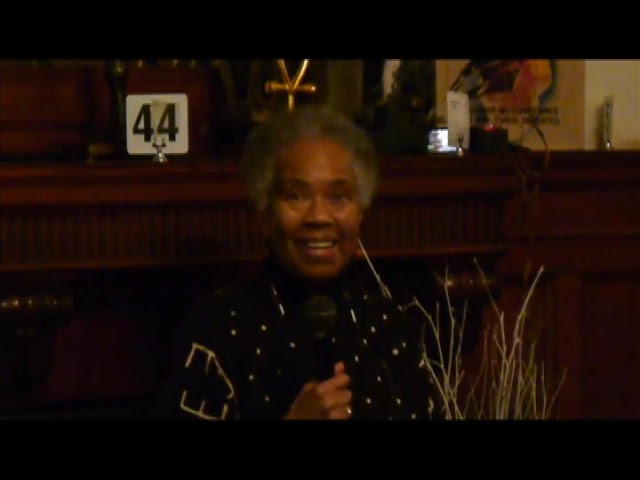



Professor James Small is a scholar activist, dynamic speaker, and organizational consultant. In pt. 3 of this reasoning, Prof. James Small explains why the depression rate in Africa is less than the depression rate in America. Please click link below to learn more about Prof. James Small and his work: https://www.professorjamessmall.com/➡️ Tune into 'I NEVER KNEW 📻'🇲🇱Roots, Rock, Reggae Music🇲🇱Hosted By : Jr of 'I Never Knew Tv'https://www.WLOY.orgSunday 9 -11 AM ESTWednesday 8- 10 AM ESTThursday 10- Noon AM EST#epigenetic #ineverknewtv

This is a clip from a lecture titled:
"From Royalty to Captivity to Warriorhood:
The Rebuilding of a Nation"
Featuring: Marimba Ani, Mwalimu Baruti, Dhoruba Bin Wahad and Professor Griff (Public Enemy)
Hosted By: Kalonji Jama Changa
#marimbaani #riotstartertv #kalonjichanga


Premiered January 10th 2021
"The Shift" is about a major internal and external shift taking place within humanity in the last few decades but predominantly the year 2020. It indicates how we are asking more questions, raising our vibration, meditating more, practicing more patience, empathy, awareness and a radical form of self love never seen before. It also talks about the beginning of a New Age that we have entered in on December 21st 2020, Age of Aquarius. The Information Age. The Age of awakening. We can see the inner and outer transformation happening within our life and we are learning to become more intuned with self and balancing our emotions. We are learning to observe not absorb all the things that get thrown at us in our lifetime. Welcome to The Shift.
Follow Zakisha Brown for more music @Zakisha
Produced by Zakisha Brown
Co-Produced by Solitair and William Dinero
Available on all Streaming Platforms
Amazon https://www.amazon.com/gp/product/B08S2RHMZV
Itunes https://music.apple.com/us/album/the-shift-single/1547356375?uo=4&app=itunes
Apple Music https://music.apple.com/us/album/the-shift-single/1547356375?uo=4&app=apple+music
Spotify
Trumpet Rudy Ray
Instagram @rudyrayontrumpet
Saxophone Mosaxx
Instagram @mosaxxmusic
Bass Guitar Joseph
instagram @J.Callender.Sax
Drummer Coury
Instagram @courykk
Make up Artist Instagram @lashmebeat
Videography by @TomxFilm
Available on all Streaming Platforms
Subscribe for more music.


The religious beliefs of Israel were rooted in the shared culture of Canaan. Although it had unique attributes that differed from the Canaanites, it still found expression in shared practices and language. Some traditional practices couldn't be merged with Yahwism, but others like sacred poetry, music, and architecture were adopted and became integral to Israelite religion. The Old Testament's embrace or rejection of these elements means that Canaanite religious influences still affect us today through biblical narratives.Before the findings at Ugarit-Ras Shamra, our knowledge of Canaanite religion was minimal and largely from indirect sources. The Old Testament did mention Canaanite deities and rituals, but these were often in a negative light, making interpretations challenging. Mentions of Canaanite gods and rituals were also found in Egyptian, Mesopotamian, and Phoenician writings, including the Karatepe inscriptions from 1946. However, these weren't enough to form a complete understanding. Greek historians provided accounts of Canaanite beliefs, but it was hard to distinguish authentic traditions from later additions. Excavations at places like Byblos and Megiddo gave us glimpses, but only a fragmentary picture.Now, thanks to discoveries at Ras Shamra (ancient Ugarit) in North Syria, the Canaanites tell their own story. Hundreds of clay tablets found there, written in a dialect close to Biblical Hebrew, offer rich insights. These tablets feature extensive mythological poems, records related to temple services, lists of deities and sacrifices, and details about temple workers and rituals. Additionally, artifacts linked to gods like Baal and Dagon, including temple remains and stelae, have been uncovered.It's crucial to understand that while there was a core Canaanite religious belief, local variations existed. Not every Canaanite city would have worshiped all the gods we know from the texts. Canaanite religion was more of a public affair than a personal one. Its rituals, mostly centered on ensuring fertility, were community events. Though there were individual acts of devotion, as seen in Phoenician inscriptions, the religion was mainly a communal way to connect with nature's forces. This involved practices believed to ensure continued creation and rejuvenation. The prominence of some deities in mythological writings doesn't always reflect their actual popularity among Canaanite devotees. Conversely, some gods, like Dagon, had a minimal role in myths—merely acknowledged as Baal's father—but seemed quite revered, as evidenced by a dedicated temple and two stelae in Ugarit.EL, the hebrew word for GOD, is the Supreme God and creator, and shows up as ALLAH in arabic.YHWH’s revelation is always at a mountain, whether called Sinai or Horeb, pictures the event is a volcanic eruption. As these texts show, volcanism seems to be an essential attribute typically associated with YHWH, linking him to the Craftsman Metalurgy gods I mentioned before. The account of the Sinai revelation, with its volcanic imagery, is meant to show that YHWH himself, and not simply a divine emissary, but a Demiurgic Crafstman.Some believe Mount Sinai might be one of these Arabian volcanoes, which the Israelites approached after departing Egypt. The Kenites seem to have been skilled metalworkers. Genesis 4 discusses Cain's descendant, Tubal-Cain, as a craftsman skilled in molding copper and iron. Semitic cognates of Cain hint that metallurgical activities were integral to its meaning. Hence, Cain might originally have represented the pioneering figure in metallurgy, with the Kenites—both metalworkers and smelters—as his successors. Their association with a volcanic deity like YHWH becomes clearer in this context.00:00:00 - Intro00:02:21 - Chapter 1: Canaanite Religion00:05:33 - Chapter 2: the God EL00:07:14 - Chapter 3: Divine Craftsman00:10:38 - Chapter 4: PTAH, Demiruge00:12:48 - Chapter 5: Elephantine Jews00:17:27 - Chapter 6: Yahweh, Midianite Metallurgy God00:24:59 - Chapter 7: YHWH vs. Ba'al00:32:18 - Chapter 8: Dionysian IAO00:37:54 - Chapter 9: Dionysus of the Desert00:39:57 - Chapter 10: Yahweh Inscriptions00:42:50 - Chapter 11: EL, King of the North00:45:45 - Chapter 12: Saturn, King of ELOHIM00:53:57 - Chapter 13: Old Gods - BAD00:58:00 - Chapter 14: Breasts of Gaia (2 Mountains)01:01:27 - Chapter 15: Jewish Polythesim01:03:22 - Chapter 16: Rise of Monotheism01:19:25 - Chapter 17: Demetrius Phalerius01:26:16 - OUTRO: Plutarch on 'AMEN'#gnosticinformant #judaism #documentary