- General Videos
- Music
- Economics
- Health
- Travel & Events
- History
- Psychology
- Spirituality
- Movies
- News & Politics
- Kmtyw Combat Sciences
- Ɔbenfo Ọbádélé Kambon Videos
- Ɔbenfoɔ Kamau Kambon: Black Liberation Philosophy
- Science, Tech, Engineering and Math
- Permaculture
- Self-Sustainability
- Living Off Grid
- Yoruba Language Learning
- Education
- Mmɔfra Adesua
- Nana Kamau Kambon Playlist
- Livestream
- Komplementarity Kouples and Revolutionary Singles
- Abibitumi Film Series
- Decade of Our Repatriation
- Kwento xpr
- Live
Top videos


A small Texas town saw 13% of its black population arrested and charged with dealing cocaine. But a state judge in 2003 said the investigator behind the arrests was "the most devious, non-responsive law enforcement witness this court has witnessed in 25 years on the bench in Texas."
Subscribe to the 60 Minutes Channel HERE: http://bit.ly/1S7CLRu
Watch Full Episodes of 60 Minutes HERE: http://cbsn.ws/1Qkjo1F
Get more 60 Minutes from 60 Minutes: Overtime HERE: http://cbsn.ws/1KG3sdr
Relive past episodes and interviews with 60 Minutes Rewind HERE: http://cbsn.ws/1PlZiGI
Follow 60 Minutes on Instagram HERE: http://bit.ly/23Xv8Ry
Like 60 Minutes on Facebook HERE: http://on.fb.me/1Xb1Dao
Follow 60 Minutes on Twitter HERE: http://bit.ly/1KxUsqX
Get the latest news and best in original reporting from CBS News delivered to your inbox. Subscribe to newsletters HERE: http://cbsn.ws/1RqHw7T
Get your news on the go! Download CBS News mobile apps HERE: http://cbsn.ws/1Xb1WC8
Get new episodes of shows you love across devices the next day, stream local news live, and watch full seasons of CBS fan favorites anytime, anywhere with CBS All Access. Try it free! http://bit.ly/1OQA29B
---
60 Minutes, the most successful American television broadcast in history, began its 52nd season in September. Offering hard-hitting investigative reports, interviews, feature segments and profiles of people in the news, the broadcast began in 1968 is still a hit in 2020. 60 Minutes makes Nielsen’s weekly Top 10 nearly every week and was the #1 weekly television broadcast three times last season.
The program still averages more than 10 million viewers, more than double the audience of its nearest network news magazine competitor. The average audience for a 60 Minutes broadcast is 150% higher than those of the network morning news programs; the audience dwarfs the number of viewers drawn by the most popular cable news programs.
About a million more people listen to the 60 Minutes radio simulcast in several major cities and on its companion podcast. Tens of thousands each week experience 60 Minutes online. The broadcast’s segments can be watched at 60Minutes.com and on the CBS All Access app. Its webcast, 60MinutesOvertime.com, offers content originally produced for the web, including behind-the-scenes video about the production of 60 Minutes stories and timely archival segments.
60 Minutes has won every major broadcast award. Its 25 Peabody and 150 Emmy awards are the most won by any single news program. It has also won 20 duPont-Columbia University journalism awards. Other distinguished journalism honors won multiple times include the George Polk, RTDNA Edward R. Murrow, Investigative Reporters and Editors, RFK Journalism, Sigma Delta Chi and Gerald Loeb awards.
60 Minutes premiered on CBS September 24, 1968. Bill Owens is the program’s executive producer. The correspondents and contributors of 60 Minutes are Sharyn Alfonsi, Anderson Cooper, John Dickerson, Norah O’Donnell, Scott Pelley, Lesley Stahl, Bill Whitaker and L. Jon Wertheim.
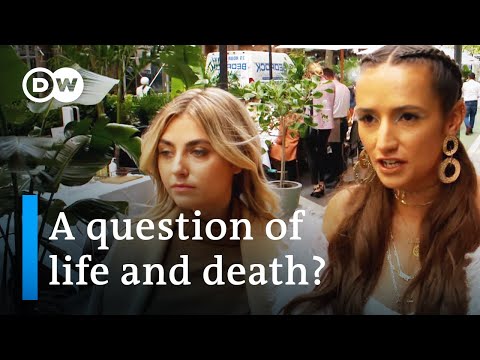
Even before COVID-19, New York was already defined by a gap between the rich and poor. Yet during the pandemic, wealth has become a determinant of survival.
The pandemic hit New York in the spring, with almost 800 people dying from COVID-19 each day in April. The city has been uneasy since then. People's lives have been shaken by months of stay-at-home orders, changing public health measures, "Black Lives Matter" protests, the presidential election, and above all the economic consequences of the pandemic, including ever-widening inequality between New Yorkers.
Stefanie Dodt and Christiane Meier are the creators of "New York City Rich and Poor - The Inequality Crisis." They spent more than eight months following the lives of three New York families who inhabit the different strata of New York society - the bottom, the top and the middle.
The documentary links this long period of observation with intensive data research and analysis and shows why, long before COVID-19, it was clear who the disease would hit hardest. The boundaries between rich and poor are often clearly defined by neighborhoods. Where a person lives determines their risk of becoming infected with the virus, and health has become more of a luxury than ever. The pandemic is spotlighting the scale and consequences of economic inequality in America. In New York, a city of extremes, the emphasis is white hot - and reflects in brash New York style the structural problems all of America is facing as COVID-19 further amplifies inequality.
-------------------------------------------------------------------
DW Documentary gives you knowledge beyond the headlines. Watch top documentaries from German broadcasters and international production companies. Meet intriguing people, travel to distant lands, get a look behind the complexities of daily life and build a deeper understanding of current affairs and global events. Subscribe and explore the world around you with DW Documentary.
Subscribe to:
DW Documentary: https://www.youtube.com/channe....l/UCW39zufHfsuGgpLvi
DW Documental (Spanish): https://www.youtube.com/dwdocumental
DW Documentary وثائقية دي دبليو: (Arabic): https://www.youtube.com/dwdocarabia
For more visit:
http://www.dw.com/en/tv/docfilm/s-3610
Instagram:
https://www.instagram.com/dwdocumentary/
Facebook:
https://www.facebook.com/dw.stories
We kindly ask viewers to read and stick to the DW netiquette policy on our channel: https://p.dw.com/p/MF1G



#AfricanScience #mysticoreligious #pluralism #WesternEducation
JOIN THE DISORD: https://discord.gg/cPdMNYkCsH
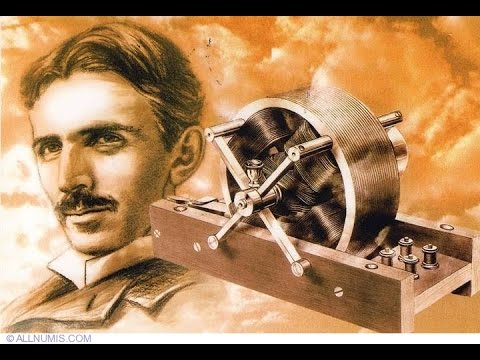
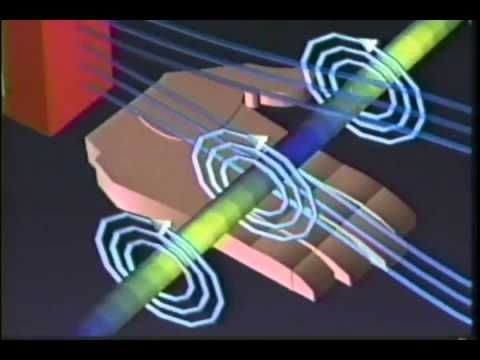
In this episode we read "African Traditional Culture and Western Education" by P. Chike Onwuachi. Join Us to learn more.
This episode continues our drive to understanding the need for a new African-centered curriculum for Black children and family units. Ask Us how can you help.
** DONATE 2 THE SHOW: $bittermedz**
Follow Us on:
Twitter: https://www.twitter.com/bittermedz
Facebook: https://www.facebook.com/BitterMedici...
Instagram: https://www.instagram.com/thebmpodcast
Tumblr: https://www.tumblr.com/blog/bittermedz
Website: linktr.ee/bmpodcast
Follow KWAZ RADIO:
Facebook: https://www.facebook.com/KWAZRADIO/
Instagram: https://www.instagram.com/kwazradio
Twitter: http://www.twitter.com/kwazradio
YouTube: https://goo.gl/a6eXJZ
Website: https://www.kwazradio.com

Patreon:
https://www.patreon.com/HomeTeamHistory
Afrographics:
http://afrographics.com
OurBlackTruth Website:
https://social.ourblacktruth.com/
Resources:
List of African history books for Beginners:
https://bit.ly/2XgzSnd
How to teach you children African History: A Guide:
https://bit.ly/2V3V8L6
How the African Continent fell before Colonialism:
https://bit.ly/2ZqZjne
A timeline of Ancient African History:
https://bit.ly/2VhRdOC
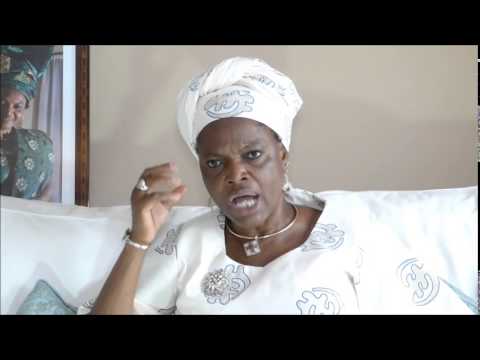

Agriculture is the main driver of deforestation. We discuss how agroforestry can regenerate our ecosystem with environmentalist Debra Kiliru and small holder farm family Mr & Mrs Agbenoxevi. [a]www.okoforests.com[/a]
We at Oko Forests are committed to adopting and promoting sustainable agricultural practices. For more information please visit [a]www.okoforests.com[/a]
Agroforestry is a land use management system in which trees and shrubs are grown around or among crops or pastureland. It combines shrubs and trees in agricultural and forestry technologies to create more diverse, productive, profitable, healthy, and sustainable land-use systems.
Agroforestry eases the tension between increased food production and environmental problems (soil and land degradation, erosion, water runoff and flooding, loss of biodiversity, breakdown of agroecological function, increased GHG emissions) by harnessing biological nitrogen fixation and agroecosystem diversification.