







- General Videos
- Music
- Economics
- Health
- Travel & Events
- History
- Psychology
- Spirituality
- Movies
- News & Politics
- Kmtyw Combat Sciences
- Ɔbenfo Ọbádélé Kambon Videos
- Ɔbenfoɔ Kamau Kambon: Black Liberation Philosophy
- Science, Tech, Engineering and Math
- Permaculture
- Self-Sustainability
- Living Off Grid
- Yoruba Language Learning
- Education
- Mmɔfra Adesua
- Nana Kamau Kambon Playlist
- Livestream
- Komplementarity Kouples and Revolutionary Singles
- Abibitumi Film Series
- Decade of Our Repatriation
- Kwento xpr
- Live
Top videos

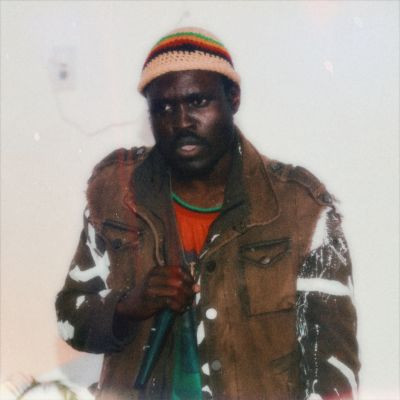


Every child deserves a peaceful childhood and the chance to go to school. This is still being denied to millions of children around the world who are engaged in child labour. Half of these are suffering from the worst forms of child labour.
.......................................
Don't forget to subscribe to our channel: https://bit.ly/2J1dFFf
Watch more amazing videos about #Africa: https://bit.ly/2J1
Watch News Central TV live: https://www.youtube.com/embed/....live_stream?channel=
Get social with News Central TV:
Twitter: https://twitter.com/NewsCentralTV
Instagram: https://www.instagram.com/newscentraltv/
Read more news on our website: https://www.newscentral.africa/

![‘Lessons Were Not Learnt From The Civil War’, Maj. Gen Calls For Unity [23 April 2021]](https://i.ytimg.com/vi/3-bTBbQLpG8/hqdefault.jpg)
Don't forget to subscribe: https://bit.ly/2Hb8hjx
Watch more interesting videos: https://bit.ly/34ogCaw
Follow Channels Television On:
Facebook: https://www.facebook.com/channelsforum/
Twitter: https://twitter.com/channelstv
Instagram: https://www.instagram.com/chan....nelstelevision/?hl=e
Get more news on our website: https://www.channelstv.com/#ChannelsTv
![0 - 100 years in Senegal [Wolof Language]](https://i.ytimg.com/vi/zXrHKxWxPO8/hqdefault.jpg)


IS NIGERIA SAFE? 7 "CRITICAL" Safety TIPS For EVERY VISITOR TO LAGOS | Lagos Travel Guide Ep.3
Buy Lagos Travel Guide: https://amzn.to/2TBXRwF
"Lagos Travel Guide" Series (Playlist): https://bit.ly/3txqlHw
Hello beautiful people, Sassy Funke wrote the PERFECT travel guide for Lagos, Nigeria (https://amzn.to/2TBXRwF) BUT She also knows that there were a lot left unsaid in her guide (that is hard to put into a book) and that is why she has decided to create A NEW VIDEO SERIES titled "Lagos Travel Guide" #TheLagosBible to give you more value and make your plans to visit Lagos smoother. Knowledge is power and this series is all about KNOWLEDGE.
Every episode will feature 7 things. Todays video is about the 7 "CRITICAL" Safety TIPS For EVERY VISITOR TO LAGOS in collaboration with "It's Iveoma" . Some episodes will also feature guests. I really hope you enjoy this new series. Don't forget to SUBSCRIBE, LIKE 👍and SHARE
Subscribe to Iveoma's channel: https://www.youtube.com/channe....l/UCXQqsYF-1El7vPPct
Subscribe to Sassy Funke YouTube and get me to 50,000 subscribers : https://bit.ly/3biKEiK
Follow Sassy Funke on instagram: https://instagram.com/sassy_funke
➡️BUY my book "LAGOS TRAVEL GUIDE" (ONLINE)
1. Amazon UK (Paperback): https://amzn.to/2TBXRwF
2. Amazon US (Paperback): https://amzn.to/3nnZviX
3. Amazon (eBook): https://amzn.to/33VAqEM
4. Apple (eBook): https://apple.co/3lDBmDw
5. Google Play (eBook): https://bit.ly/2INK049
5. Kobo (eBook): https://bit.ly/34kxTUm
➡️BUY Lagos Travel Guide (IN LAGOS - Stockist)
1) Nike Art Gallery: 2 Oba Yekini Elegushi Rd, Lekki Phase I, Lekki
2) Terra Kulture: Plot 1376 Tiamiyu Savage St, Victoria Island
3) Godaif Village: Casa Asmarina, 26B Turnbull Rd, Ikoyi
4) Quintessence: Ikoyi
5) Jazzhole: Ikoyi
6) Roving Heights: Victoria Island (Landmark), Surulere & Abuja
7) Alara Lagos: Victoria Island
8) Fahrenheit Hotel: Victoria Island
9) The Homestores: Victoria Island
10) The Marshmallow by CLAN RTW: Victoria Island
11) Bogobiri: Ikoyi
Thank you to all of you that have bought my book. I look forward to reading your reviews.
#Lagos #LagosNigeria #Nigeria



![Something To Die For [ft. The Last Poets] - Documentary | 1997](https://i.ytimg.com/vi/Efe5dW01Fu4/hqdefault.jpg)
![Smelting Iron in Africa [A DEMONSTRATION]](https://i.ytimg.com/vi/RuCnZClWwpQ/hqdefault.jpg)


#MyJoyOnline
#joynews
https://www.myjoyonline.com/ghana-news/
Subscribe for more videos just like this:
https://www.youtube.com/channe....l/UChd1DEecCRlxaa0-h
Follow us on: Facebook: https://www.facebook.com/joy997fm
Twitter: https://twitter.com/Joy997FM
Instagram: https://bit.ly/3J2l57



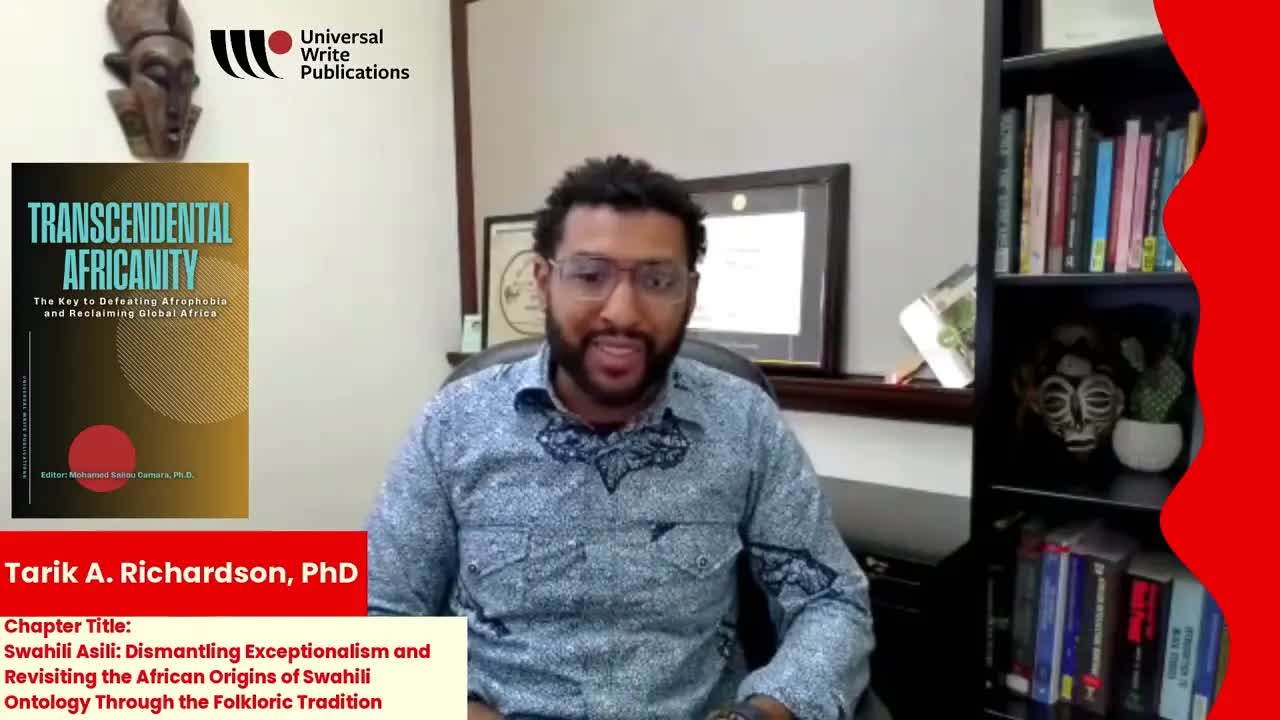

What happens when the history of an African people is interpreted primarily through outside influences rather than through their own cultural memory, language, traditions, and historical experience?
In this UWP Scholar Spotlight, Tarik Richardson, Ph.D., of Xavier University of Louisiana, discusses his chapter, “Swahili Asili: Dismantling Exceptionalism and Revisiting the African Origins of Swahili Ontology through the Folkloric Tradition,” in Transcendental Africanity: The Key to Defeating Afrophobia and Reclaiming Global Africa, edited by Mohamed Saliou Camara, Ph.D.
Dr. Richardson examines debates surrounding the origins of Swahili culture and how those narratives shape understandings of culture, Blackness, identity, and Africanity on the East Coast of Africa. His chapter considers Afrophobia and cultural memory, confronts narratives of cultural exceptionalism, and examines Swahili language, spiritual thought, history, folklore, and cultural traditions through an Afrocentric theoretical framework that centers Swahili people within their own history.
The chapter also places Swahili culture into a wider African conversation. Richardson examines shared histories and cultural relationships with other African peoples while interrogating interpretations that position outside influences as foundational to Swahili identity.
This is precisely what the UWP Scholar Spotlight Series is designed to make visible: not simply who contributed to an edited volume, but what that scholar is asking, challenging, recovering, and contributing to the field.
ABOUT THE CHAPTER
Chapter 7: “Swahili Asili: Dismantling Exceptionalism and Revisiting the African Origins of Swahili Ontology through the Folkloric Tradition”
The chapter begins from the significance of Swahili as a language that has facilitated interethnic and international solidarity among African peoples on the continent and throughout the Diaspora. Richardson notes its historical importance to African-descended communities beyond East Africa while examining the complicated relationship among Swahili identity, Blackness, Africanity, and competing narratives of Swahili origins.
At stake is a larger epistemic question:
Who gets to explain an African people's origins, identity, and cultural meaning?
ABOUT TRANSCENDENTAL AFRICANITY
Transcendental Africanity: The Key to Defeating Afrophobia and Reclaiming Global Africa brings together ten chapters examining Africanity and Global Africa through questions of identity, culture, music, belonging, coloniality, language, ontology, Black nihilism, freedom, resistance, and African self-determination.
The volume offers interdisciplinary relevance for African Studies, Africana Studies, Black Studies, African Diaspora Studies, Africology, History, Linguistics, Cultural Studies, Folklore Studies, Postcolonial Studies, and related fields.
FOR FACULTY, STUDENTS, LIBRARIANS & RESEARCHERS
For faculty, this Spotlight provides an entry point for conversations about Swahili identity, African-centered knowledge production, cultural memory, language, historiography, and the politics of interpreting African civilizations.
For students and researchers, Richardson's chapter demonstrates what becomes possible when received historical narratives are interrogated and African peoples are repositioned as subjects and interpreters of their own histories.
For librarians, the chapter demonstrates the interdisciplinary reach of Transcendental Africanity across African and Africana Studies, language and culture, history, Diaspora Studies, and Black intellectual thought.
📚 BOOK INFORMATION
Transcendental Africanity: The Key to Defeating Afrophobia and Reclaiming Global Africa
Editor: Mohamed Saliou Camara, Ph.D.
Publisher: Universal Write Publications
Publication Date: September 29, 2026
Print ISBN: 978-1-942774-35-8
eBook ISBN: 978-1-942774-34-1
LCCN: 2026902889
DOI: 10.65724/DWCO4934
UWP SCHOLAR SPOTLIGHT SERIES
The UWP Scholar Spotlight Series brings audiences closer to the scholars behind the scholarship.
Through conversations with UWP authors, editors, and edited-volume contributors, the series creates a growing digital archive of the people, ideas, research, and intellectual traditions advancing Black scholarship and interdisciplinary inquiry.
For contributors to edited volumes, Scholar Spotlight provides dedicated visibility for their individual research, connecting their chapter to the larger intellectual conversation of the book while extending the discoverability and scholarly life of their work beyond the printed page.
Explore the UWP Scholar Spotlight Series
Subscribe to UWP Books on YouTube
Read the scholarship. Meet the scholar. Continue the conversation.
#tarikrichardson #swahili #swahilistudies #africanity #transcendentalafricanity #afrophobia #culturalmemory #scholarspotlight #scholarshipinconversation #uwpbooks #wewilltellourownstory