- General Videos
- Music
- Economics
- Health
- Travel & Events
- History
- Psychology
- Spirituality
- Movies
- News & Politics
- Kmtyw Combat Sciences
- Ɔbenfo Ọbádélé Kambon Videos
- Ɔbenfoɔ Kamau Kambon: Black Liberation Philosophy
- Science, Tech, Engineering and Math
- Permaculture
- Self-Sustainability
- Living Off Grid
- Yoruba Language Learning
- Education
- Mmɔfra Adesua
- Nana Kamau Kambon Playlist
- Livestream
- Komplementarity Kouples and Revolutionary Singles
- Abibitumi Film Series
- Decade of Our Repatriation
- Kwento xpr
- Live
Top videos


In this video, we meet up with Mamadou "Futty" Danso who is a Gambian professional footballer and he tours us around his house.
This video was recorded and edited by Makonnen Sankofa. Subscribe to Makonnen's YouTube channel https://www.youtube.com/channe....l/UCiP8DHZ_eEFLJdOn7
We're appealing for donors, sponsors and paid endorsements so we can continue to produce content. bopcollective@yahoo.com
Thanks to all our Bla Xit donors.
Become a Bla Xit Messenger (Subscribers only) by sending your video clip to blaxithome@gmail.com
Special thanks to our friend and YouTube Vlogger Wode Maya for helping to set-up the Bla Xit channel. You can follow him on YouTube too https://www.youtube.com/user/MrGhanaBaby
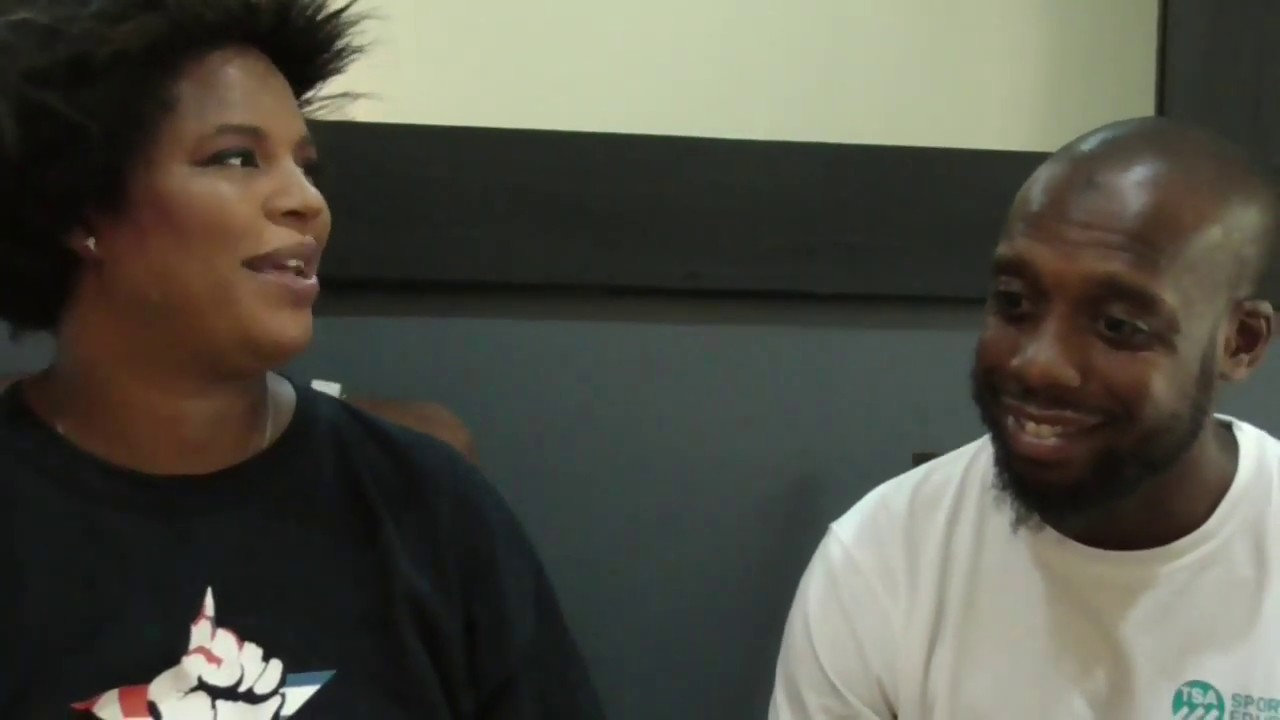
In this video, Bla Xit met up with Tanayah from TSA Projects during his time visiting the Gambia. His mission is to get involved in sports development in the Gambia.
Special thanks to Makonnen Sankofa (Bla Xit Cameraman & Video Editor). Subscribe to Makonnen's YouTube channel https://www.youtube.com/channe....l/UCiP8DHZ_eEFLJdOn7
Please support the Bla Xit channel so we can continue producing more content, you can send a donation via PayPal to bopcollective@yahoo.com
Thanks to all our Bla Xit donors.
Become a Bla Xit Messenger (Subscribers only) by sending your video clip to blaxithome@gmail.com
Special thanks to our friend and YouTube Vlogger Wode Maya for helping to set-up the Bla Xit channel. You can follow him on YouTube too https://www.youtube.com/user/MrGhanaBaby


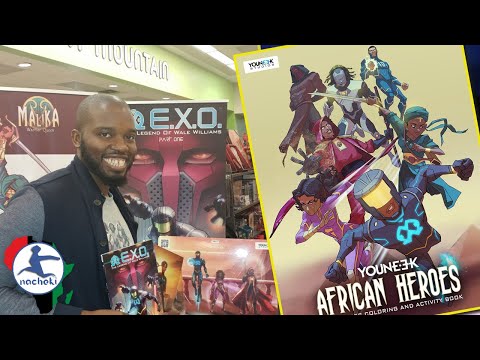

African superhero publisher YouNeek Studios Partners with Dark Horse to promote African stories and creators
Visit here for more on https://ogelle.com/home
Thank you for watching 2nacheki pronounced (tunacheki) it means 'We Are Watching ' in Swahili slang. Our goal is to educate & inform you about everything in Africa while showing the World that Africa is Watching.
~~-~~-~-
Our #Africanvideos covers; #AfricaContent #AfricaLists #AfricaNews #AfricaMusic #AfricaDance #AfricaSpeeches #AfricaEntertainment #AfricaHistory #AfricaInterviews #AfricaDocumentaries #Panafricanism #Africapop-culture #AfricanCulture #AfricanPolitics and more
~~-~~-~-
We now have Merchandise https://teespring.com/stores/2nacheki
~~-~~-~-
Membership: https://www.youtube.com/channe....l/UCG7uFJVZsxQRwDsso
Patreon: https://www.patreon.com/2nacheki
Website: http://2nacheki.tv/
-~-~~-~
Thanks for watching 2nacheki the biggest African channel on Youtube . All our videos are aimed at Educating, Informing, Reporting, Reviewing, Criticizing & Ranking everything African inorder to build a better Africa.
-~-~~-~
Email us 2nacheki@gmail.com for News Tips, Content submission, Ads, Submissions, Takedowns, Collabos and Inquiries
Translated titles:
El editor de superhéroes africanos YouNeek Studios se globaliza en un enorme acuerdo de asociación
Der afrikanische Superhelden-Verlag YouNeek Studios wird in einem riesigen Partnerschaftsabkommen gl
L'éditeur de super-héros africains YouNeek Studios devient mondial dans le cadre d'un énorme part
अफ्रीकी सुपरहीरो प्रकाशक YouNeek स्टूडिय
الناشر الأفريقي الخارق YouNeek Studios ينتقل إلى العالمية في
Mchapishaji wa Superhero wa Afrika YouNeek Studios Inakwenda Ulimwenguni katika Dili Kubwa ya Ushiri
非洲超级英雄发行商YouNeek Studios在庞大的合作伙伴关系交易中走向全球

![[EXCERPT] Class FM Panel Discussion On donald trump and amerikkkan Politics](https://i.ytimg.com/vi/XCraTF5BJSY/hqdefault.jpg)