- General Videos
- Music
- Economics
- Health
- Travel & Events
- History
- Psychology
- Spirituality
- Movies
- News & Politics
- Kmtyw Combat Sciences
- Ɔbenfo Ọbádélé Kambon Videos
- Ɔbenfoɔ Kamau Kambon: Black Liberation Philosophy
- Science, Tech, Engineering and Math
- Permaculture
- Self-Sustainability
- Living Off Grid
- Yoruba Language Learning
- Education
- Mmɔfra Adesua
- Nana Kamau Kambon Playlist
- Livestream
- Komplementarity Kouples and Revolutionary Singles
- Abibitumi Film Series
- Decade of Our Repatriation
- Kwento xpr
- Live
Top videos


Meet the brides and grooms defying the jihadist militants who have been laying siege to the Nigerian city of Maiduguri.
Subscribe to our channel for more Unreported World episodes https://www.youtube.com/unreportedworld.
Maiduguri is the spiritual home of Boko Haram, a terrorist group at the centre of an insurgency that has killed more than 36,000 people, and displaced over two million more.
With Covid lockdowns over, and the militants driven out, reporter Yousra Elbagir discovers a city determined to reclaim the joy of weddings despite the ongoing risk of kidnappings and attacks.
Producer/Director: Wil Davies
Executive Producer: Nevine Mabro
Series Producer: Andy Lee
Production Company: ITN/Channel 4 News



OMOWALE #MALCOLMX: Lessons from "OUR LIVING BLACK MANHOOD"
ShakaRa will be exploring the influence of Omowale Malcolm X, in shaping his ideals of Manhood.
► JOIN ME ON TELEGRAM: https://t.me/ShakaRaSpeaks
Affirming Black Manhood
Tickets & Info: https://www.shakaraspeaks.com/
It has almost become unpopular to talk about what it means to be a man, to deal with the concept of Manhood. You’ve got to deal with it.
About this event.
WE ARE BLACK MEN!
“It has almost become unpopular to talk about what it means to be a man, to deal with the concept of Manhood. You’ve got to deal with it. You can’t get around it.” – Nana Amos Wilson
“Affirming Black Manhood” attempts to contribute to the process of Black man taking back the power to define, develop & project what it means to be a Black Man. Our facilitators approach Black Manhood from varying perspectives, with an emphasis on promoting the values, principles & ideals that represent the best of who we be... And need to become.
We will engage a series of workshops on various aspects of Black Manhood, including space for general discussion. Our special guest facilitators are all Black Afrikan Men with a proven track record of sustained work with Black Men; addressing issues pertaining to Black Manhood!
We feature:
BABA MWALIMU BARUTI • DEFINING PRINCIPLES OF BLACK MANHOOD
ROBIN WALKER • THE ECONOMICS OF BLACK MANHOOD
IFAYOMI GRANT • CHALLENGING MISOGYNY: REBUILDING AFRIKAN MANHOOD
BRO. LDR. MBANDAKA • BLACK MANHOOD, FATHERHOOD & RITES OF PASSAGE
BABA BUNTU • THE POWER OF BLACK BROTHERHOOD
+more
20th june 2021 • 12pm-8pm GMT •Tickets £10 • available from ShakaRaSpeaks.com

Agro processing in Nigeria involves adding value to Nigeria agricultural produce. Value-added agriculture generates several billions in economic impact of a country. In fact, adding value to agricultural products beyond the farm gate usually has several times the economic impact of the agricultural production alone.
Agricultural producers receive a much smaller portion of the consumer’s naira than do food processors, especially processors who produce brand name items. Capturing those additional naira by adding value to farm or ranch products is a goal of many producers.
Agro processing in Nigeria today can act as a catalyst towards starting or commencing your own value added business. Visit www.exportbusiness.com for more information

Wongel Zelalem reports on Congo seizing gold worth $1.9 million in Okapi wildlife reserve from Chinese.
Join Our Website For Uncensored News Reports
https://africandiasporanews.org
--------------------------------------------
Download Our New African Diaspora News Channel App
Android https://play.google.com/store/....apps/details?id=com.
iOS https://apps.apple.com/us/app/....african-diaspora-new
----------------------------------------------------
Support Us On Patreon For A Minimum Of $2 Per Month.
https://patreon.com/AfricanDiasporaNews
---------------------------------------------
Send Money Orders To
2323 Clear Lake City Blvd.
Suite 180 Box 133
Houston,Tx 77062
--------------------------
One Time Donations To Our Network
Paypal https://paypal.me/AdviseMediaNetwork
Cash App https://cash.app/$AfricanDiasporaNews
----------------------------------------------
Order My Book Passive Aggressive Racism In The System of White Supremacy
https://www.amazon.com/dp/1732887314
------------------------------------------------------------------------
Listen To The Phillip Scott Audio Experience Podcast
https://anchor.fm/advise-media-network
------------------------------------------------------
Subscribe To All Of Our YouTube Channels
https://www.youtube.com/UCKZGcrxRAhdUi58Mdr565mw (African Diaspora News Channel)
https://www.youtube.com/c/Afri....canDiasporaNewsInsid (African Diaspora News Insider)
https://www.youtube.com/thephillipscottshow (The Phillip Scott Show)
https://youtube.com/intercontinentalfoodreview (Intercontinental Food Review)
https://www.youtube.com/channe....l/UC90CRiDvbos7k0B6k (Phillip Scott Audio Experience)
------------------------------------------------------------------------------------------
Social Media Pages
Follow us on Instagram https://www.instagram.com/africandiasporanews
Follow us on Twitter https://twitter.com/AfrDiasporaNews
Follow us on Facebook https://www.facebook.com/AfricanDiasporaNews
Follow us on Tik Tok https://tiktok.com/@africandiasporanews
---------------------------------------------------------------------
Purchase merchandise from our store
https://teespring.com/stores/a....frican-diaspora-news

Subscribe to Transatlantic Productions 💥Smash The LIKE Button👍🏿 Share↗️ & hit the Notifications Bell 🔔
Donate so we can complete the upload
https://www.gofundme.com/tapvideo
Cash App: $tapvideo
Share on video on all Social Media.
Videos on Youtube
https://tapvideo.blogspot.com/....2019/06/all-videos-o
Tapvideo Instagram: https://www.instagram.com/tran....satlanticproductions

Among the thousands of hunters enlisted by the Nigerian army to track and capture Boko Haram fighters, one stands out from the crowd.
Aisha Bakari Gombi towers over her band of hunters, one of the few women who has joined the fight against one of the deadliest armed groups in Africa.
With her shotgun slung over her shoulder, she ventures into the scrub of Borno, the northeastern province of Nigeria long plagued by Boko Haram attacks, hunting down their fighters.
Her bravery and keen hunting abilities have earned her the title of 'Queen Hunter'.
Government troops are quick to call on Aisha for her skills but slow to reward her efforts financially.
While she is unable to liberate many more captives held by Boko Haram due to a lack of resources, she will never stop trying.
Dive into the multiple worlds of Aisha, a commander, a hunter and a wife.
More from Witness on:
YouTube - http://aje.io/witnessYT
Facebook - https://facebook.com/AJWitness
Twitter - https://twitter.com/AJWitness
Instagram - https://instagram.com/ajwitness/
Website - http://aljazeera.com/witness
- Subscribe to our channel: http://aje.io/AJSubscribe
- Follow us on Twitter: https://twitter.com/AJEnglish
- Find us on Facebook: https://www.facebook.com/aljazeera
- Check our website: https://www.aljazeera.com/

[English below]
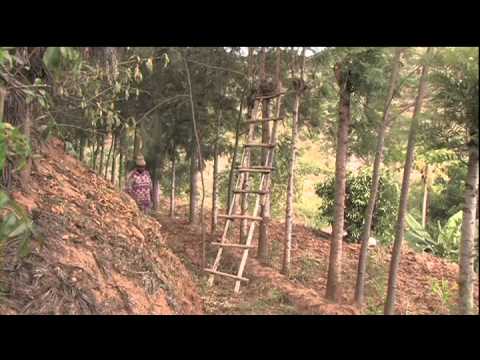
Songhaï est avant tout motivé par le bonheur ! Le désir de bonheur est l'impulsion pour un développement socio-économique durable. Il n'y a pas de bonheur dans l'insuffisance alimentaire, l'actuel exode rural africain et la fuite des cerveaux, une économie dépendante des importations, la dégradation de l'environnement, la perte d'espoir pour l'avenir chez les jeunes, l'agriculture de subsistance et la dévaluation de l'opportunité qui vient avec une croissance démographique excessive.
Le père Godfrey Nzamujo, est un prêtre dominicain, titulaire d'un doctorat en électronique, microbiologie et sciences du développement. Le père Nzamujo s'est associé à un groupe d'Africains et d'amis de l'Afrique qui partagent la vision de rendre à l'Afrique sa dignité, trop longtemps bafouée.
En 1982-1983, les médias ont fourni de nombreuses images de la famine africaine et de la grave sécheresse qui ont frappé l'Éthiopie en particulier. Ces images ont dépeint l'Afrique comme un continent ravagé par des guerres sanglantes, la famine, les crises et la pauvreté - un continent où l'espoir n'était pas permis. Le père Nzamujo, qui était alors professeur d'université aux États-Unis, a débarqué en Afrique avec la ferme conviction de changer les choses. "Au début, personne n'y croyait, ni mon ordre religieux, ni ma famille et mes amis. Mais j'étais convaincu que demain serait différent, parce que Dieu allait nous aider et que l'injustice pouvait être repoussée. ("Songhai When Africa stands up", p.28).
Quatre ans après sa création, Songhai a commencé à former de jeunes entrepreneurs agricoles. La formation de longue durée a commencé à Porto-Novo en 1989. Le Centre a étendu sa mission à tout le Bénin et à la sous-région occidentale de l'Afrique.
http://songhai.org/
_______________________________________________________________
[English]
Songhai is motivated primarily by happiness! The desire for happiness is the impetus for sustainable socio-economic development. There is no happiness in food insufficiency, the current African rural exodus and brain drain, an import-dependent economy, environmental degradation, loss of hope for the future among young people, subsistence agriculture, and devaluation of the opportunity that comes with excessive population growth.
Father Godfrey Nzamujo, is a Dominican priest with doctorate degrees in electronics, microbiology, and development science. Father Nzamujo joined forces with a group of Africans and friends of Africa who shared the vision of giving back to Africa its dignity, which has been scorned for far too long.
During 1982-1983, the media provided abundant images of African famine and severe drought, which struck Ethiopia in particular. These images portrayed Africa as a continent ravaged by bloody wars, famine, crisis, and poverty -- a continent where hope was not permitted. Father Nzamujo, who was then a university professor in the United States, landed in Africa with the firm conviction to change things. "At first, nobody believed it, neither my religious order, nor my family and friends. But I was convinced that tomorrow would be different, because God was going to help us and that injustice could be pushed away. (“Songhai When Africa stands up”, p.28).
Four years after its creation, Songhai began to train young agricultural entrepreneurs. Long duration training began in Porto-Novo in 1989. The Centre expanded its mission throughout Benin and western sub-region of Africa.
http://songhai.org/