- General Videos
- Music
- Economics
- Health
- Travel & Events
- History
- Psychology
- Spirituality
- Movies
- News & Politics
- Kmtyw Combat Sciences
- Ɔbenfo Ọbádélé Kambon Videos
- Ɔbenfoɔ Kamau Kambon: Black Liberation Philosophy
- Science, Tech, Engineering and Math
- Permaculture
- Self-Sustainability
- Living Off Grid
- Yoruba Language Learning
- Education
- Mmɔfra Adesua
- Nana Kamau Kambon Playlist
- Livestream
- Komplementarity Kouples and Revolutionary Singles
- Abibitumi Film Series
- Decade of Our Repatriation
- Kwento xpr
- Live
Top videos


"2AM in Venezuela" (OFFICIAL VIDEO): https://youtu.be/GtvkwgbVKF8
BLACK WINTER (Full Album): https://youtube.com/playlist?list=PLJSMFuicKjJ46p1K9TlqZPRGFSd0M5z9U&si=4WG_YXCGJinM6XEN
Join the Patreon for exclusive videos that you won't find on Youtube: https://www.patreon.com/NTD1814
S U P P O R T
Cash App - $NelsonAmadeus
PayPal- GlobalHitsWorld@gmail.com
EMAIL - KingNeferkare@gmail.com
Twitter @NTDessalines
Instagram @NelsonAmadeus
TURN ON POST NOTIFICATIONS.

👉🏿 INVEST IN INDEPENDENT BLACK MEDIA→ Uncensored, Ad-Free & Exclusive Content
https://ineverknewtv.com/premium/
📍OUR SPONSOR: Maroon Productions
We help brands grow through strategic video, design, and content that actually attracts attention, builds trust, and converts.
If you’re looking to elevate your brand or content, learn more here:
👉🏿 [a]www.maroonproduction.com[/a]
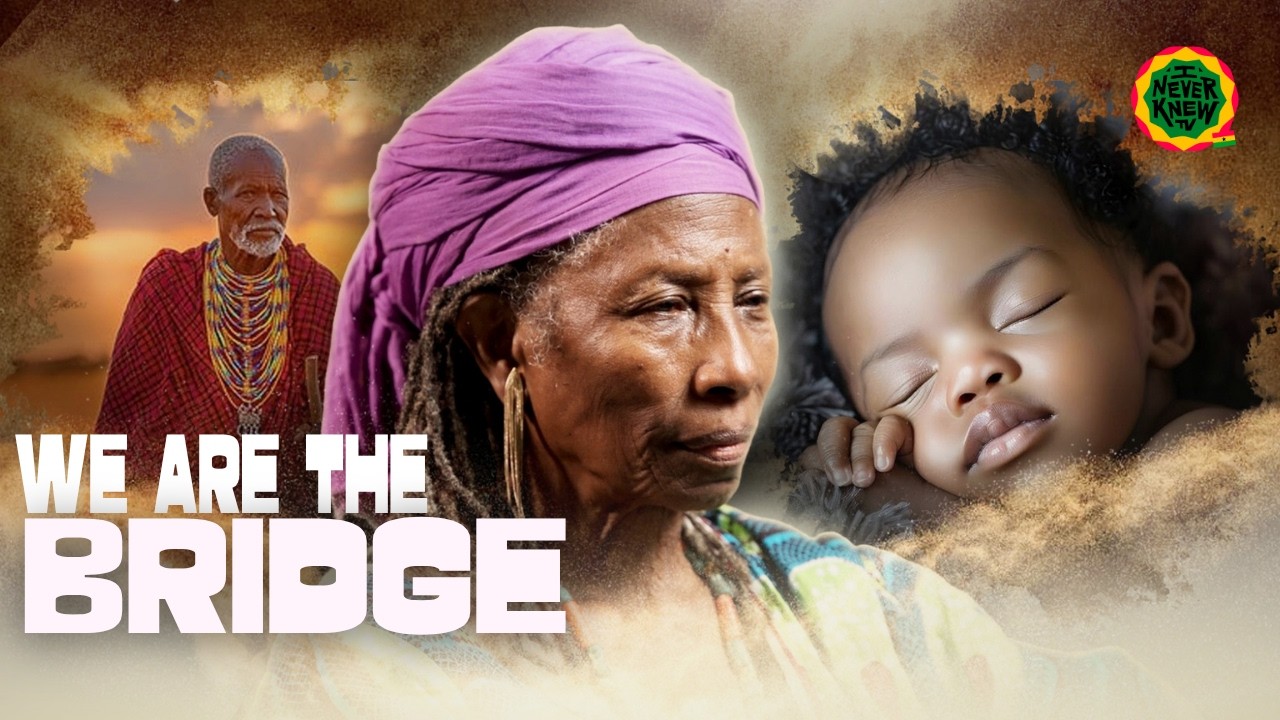
Are you coping or are you healing?
In this profound reasoning, Mawiyah Kambon, a psychologist, cultural scholar, and educator, explores the spiritual and psychological journey of Black men and women.
From unaddressed trauma and the impact of seeking white validation, to the deeper spiritual responsibilities within relationships and the sacred bond between mothers and daughters, this conversation offers a powerful path toward healing and self-understanding.
It serves as a roadmap for those seeking to reconnect with their ancestral roots—revealing why you are the critical link between your ancestors and the unborn, and how to move from survival mode into a life of purpose, clarity, and peace.
00:00 – The danger of listening to "his story" instead of our own
01:05 – Signs of unaddressed trauma vs. "normal" stress in Black men
02:41 – Why "coping" isn't healing: Addressing substances and distractions
06:02 – Realistic steps for men to break unhealthy patterns
08:06 – A 3-step spiritual process: Naming, Stillness, and Cleansing
11:07 – The high cost of seeking white validation in modern society
12:02 – Reclaiming ancestral "ways of knowing" over modern religion
16:10 – The Diaspora’s return: Moving beyond the pursuit of money
19:18 – The truth about Polygamy: Spiritual responsibility vs. sexual desire
23:19 – Healing the friction between Black mothers and daughters
29:18 – Lessons from a "Quiet Warrior": Building a marriage on unadulterated love
36:20 – The ultimate principle: Being the link between Ancestors and the U
Please click the link below to learn more about Dr. Mawiyah Kambon
and her work: https://www.onipa.com/about-dr-mawiyah-kambon/
📍OUR SPONSOR: Maroon Productions
We help brands grow through strategic video, design, and content that actually attracts attention, builds trust, and converts.
If you’re looking to elevate your brand or content, learn more here:
👉🏿 [a]www.maroonproduction.com[/a]
🎧 Catch 'I NEVER KNEW RADIO
for Roots, Rock, Reggae Music!
Hosted by Jr a.k.a 'The Bald Head' of 'I Never Knew TV'
📅 Sundays: 9 - 11 AM EST
📅 Wednesdays: 8 - 10 AM EST
📅 Thursdays: 10 AM - Noon EST
Listen live: https://wloy.org/listen/
#ineverknewtv #therapy

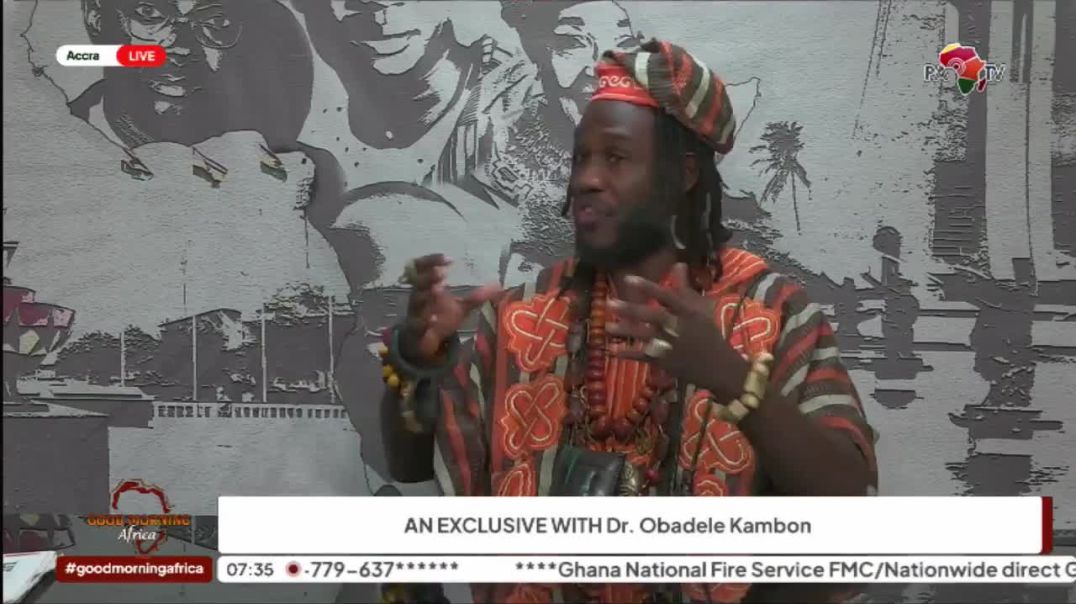

FULL INTERVIEW | Ɔbenfo Ọbádélé Kambon joins GOOD MORNING AFRICA on Pan African Television to discuss Open D.O.O.R. Dialogues, the Decade of Our Repatriation (2026–2036), self-reparations through repatriation, the global Black brain gain, and practical pathways for jobs, entrepreneurship and investment in Ghana.
The Open D.O.O.R. Dialogues Media Launch takes place Friday, 17 July 2026 at 10:00 AM in the Great Hall, University of Ghana. The main dialogue follows on 30 October 2026.
Learn more and get involved:
https://door.events
https://decadeofourrepatriation.com
Original broadcast: GOOD MORNING AFRICA, Pan African Television, 14 July 2026.
Source: https://www.facebook.com/10007....1786950785/videos/17
#decadeofourrepatriation #opendoordialogues #repatriation #ghana #panafricantv
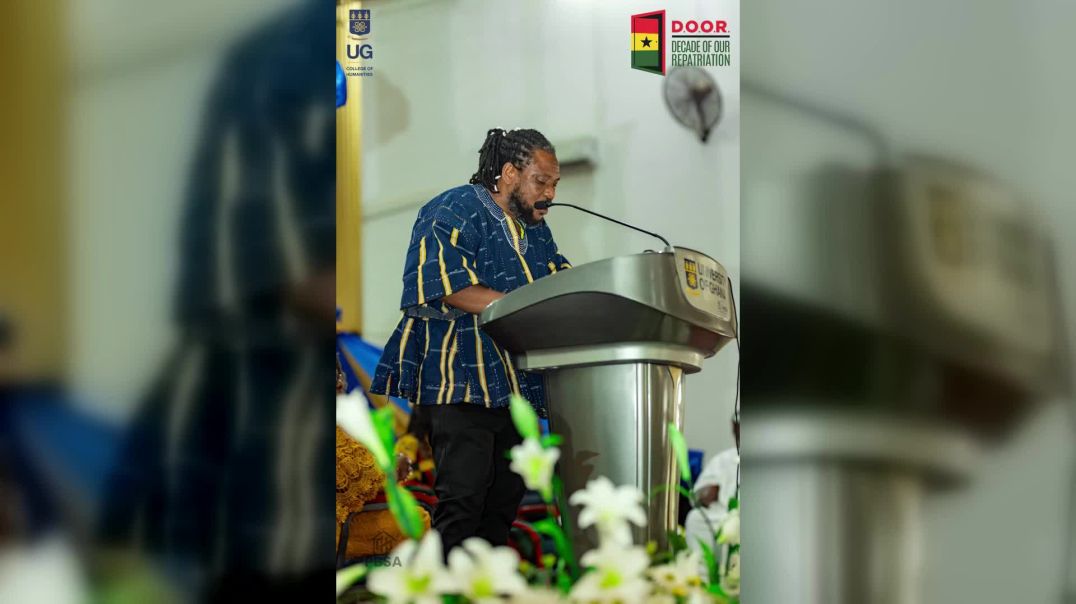
Radio Univers features the D.O.O.R. Initiative media launch and the Open D.O.O.R. Dialogues, highlighting the call for Africans in the diaspora to reconnect with Ghana through investment, repatriation, skills transfer, enterprise, and cultural exchange.
The Decade of Our Repatriation is about turning memory into movement: practical pathways home, lasting partnerships, and a shared future rooted in Africa.
#doorinitiative #decadeofourrepatriation #opendoordialogues #ghana #diasporainvestment #repatriation #panafricanism #RadioUnivers



Neil deGrasse Tyson Blasts Maps For Making Africa Look Small
"You can fit 5 United States into Africa. ... Don't get me started." - Neil deGrasse Tyson
#ClubShayShay #neildegrassetyson #africa
Buy LePortier: https://leportiercognac.com/pr....oducts/shay_vsop_750
SUBSCRIBE to get the latest Club Shay Shay content: https://www.youtube.com/c/Club....ShayShay?sub_confirm
Listen to the Club Shay Shay podcast on Apple Podcasts: https://podcasts.apple.com/us/....podcast/club-shay-sh
Listen to the Club Shay Shay podcast on Spotify: https://open.spotify.com/show/060hDdnydsJyMi17TmvyAh?si=iuda1z7oTE-21ZYzwiUdhg&nd=1
Like Club Shay Shay on Facebook: https://m.facebook.com/ClubShayShay/
Follow Club Shay Shay on Twitter: https://x.com/clubshayshay?s=21&t=PF1soCgsTT_NEerDJm9Lfg
Follow Club Shay Shay on Instagram: https://instagram.com/clubshay....shay?igshid=MzRlODBi
Follow Shannon Sharpe on Twitter: https://x.com/shannonsharpe?s=21&t=PF1soCgsTT_NEerDJm9Lfg
Follow Club Shay Shay on Tik Tok: https://www.tiktok.com/@clubshayshaypod?_t=8fJ79WZy2fb&_r=1
About Club Shay Shay:
Club Shay Shay is a weekly podcast hosted by Shannon Sharpe – 3x Super Bowl champion, member of the Pro Football Hall of Fame and co-host of First Take on ESPN. Each week Shannon will sit down with athletes, celebrities and influencers to break down, analyze and discuss the latest headlines in sports, pop culture and everything in-between. Get on the VIP list at Club Shay Shay NOW and never miss an episode!
Neil deGrasse Tyson | EP. 217
https://youtu.be/ahyz9LmxRis
Club Shay Shay
https://www.youtube.com/c/ClubShayShay