- General Videos
- Music
- Economics
- Health
- Travel & Events
- History
- Psychology
- Spirituality
- Movies
- News & Politics
- Kmtyw Combat Sciences
- Ɔbenfo Ọbádélé Kambon Videos
- Ɔbenfoɔ Kamau Kambon: Black Liberation Philosophy
- Science, Tech, Engineering and Math
- Permaculture
- Self-Sustainability
- Living Off Grid
- Yoruba Language Learning
- Education
- Mmɔfra Adesua
- Nana Kamau Kambon Playlist
- Livestream
- Komplementarity Kouples and Revolutionary Singles
- Abibitumi Film Series
- Decade of Our Repatriation
- Kwento xpr
- Live
Top videos
![A look at Capitalism in Kenya & Ujamaa in Tanzania [1970]](https://i.ytimg.com/vi/A9JKZWgGB5I/hqdefault.jpg)


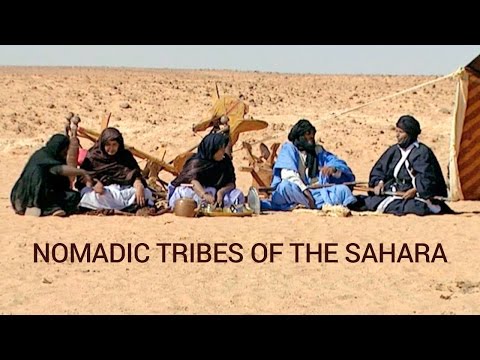

In this documentary, we will travel to the heart of Western Sahara, the last remaining unexplored region of the great African desert.
We will meet the nomads that inhabit this land, learn about their fascinating customs, their atavistic rites; the birthplace of an ancient empire. They are the ULAD EL MIZNA, the Children of the Cloud.
The immense desert which comprises the Western Sahara, almost 250,000 km in size, is one of the least-known, and most hostile regions in the world.
In 1976, exile began for the Sahrawi nation, which since then has been crowded into refugee camps in the barren hammada of TINDUF, in extreme living conditions and depending for their survival on international aid.
The unequal war between the FRENTE POLISARIO and Morocco in order to achieve freedom for their country has led to poverty, desolation and an unbearable cost in human lives.
In exile, the Sahrawi nation has, with the few available resources, managed to create a rudimentary but efficient system of administration. The population, some 170,000 people, has organised itself into WILAYAS and DARÍAS, assemblies of neighbours at which they discuss the problems of the community.
Mauritania is a country entirely of desert and with a fascinating history.
The terrifying canyons of the AMOJIAR ravine, its vertical walls, and the frequent landslides formed part of the dangers of the road which the ancient caravans had to negotiate in order to reach the mythical cities of the Gold Route. The lost cities of Mauritania. The mosque is the most important building in Chinguetti and perhaps in all of Mauritania. Every year, below its minaret, of dry-stone masonry and reconstructed several times, thousands of the Turab al Bidan faithful gathered to set out on the pilgrimage to Mecca.
For this reason, Chinguetti was considered the seventh holy city of Islam.
▶ SUBSCRIBE! http://bit.ly/PlanetDoc Full Documentaries every Tuesday, Thursday and Saturday!
▶FULL DOCUMENTARIES |
http://planetdoc.tv/playlist-full-documentaries
▶ TRIBES | http://planetdoc.tv/playlist-tribes-documentaries
▶FACEBOOK | http://bit.ly/FBPDoc
▶TWITTER | http://bit.ly/TwPDoc
▶TUMBLR | http://bit.ly/TbPlDoc

Last December, an Al Jazeera network investigation examined shocking claims that the government of Kenya has been running secret police death squads, tasked with assassinating suspected terrorists and criminals. At the time the Kenyan government strongly refuted the allegations but reports and rumours in Kenya about extra-judicial killings have continued to proliferate.
Ten months on, People and Power asked Mohammed Ali, one of Kenya’s top independent investigative journalists, to find out why.
In this deeply worrying film, Ali discovers that mysterious killings are indeed continuing amid a culture of apparent impunity, leaving Kenyan security forces open to suspicions that they are unaccountable and seemingly out of control.
He discovers that over 1,500 Kenyan citizens have been killed by the police since 2009, and that statistically, Kenyans are currently five times more likely to be shot by a policeman than a criminal.
With often little or no investigation by the Kenyan state into the circumstances surrounding these deaths, he finds evidence to suggest that an increasing number of Kenyan police officers may be complicit in what have been described as summary executions of suspects.
Even the Kenyan army, seen by most Kenyans as less corrupt and more trustworthy than the police, is now allegedly implicated in the torture and forced disappearance of terror suspects in the country’s northeastern region.
This film contains graphic images of violence and its aftermath that some viewers may find disturbing.
Connect with People & Power:
YouTube - http://aje.io/peopleandpowerYT
Facebook - https://facebook.com/AJPeopleAndPower
Twitter - https://twitter.com/AJpeoplepower
Website - http://www.aljazeera.com/peopleandpower/

![Tanzania: The Quiet Revolution [1973] (2/2)](https://i.ytimg.com/vi/ipZUOAlxCnE/hqdefault.jpg)


Fifteen years after the creation of al-Shabaab in Somalia, terror still reigns and the reality on the ground just shifted more in their favor.In a last ditch effort to leave a mark on foreign policy before his ouster, President Trump announced a drawdown of US troops in global hotspots around the world, including around 700 in Somalia. With no soldiers on the ground the plan promised to provide support through an already controversial and secretive drone program–which watchdog groups say has killed exponentially more civilians than the US admits.VICE News travels to the frontline of Somalia’s war against al-Shabaab to see what the US pullout means for the next chapter in the war on terror.Subscribe to VICE News here: http://bit.ly/Subscribe-to-VICE-NewsCheck out VICE News for more: http://vicenews.comFollow VICE News here:Facebook: https://www.facebook.com/vicenewsTwitter: https://twitter.com/vicenewsTumblr: http://vicenews.tumblr.com/Instagram: http://instagram.com/vicenewsMore videos from the VICE network: https://www.fb.com/vicevideo#VICENews #News