- General Videos
- Music
- Economics
- Health
- Travel & Events
- History
- Psychology
- Spirituality
- Movies
- News & Politics
- Kmtyw Combat Sciences
- Ɔbenfo Ọbádélé Kambon Videos
- Ɔbenfoɔ Kamau Kambon: Black Liberation Philosophy
- Science, Tech, Engineering and Math
- Permaculture
- Self-Sustainability
- Living Off Grid
- Yoruba Language Learning
- Education
- Mmɔfra Adesua
- Nana Kamau Kambon Playlist
- Livestream
- Komplementarity Kouples and Revolutionary Singles
- Abibitumi Film Series
- Decade of Our Repatriation
- Kwento xpr
- Live
Top videos


Support our work: https://democracynow.org/donate/sm-desc-yt
The U.S.-Israeli war on Iran and the closure of the Strait of Hormuz have raised fuel costs and caused shortages of key fertilizers around the world, wreaking havoc on the agricultural industry. Adam Hanieh, director of the SOAS Middle East Institute at the University of London, says the effects could be felt for a long time, particularly in the Global South.
“About a third of the world’s basic fertilizers now pass through the Strait of Hormuz,” says Hanieh, who adds that the “coming food crisis” is compounded by the climate and debt crises in much of the developing world. “It’s a perfect storm.”
Subscribe to our Daily Email Digest: https://democracynow.org/subscribe


STATEMENT
FROM THE PRESIDENT OF THE CONFEDERATION OF SAHEL STATES (AES)
Following terrorist attacks carried out against the Republic of Mali
April 25, 2026
The Confederation of Sahel States, in its ongoing struggle for sovereignty, was the target of terrorist attacks on the morning of April 25, 2026, targeting several sites on Malian territory.
The coordination of the attacks, the targets chosen, the forces involved, as well as the logistics and weapons used, clearly indicate that these were long-planned and coordinated operations aimed at inflicting heavy losses on defense and security forces and spreading terror among innocent civilian populations of the Confederation of Sahel States, particularly in Mali.
The persistence of these barbaric and inhumane aggressions bears the mark of a monstrous plot supported by enemies of the Sahel’s liberation struggle, carried out through the confederal dynamic of the AES.
However, the sinister plan and destabilization attempt of these enemies of peace and unity in the Sahel were thwarted thanks to the professional, courageous, and determined response of the Malian armed forces.
The Confederation of Sahel States emphasizes that these ignoble, cowardly, and barbaric acts against a sovereign member state cannot shake the determination of the brave peoples of the Sahel to live free, in peace, and with dignity.
It expresses its deepest condolences to the families of the martyrs and wishes a swift recovery to the wounded.
The Confederation of Sahel States expresses to the Malian people, the Government of the Republic of Mali, and the valiant Malian Armed Forces (FAMa), its total, unconditional, and fraternal solidarity. It pays vibrant tribute to their extraordinary courage in repelling this barbaric aggression and neutralizing individuals from another era, acting on behalf of forces determined to undermine its sovereign vision.
It expresses its gratitude to all States and partners who, in a spirit of solidarity, have shown their support to the Malian people and once again demonstrated their commitment to stand alongside the States and peoples of the Sahel.
Done in Ouagadougou, April 25, 2026
Captain Ibrahim TRAORÉ
President of the Confederation of Sahel States
Please SUBSCRIBE, LIKE, COMMENT and Share, Thank for Watching
#Love
#Peace
#africansolutions


This preview is only the first 8 minutes 59 seconds.https://www.abibitumi.com/prod....uct/reparations-and- this explosive TV3 interview, Ɔbenfo Ọbádélé Bakari Kambon breaks down the role of the Catholic Church in the kidnapping, enslavement, and exploitation of Black people, showing how religious authority, papal decrees, monarchy, capitalism, and violence worked together to create one of the greatest crimes in world history.The full interview runs 1 hour, 4 minutes, and 45 seconds, and the complete conversation goes much deeper than what you see here.In the full interview, Ɔbenfo Kambon addresses:The Catholic Church’s role in giving religious sanction to perpetual enslavementThe papal bulls Dum Diversas and Romanus PontifexWhy the term “slave trade” hides the reality of organized kidnappingThe false “400 years” narrative and why the timeline must begin earlierThe Georgetown 272 and wealth built from Black sufferingWhy apologies without restitution are meaninglessThe myth that “Africans sold Africans”The role of Christian records, baptism, and bookkeeping in distorting historyThe connection between reparations, retribution, and blood debtWhat Ghana and Black institutions must do now to demand accountabilityThe preview gives you the foundation. The full interview gives you the fire.To watch the complete 1 hour, 4 minutes, 45 second interview, purchase it on Abibitumi for $10 here:https://www.abibitumi.com/prod....uct/reparations-and- is not just another discussion about history. This is a direct challenge to the institutions that profited from the blood, labor, land, and lives of our Ancestors.Watch the preview. Then get the full interview.Title of full interview:Reparations and the Role of the Catholic Church in Enslavement: TV3 Complete InterviewPurchase the complete interview here:https://www.abibitumi.com/prod....uct/reparations-and- #catholicchurch #enslavement #blackhistory #georgetown272 #abibitumi #abibifahodie #blackliberation #tv3ghana #repatriation #ghana #blackpower

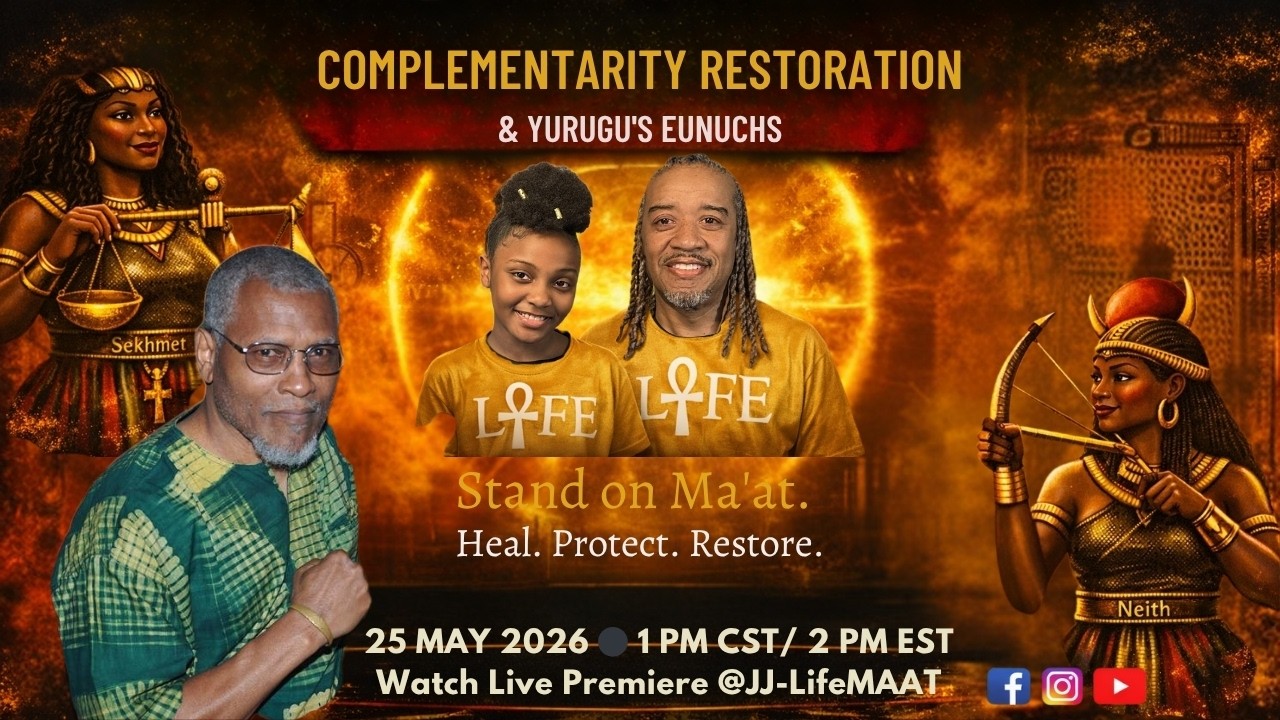
In his third appearance on the J&J Life Ma’at Podcast, Baba Mwalimu Baruti joins hosts Ra’Asar and Reya’Sekhmet to deepen the discussion on Complementarity Restoration — the sacred, strategic union of Afrikan man and Afrikan woman as the core of nation‑building. Drawing from his work Complementarity, Baba Baruti affirms that the Afrikan couple is the first army, the first school, and the first temple of cultural continuity, where love functions as a disciplined mission rooted in trust, purpose, and shared vision.
This conversation explores the essence of A Warrior’s Love, where affection and duty merge into the spiritual armor required for restoration. We also confront the truths in Yurugu’s Eunuchs, examining how colonial and psychological warfare have targeted Afrikan masculine and feminine balance, and how Afrikan Warriors reclaim harmony through unity, clarity, and Ma’at.
#complementarity #warriorslove #AfrikanRestoration #YurugusEunuchs #reyasekhmet #nationbuilding #maat #afrikancentered
🎙️ Host: Reya'Sekhmet
🎙️ Guest: Ra'Asar
📖 New Book Alert: The Magical Adventures of Ra'Lena
Purchase my New book at: www.ReyaSekhmet.com
=================
🎙️ Guest: Baba Mwalimu Baruti
GET BABA BARUTI'S BOOKS HERE:
https://akobenhouse.com
=================
Donate a Coloring Book Cash App http://cash.app/$JJ1Life
J&J-Life MA'AT https://www.instagram.com/jjlifemaat/
J&J-Life MA'AT https://www.tiktok.com/@jjlifemaat?_t=8nS3sD56Cd9&_r=1
J&J-Life MA'AT Productions Presents: Maatkara Squad
👕
Official J&J-Life MA'AT Show Merch: https://linktr.ee/sekhmetmaatkara
📬
J&J-Life MA’AT
P.O. Box 35081
Des Moines, IA. 50315


"2AM in Venezuela" (OFFICIAL VIDEO): https://youtu.be/GtvkwgbVKF8
BLACK WINTER (Full Album): https://youtube.com/playlist?list=PLJSMFuicKjJ46p1K9TlqZPRGFSd0M5z9U&si=4WG_YXCGJinM6XEN
Join the Patreon for exclusive videos that you won't find on Youtube: https://www.patreon.com/NTD1814
S U P P O R T
Cash App - $NelsonAmadeus
PayPal- GlobalHitsWorld@gmail.com
EMAIL - KingNeferkare@gmail.com
Twitter @NTDessalines
Instagram @NelsonAmadeus
TURN ON POST NOTIFICATIONS.
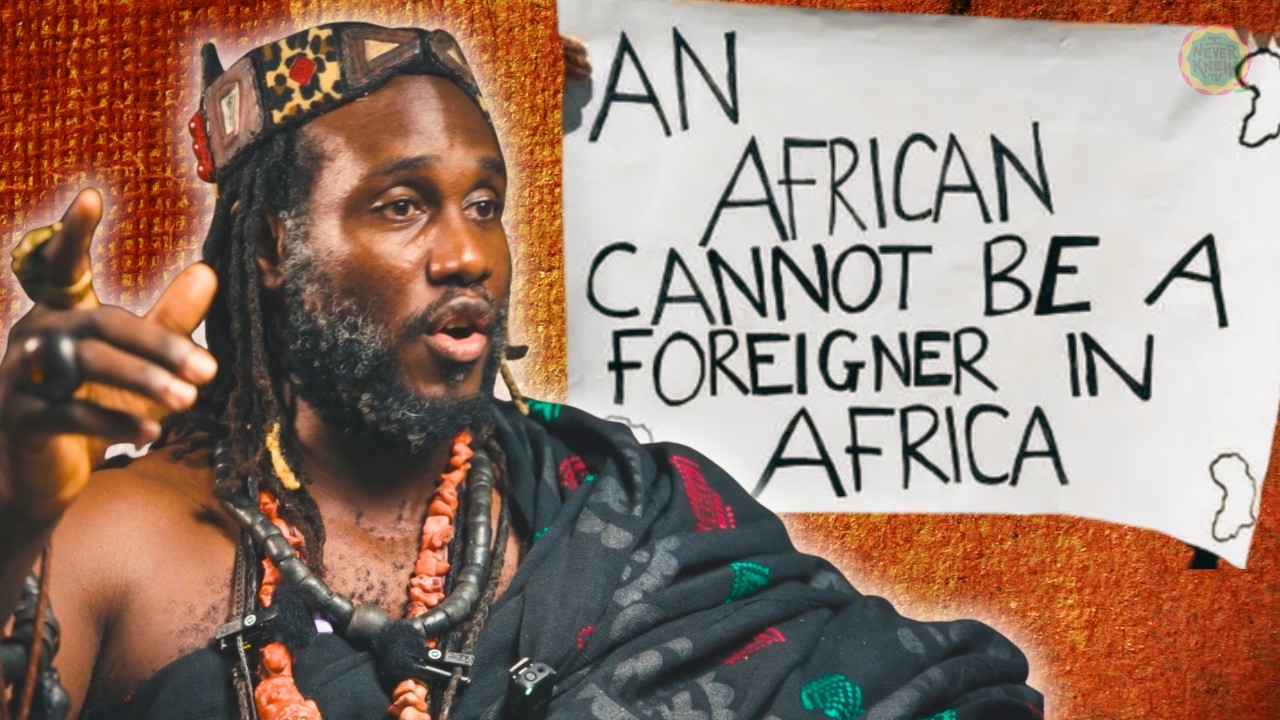
👉🏿 JOIN THE MOVEMENT → Uncensored, Ad-Free & Exclusive Contenthttps://ineverknewtv.com/premium/🇬🇭 Click the link to LEARN MORE about 'Repatriate To Ghana'www.R2GH.com📍OUR SPONSOR: Maroon ProductionsWe help brands grow through strategic video, design, and content that actually attracts attention, builds trust, and converts.If you’re looking to elevate your brand or content, learn more here:👉🏿 www.maroonproduction.comObenfo Obadele Kambon is a world-renowned master linguist, scholar and the architect of Abibitumi the oldest and largest Black social education network on the planet.In Pt.2 of this powerful reasoning, Obenfo Obadale Kambon argues that what many call "xenophobia" in South Africa is actually something much deeper. Using the story of a one-year-old child denied medical treatment because she was considered a foreigner, he challenges viewers to reconsider who is really benefiting when Black people fight one another.Please click link below to learn more about Obenfo Obadele Kambon and his work:https://www.repatriatetoghana.....comhttps://www.abibi Catch 'I NEVER KNEW RADIO for Roots, Rock, Reggae Music!Hosted by Jr a.k.a 'The Bald Head' of 'I Never Knew TV'📅 Sundays: 9 - 11 AM EST📅 Wednesdays: 8 - 10 AM EST📅 Thursdays: 10 AM - Noon ESTListen live: https://wloy.org/listen/ #ineverknewtv #xenophobia