- General Videos
- Music
- Economics
- Health
- Travel & Events
- History
- Psychology
- Spirituality
- Movies
- News & Politics
- Kmtyw Combat Sciences
- Ɔbenfo Ọbádélé Kambon Videos
- Ɔbenfoɔ Kamau Kambon: Black Liberation Philosophy
- Science, Tech, Engineering and Math
- Permaculture
- Self-Sustainability
- Living Off Grid
- Yoruba Language Learning
- Education
- Mmɔfra Adesua
- Nana Kamau Kambon Playlist
- Livestream
- Komplementarity Kouples and Revolutionary Singles
- Abibitumi Film Series
- Decade of Our Repatriation
- Kwento xpr
- Live
Top videos


Sign up for a free Audible trial at https://audible.com/greatwar or text greatwar to 500-500
Following the Spanish-American War, the United States foreign policy, under the influence of the Monroe Doctrine, intervened in several countries in Central America and the Caribbean. The United States Marine Corps was usually the military arm of these involvements as was the case in Cuba, Haiti and the Dominican Republic.
» SUPPORT THE CHANNEL
Patreon: https://www.patreon.com/thegreatwar
Become a member: https://www.youtube.com/channe....l/UCUcyEsEjhPEDf69RR
» OUR PODCAST
https://realtimehistory.net/podcast - interviews with World War 1 historians and background info for the show.
» BUY OUR SOURCES IN OUR AMAZON STORES
https://realtimehistory.net/amazon *
*Buying via this link supports The Great War (Affiliate-Link)
» SOURCES
Bauduy, Jennifer, “The 1915 U.S. Invasion of Haiti: Examining a Treaty of Occupation” Social Education 79 (2015)
Castor, Suzy & Garafola, Lynn, “The American Occupation of Haiti (1915-34) and the Dominican Republic (1916-24)” The Massachusetts Review, Vol. 15, No. 1/2, Caliban (Winter - Spring, 1974)
Gilderhus, Mark T, The Second Century: U.S.-Latin American Relations Since 1889, (Wilmington, Delaware : Scholarly Resources Inc, 2000)
Johnson, Jeannie L. The Marines, Counterinsurgency, and Strategic Culture: Lessons Learned and Lost in America's Wars, (Washington D.C. : Georgetown University Press, 2018)
Langley, Lester D, The Banana Wars: United States Intervention in the Caribbean, 1898-1934, (Wilmington, Delaware : Scholarly Resources Inc, 2002)
Langley, Lester D, The United States and the Caribbean, 1900-1970, (Athens, Georgia : University of Georgia Press, 1980)
Perez, Louis A., Jr. Intervention, Revolution, and Politics in Cuba, 1913-1921, (Pittsburgh, Pennsylvania : University of Pittsburgh Press, 2009)
Posner, Walter H. “American Marines in Haiti, 1915-1922” The Americas, Vol. 20, No. 3 (Jan., 1964)
Schreadley, R. L. Intervention! : the Americans in Haiti, 1915-1934, (Charleston, South Carolina : Evening Post Books, 2017)
Yates, Lawrence A, “The US Military’s Experience in Stability Operations, 1789-2005”, Global War on Terrorism Occasional Paper 15, Title 1, Series 2, (2006)
» MORE THE GREAT WAR
Website: https://realtimehistory.net
Facebook: https://facebook.com/TheGreatWarYT
Instagram: https://instagram.com/the_great_war
Twitter: https://twitter.com/WW1_Series
Reddit: htpps://reddit.com/r/TheGreatWarChannel
» OTHER PROJECTS
16 DAYS IN BERLIN: https://realtimehistory.net/pages/16-days-in-berlin
»CREDITS
Presented by: Jesse Alexander
Written by: Mark Newton, Jesse Alexander
Director: Toni Steller & Florian Wittig
Director of Photography: Toni Steller
Sound: Toni Steller
Editing: Toni Steller
Motion Design: Philipp Appelt
Mixing, Mastering & Sound Design: http://above-zero.com
Maps: Daniel Kogosov (https://www.patreon.com/Zalezsky)
Research by: Jesse Alexander
Fact checking: Florian Wittig
Channel Design: Yves Thimian
Contains licensed material by getty images
All rights reserved - Real Time History GmbH 2021

Syntropic farming is a new and ancient permaculture practice that can be implemented in any region, in any climate, in limitless ways – even in your own back yard. For over a decade the Lotz-Keegan family have been implementing permaculture practices to regenerate a degraded hillside into an abundant food forest of native and exotic trees that feed their family, their community, the wildlife, the soil, and their souls.
Combining the practices of syntropic agroforestry with the principles of permaculture and their own deeply thoughtful approach to land regeneration, food growing, and lifestyle, this family is partnering with nature to create a humming diversity on the land and a positive story about the role of humans in an eco-system.
We came away from our shoot with so much invaluable information about the why and how of syntropic farming as it’s practised at PermaDynamics. For this reason we’ve made the full interview with Klaus Lotz available on our website, and all 10 full-length interviews, some of which we couldn’t include in the film, available on our Patreon page. Also if you’re keen to dig deeper into this style of growing food and regenerating soil, check out PermaDynamics' own videos available on their Patreon page.
Get access to all 10 full-length interviews: https://happenfilms.com/patreon
Check out PermaDynamics on Patreon: https://patreon.com/PermaDynamicsNZ
The full interview with Klaus Lotz: https://happenfilms.com/film/k....laus-lotz-syntropic-
** Find out more about PermaDynamics at these links **
Website: http://www.permadynamics.net
Instagram: https://instagram.com/permadynamics
Facebook: https://facebook.com/PermaDynamics.nz
Patreon: https://patreon.com/PermaDynamicsNZ for weekly permaculture videos, live Q&A and mentorship.
** Find out more about Happen Films **
If you’re interested in supporting us to make more films, find us on Patreon: https://happenfilms.com/patreon
For more info about Happen Films, check out our website: https://happenfilms.com. We make short films and feature films, all with a permaculture, resilience, sustainability focus. Don’t forget to subscribe here on YouTube!
Find us on social media
Instagram: https://instagram.com/happenfilms
Facebook: https://facebook.com/happenfilms
Twitter: https://twitter.com/happenfilms
** Film credits **
Directed and written by Jordan Osmond & Antoinette Wilson
Produced by Antoinette Wilson
Cinematography and editing by Jordan Osmond
Story feedback and suggestions from Nick Tucker
Additional drone footage by Byron Birss (https://instagram.com/byron.in.new.zealand)
1990 photo by Malcolm Rands
** Thanks! **
To our wonderful supporters on Patreon, who helped make this film happen:
Kimberly Levesque, Matthew Zimmer, Rahul Banerjee, Jonathan Wise, Georjette Mercer, Mary Conlan, Kate Hall, V.J. Raghavan, Pierre Blom, Cicely Jette Stewart, Brett Davidson, Tony Schaufelberger, Namaste Foundation, Sankar Madhavan, Sue Campbell, Melissa Tripodi, Filip Zeman, Greg and Rachel Hart, Brian Newton, Susan Hunsberger, Kirti Patel, Kelly Milikins, Nathan Kitchen, Geoffrey Torkington, Alex Muir, Tiitus Laine, Rex and Jo, Jess O’Shea, Moana Kiff, William B. Everett, Ron Hastie, David, Lauren, Carolyn Gillum.
** Subtitles and closed captions **
In the past, many people have generously taken time to translate our films here on YouTube. The Community Contributions function no longer exits, but if you’d like to contribute a translation please contact us. Making the film available in your language and to your community would mean the world to us!
Chapters
00:00 - Intro to Syntropic Farming
2:36 - 17-Year-Old Food Forest
7:48 - Market Garden and Orchard
12:20 - Native and Exotic Plants
14:45 - Annuals in the Food Forest
17:29 - Tropical Hothouse
19:17 - 3-Month-Old Food Forest
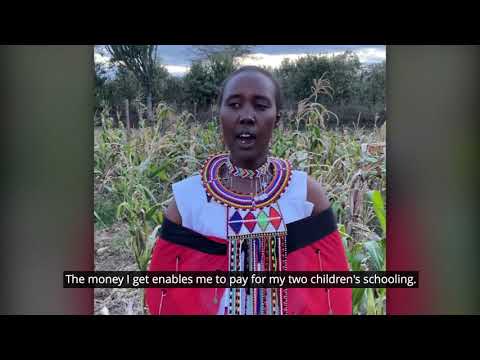
📢 “When I realised that our traditional way of life is no longer sustainable, I started crop farming.” - Jennifer Gisa, a Maasai farmer from Kenya, for #IGrowYourFood 🌱
Find out more about the global action day: https://campaigns.ifoam.bio/igrowyourfood
🤗 Support our ORGANISATION:
https://ifo.am/Donate
🤝 Become our PARTNER:
https://ifo.am/JoinIFOAM
📩 Sign up to our NEWSLETTER:
https://ifo.am/Newsletter
▶️ Subscribe to our YOUTUBE channel:
https://ifo.am/YouTube
👍 Stay connected on FACEBOOK:
https://ifo.am/Facebook
👩💻 Join the conversation on TWITTER:
https://ifo.am/Twitter
👨💻 Follow us on LINKEDIN:
https://www.linkedin.com/compa....ny/ifoamorganicsinte



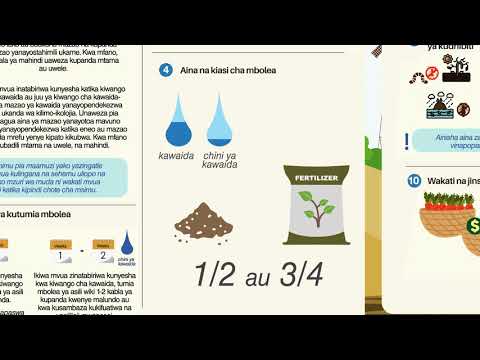
Video hii inaonyesha maamuzi 10 makuu ya kilimo ya kufanya kulingana na habari ya hali ya hewa.
Tazama toleo la Kiingereza kwenye kiunga hapa chini:
https://youtu.be/kSxTq4OW1Fg
Sifa za video:
USDA, USAID, IITA, Kilimo cha Misitu Ulimwenguni, FAO.
Tutembelee → https://iita.org/
Ikiwa wewe ni mpya, tafadhali jiandikishe!
Tutembelee → https://iita.org/
Kama sisi → https://facebook.com/IITA.CGIAR
Tufuate → https://twitter.com/iita_cgiar
Tufuate → https://instagram.com/iita_cgiar/
Pata habari zetu zote za hivi karibuni → http://bulletin.iita.org/
#IITA #kilimo #haliyahewa

WPRO Reporter John Anderson interviews Malcolm X in Providence in 1961.
Local TV Newsfilm from the Rhode Island Historical Society Collections
Call No: 1969.92.2
Original Title: Malcolm X
Date: 1961
Collection: WPRI-TV
Format: 16mm, b&w, sound on film
RIHS Website: http://bit.ly/rihs_homepage
RIHS Blog: http://bit.ly/rihs_Blog
Follow us on SOCIAL MEDIA!!!
FB: http://bit.ly/rihs_FB
IG: http://bit.ly/rihs_IG
TW: http://bit.ly/rihs_TW