- General Videos
- Music
- Economics
- Health
- Travel & Events
- History
- Psychology
- Spirituality
- Movies
- News & Politics
- Kmtyw Combat Sciences
- Ɔbenfo Ọbádélé Kambon Videos
- Ɔbenfoɔ Kamau Kambon: Black Liberation Philosophy
- Science, Tech, Engineering and Math
- Permaculture
- Self-Sustainability
- Living Off Grid
- Yoruba Language Learning
- Education
- Mmɔfra Adesua
- Nana Kamau Kambon Playlist
- Livestream
- Komplementarity Kouples and Revolutionary Singles
- Abibitumi Film Series
- Decade of Our Repatriation
- Kwento xpr
- Live
Top videos





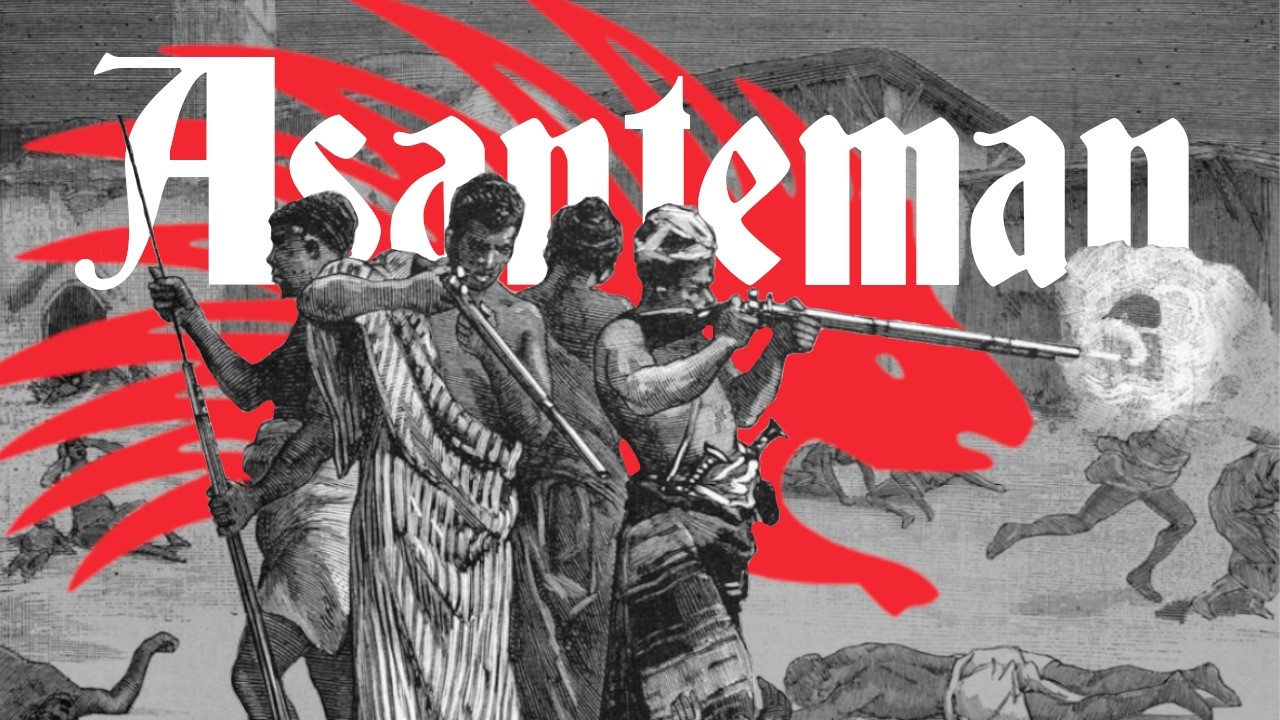

As Europeans explored the interior of the African continent in the mid-19th century, the societies they encountered were often characterized as technologically underdeveloped.
Deep in the jungles of what is present-day Ghana, however, paved roads guided these explorers to large cities with multi-story buildings that rose above the tree line.
Chapters:
00:00 - Intro
01:43 - Part I: Because of War
03:38 - Treasury, Medicine, Politics
05:37 - The Great Roads
07:50 - Part II: Cormantine and Saturday
11:13 - Agriculture
13:42 - Anglo-Asante Wars
17:00 - Part III: Days of Torment
19:15 - Joint Ventures
23:00 - Rebellion, But Not the Last
Audio:
Lucid Haze - YouTube Audio Library
Origins - EU4 OST
The Dark Continent - YouTube Audio Library
I Saved Your Life - Beasts of No Nation
Surrender - Beasts of No Nation
Helicopters - Beasts of No Nation
Sources:
- Ivor Wilks. Asante in the Nineteenth Century: The Structure and Evolution of a Political Order. (African Studies Series, number 13.) Cambridge: Cambridge University Press. 1975.
- Africa's 100 years' war at the dawn of colonialism: The Anglo-Asante wars (1807-1900) by Isaac Samuel
https://www.africanhistoryextr....a.com/p/africas-100-

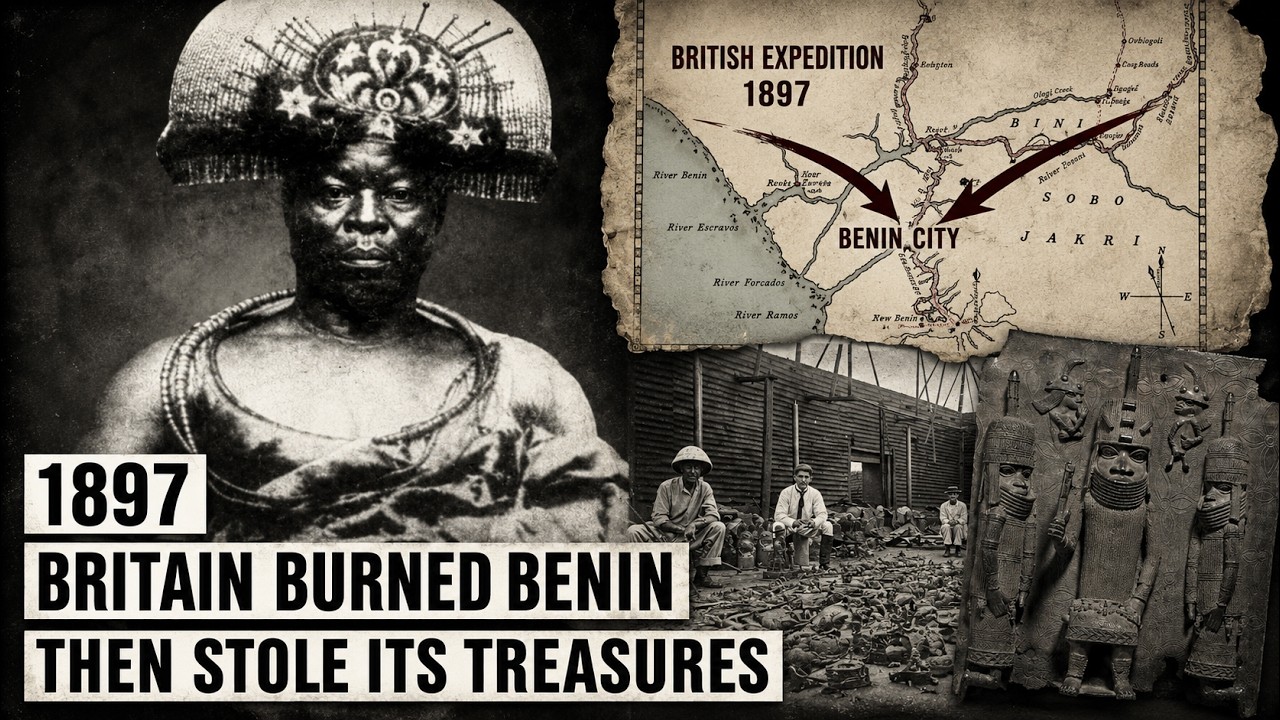
In 1897, Britain sent over 1,200 soldiers to destroy the Kingdom of Benin — one of the most advanced civilizations in pre-colonial Africa. They burned the capital to the ground, exiled the king, and looted an estimated 10,000 priceless artifacts including the world-famous Benin Bronzes. These weren't just works of art. They were the memory system of an entire civilization — court records, royal genealogies, and sacred ceremonial objects cast in bronze by master craftsmen whose guild had been perfecting their techniques for over 500 years.
Today, more than 900 of these stolen treasures sit in the British Museum alone. Thousands more are scattered across institutions in Germany, the United States, the Netherlands, and beyond. The British Museum still refuses to return a single piece, citing a 1963 law — while Germany, the Smithsonian, and dozens of other institutions have already begun sending them home.
This is the full story of how a kingdom that rivaled European capitals in size and sophistication was deliberately destroyed, its treasures stolen at gunpoint, and how the fight to bring them home is still being waged today.
Subscribe for more deep dives into the hidden forces that shaped our world.
#beninbronzes #kingdomofbenin #britishempire #colonialhistory #scrambleforafrica #africanhistory #benincity #edopeople #britishmuseum #culturalrestitution #stolenart #decolonization #africanart #lostwaxcasting #obaofbenin #nigerianhistory #repatriation #colonialviolence #westafricanhistory #hiddenhistory #powerandwealth #empireandconquest
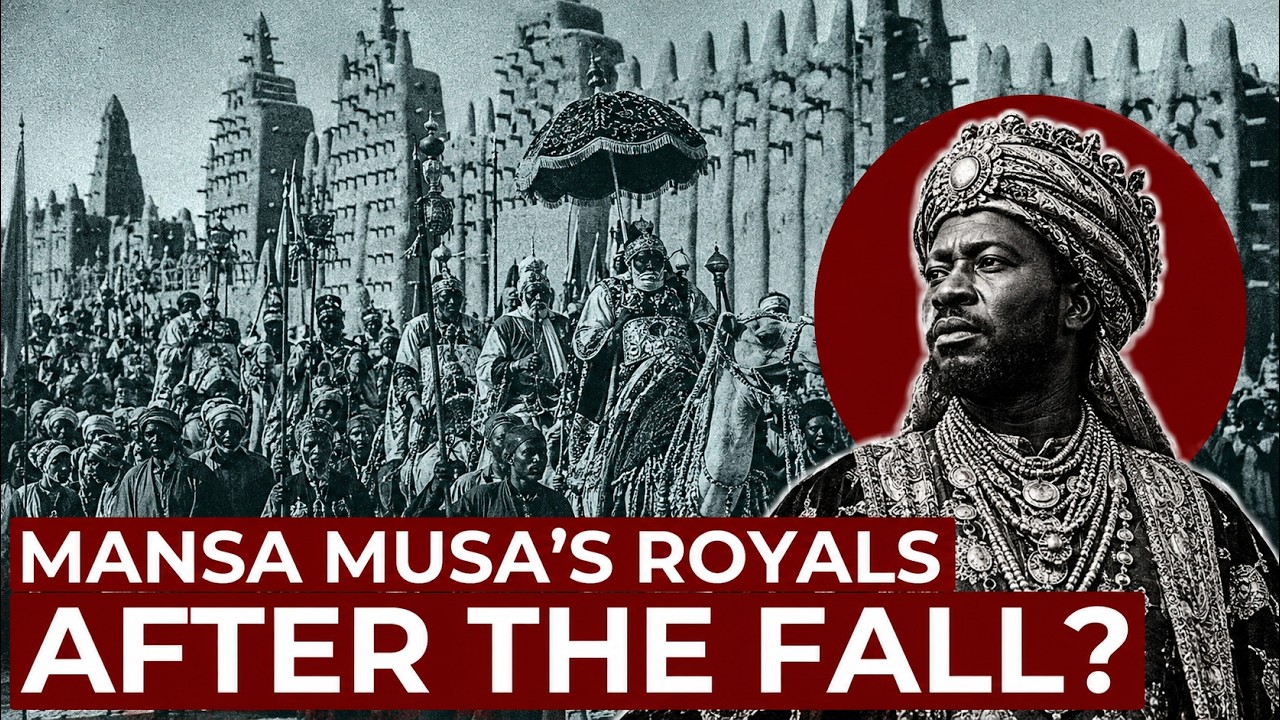
Mansa Musa is widely considered the richest person who ever lived. His wealth was so vast that economists have given up trying to calculate it. During his famous pilgrimage to Mecca in 1324, he gave away so much gold in Cairo that he crashed the Egyptian economy for over a decade. But Mansa Musa didn't build this empire alone. He inherited a dynasty — the Keita family — that had been accumulating power and wealth for generations before him. His great-uncle Sundiata Keita, a crippled prince driven into exile, rose from nothing to defeat a tyrant and found the Mali Empire from scratch. At its peak, Mali controlled half the world's gold supply, built one of the greatest universities in history, and commanded a territory larger than Western Europe.
But after Mansa Musa died, everything fell apart. Weak successors, civil wars, power-hungry viziers, and rising enemies tore the empire to pieces. Within two generations, the golden age was over. Within two centuries, the empire was gone entirely. So what really happened to the family that built the richest empire in human history? And where are the Keitas today?
This is the full story of how one dynasty rose from exile and poverty to build the wealthiest empire the world has ever seen — and how they lost it all.
FAIR USE DISCLAIMER: This video is for educational and commentary purposes.
#mansamusa #maliempire #sundiatakeita #africanhistory #keitadynasty #timbuktu #wealthinhistory #richestmaninhistory #goldempire #westafrica #medievalafrica #transsaharantrade #historydocumentary #empireriseandfall #africanempires #mansa #oldmoney #dynastywealth #goldenage #sankoreuniversity

"2AM in Venezuela" (OFFICIAL VIDEO): https://youtu.be/GtvkwgbVKF8
BLACK WINTER (Full Album): https://youtube.com/playlist?list=PLJSMFuicKjJ46p1K9TlqZPRGFSd0M5z9U&si=4WG_YXCGJinM6XEN
Join the Patreon for exclusive videos that you won't find on Youtube: https://www.patreon.com/NTD1814
S U P P O R T
Cash App - $NelsonAmadeus
PayPal- GlobalHitsWorld@gmail.com
EMAIL - KingNeferkare@gmail.com
Twitter @NTDessalines
Instagram @NelsonAmadeus
TURN ON POST NOTIFICATIONS.