- General Videos
- Music
- Economics
- Health
- Travel & Events
- History
- Psychology
- Spirituality
- Movies
- News & Politics
- Kmtyw Combat Sciences
- Ɔbenfo Ọbádélé Kambon Videos
- Ɔbenfoɔ Kamau Kambon: Black Liberation Philosophy
- Science, Tech, Engineering and Math
- Permaculture
- Self-Sustainability
- Living Off Grid
- Yoruba Language Learning
- Education
- Mmɔfra Adesua
- Nana Kamau Kambon Playlist
- Livestream
- Komplementarity Kouples and Revolutionary Singles
- Abibitumi Film Series
- Decade of Our Repatriation
- Kwento xpr
- Live
Top videos




African, Caribbean, and soul food spots are catching heat over prices. Are we supporting Black business — or being priced out? Full episode: https://youtube.com/live/F4QM_Ze6OsI
#blackbusiness #africanfood #soulfood #blackeconomics #ShootTheBreeze



The idea that Africa is "overpopulated" and that the poverty of its people is a function of geographical poverty is one of the most persistently promoted myths in western-dominated global discourse.
In this video, @Big_Mck forensically takes apart this myth, and the adjacent myth of Africa's small geographical size which has been promoted for centuries by the Mercator Projection, revealing them for the pernicious lies they are, and linking these lies totheir ultimate beneficiaries in the capitals of Europe and North America.#africa #population #poverty #thetruth




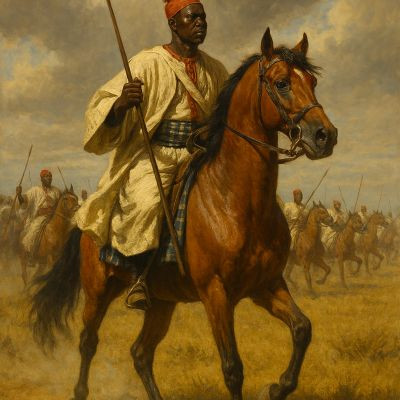

India once produced the finest cloth on Earth. Dhaka muslin was so delicate it was called "woven air," and Indian textiles dominated global trade for centuries. At its peak, India accounted for nearly 25% of the world's economic output, and its weavers were the highest-paid textile workers on the planet.
So how did Britain, a country that couldn't even produce decent cotton cloth, manage to flip the entire trade on its head — turning India from the world's greatest textile exporter into a captive market for inferior British factory goods?
The answer involves protectionist trade bans, industrial espionage, military conquest, the deliberate destruction of an entire artisan class, and one of the most calculated economic reversals in modern history. From the Calico Acts to the Battle of Plassey, from the spinning jenny to Gandhi's spinning wheel — this is the full story of how Britain stole India's cloth trade and how India eventually fought back.
If you enjoyed this video, please like, subscribe, and leave the word "muslin" in the comments.
Sources:
• Angus Maddison, "The World Economy: A Millennial Perspective" (OECD, 2001)
• Prasannan Parthasarathi, "Why Europe Grew Rich and Asia Did Not" (Cambridge University Press, 2011)
• Sven Beckert, "Empire of Cotton: A Global History" (Vintage, 2015)
• K.N. Chaudhuri, "The Trading World of Asia and the English East India Company" (Cambridge University Press)
• The Cambridge Economic History of India, Volume 2
• Victoria and Albert Museum, "Indian Textiles: A Global Trade"
• John Forbes Watson, comparative assessment of Indian, British, and French muslins (1866)
• Shashi Tharoor, "Inglorious Empire: What the British Did to India" (Hurst Publishers, 2017)
• Science Museum Journal, "The Indian Challenge and the Rise of Manchester"
• UNESCO and GI designation records on Dhaka Muslin revival
#india #britishempire #colonialism #textiles #economichistory #dhakamuslin #eastindiacompany #industrialrevolution #tradewar #gandhi #swadeshi #britishraj #deindustrialization #cottontrade #calicoacts #mughalempire #bengal #manchester #economics #history #documentary