





- General Videos
- Nnwom
- Sikas?m
- Akwahosan
- Travel & Events
- Abak?s?m
- Adwene mu Nhwehw?mu
- Honhom fam nne?ma
- Fim
- News & Politics
- Kmtyw Combat Sciences
- Ɔbenfo Ọbádélé Kambon Video ahorow
- ?benfo? Kamau Kambon: Black Liberation Philosophy
- Science, Tech, Engineering and Math
- Permaculture
- Self-Sustainability
- Living Off Grid
- Yoruba Language Learning
- Nhomasua
- Mmɔfra Adesua
- Nana Kamau Kambon Playlist
- Livestream
- Komplementarity Kouples and Revolutionary Singles
- Abibitumi Film Series
- Decade of Our Repatriation
- Live
Video a ɛwɔ soro


Videos on Youtube
https://tapvideo.blogspot.com/....2019/06/all-videos-o
Instagram: https://www.instagram.com/tran....satlanticproductions
Donate so we can complete the upload
https://www.gofundme.com/tapvideo Share on Facebook.

ABONNEZ-VOUS | LIKEZ | PARTAGEZ
_____________________________________
La première présentation dédicace venait de se faire chez l’éditeur Présence africaine, aussitôt le professeur a été ensuite invité à l’ambassade du Congo en France par l’ambassadeur Rodolphe Adada, pour une deuxième présentation de son ouvrage : Reconstruction du Nilo -Atlantique, le professeur Théophile Obenga a été agréablement surpris par les services de l’ambassade qui ont mis les bouchées doubles en organisant une agréable surprise surprise anniversaire de ses 90 ans.
Un moment plein d’émotions, qui a fait couler les larmes de l’Egyptologue, juste après son exposé sur le concentré comparatif linguistique du Chamito-Semitique à l’afro -Asiatique.
Le nonagénaire infatigable pédagogue, est déjà en route pour Genève pour une autre série de dédicaces .
#ThéophileObenga #cheikhantadiop #reconstructionniloatlantique #PrésenceAfricaine #egypteancienne #afroasiatique #ChamitoSémitique #cultureafricaine #90ansobenga #histoireafricaine
rejoignez cette chaîne pour bénéficier d'avantages exclusifs :
https://www.youtube.com/channe....l/UClyc8f5pyYAETKdGv


In this Video, Opolotiversity shows you the Process of Drilling a Water Borehole..
Hope you enjoy as we learn and grow together!!
Kindly Subscribe to the Channel for more updates...
#BoreHole
#Drilling Process
AngloZulu - The Dark Contenent by Kevin MacLeod is licensed under a Creative Commons Attribution 4.0 licence. https://creativecommons.org/licenses/by/4.0/
Source: http://incompetech.com/music/r....oyalty-free/index.ht
Artist: http://incompetech.com/

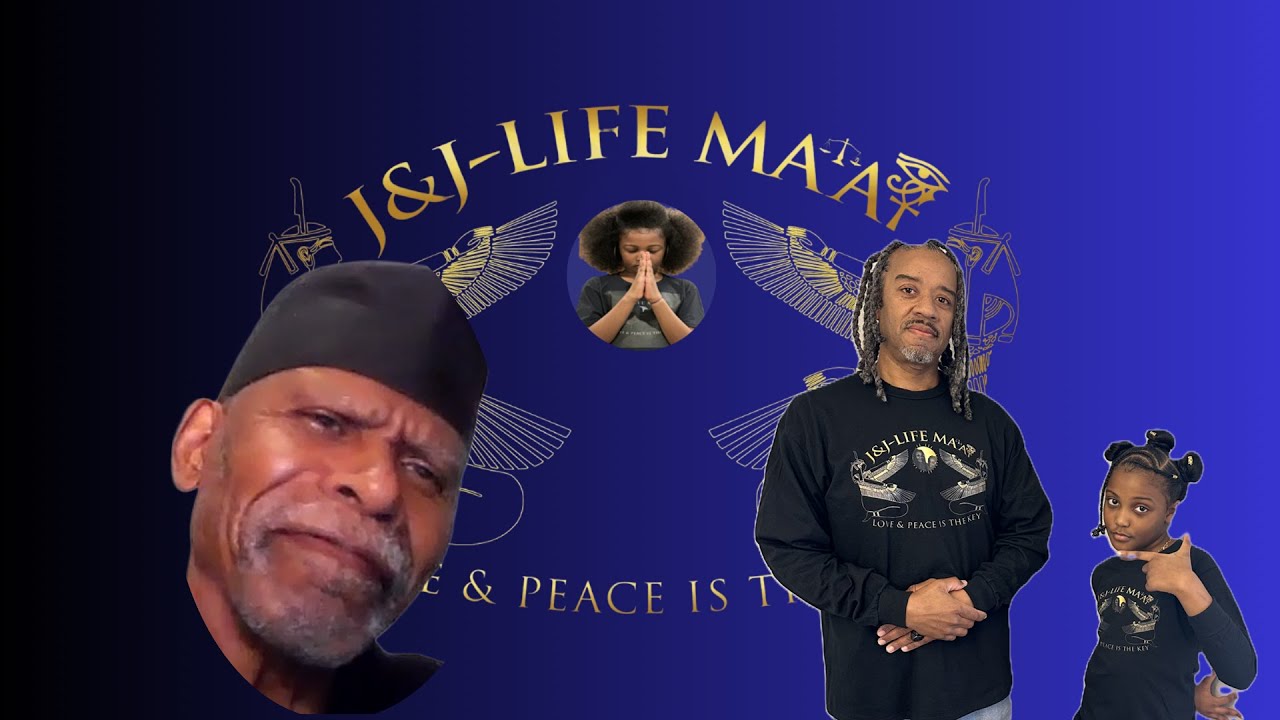

From Sacred to Silenced: The Rewrite of Afrikan Reality#historyexposed #genocideawareness #facts Uncompromised. #didyouknowfacts #didyouknow #blackhistory #africanhistory #historyexposed #misinformation_buster
🎙️ Host: Reya'Sekhmet / J&J-Life http://cash.app/$JJ1Life
🎙️ Guest: Aakhu'Ra Pa Sa'Ankh (Ra'Asar)
📖 New Book Alert: The Magical Adventures of Ra'Lena
Purchase my New book at:
Linktr.ee https://linktr.ee/sekhmetmaatkara
Amazon https://a.co/d/7xtZuAi
Payhip https://payhip.com/b/7j2bv
=================
🎙️ Guest: Dr. Batu Shakari
Dr. Shakari can be reached at:
Baba Batu A. Shakari, Ph.D.
Email: beetheone12@att.net
=================
Timecodes:
0:00 – 🎶 Intro Music
0:25 – 🌟 Welcome
4:39 – 🏞️ Dr. Batu Shakari: Remembering, Reclaiming & Living Truth
19:48 – 🛕Temple of Ankh Rekh and Afrikan Vision
31:51 – 🧭 How We Move After Reclaiming Ourselves
54:22 – 📚 Reya’Sekhmet Breaks It Down for the Young Ma’atians
1:14:45 – 🔥Breaking Down the Rise of Tribalism, Mysticism, & Primitivism
1:41:21 – 🔦 R’Sekhmet on Why Stories Matter
1:44:28 – 🌍 Fun Question from the Sekhmet Zone
1:52:23 – ✊🏿Baba Shakari on Erasure and Replanting Truth
2:03:40 – 🛠️Buried but Still Building - Baba Shakari Speaks
2:08:14 – 💫Afrikan Centered Familyhood: Walking the Assignment with Divine Reflection
2:23:14 – 📌Unique Name of Batu Shakari: A King Who Understands & Struggles to be Undefeated.
2:35:00 – 🧠Baba Shakari on Dr. Mundari’s Impact
2:41:20 – 🌌 Reya’Sekhmet & Ra’Asar Pays Homage to All Truth Tellers and Truth Defenders
2:47:23 – 🌌 Future Plans
2:50:09 – 🛡️ Do for Self, Laced with Truth, Build the Future and Baba’s Website & Contact Details
2:51:23 – 🌌 Baba Shakari’s Closing Words
2:54:40 – ✌️ Sign Off & 🎶 Outro Music
========================
Donate a Coloring Book Cash App http://cash.app/$JJ1Life
J&J-Life MA'AT https://www.instagram.com/jjlifemaat/
J&J-Life MA'AT https://www.tiktok.com/@jjlifemaat?_t=8nS3sD56Cd9&_r=1
J&J-Life MA'AT Productions Presents: Maatkara Squad
Filmed at: J&J-Life MA'AT Studio
👕
Official J&J-Life MA'AT Show Merch: https://linktr.ee/sekhmetmaatkara
📬
J&J-Life MA’AT
P.O. Box 35081
Des Moines, IA. 50315


"2AM in Venezuela" (OFFICIAL VIDEO): https://youtu.be/GtvkwgbVKF8
BLACK WINTER (Full Album): https://youtube.com/playlist?list=PLJSMFuicKjJ46p1K9TlqZPRGFSd0M5z9U&si=4WG_YXCGJinM6XEN
Join the Patreon for exclusive videos that you won't find on Youtube: https://www.patreon.com/NTD1814
S U P P O R T
Cash App - $NelsonAmadeus
PayPal- GlobalHitsWorld@gmail.com
EMAIL - KingNeferkare@gmail.com
Twitter @NTDessalines
Instagram @NelsonAmadeus
TURN ON POST NOTIFICATIONS.

The second guest we have with us for 'Africanus Talks' is Sarah Agnela Nyaoke Ouma. Nyaoke is a Ja-Luo born in East Africa who is undertaking a post as a PHD researcher in the Seafarers International Research Centre, Cardiff. She gives us an insight into what it was like growing up as a Luo during the rise of the multiparty political system in Kenya, which was nurtured by her father, the late great Professor Ouma Muga. Join us each Saturday for new content from 'Africanus World'
Website - www.Africanusworld.com
Pateron - https://www.patreon.com/AfricanusWorld
Facebook - https://www.facebook.com/AfricanusWorld/
Twitter - https://twitter.com/AfricanusWorld
Instagram - https://www.instagram.com/africanuswo...
Pay Pal - https://www.paypal.com/cgi-bin/webscr...

Dr. Amos N. Wilson (1941 - 1995) Former Social Caseworker, Psychological Counselor, Supervising Probation Officer, Training Administrator in the New York City Department of Juvenile Justice, Assistant Professor of Psychology at the City University of New York, Master Teacher, Organizer, and Author The late, Honorable Dr. Wilson was born in Hattiesburg, Mississippi in 1941. Familiarly referred to as Brother Amos, he provided the average person with an acute analysis of where we are and the things that affect us. He served as a council to energize our race and those in positions of influence as to how to carry out their leadership responsibilities. Dr. Wilson's activities transcended academia into the fields of business, owning and operating various enterprises in the greater New York area. "When we get into social amnesia - into forgetting our history - we also forget or misinterpret the history and motives of others as well as our motives. The way to learn of our own creation, how we came to be what we are, is getting to know ourselves. It is through getting to know the self intimately that we get to know the forces that shaped us as a self. Therefore knowing the self becomes a knowledge of the world. A deep study of Black History is the most profound way to learn about the psychology of Europeans and to understand the psychology that flows from their history. If we don't know ourselves, not only are we a puzzle to ourselves; other people are also a puzzle to us as well. We assume the wrong identity and identify ourselves with our enemies. If we don't know who we are then we are whomever somebody tells us we are."
(The Falsification of Afrikan Consciousness," Afrikan World InfoSystems, New York 1993, p. 38)
VIDEO PLAYER URL: RBG Communiversity Dr. Amos Wilson Player http://www.youtube.com/playlis....t?list=PL0E8B95FA3F4


In this video we bring you the highly anticipated video evidence that cancer is caused by micro-parasites and is therefore preventable and heal-able.
We show you the footage that was shot over a 20-year period by renowned doctors with the complete explanation of the micro-parasitical life cycle and how they cause cancer. You also get to see some simple experiments with which you can detect the parasites and make them visible yourself.
The previous video on this matter can be found here:
https://www.youtube.com/watch?v=bcgUBVj9i70&t=2s
Visit us at our web shops for the most powerful cancer supplements & holistic therapy devices:
https://lyranara.com
https://lyranara.com/product/vegetbalance/
https://lyranara.com/vita-chip/
https://lyranara.me/
https://lyranara.me/product/artemisia-herbs-extract/
https://lyranara.me/dmso/
https://lyranara.me/peptides/
Please like, share & subscribe.
Stay healthy!


21st February marks the anniversary of the Assassination of our "Living Black Manhood" - "Our Shinning Black Prince", OMOWALE MALCOLM X.
Today, ShakaRa Speaks will be dedicated to 9 Hours of programming, profiling the life & Legacy of Papa Omowale.
The Alkebu-Lan Revivalist Movement for the annual Omowale Malcolm X Observance this coming Sunday 24th Feb. Full info here: https://www.alkebulan.org/2019..../01/26/omowale-malco
Through our streaming, we hope to highlight Papa Omowale's evolution as one of the worlds leading Black Nationalist Pan-Africanists. As such, our footage focusses on the years 1963-1965.
We feature
Message to the Grassroots
The Ballot or the Bullet
Interview with Congolese Students
Prospects for Freedom
The Last Speech
Interview with Ella Collins (Malcolm X's big Sister)
Covert War on Malcolm X - Like It Is with Gil Noble
Malcolms People - Like it is with Gil Noble
OMOWALE: The Sun Has Returned - A Message by Bro. Ldr. Mbandaka
OMOWALE - Prince Munyaradzi @Alkebulan Kwanzaa
------------------------------------------------------------
► Subscribe: https://www.youtube.com/shakar....aspeaks/?sub_confirm
► Twitter https://twitter.com/ShakaRaSpeaks
► Facebook: https://www.facebook.com/ShakaRaSpeaks/
► Instagram: https://www.instagram.com/shakaraspeaks/