- General Videos
- Music
- Economics
- Health
- Travel & Events
- History
- Psychology
- Spirituality
- Movies
- News & Politics
- Kmtyw Combat Sciences
- Ɔbenfo Ọbádélé Kambon Videos
- Ɔbenfoɔ Kamau Kambon: Black Liberation Philosophy
- Science, Tech, Engineering and Math
- Permaculture
- Self-Sustainability
- Living Off Grid
- Yoruba Language Learning
- Education
- Mmɔfra Adesua
- Nana Kamau Kambon Playlist
- Livestream
- Komplementarity Kouples and Revolutionary Singles
- Abibitumi Film Series
- Decade of Our Repatriation
- Kwento xpr
- Live
Top videos


![PART I - The Fulani in Nigeria: The Influential King of Lagos I AFP [2019]](https://i.ytimg.com/vi/plnyI_FdP34/hqdefault.jpg)

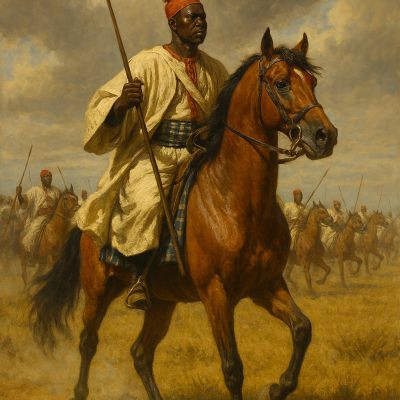


Let's come together in reasonable dialogue to honour our ancestors and reclaim the world through an African lens. Join me as we delve into African history, culture, and worldview to better understand their relevance to our lives today. By sharing our thoughts and knowledge, we can pave the way for a new culture of awareness and reclaim our story. As the African Diaspora saying goes, "I am because we are, and we are because I am."
Join this channel to get access to perks:
https://www.youtube.com/channe....l/UC2vy1ztN3iredhD_o
0:52: 🌍 African leader rejects two nations from Sahel Confederation based on cultural and economic similarities, emphasizing unity and independence.
4:26: ⚔️ French colonization impact on Ivory Coast and Ghana, leading to exclusion from Sahel Confederation.
8:52: 🌍 Burkina Faso's vocal opposition to French influence in the region sparks independence movements.
12:48: 🌍 Chad's potential membership in the Sahel Confederation emphasizes shared cultural ties and collective defense against security threats.
16:28: 🌍 President TR's vision for Sahel Confederation: mutual support, self-reliance, and regional cooperation on security matters.
============================
Sources:
1. https://www.aa.com.tr/en/afric....a/-unity-dead-and-bu
2. https://www.thejournal.ie/west....-african-security-me
3. https://trtafrika.com/africa/c....ote-divoire-denies-s
4. https://www.policycenter.ma/pu....blications/alliance-
5. https://www.fides.org/en/news/....75199-AFRICA_Allianc
6. https://foreignpolicy.com/2024..../07/10/sahel-mali-bu
7. https://www.jstor.org/stable/41203715
8. https://english.almayadeen.net..../news/politics/sahel
9. https://moderndiplomacy.eu/202....3/08/18/the-second-a
10. https://www.middleeastmonitor.....com/20230824-a-stron
11. https://foreignpolicy.com/2023..../02/08/russia-ukrain
Please, like, comment, subscribe, and ring the bell! EVERYTHING helps us grow!.
Subscribe Here:
#blackhistory #africanhistory #africanews
thanks For Watching Our Video 🤗


Thatched houses plans and gazebo in Zimbabwe 0773974777 or 0772389998
We don't build the houses and offer plans , we just roof and thatch.
Facebook: http://www.facebook.com/framew....orkthatchzimbabweTwi http://www.twitter.com/frameworkthatc1visit our website on : http://frameworkthatcherszimbabwe.wordpress.comor email us at frameworkthatch@gmail.com


Hydroponics is the pioneer initiator and leader of hydroponic farming systems in East Africa.
It enables farmers to achieve predictable and highly nutritious yields for vegetables and produce their own animal feed at limited cost of input.
With hydroponics the farmer is unaffected by seasons and adverse weather conditions.
www.farmers.co.ke is the site for authoritative multimedia agricultural and agribusiness content.
Visit us today for farming news, agribusiness tips, practical expert advice and industry updates.
For farming, tips send the word FARMERS to 22071 (no charges)
JOIN FB GROUP: https://www.facebook.com/groups/FarmK...
Follow us on Twitter: https://www.instagram.com/farmkenya254/
Follow us on Twitter: https://twitter.com/FarmKenya254
WATCH KTN FARMERS TV ON BAMBA, PANG, GOTV, STARTIMES AND ALL FREE TO AIR SET-TOP BOXES
#Hydroponics #FarmersTV



![WAILING SOULS - Who No Waan Come [1981].mp4](https://d2pqtpahsfkkkc.cloudfront.net/upload/photos/2020/01/6f0d0328068e3f77b974390f995a653f3e8d81acgcwEvcVpWZtkebVBDPTF.video_thumb_6497_11.jpeg)








Mike Pondsmith, Cyberpunk creator and CEO and Lead Designer of R. Talsorian Games, shares more insights in our exclusive interview: https://www.jcu.edu.sg/news/re....leases/insights-from
Read more about the 5th Retro Inspired!: https://www.jcu.edu.sg/news/re....leases/highlights-fr
With a long and storied experience in the industry, Mike Pondsmith shared his insights on licensed properties and issues that intellectual properties face in adapting to different types of media, such as books, comics, novelisations, tabletop games and video games.
#JCUSingapore #intellectualproperty #games #videogames #gaming #media #mikepondsmith #cyberpunk #cyberpunk2077
Connect with James Cook University, Singapore:
Like us on Facebook: https://www.facebook.com/jcu.singapore.fanpage/
Follow us on Twitter: https://twitter.com/jcu_singapore
Follow us on Instagram: https://www.instagram.com/jcusingapore
Follow us on LinkedIn: https://www.linkedin.com/schoo....l/james-cook-univers
And for more news and information, visit https://www.jcu.edu.sg/


Subscribe to this channel || Fitiam TV [Subscribe/Press on the bell🔔] for more video from typical Akan settings —- Email :- Fitiamtv@gmail.com __#fitiamtv #proverbs #akanproverbs #akansie #competition #twi # #asantehene #akans #manhyia #amammere #akwankyere #entertainment #ghana #edutainment #asanteman #kumerica #zion


Do you know your child as well as you think you do? In this video, Auntie Jackie and Niece Afia take the Destination Africa challenge to find out how well they really know each other. From questions about your child's favorite food to their current interests, this quiz will give you a sneak peek into your kids' lives.
By taking this quiz, you'll be able to see where you need to improve your child-knowledge and learn some easy ways to improve communication with your kids. Watch the video to find out how you can get started!
ℹ To find out more about Destination Africa and our products & services, visit our website: www.TheDestinationAfrica.com
Instagram: www.Instagram.com/destafricagrp
Facebook.com/DestAgricaGrp
#howwelldoyouknowme
#howwelldoyourniece
#afroparenting
#learnersoftodayleadersoftomorrow