- General Videos
- Music
- Economics
- Health
- Travel & Events
- History
- Psychology
- Spirituality
- Movies
- News & Politics
- Kmtyw Combat Sciences
- Ɔbenfo Ọbádélé Kambon Videos
- Ɔbenfoɔ Kamau Kambon: Black Liberation Philosophy
- Science, Tech, Engineering and Math
- Permaculture
- Self-Sustainability
- Living Off Grid
- Yoruba Language Learning
- Education
- Mmɔfra Adesua
- Nana Kamau Kambon Playlist
- Livestream
- Komplementarity Kouples and Revolutionary Singles
- Abibitumi Film Series
- Decade of Our Repatriation
- Kwento xpr
- Live
Top videos


Don't forget to subscribe: https://bit.ly/2Hb8hjx
Watch more interesting videos: https://bit.ly/34ogCaw
Follow Channels Television On:
Facebook: https://www.facebook.com/channelsforum/
Twitter: https://twitter.com/channelstv
Instagram: https://www.instagram.com/chan....nelstelevision/?hl=e
Get more news on our website: https://www.channelstv.com/
#ChannelsTv


SUPPORT GOTKUSHTV: https://www.patreon.com/kimbungamedia
Join WhatsApp: https://whatsapp.com/channel/0....029VaXt3adHwXb8Yt44J
Join Telegram: https://t.me/kimbungamedia
• SUBSCRIBE • LIKE • COMMENT • SHARE
••••••••••••••••••••••••••••••••••••••••••••••••••
Greetings & Welcome to Kimbunga Media - Your Premiere Universal Afrikan Nationalist Media Institution
Find Kimbunga Medai on:
► Instagram: http://instagram.com/kimbungamedia
► https://www.facebook.com/kimbungamedia
► Twitter: https://twitter.com/kimbungamedia
► SignUp for Newsletter: https://kimbungamedia.com/


Sources:
Williams, Christopher. "Explaining the Great War in Africa: How Conflict in the Congo Became a Continental Crisis." The Fletcher Forum of World Affairs 37, no. 2 (2013): 81-100.International Crisis Group, “Congo at War: A Briefing on the Internal and External Players in the Central African Conflict,” November 17, 1998.John F. Clark, “Museveni’s Adventure in the Congo War: Uganda’s Vietnam?” in TheAfrican Stakes of the Congo War, ed. John F. Clark (New York: Palgrave Macmillan,2002) Group of Experts on the Democratic Republic of the Congo, “Report of the Panel of Experts on the Illegal Exploitation of Natural Resources and Other Forms of Wealth of the Democratic Republic of the Congo,” April 12, 2001 Nzongola-Ntalaja, Georges. The Congo from Leopold to Kabila: A Peoples History. London: Zed Books, 2013.Music:Dawn without End by Zach HeydeDance & Electronic by Andrew HuangConsequence - Wonders by Kevin MacLeod is licensed under a Creative Commons Attribution license (https://creativecommons.org/li....censes/by/4.0/)Sourc http://incompetech.com/music/r....oyalty-free/index.ht http://incompetech.com/Decisions by Kevin MacLeod is licensed under a Creative Commons Attribution license (https://creativecommons.org/li....censes/by/4.0/)Sourc http://incompetech.com/music/r....oyalty-free/index.ht http://incompetech.com/Exotic Battle by Kevin MacLeod is licensed under a Creative Commons Attribution license (https://creativecommons.org/li....censes/by/4.0/)Sourc http://incompetech.com/music/r....oyalty-free/index.ht http://incompetech.com/Antonio Salieri, Twenty six variations on La Folia de SpagnaLondon Mozart PlayersMatthias Bamert, as conductor


September 2025. France's government collapses. Prime ministers ousted one after another. Protests engulf Paris. Debt spiraling past 110% of GDP. Energy prices up 40% since 2022.
The headlines blame political chaos. Budget cuts. Macron's failures.
But that's not the real story.
The real story starts in Niger. With uranium. And a $500 billion rejection that nobody saw coming.
For 80 years, France paid Niger pennies for uranium worth billions. Niger got €100 million annually—just 5% of its budget. France? They turned that uranium into $74 billion in nuclear energy exports. Built an empire on African resources while telling the world they were "partners."
When Niger finally asked for a fair deal—raising royalties from 5.5% to 12%—French executives laughed. Called them dreamers. Shut down production to pressure them into submission.
Big mistake.
Because what France didn't understand is that this generation of Africans isn't asking for permission anymore. They're not begging. They're not waiting.
Mali, Burkina Faso, Niger, Chad, Senegal—one by one, they cut the cord. Kicked out French troops. Stopped depositing reserves in Paris. Renegotiated contracts. And when France tried to hold onto Niger's uranium? Niger nationalized the mines.
The economic model that kept France wealthy for nearly a century? Gone. The cheap uranium that powered 65% of French electricity? Cut off. The financial flows that propped up French borrowing? Dried up.
And now we're watching France discover what happens when extraction ends and reality hits.
This isn't just about France and Africa. It's about every system built on exploitation. Every relationship that only works when one side doesn't know they're being used. Every empire that forgets empires fall.
In this video, I'm breaking down the numbers they don't want you to see. The predictions experts made that the media ignored. And why Germany thrives without exploiting anyone while France crumbles without Africa.
If you want to understand the real forces reshaping global power—the ones the headlines miss—you're in the right place.
Hit subscribe. This is just the beginning.
Sources in pinned comment.
#france #africa #niger #uranium #geopolitics #panafrican #cfa #economics #francecollapse #africanunity
welcome to Africa Today a place where we showcase Africa's financial potential and help you obtain financial freedom
TO JOIN OUR MEMBERSHIP CLICK THE LINK
https://www.patreon.com/AfricaTodayClub763
BOOK A SESSION WITH US THROUGH
https://www.patreon.com/AfricaTodayClub763/shop/one-on-one-consultation-129020?source=storefront
JOIN OUR MEMBERSHIP THROUGH
https://www.youtube.com/channe....l/UCQhku_T68i-szD9Qj
OUR PAYPAL
http://paypal.me/AfricaToday
Don't forget to Like, Share and Subscribe




Brother Omowale Afrika engages in an examination of the different schools of Pan-Afrikanism, the current state of the movement and which is the most effective for us to pursue in the current era.
CHECK OUT THE RBG CENTENNIAL CONFERENCE: https://www.rbgcentennial.com/
For those who would like to support these presentations please follow the link below: https://www.paypal.me/abengapparel

Website is still under construction but you can place your order via
Instagram:@thebelleskin
or WhatsApp:+2349054480688
_________
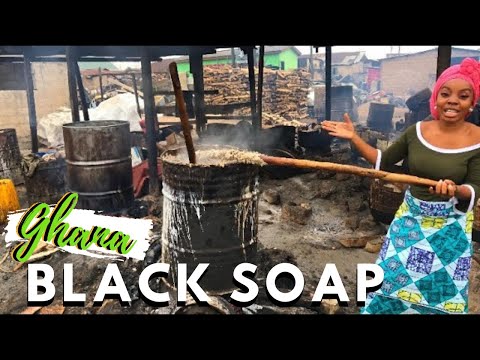
Hi Bellez ♡ The Making of African blacksoap has been with the Africans for centuries and today I will show you how the black and white soap is made locally in Ghana. I loved it so much and I hope you enjoy this video.😀
Thank you for watching, hope you enjoyed! ♡
I love youuuuu!
_________________________
♡ FOLLOW ME ♡
My Social Media:
Facebook: https://m.facebook.com/skybellee/
Instagram: @_skybelle
https://www.instagram.com/_skybelle/
________________________
SUBSCRIBE TO MY CHANNEL: https://www.youtube.com/c/SKYB....ELLE?sub_confirmatio
_________________________
SUPPORT MY CHANNEL : https://paypal.me/skybelles?locale.x=en_US
_________________________
SHOP TO PREORDER PRODUCTS MENTIONED
Instagram: @_skybelle
@thebelleskin
https://www.instagram.com/_skybelle/
________________________
For business inquires : info@skybelle@gmail.com
_________________________
FTC- This is not a sponsored video, I wasn’t paid to do or say anything in this video. All opinions expressed are and will always remain my own!
__________________________
#blacksoap #howblacksoapismade #ghanavlog #blacksoapforacne #rawafricanblacksoap #ghanavlog #accra #contentcreator #creator #glassskin #skincare
_________________________
Hello everyone and welcome to my channel!
My name is Amaka and i’m a Nigerian youtuber living in Ghana.
I make Skincare and Lifestyle videos and i post on Sundays.
Subscribe to my channel for more! I love you so much
♡
_________________________
"To thy own self, be true".
Yayy!! You reached the bottom of the description box!! Comment “bellez gang “so I know you did🎀🎀


'The Woman King & The Real History of The West African Kingdom of Dahomey' - Prof. James Small & Michael Imhotep - TheAHNShow 9-25-22 #TheWomanKing #ViolaDavis #TheAHNShow Prof. James Small, former Black Studies Prof. at CUNY and featured in the films, 'Hapi', 'Hidden Colors' & 'Elementary Genocide 3', joins Michael Imhotep to discuss 'The Woman King & The Real History of The West African Kingdom of Dahomey'. The #1 Movie, 'The Woman King' from producer Viola Davis and Director Gina Prince-Bythewood is amazing audience as it is 'Inspired by True Events' involving the African Female Warriors known as the Agojie or the Ahosi. We separate Fact from Fiction and deal better Understanding The Trans-Atlantic Slave Trade, the real history of Dahomey and much more. Support The African History Network through Cash App @ https://cash.app/$TheAHNShow or PayPal @ TheAHNShow@gmail.com or http://www.PayPal.me/TheAHNShow or visit http://www.TheAfricanHistoryNetwork.com. Thank you for your support and helping us to continue doing the work.No movie is 100% Historically accurate. Not even the White ones. These are not documentaries. They are Hollywood movies. These movies should lead people to seek out the real history of Dahomey, the Oyo Empire (Yoruba), The Agojie, African Martial Arts, African Spirituality, Ifa, the Orisha like Ogun mentioned in the film, The Franco-Dahomean Wars 1890s, Colonialism, The Berlin Conference of 1884 - 1885, Great Britain abolishing Slavery in 1834 after being involved in Slavery for 272 years , etc. - Michael Imhotep host of 'The African History Network Show' Watch on Facebook Live @ “The African History Network” & Youtube at “Michael Imhotep” or Listen on BlogTalkRadio.com/TheAfricanHistoryNetworkShow or Visit www.TheAfricanHistoryNetwork.com.REGISTER NOW: Next Class is Saturday, 10-1-22, 4:00pm EST! WATCH CONTENT ON DEMAND NOW!!! ‘Ancient Kemet (Egypt), The Moors & The Maafa: Understanding The Trans-Atlantic Slave Trade What They Didn’t Teach You In School’, (LIVE 8 Week Online Course) with Michael Imhotep host of ‘The African History Network Show’. Discounted Registration $80; ALL LIVE SESSIONS WILL BE RECORDED SO YOU CAN WATCH AT ANY TIME! WATCH CONTENT ON DEMAND! Visit https://TheAfricanHistoryNetwork.com or REGISTER HERE: https://theahn.learnworlds.com..../course/ancient-keme We can’t start studying our history in SLAVERY. Even when we study the Trans-Atlantic Slave Trade, which is important to study, we can’t start in 1619 or in the 1440s when the Portuguese get involved. We have to understand the history chronologically and deal with the 800 year occupation of Europe by the Africans known as the Moors who enter into the Iberian Peninsula, today known as Spain and Portugal, from North Africa in 711A.D. This course not only deals with the Trans-Atlantic Slave Trade but thousands of years of history that leads up to the Slave Trade of African people taking place.Aug. 20th, 2019 marked the 400th year Anniversary of the "20 and odd Africans" who came into Point Comfort on Aug. 20th, 1619 in what would later be called the colony of Virginia. This year was known as "The Year Of Return" as many African Americans are reconnecting to Africa and traveling to Ghana and other West African countries. When we discuss the Trans-Atlantic Slave Trade we have to first understand that African people are the Original people of North, Central & South America & have been in the land we call U.S. at least 51,700 years.