- General Videos
- Music
- Economics
- Health
- Travel & Events
- History
- Psychology
- Spirituality
- Movies
- News & Politics
- Kmtyw Combat Sciences
- Ɔbenfo Ọbádélé Kambon Videos
- Ɔbenfoɔ Kamau Kambon: Black Liberation Philosophy
- Science, Tech, Engineering and Math
- Permaculture
- Self-Sustainability
- Living Off Grid
- Yoruba Language Learning
- Education
- Mmɔfra Adesua
- Nana Kamau Kambon Playlist
- Livestream
- Komplementarity Kouples and Revolutionary Singles
- Abibitumi Film Series
- Decade of Our Repatriation
- Kwento xpr
- Live
Top videos
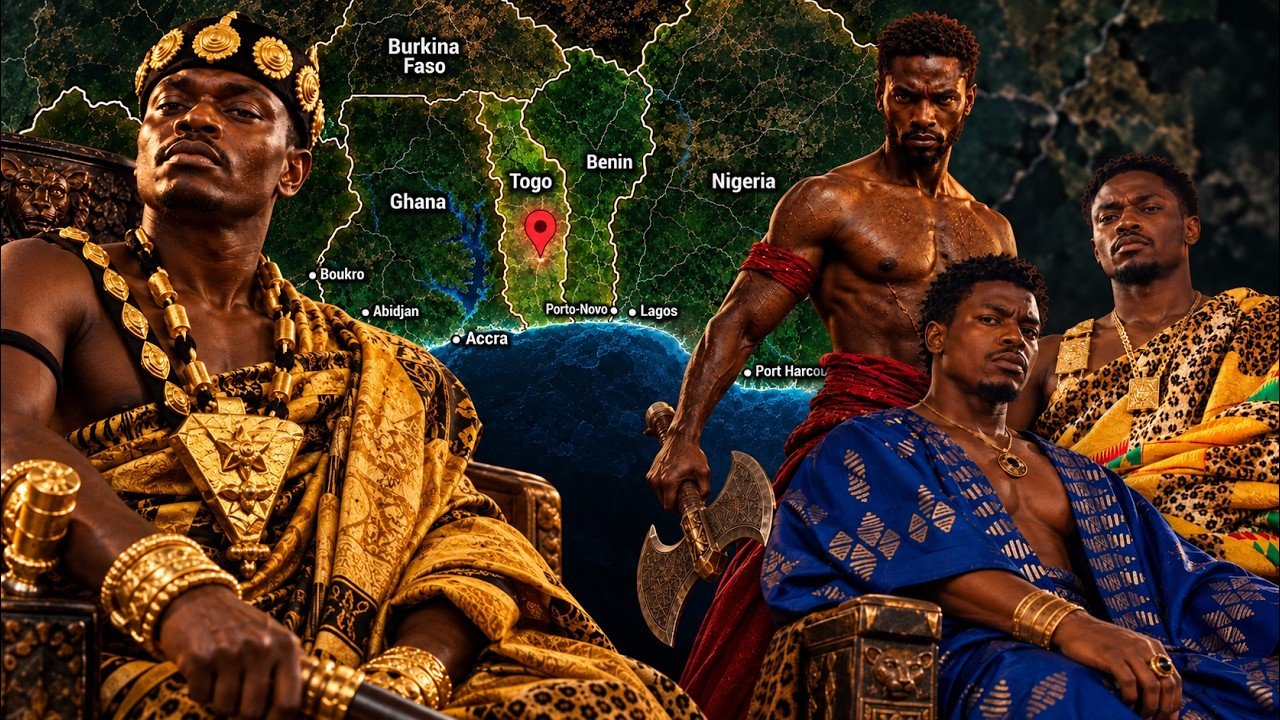

The Battle of Atakpamé was a major 1764 military conflict in modern-day Togo where an alliance of the Oyo Empire, the Kingdom of Dahomey, and Akyem forces inflicted a severe defeat on the Asante Empire
"2AM in Venezuela" (OFFICIAL VIDEO): https://youtu.be/GtvkwgbVKF8
BLACK WINTER (Full Album): https://youtube.com/playlist?list=PLJSMFuicKjJ46p1K9TlqZPRGFSd0M5z9U&si=4WG_YXCGJinM6XEN
Join the Patreon for exclusive videos that you won't find on Youtube: https://www.patreon.com/NTD1814
S U P P O R T
Cash App - $NelsonAmadeus
PayPal- GlobalHitsWorld@gmail.com
EMAIL - KingNeferkare@gmail.com
Twitter @NTDessalines
Instagram @NelsonAmadeus
TURN ON POST NOTIFICATIONS.


![Kokota -An Island On the Brink of Collapse Makes a Huge Comeback [2018]](https://i.ytimg.com/vi/F5VcPoGj4DU/hqdefault.jpg)

Off the coast of East Africa in the Zanzibar archipelago, lie the island of Pemba and islet of Kokota. When Mbarouk Mussa Omar visited Kokota a decade ago, it was teetering toward the brink of collapse. Deforestation and climate change had wreaked havoc on the tiny islet. He recognized that his island of Pemba could suffer the same fate and was determined to do something.
➡ Subscribe: http://bit.ly/NatGeoSubscribe➡
Get More Short Film Showcase: http://bit.ly/ShortFilmShowcase#NationalGeographic #EastAfrica #Deforestation
About Short Film Showcase:The Short Film Showcase spotlights exceptional short videos created by filmmakers from around the web and selected by National Geographic editors. We look for work that affirms National Geographic's belief in the power of science, exploration, and storytelling to change the world. The filmmakers created the content presented, and the opinions expressed are their own, not those of National Geographic Partners.
See more from National Geographic's Short Film Showcase at http://documentary.comGet More National Geographic:
Official Site: http://bit.ly/NatGeoOfficialSite
Facebook: http://bit.ly/FBNatGeo
Twitter: http://bit.ly/NatGeoTwitter
Instagram: http://bit.ly/NatGeoInsta
Mbarouk teamed up with Jeff Schnurr, a young Canadian tree planter living in Tanzania. Schnurr's knowledge and Mbarouk's connections with Kokotans mobilized local residents to use innovative solutions to counter the effects of climate change. Kokota: The Islet of Hope is a celebration of ingenuity and one community's effort to reforest their island to adapt to a warming climate.Learn more about Community Forests International, the organization leading these initiatives.https://forestsinternational.org/About National Geographic:National Geographic is the world's premium destination for science, exploration, and adventure. Through their world-class scientists, photographers, journalists, and filmmakers, Nat Geo gets you closer to the stories that matter and past the edge of what's possible.An Island On the Brink of Collapse Makes a Huge Comeback | Short Film Showcasehttps://youtu.be/F5VcPoGj4DUNational Geographichttps://www.youtube.com/natgeo

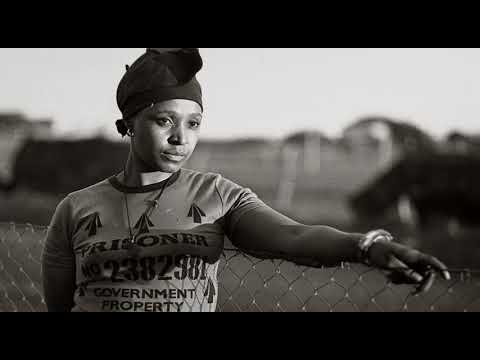
This tribute to Winnie Madikizela-Mandela reflects through rare archival footage and interviews some of the most poignant moments of Winnie Mandela to pay tribute to a woman of strength and valour produced by The African Oral History Archive, a flagship programme of the @Ichikowitz Family Foundation @ivorichikowitz www.africanoralhistory.com

Open and Close (LP) (1971) Fela Kuti
Songs includes: Open And Close/ Suegbe And Pako / Gbagada Gbogodo
Subscribe ► http://bit.ly/1XsVy99 & Everybody say "Yeah Yeah"
http://fela.net/discography/
This video is part of a series of songs being posted on Fela's official YouTube channel (http://www.youtube.com/fela) each featuring, alongside the music, an informative commentary by Afrobeat Historian, Chris May.
The entire catalogue, released on Kntting Factory Records, is available on the Fela website (http://fela.net/), along with documentaries and recorded concerts, CDs and vinyl, tee shirts, posters and many other items.


• 7 Nov 2024 • #mkparty
the former Chairperson of the EFF, Advocate Dali Mpofu, has joined the uMkhonto weSizwe Party.
Mpofu joined what was once the third largest party upon its formation in 2013 and served as the Chairperson of the Red Berets for five years from 2014.
Mpofu's departure marks another blow for the EFF following former Deputy President Floyd Shivambu's surprise move to the almost one-year-old MK Party.
Mpofu has represented the official opposition in several legal matters in his capacity as Senior Counsel.
Speaking to the SABC in an exclusive interview, Mpofu says he believes the MK Party is the only vehicle to achieve unity and emancipation.
For more news, visit sabcnews.com and #mkparty on all Social Media platforms.


Whenever the West says some old scheme is a thing of the past, you know they've just moved on to a more PR friendly version of the same. Colonialism is probably the prime example. Instead of exploiting people at the barrel of a gun, they now do it at the barrel of US Dollar denominated debt. Even resource rich and prosperous countries like Sri Lanka can't escape the terrible logic, once corrupt elites sign the contracts that kick-off debt-trap spirals of doom.
Today I’m talking to Dr. Darini Rajasingham-Senanayake. Darini earner her PhD from Princeton University and Is now a social and medical anthropologist with research focus on international development and political economy. She is also a prolific writer in several online outlets on the politics of South Asia and especially her native Sri Lanka. She often points out the neo-colonial structures and the many regime change operations that have been economically and politically devastating her part of the Eurasian continent.
Links:
Article: https://www.colombotelegraph.c....om/index.php/facades
Goods Shop: https://neutralitystudies-shop.fourthwall.com

A tour through Ethiopia in the early 1960's. To purchase a clean DVD or digital download of this film for personal home use or educational use contact us at questions@archivefarms.com. To license footage from this film for commercial use visit: www.travelfilmarchive.com

Jamaica Gospel Radio - https://jamaicagospel.maax.site/
No Justice No Peace 5-7pm
More Info Justice 904 444 9444
DISCLAIMER!!!
I Do Not Own Song/Songs In This Video, They Belong To It's Respective Owners. Please Support The Artist/Artists By Purchasing Their Album/Songs.
THIS VIDEO IS FOR PROMOTIONAL PURPOSES ONLY, NO COPYRIGHT INTENDED This video is only for promotion and entertainment all rights are for the Artist.



www.Farmers.co.ke is the site for authoritative multimedia agricultural and agribusiness content.
#FarmKenya
Visit us today for farming news, agribusiness tips, practical expert advice and industry updates.
SMS: 22071

tts donations here/ https://streamlabs.com/ishowspeed
FOLLOW ME 👀 http://link.me/ishowspeed
MERCH 👕 - https://speed.store/
MEMBERSHIPS ✅ - https://www.youtube.com/c/IShowSpeed/join
for donations tts/ Media Request here
https://streamlabs.com/ishowspeed/tip
IG: https://www.instagram.com/isho....wspeed?igsh=MXNveXVu
X: https://x.com/ishowspeedsui?s=21
Snap : https://snapchat.com/t/IeuoJ50Y
Discord: https://discord.gg/ishowspeed
JOIN MY OTHER CHANNELS
YT Live speedy: https://youtube.com/@LiveSpeed....y?si=Sd4QiWsrk-iGX7f
YT Speedy Boykins: https://youtube.com/@speedyboy....kins7869?si=0jMDTQQs
YT Speeduniverse : https://youtube.com/@SpeedUniv....erse?si=XUMYeIWoUY4T