Top videos

How Agroecology Helps to Build Climate Change-Resilient Livelihoods
How Agroecology Helps to Build Climate Change-Resilient Livelihoods Ambakisye-Okang Dukuzumurenyi 53 Views • 5 years ago

More information: https://www.agroecology-pool.o....rg/climatechangerepo
Follow us on Twitter: https://twitter.com/futureforall
Follow us on LinkedIn: https://www.linkedin.com/compa....ny/biovision-foundat
Subscribe to our eNewsletter: https://www.biovision.ch/en/pu....blications/e-newslet

This video summarizes the study "The potential of agroecology to build climate change resilient livelihoods and food systems" which highlights the links between agroecology and climate change, by providing evidence on the technical (i.e. ecological and socio-economic) and policy potential of agroecology to build resilient food systems. The report aims to answer the following question:

How can agroecology foster climate change adaptation, mitigation and resilience through practices and policies?
Inspired by the idea that transformation will only happen through a coordinated approach among all levels, this study aims to combine evidence from a broad range of backgrounds and perspectives.

The study was conducted by Biovision Foundation and the UN Food and Agriculture Organisation FAO.

A future for all, naturally
Since 1998, Biovision Foundation has been promoting the development, dissemination and application of sustainable ecological agricultural practices, allowing people in the developing world to help themselves. Key is our holistic approach: The health of people, animals, plants and the environment are central aims in all our projects. Biovision Foundation is a charitable organisation in Switzerland (ZEWO certified) and has a legal opinion for 501(c)(3) public charity equivalency in the United States.

The right livelihood Award
In 2013, Biovision and its founder Hans Rudolf Herren won the Right Livelihood Award, also known as the Alternative Nobel Prize.

Afro-Ecuatorianos y Participación Política presentada por Paola Cabezas, Asambleísta Nacional del Ec
Afro-Ecuatorianos y Participación Política presentada por Paola Cabezas, Asambleísta Nacional del Ec CEADA 53 Views • 5 years ago

El Ciclo de Conferencias de Estudios africanos y de la Diáspora Africana, ha sido creado para difundir el pensamiento africano-centrado y panafricanista a través de las experiencias y los aportes de los africanos y sus descendientes alrededor de mundo. Es un espacio abierto y permanente, donde se invitan expertos en diferentes áreas del conocimiento y donde el dialogo circunda en temas de interés colectivo y desde la perspectiva centrada en África, panafricana y anti-colonial.

Afro-ecuatorianos y participación política

En septiembre de 2008, los ciudadanos ecuatorianos votaron para adoptar una nueva constitución que reconocía a su país como una nación plurinacional, intercultural e inclusiva. Muchos celebraron la nueva constitución por sus disposiciones progresistas sobre los derechos indígenas y afroecuatorianos. Por primera vez, el Estado identifica a las comunidades afroecuatorianas con territorio colectivo como una forma ancestral de organización territorial y reconoce a los afroecuatorianos como pueblos, crea disposiciones para proteger sus tierras comunales y ancestrales, su cultura, su organización social y participación en la política en la vida, del país... al menos en el papel. Si bien esta constitución ofrece al gobierno y a la ciudadanía la oportunidad de abordar la invisibilidad multifacética, marginación y pobreza que los afroecuatorianos han vivido durante siglos, el desafío que enfrentan los afroecuatorianos es cómo lograr que los compromisos agrupados en la Constitución de 2008 se traduzcan en práctica.

Según el Instituto Nacional de Estadísticas y Censos (INEC), el 7,2% de los habitantes del país son afroecuatorianos. Se encuentran principalmente en la región costera noroeste del país, en la provincia de Esmeraldas y el Valle del Chota en la provincia de Imbabura, su territorio ancestral. En esta zona del país son el 70% de la población. También se pueden encontrar en cantidades importantes en Guayaquil, donde son mayoría en algunos sectores.

Con la constitución de 2008, los ciudadanos ecuatorianos se embarcaron en un pacto social progresista. Renovaron su compromiso de asegurar que los afrodescendientes sean parte integral e igualitaria de la sociedad ecuatoriana. Por otro lado, el proceso organizativo afroecuatoriano ha tenido como objetivo reconocer los derechos individuales y colectivos de los afroecuatorianos, así como exigir reparaciones por los daños ocasionados por el racismo y la esclavitud; Sin embargo, satisfacer estas demandas depende de la capacidad de incidencia. En este sentido, el acceso a la participación política del pueblo afroecuatoriano ha sido mediado por la violencia, el racismo estructural e institucional, y del cual se han derivado otras manifestaciones que han incidido en el acceso al poder político de los afrodescendientes en Ecuador. Hoy el consenso es que no ha cambiado mucho. Siguen siendo discriminados por el color de su piel, son marginados, no tienen oportunidades educativas y laborales en relación con otros grupos étnicos, y son invisibles a las políticas gubernamentales.

CONSTITUCIÓN DE LA REPÚBLICA DEL ECUADOR (2008),

Capítulo cuarto

Derechos de las comunidades, pueblos y nacionalidades

Art. 56.- Las comunidades, pueblos, y nacionalidades indígenas, el pueblo afroecuatoriano, el pueblo montubio y las comunas forman parte del Estado ecuatoriano, único e indivisible.

Art. 58.- Para fortalecer su identidad, cultura, tradiciones y derechos, se reconocen al pueblo afroecuatoriano los derechos colectivos establecidos en la Constitución, la ley y los pactos, convenios, declaraciones y demás instrumentos internacionales de derechos humanos.

Paola Cabezas Castillo es una política y periodista ecuatoriana, y actual asambleísta nacional de Ecuador. Desde muy temprana edad, comenzó a trabajar en la radio como conductora de radio y luego como reportera de noticias para el canal de televisión ecuatoriano RTS. En 2009 se incorporó a Ecuador TV, donde se desempeñó como la primera presentadora de noticias afroecuatorianas en la historia del canal.

Su vida política comenzó en 2010 cuando ocupó el cargo de especialista en interculturalidad en la Secretaría Nacional de Gestión Política y la Secretaría de Pueblos. En 2013 fue nombrada gobernadora de la Provincia de Esmeraldas por el presidente Rafael Correa. Para las elecciones legislativas de 2017 fue elegida diputada nacional suplente (asambleísta nacional alterna). En las elecciones legislativas de 2021, fue elegida asambleísta nacional principal por la alianza UNES (Unión por la Esperanza). Paola tiene un título (licenciatura) en Ciencias de la Comunicación de la Universidad de Guayaquil y una maestría en marketing político de la Universidad del Salvador en Buenos Aires, Argentina.

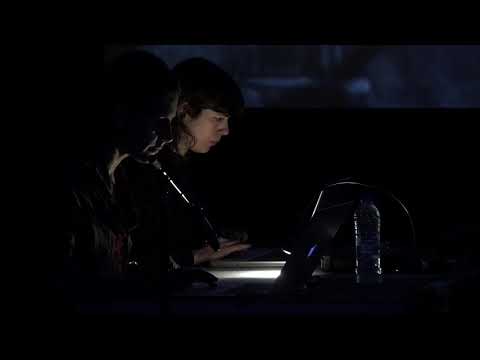
Filipa César, Jin Mustafa – Meteorisations: Reading Amílcar Cabral's Agro-Poetics of Liberation
Filipa César, Jin Mustafa – Meteorisations: Reading Amílcar Cabral's Agro-Poetics of Liberation Ambakisye-Okang Dukuzumurenyi 53 Views • 5 years ago

SONIC ACTS FESTIVAL 2019 – HEREAFTER
Filipa César, Jin Mustafa – Meteorisations: Reading Amílcar Cabral's Agro-Poetics of Liberation
24 February – De Brakke Grond, Amsterdam, The Netherlands

A reading of Amílcar Cabral’s agronomic writings exposes substrata of a syntax for liberation later performed in guerrilla language and the struggle against Portuguese colonialism in Guinea-Bissau and Cape Verde. This visual and sonic reading explores the definitions of soil and erosion that Cabral developed as an agronomist, as well as his reports on colonial land exploitation and analysis of the trade economy, to unearth his double agency as a state soil scientist and as a ‘seeder’ of African liberation. Cabral understood agronomy not merely as a discipline combining geology, soil science, agriculture, biology and economics but as a means to gain materialist and situated knowledge about peoples’ lived conditions under colonialism. The scientific data he generated during his work as an agronomist, along with his poetry, were critical to his theoretical arguments in which he denounced the injustices perpetrated on colonised land, and it later informed his warfare strategies.
Cabral used his role as an agronomist for the Portuguese colonial government subversively to further anti-colonial struggle. Cabral’s process of decolonisation was understood as a project of soil reclamation and national reconstruction in the postcolony. His agency as an agronaut ventures through soil cosmologies, mesologies, meteorisations, ‘atmos-lithos’ conflict zones, celluloid compost, violence of imperial consumption — the sugar question. Humble derives from Humus.

Performative lecture by Filipa César with sound by Jin Mustafa and images from Sana na N’Hada and Flora Gomes, 1974, Cape Verde.

This iteration of the lecture has been commissioned by Sonic Acts as a part of Re-Imagine Europe, co-funded by the Creative Europe programme of the European Union.

Filipa César is an artist and filmmaker interested in the porous boundaries between the moving image and its reception, the fictional dimensions of the documentary and the economies, politics and poetics inherent to cinema praxis. Characterised by rigorous structural and lyrical elements, her multiform meditations often focus on Portuguese colonialism and the liberation of Guinea-Bissau in the 1960s and 1970s. This research developed into the collective project Luta ca caba inda (The Struggle Is Not Yet Over). She gained an MA Art in Context at the University of Arts, Berlin. Selected exhibitions and screenings include at the São Paulo Biennial, Manifesta 8, Cartagena, and the Contour 8 Biennial in Mechelen, Belgium, and Gasworks, London. Festival screenings include the Kurzfilmtage Oberhausen, Curtas Vila do Conde, Forum Expanded at the Berlinale and the International Film Festival Rotterdam.

Jin Mustafa is a Stockholm-based visual artist, DJ and electronic music producer. Her work shifts between media, often taking the form of moving images, objects, sound and music. She is interested in the relationship between technology, imaginary spaces and questions of personal and collective memory. Recent exhibitions include I’m fine, on my way home now at Mossutställningar, Stockholm (2017); Ripple at Alta Art Space in collaboration with Signal, Malmö; If she wanted I would have been there once, twice or again at Zeller Van Almsick Gallery, Vienna; and a collaborative work with Natália Rebelo for Chart Emerging at Kunsthal Charlottenborg, Copenhagen (2018).

GhanaWeb TV Live: 20 September 2021
GhanaWeb TV Live: 20 September 2021 Ambakisye-Okang Dukuzumurenyi 53 Views • 5 years ago

Stay tuned for a line-up of compelling programmes and national events here on GhanaWeb TV.

Disclaimer: Please note no copyright infringement is intended.
We do not own rights to any third party Videos/Audios or any music used in this video.

Get the latest headlines:
https://www.ghanaweb.com/

Like and subscribe for more videos ► http://youtube.com/TheGhanawebTV

Copyright Disclaimer: Under Section 107 of the US Copyright Act 1976, allowance is made for fair use for purposes such as criticism, comment, news reporting, teaching, scholarship and research.

And the Ghana Copyright Act, 2005 (Act 690), the use of a literary or artistic work either in the original language or in translation shall not be an infringement of the right of the author as the room is made for the purposes of fair practice.

With the exception of live interviews, we do not own the right to audios and videos in this live stream. They are being used for promotional purposes.

Agricultural experts dissect organic farming in Kenya - part 2
Agricultural experts dissect organic farming in Kenya - part 2 Ambakisye-Okang Dukuzumurenyi 53 Views • 5 years ago

www.Farmers.co.ke is the site for authoritative multimedia agricultural and agribusiness content.

#FarmKenya
Visit us today for farming news, agribusiness tips, practical expert advice and industry updates.

SMS: 22071
Showing 362 out of 363