- General Videos
- Music
- Economics
- Health
- Travel & Events
- History
- Psychology
- Spirituality
- Movies
- News & Politics
- Kmtyw Combat Sciences
- Ɔbenfo Ọbádélé Kambon Videos
- Ɔbenfoɔ Kamau Kambon: Black Liberation Philosophy
- Science, Tech, Engineering and Math
- Permaculture
- Self-Sustainability
- Living Off Grid
- Yoruba Language Learning
- Education
- Mmɔfra Adesua
- Nana Kamau Kambon Playlist
- Livestream
- Komplementarity Kouples and Revolutionary Singles
- Abibitumi Film Series
- Decade of Our Repatriation
- Kwento xpr
- Live
Top videos

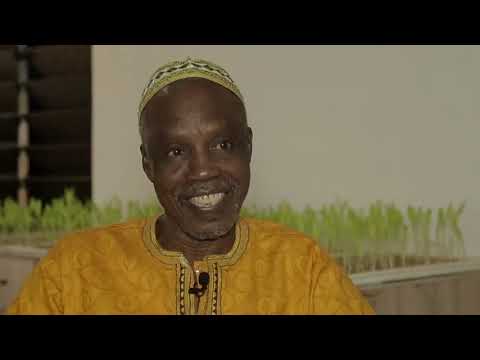

Through Tropical Legumes projects, National Agricultural Research Institution like CSIR-SARI in collaboration with IITA have been developing and using quality seeds of improved varieties to attract youth in agriculture and reduce migration.
We met with a few Cowpea seed producers and farmers who shared their farming experience. Tropical Legumes projects was implemented in 14 countries with funding from Bill and Melinda Gates Foundation.
If you're new, please subscribe!
Visit us → https://iita.org/
Like us → https://facebook.com/IITA.CGIAR
Follow us → https://twitter.com/iita_cgiar
Follow us → https://instagram.com/iita_cgiar/
Get all our latest news → http://bulletin.iita.org/
#IITA #Research #Agriculture #TransformingAfricanAgriculture
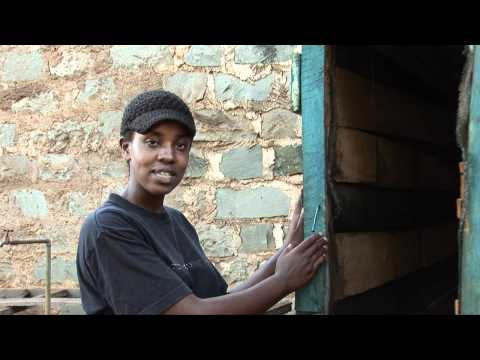
Fresh-picked vegetables and fruits last longer if they can be kept cool. African farmers use 'charcoal coolers' to store their crops before packing. Could you make a fridge with pieces of wood, some netting, a length of pipe and some charcoal? Find out who does and how the technology works.
Find out more about farming on the LEAF Virtual Farm Walk website, www.virtualfarmwalk.org

Andrew Kimbrell has been a leading proponent of regenerative forms of agriculture and organic policies. He is the editor of the nationally renowned book Fatal Harvest, The Tragedy of Industrial Agriculture and the author of Your Right to Know: Genetic Engineering and the Secret Changes in Your Food. Kimbrell’s articles and editorials have appeared in The New York Times, Harpers, USA Today, and numerous other print and new media publications such as The Huffington Post.
He has testified numerous times before the U.S. Congress and has been a featured speaker at dozens of colleges and universities around the country and other public forums including Google Author Talks, Slow Food Nation, Bioneers and Ecofarm. He is featured in several documentaries including “The Future of Food,” “FRESH,” and a critique of genetic engineering, “Life Running out of Control.”
Connect with The Real Truth About Health
http://www.therealtruthabouthealth.com/
https://www.facebook.com/The-R....eal-Truth-About-Heal
https://www.instagram.com/therealtruthabouthealth/
https://twitter.com/RTAHealth
Passionate believers in whole food plant based diets, no chemicals, minimal pharmaceutical drugs, no GMO's. Fighting to stop climate change and extinction.


Join me on Tuesday August 11th at 8PM Eastern time as I do an encore presentation of my lecture for the RBG Centennial Conference held August 8-9, 2020. The title of the lecture is "Marcus Garvey and the Role of Science in Afrikan Liberation." This will be a powerful powerful show that you do not want to miss. So set your reminder, like, and share with friends and colleagues.
In the meantime, GET YOUR COPY TODAY!
Towards a Comparative Dictionary of CIkam and Modern African Languages (2020): http://asarimhotep.com/shop-ma....rket/books/towards-a
Aaluja Vol. II: Cyena-Ntu Religion and Philosophy (2020). : https://asarimhotep.com/shop-m....arket/books/aaluja-v
To continue to support this channel, please consider donating with Cash App:
CashApp: $asarimhotep
PayPal: https://www.paypal.com/biz/fund?id=KY68KNYLEPMGA
Visit me on Twitter: https://twitter.com/imhotep06
Visit me on Instagram: imhotep1906
My webpage: http://asarimhotep.com

SARS (Special Anti Robbery Squad) is a unit in Nigeria that is killing peaceful protesters in Nigeria. Please lend your voice every retweet’s, post and donation will help to end the on going genocide in Nigeria.
To help out online please sign this petition
CHANGE.ORG PETITION LINK : https://www.change.org/p/international-criminal-court-petition-for-president-buhari-to-be-charged-before-the-icc-for-crimes-against-humanity?recruiter=926818945&utm_source=share_petition&utm_campaign=psf_combo_share_abi&utm_medium=whatsapp&recruited_by_id=bb104710-10d7-11e9-802c-3731fb020a29&utm_content=washarecopy_25377375_en-GB%3A0
Donate:
The feminist collocation: https://feministcoalition2020.com/
♡
It’s Time to rewrite the Village Story of Africa. Unlike the age old, warped picture painted of African villages by western media as the home of the poor and desolation, and a place where lions are pets and they live on trees...The rooted experience is here to break the misconceptions we’ve been told and sold about the villages and show you the great beauty that lies in the villages of Africa. We take you to the villages of Africa and show you the real African Village life. You get to experience the richness, the beauty, the heritage, and the culture here in Africa. Subscribe to enjoy the African Village life as told by An African Village Princess!
Your Support is Needed and Appreciated To Make this Project A Success:
https://www.paypal.me/thebelleskin
For Sponsorship Advertisement and Business Enquires Email: info.skybelle@gmail.com
Donate and Support me on PayPal:
https://www.paypal.me/thebelleskin
Shop Our African Village Skincare Products to Support our Journey:
https://www.instagram.com/thebelleskin/
♡ Let’s be friends on♡
Facebook:
https://m.facebook.com/skybellee/
Instagram:
https://www.instagram.com/_skybelle/
Youtube:
https://www.youtube.com/c/SKYB....ELLE?sub_confirmatio
♡ I love youuuuu!
"To thy own self, be true".
Yayy!! You reached the bottom of the description box!! Comment "Rooted Experience " so I know you did ✊🏿
____
Sub count: 5.9k
#therootedexperience #ghanavlog #ghanavillagelife #villagefoodghana #accra #contentcreator #creator #glassskin #skincare

Please join us for a conversation with Dr. Obadiah Mailafia [Theme]- NIGERIA: HOW TO FIX A FAILING STATESunday, August 15, 20215:00 PM Nigeria4:00 PM GMT11:00 AM Austin CSTJoin via Zoom:https://us02web.zoom.us/j/85807196335
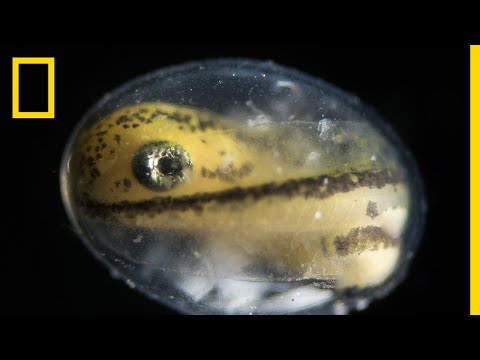

Witness the ‘making of’ a salamander from fertilization to hatching in this six minute time-lapse.
➡ Subscribe: http://bit.ly/NatGeoSubscribe
➡ Get More Short Film Showcase: http://bit.ly/ShortFilmShowcase
#NationalGeographic #Salamanders #ShortFilmShowcase
About Short Film Showcase:
The Short Film Showcase spotlights exceptional short videos created by filmmakers from around the web and selected by National Geographic editors. We look for work that affirms National Geographic's belief in the power of science, exploration, and storytelling to change the world. The filmmakers created the content presented, and the opinions expressed are their own, not those of National Geographic Partners.
See more from National Geographic's Short Film Showcase at http://documentary.com
Get More National Geographic:
Official Site: http://bit.ly/NatGeoOfficialSite
Facebook: http://bit.ly/FBNatGeo
Twitter: http://bit.ly/NatGeoTwitter
Instagram: http://bit.ly/NatGeoInsta
Filmmaker Jan van IJken's Becoming reveals the fascinating genesis of animal life. A single cell is transformed into a complete, complex living organism with a beating heart and running bloodstream. Observe the stages of development that occur within an Alpine newt embryo (Ichthyosaura alpestris) in this fascinating six minute time-lapse captured over a three week period.
Follow Jan van IJken:
https://www.janvanijken.com/
Read "See a salamander grow from a single cell"
https://on.natgeo.com/2DVOnUN
About National Geographic:
National Geographic is the world's premium destination for science, exploration, and adventure. Through their world-class scientists, photographers, journalists, and filmmakers, Nat Geo gets you closer to the stories that matter and past the edge of what's possible.
See a Salamander Grow From a Single Cell in this Incredible Time-lapse | Short Film Showcase
https://youtu.be/SEejivHRIbE
National Geographic
https://www.youtube.com/natgeo