







- General Videos
- Music
- Economics
- Health
- Travel & Events
- History
- Psychology
- Spirituality
- Movies
- News & Politics
- Kmtyw Combat Sciences
- Ɔbenfo Ọbádélé Kambon Videos
- Ɔbenfoɔ Kamau Kambon: Black Liberation Philosophy
- Science, Tech, Engineering and Math
- Permaculture
- Self-Sustainability
- Living Off Grid
- Yoruba Language Learning
- Education
- Mmɔfra Adesua
- Nana Kamau Kambon Playlist
- Livestream
- Komplementarity Kouples and Revolutionary Singles
- Abibitumi Film Series
- Decade of Our Repatriation
- Kwento xpr
- Live
Top videos



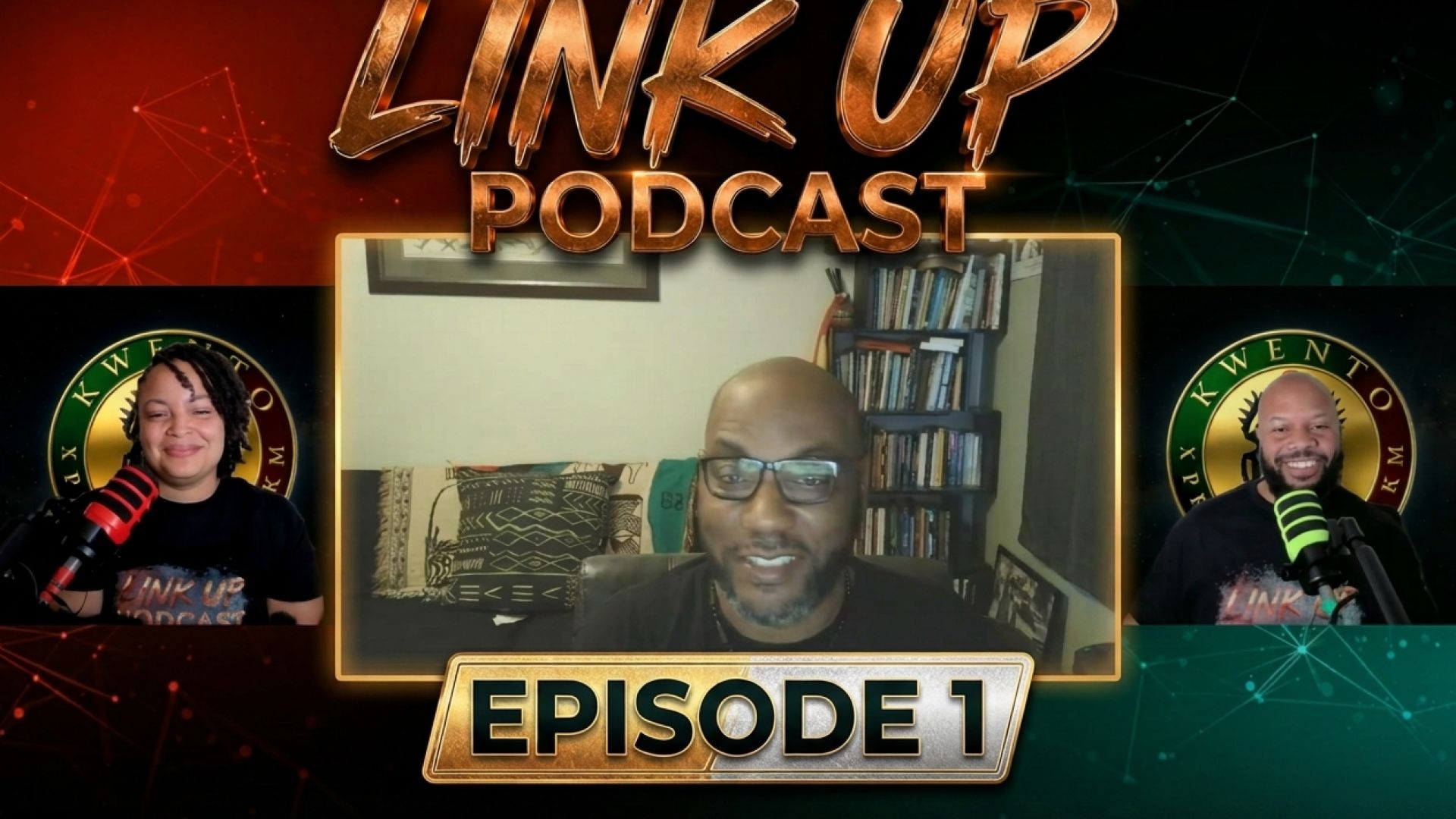
Link Up Podcast — Episode 1 | Featuring Agya Kwadwo Danmeara Tókunbọ
Hosts: Niara Esi Ìjèawelē Ọmọlará Kwento & Bakari Kwadwo Ọbatayé Kwento
with an Abibitumi 20 year tribute from Baba Amn and Sister Nuru
Welcome to the premiere episode of Link Up Podcast, where we connect with Abibifoɔ (Black People) doing Black powerful work across Abibiman (the Black Land) and the diaspora.
In this first episode, we Link Up with Agya Kwadwo Danmeara Tókunbọ — longtime builder, administrator, "the Commissioner", solutionary, and one of the behind-the-scenes forces connected to Abibitumi.
We discuss his personal journey from raised consciousness into raised behavior, the importance of language, repatriation, building independent Black platforms, Sankɔfa Journey experiences, Abibitumi’s 20-year legacy, and what it means to do real work for the Nananom (grandcestors) and future generations.
Feel free to share your thoughts, and Link Up!
#linkuppodcast #abibitumi #kwentoxpr #r2gh #nkwadua #SankɔfaJourney #abibiman #kmt #podcast


A 'whites-only' town in South Africa is making headlines. Black people cannot live & work in this town, every job is reserved for white people. The residents of the town insist their actions are not racist. Palki Sharma brings you the story of Orania..
#Gravitas #Orania #SouthAfrica
About Channel:
WION The World is One News, examines global issues with in-depth analysis. We provide much more than the news of the day. Our aim to empower people to explore their world. With our Global headquarters in New Delhi, we bring you news on the hour, by the hour. We deliver information that is not biased. We are journalists who are neutral to the core and non-partisan when it comes to the politics of the world. People are tired of biased reportage and we stand for a globalised united world. So for us the World is truly One.
Please keep discussions on this channel clean and respectful and refrain from using racist or sexist slurs as well as personal insults.
Subscribe to our channel at https://goo.gl/JfY3NI
Check out our website: http://www.wionews.com
Connect with us on our social media handles:
Facebook: https://www.facebook.com/WIONews
Twitter: https://twitter.com/WIONews
Follow us on Google News for latest updates
Zee News:- https://bit.ly/2Ac5G60
Zee Bussiness:- https://bit.ly/36vI2xa
DNA India:- https://bit.ly/2ZDuLRY
WION: https://bit.ly/3gnDb5J
Zee News Apps : https://bit.ly/ZeeNewsApps


HAPI Talks with Dr. Bayyinah Bello about the Maroon Resistance Fighters in the Americas.
Please visit www.hapifilm.com to get a copy of the Groundbreaking documentary film HAPI and all the latest HAPI gear.
Don't forget to LIKE, SHARE & SUBSCRIBE to our channel so that we can continue to bring you excellent programming.
Cash app: $hapifilm


![Torture Virus: Tabay 'Rampant' Among Nigeria’s Security Forces - BBC Africa Eye [2020]](https://i.ytimg.com/vi/AzqP7z62ilU/hqdefault.jpg)

WARNING: This film contains disturbing scenes including images of torture.
BBC Africa Eye has uncovered shocking video evidence that torture is being used by multiple branches of the Nigerian police and armed forces.
Torture is illegal in Nigeria. But images from social media show that a particular form of torture—a technique known as ‘tabay’—is widely used in the interrogation and punishment of detainees, including children.
This investigation looks at the origins of this technique, identifies the worst offenders, and asks why they are not being held to account. It also reveals that in 2014 a senior police officer serving with SARS was involved in the torture of a young man who later died from his injuries.
Reporter: Mayeni Jones
Lead Investigator: Aliaume Leroy
Produced and edited by: Kelvin Brown, Suzanne Vanhooymissen, Naomi Scherbel-Ball.
Motion design: Tom Flannery
Animation: Manuella Bonomi
Investigative team: Bertram Hill, Benjamin Strick, Abdulbaki Jari Aliyu, Rosa Vane
Executive producer: Daniel Adamson
Subscribe: http://bit.ly/subscribetoafrica
Website: https://www.bbc.com/africa
Facebook: https://www.facebook.com/bbcnewsafrica/
Twitter: https://www.twitter.com/bbcafrica/
Instagram: https://www.instagram.com/bbcafrica/

The influential leader of New Guinea's Kawelka spends five years amassing an abundance of valuables, only to give them away in a festive ceremony called the Moka. A key component to Kawelka culture, the Moka ceremony finds those seeking to gain influence attempting to do so not by acquiring valuable objects, but by giving them away. Unfortunately, things do not go as planned and the leader is ultimately threatened with violence as a result of his outwardly selfless act of giving.The documentary series “Disappearing World” was originally broadcasted between 1970-1975. As an anthropological landmark of its time, the series tells the story of traditional communities endangered by the modern world’s progressions. The series stands as a historical document of daily life in remote and threatened societies, such as the Cuiva, Embera and Panare Indians of Colombia, the nomadic Tuareg of the Sahara, the Kurdish Dervishes, and the Meo of China. Subscribe to see more full documentaries every week:https://bit.ly/2lneXNyTRACKS publishes unique, unexpected and untold stories from across the world every week. From "From "Disappearing World""Facebook: https://www.facebook.com/TRACK....STravelChannel/Conte licensed from ITV Global to Little Dot Studios.Any queries, please contact us at: owned-enquiries@littledotstudios.com