Top videos

Vertical Micro Gardening - IDEAS For Uganda
Vertical Micro Gardening - IDEAS For Uganda Ambakisye-Okang Dukuzumurenyi 26 Views • 5 years ago

▶▶ SUPPORT IDEAS FOR UGANDA - https://ideasforus.org/uganda


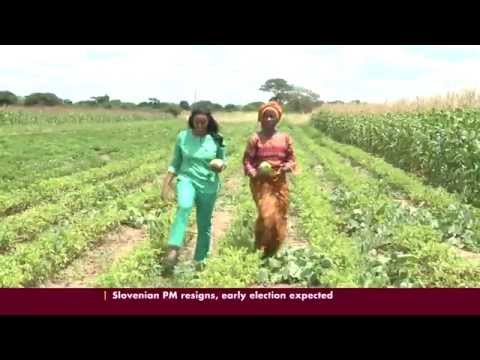
It is estimated that by 2030 nearly 50% of the world's population may live in urban areas. Consequently, many millions of acres of productive farmland are expected to be lost to housing and industrial usage. In Uganda, the lack of appropriate farmland, low incomes, unemployment, and natural disasters have resulted in very poor food security. This makes the country’s chances of halving poverty and hunger by 2030 very slim. Uganda and other African countries need to increase agricultural productivity in a sustainable manner through innovative approaches, particularly in dense urban areas.

On top of this, Kampala is facing a major issue with urban waste management, where nearly 28,000 tons of waste are delivered to city landfills each month. However, according to the Kampala Capital City Authority, this represents only 40% of the waste generated in the city. The rest ends up in unauthorized sites. Often on city streets and in dense urban areas, causing significant environmental and human health problems.

So in 2014, a group of students at the Makerere University chapter of IDEAS For Uganda, led by Mr. Paul Matovu, developed an innovative approach to urban micro-gardening and integrated waste management in Kampala, a social enterprise called “Vertical Micro-Gardening” (VMG), the first of its kind in Uganda.

How This Brooklyn Urban Farm Creates 300,000 lbs of Compost by Hand
How This Brooklyn Urban Farm Creates 300,000 lbs of Compost by Hand Ambakisye-Okang Dukuzumurenyi 26 Views • 5 years ago

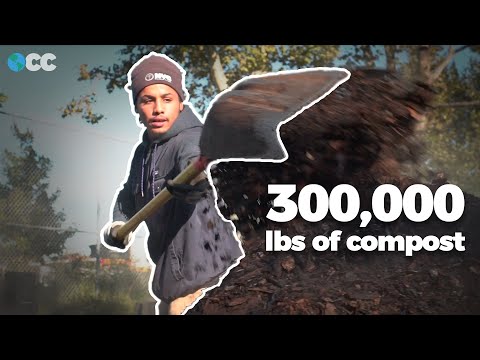
In this video brought to you by the Local Motives YouTube channel, we explore how a small community urban farm in Red Hook, Brooklyn produces over 150 tons of compost every year with just hand tools. Through the help of over 2000 volunteers, the Red Hook Community Urban Farm diverts over 300,000 lbs (pounds) of food scraps, food waste, and yard waste from the landfill. This NYC urban farm uses large piles of food waste to create compost. The NYC urban farm not only educates volunteers on how to compost and grow their own food in an urban agriculture environment, but they also put them to work turning compost piles to create the perfect soil for growing organic vegetables and produce. This is an excellent example of how small farms, collective work, and a good idea can make a big impact on climate change.

Subscribe to Local Motives:
https://www.youtube.com/channe....l/UCLTofw9H3F8-MRsIj
Local Motives Instagram: http://instagram.com/localmotives.series
Local Motives Website: https://www.localmotives.us
Local Motives Series original score composed and produced by William Lindsay.

Volunteer at Red Hook Community Farm’s Compost Operation: https://rhicenter.org/red-hook-farms/the-farms/

Help me make more videos like this via Patreon: http://bit.ly/2iz4lIV
Email List: https://www.subscribepage.com/ourchangingclimate
Twitter: https://twitter.com/OurClimateNow
Facebook: https://www.facebook.com/occvideos/
Instagram: https://www.instagram.com/occ.climate/

I use Epidemic Sound for some of my music: http://epidemicsound.com/creator

For the rest of my music, I use Artlist.io. You can get 2 months free of Artlist.io with this link: https://artlist.io/Charlie-278823
_______________________
#Compost #UrbanFarm #FoodWaste


How Trees Secretly Talk to Each Other in the Forest
How Trees Secretly Talk to Each Other in the Forest Ambakisye-Okang Dukuzumurenyi 26 Views • 5 years ago

What do trees talk about? In the Douglas fir forests of Canada, see how trees “talk” to each other by forming underground symbiotic relationships—called mycorrhizae—with fungi to relay stress signals and share resources with one another.
➡ Subscribe:
http://bit.ly/NatGeoSubscribe

#NationalGeographic #Trees #Nature

About National Geographic:
National Geographic is the world's premium destination for science, exploration, and adventure. Through their world-class scientists, photographers, journalists, and filmmakers, Nat Geo gets you closer to the stories that matter and past the edge of what's possible.

Get More National Geographic:
Official Site: http://bit.ly/NatGeoOfficialSite
Facebook: http://bit.ly/FBNatGeo
Twitter: http://bit.ly/NatGeoTwitter
Instagram: http://bit.ly/NatGeoInsta

Read ‘Talking Trees’ in the June 2018 issue of National Geographic magazine to learn more about the Douglas fir forests of Canada and the work of forest ecologist Suzanne Simard.

How Trees Secretly Talk to Each Other in the Forest | Decoder
https://youtu.be/7kHZ0a_6TxY

National Geographic
https://www.youtube.com/natgeo

Farmer Managed Seed Systems in Africa
Farmer Managed Seed Systems in Africa Ambakisye-Okang Dukuzumurenyi 26 Views • 5 years ago

ORFC Global 2021 Session

Farmer Managed Seed Systems (FMSS) have, for hundreds of years, played a crucial role across the African continent in ensuring a diverse diet for millions of people and sustaining biodiversity. However, there is no continental law governing seeds in Africa and corporates have taken this as an opportunity to grab resources from the agricultural sector - which still occupies 70 % of the population into Africa - and sell them seed, fertilizers and pesticides. In some regions various stakeholders such as seed companies and their allies, are promoting uniformity in the name of high yield seed and food security. 

Despite the push of multiple legal-political instruments to install industrial seed systems as the vehicle of African agriculture, 80% of seeds used by farmers in Africa come from their own reserves.  In this panel, organised by AFSA, we will learn about two levels of resistance to the African seeds takeover by industry: first is led by civil society organisations at sub regional level, engaging the push of seed law revision favourable to hybrid seeds and GMO’s. Second is at national levels where farmers’ organisations break the law by organising seed festivals; sharing indigenous seed, knowledge and practices.

Speakers:
Jean Paul Sikeli
Mr. Sougalo Soulama
Fassil Gebeyehu Telemtu
Bright Thamie Phiri

Chair:
Famara Diédhiou

#ORFCGlobal​
https://orfc.org.uk/

Ebola in Congo (full film) | FRONTLINE - 23 Dec 2019
Ebola in Congo (full film) | FRONTLINE - 23 Dec 2019 Ambakisye-Okang Dukuzumurenyi 26 Views • 5 years ago

Three health workers risk their lives to battle Ebola in a war zone.

FRONTLINE reports from inside the second-largest Ebola outbreak ever in a region of the Democratic Republic of Congo devastated by decades of conflict.

This journalism is made possible by viewers like you. Support your local PBS station here:
http://www.pbs.org/donate

Love FRONTLINE? Find us on the PBS Video App where there are more than 250 FRONTLINE documentaries available for you to watch any time: https://to.pbs.org/FLVideoApp

Subscribe on YouTube: http://bit.ly/1BycsJW

#Ebola #Congo #documentary

Instagram: https://www.instagram.com/frontlinepbs
Twitter: https://twitter.com/frontlinepbs
Facebook: https://www.facebook.com/frontline

FRONTLINE is streaming more than 200 documentaries online, for free, here: http://to.pbs.org/hxRvQP

Funding for FRONTLINE is provided through the support of PBS viewers and by the Corporation for Public Broadcasting. Major funding for FRONTLINE is provided by the John D. and Catherine T. MacArthur Foundation and the Ford Foundation. Additional funding is provided by the Abrams Foundation, the Park Foundation, The John and Helen Glessner Family Trust, and the FRONTLINE Journalism Fund with major support from Jon and Jo Ann Hagler on behalf of the Jon L. Hagler Foundation.

Showing 783 out of 784