- General Videos
- Music
- Economics
- Health
- Travel & Events
- History
- Psychology
- Spirituality
- Movies
- News & Politics
- Kmtyw Combat Sciences
- Ɔbenfo Ọbádélé Kambon Videos
- Ɔbenfoɔ Kamau Kambon: Black Liberation Philosophy
- Science, Tech, Engineering and Math
- Permaculture
- Self-Sustainability
- Living Off Grid
- Yoruba Language Learning
- Education
- Mmɔfra Adesua
- Nana Kamau Kambon Playlist
- Livestream
- Komplementarity Kouples and Revolutionary Singles
- Abibitumi Film Series
- Decade of Our Repatriation
- Kwento xpr
- Live
Top videos

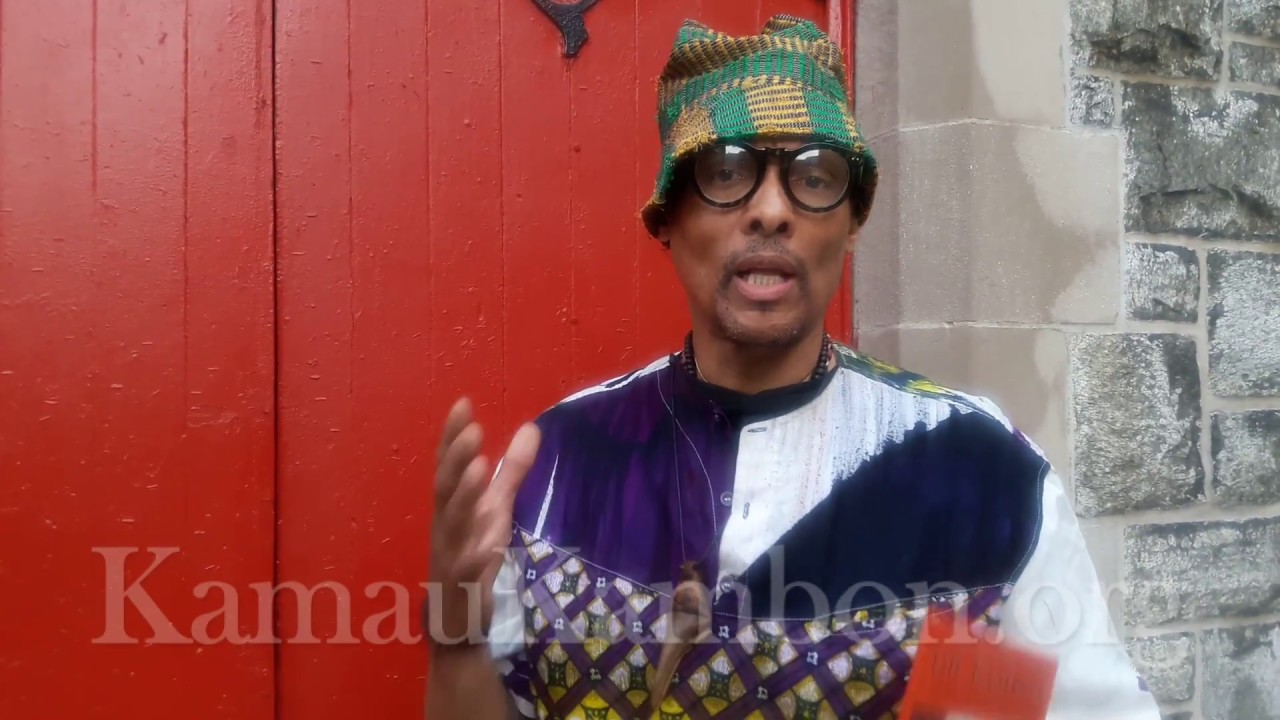


The C.O.W.S. Radio Show, w/ Dr. Kambon Part III
Dr. Kambon explains why he got his degree.
This clip is taken from The C.O.W.S. Radio Show episode 500 on October 31st 2011.
http://www.podfeed.net/episode..../The+C.O.W.S.+w+Dr.+
For more episodes:
http://archive.org/details/TheCowsRadioShow
http://archive.org/details/TheCowsRadioShow2
Dr. Kamau Kambon's website:
http://www.kamaukambon.org/
Double Consciousness Mix-tape
by GACMusikRoom. Free Download
http://gacmusikroom.bandcamp.c....om/album/double-cons
Victim of White Supremacy Diary
http://racism-notes.blogspot.com/
Victim of White Supremacy Diary. Blogging to Replace White Supremacy With Justice (RWSWJ).
*All audio is best played through a quality PC soundcard w/ a 2 or3 speaker system or headphones.
All mixed audio material is for educational non-profit purposes.....
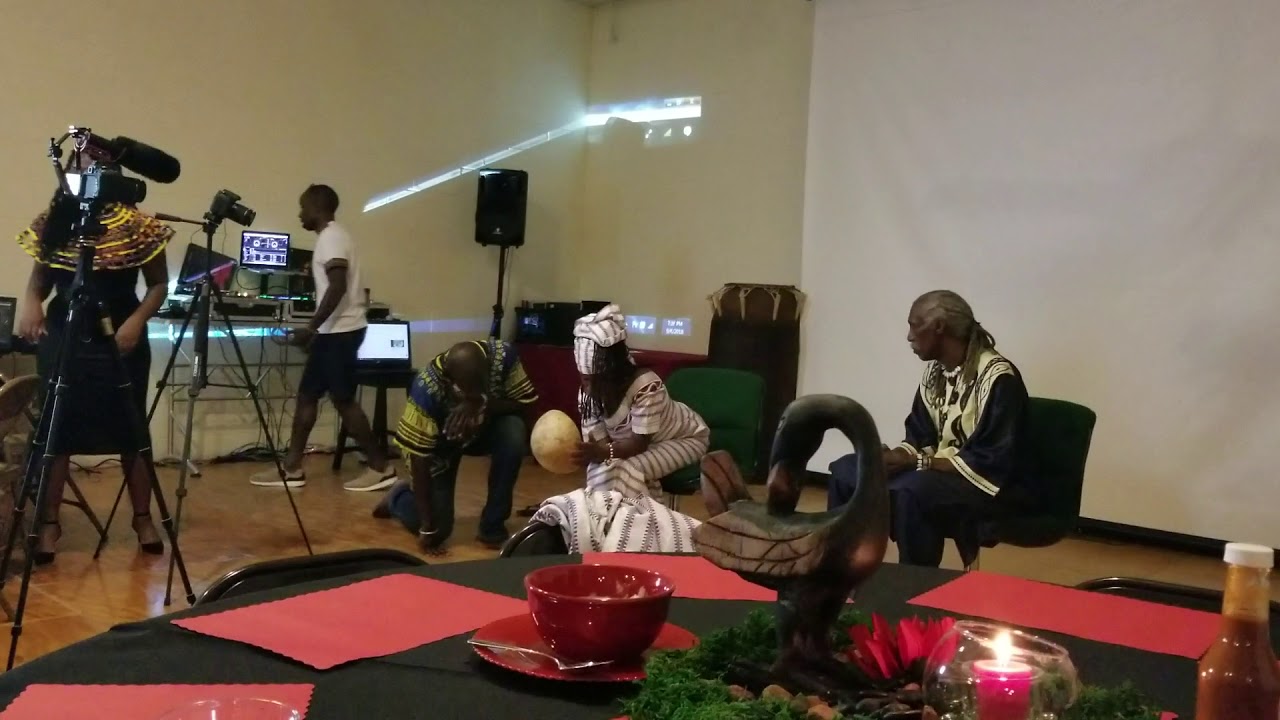


We are joined at 'Africanus Talks' by Dr Onyeka Nubia who is with us to talk about his book "Blackamoores: Africans in Tudor England, their Presence, Status and Origins" and his views on everything else from history to lifestyle!
Join us each Saturday for new content from 'Africanus World'
Website - www.Africanusworld.com
Pateron - https://www.patreon.com/AfricanusWorld
Facebook - https://www.facebook.com/AfricanusWorld/
Twitter - https://twitter.com/AfricanusWorld
Instagram - https://www.instagram.com/africanuswo...
Pay Pal - https://www.paypal.com/cgi-bin/webscr...
Dr Onyeka Nubia resources
Website - http://www.narrative-eye.org.uk/
Twitter - https://twitter.com/narrativeeye?lang=en
Facebook - https://www.facebook.com/narrativeeye2017/?__tn__=%2Cd%2CP-R&eid=ARDYrwI-uitiXC5inc7dPzgwnG0T3BHtYb6VCyH_IvhhdQSjKNzNSbOTeRy5JOJ72cZro21qv4fRMoMV
Amazon - https://www.amazon.co.uk/Onyeka/e/B00...

![Babu - Man of the People [1997]](https://i.ytimg.com/vi/5ZjVNqvVD6Y/hqdefault.jpg)


![Namib: Surviving the Sand Sea Documentary [2019]](https://i.ytimg.com/vi/DqbOgx_FCbw/hqdefault.jpg)
![Baaba Maal: On the Road [Full Live Album]](https://i.ytimg.com/vi/5KfY0vDzAWA/hqdefault.jpg)

00:00 Baayo
05:41 Fanta
11:33 Farba
19:42 Iyango
27:12 Koni (Electric Guitar – Ernest Ranglin)
36:33 Africans Unite (Yolela)
44:46 Cherie
51:44 Bamba
Baaba Maal is one of the finest singers in the world, and he's currently on brilliant live form - as shown by those memorable impromptu collaborations with anyone from Toumani Diabate to Franz Ferdinand at the Africa Express shows. Yet he hasn't recorded a new album for seven years, which presumably explains this limited-edition retrospective acoustic live set. It's taken from performances over the past 10 years, many featuring the exquisite kora work of the late Kaouding Cissoko, and includes some impressive tracks, from that lyrical favourite Baayo to a hypnotic, improvised workout on the harsh-edged Farba, previously only released on cassette in Africa. Then there's the gently charming, kora-backed Fanta, the well-worn and more slushy Cherie, and a virtuoso collaboration with Jamaican guitar hero Ernest Ranglin on Koni, which they performed together on Maal's last live recording, nine years ago. It's currently available only on vinyl or as a download from baabamaal.tv, but is well worth checking out as we wait for something new. Those Africa Express collaborations would make a great start.
--------------------------------------------------------------------
Baaba Maal has partnered with charity: water to reissue his critically acclaimed album, The Traveller. All proceeds go towards bringing clean, safe drinking water to people in developing countries. Download here: https://lnk.to/BaabaMaal-CharityWaterID
The reissue exclusively features a new 50-minute documentary of his annual Blues Du Fleuve Festival in Senegal as well as a 12-minute short film featuring Baaba performing acoustically and talking about his involvement with the charity.
View the full 50 minute documentary, and receive a download of Baaba’s album “The Traveller” with a contribution to charity: water via this link: https://lnk.to/BaabaMaal-CharityWaterID
--------------------------------------------------------------------
Subscribe : http://goo.gl/BV2SJb
Like our Facebook page : https://goo.gl/Fu74E1
Follow Us on Twitter : https://goo.gl/uv8zdj
Visit our website : http://goo.gl/LaHHZt
The Palm Channel will present some of the highlights from our catalogue, an eclectic mix of original short films, interviews from our archives exploring the roots and branches of Jamaican music, and much more.
Created by Island Records founder Chris Blackwell (Bob Marley, U2, Grace Jones etc.). Palm Pictures has always pushed musical boundaries and encouraged unlikely collaborations. Since the late 90's it has been a leader in the convergence of music and film, producing and distributing music documentaries, arthouse & foreign cinema, and music videos.