- General Videos
- Music
- Economics
- Health
- Travel & Events
- History
- Psychology
- Spirituality
- Movies
- News & Politics
- Kmtyw Combat Sciences
- Ɔbenfo Ọbádélé Kambon Videos
- Ɔbenfoɔ Kamau Kambon: Black Liberation Philosophy
- Science, Tech, Engineering and Math
- Permaculture
- Self-Sustainability
- Living Off Grid
- Yoruba Language Learning
- Education
- Mmɔfra Adesua
- Nana Kamau Kambon Playlist
- Livestream
- Komplementarity Kouples and Revolutionary Singles
- Abibitumi Film Series
- Decade of Our Repatriation
- Kwento xpr
- Live
Top videos


Buy " THE BLACKEST JOY" Album https://akuanaru.lnk.to/TheBlackestJoy
WHEN THE JOY COMES-TOUR tickets: https://kj.de/artist/4684/Akua_Naru.html
"My Mother’s Daughter" is the first single release off Akua Naru’s third and forthcoming studio album "...The Blackest Joy" (Spring 2018). The song, at times dark and mystical, at others bright and full of hope, is a rich narrative of black womanhood, agency, West African spirituality, lineage, and sisterhood. With West African influences, as evidenced by the song's introduction and its additional vocals (spoken & sung completely in Mina), Naru, once again, merges genres along the black music tradition and glides effortlessly between soul, jazz, and hip-hop.
Filmed in Lome, Togo, West Africa and directed by Hamburg based artist Joachim Zunke, the video, to be continued, highlights Akua Naru, the mystic/ the traveler, and documents the marriage of her inner and outer worlds. A visual homage to black womanhood on the African continent and in the diaspora.
---Deutsch---
"My Mother's Daughter" ist die erste Single aus Akua Narus drittem Album "…The Blackest Joy", das im Frühling 2018 erscheint. Der Song ist mystisch und zugleich hell und hoffnungsvoll. Er erzählt eine Geschichte über schwarze Weiblichkeit und westafrikanische Spiritualität. Letztere spiegelt sich auch in der Musik, im Intro und den Vocals, komplett in Mina vorgetragen. Akua Naru’s Hip Hop Musik ist zeitlos und repräsentiert den Reichtum und die Schönheit afro-amerikanischer Tradition und Kultur.
Der Hamburger Regisseur Joachim Zunke hat das Video in Lomé in Togo/Westafrika gedreht. Es stellt Akua Naru als Mystikerin und Wanderin dar und lässt ihre inneren und äußeren Welten verschmelzen: eine visuelle Hommage an afrikanische Weiblichkeit in Afrika und der Diaspora.
---Francais---
"My Mother's Daughter" est le premier single du troisième album d'Akua Naru "... The Blackest Joy" (Printemps 2018). La chanson, tantôt sombre et mystique, tantôt brillante et pleine d'espoir, est un riche récit de féminité noire, de spiritualité d'Afrique de l'Ouest, de lignage et de fraternité. A l’origine, influencé par un chant d'Afrique de l'Ouest, comme en témoigne l'introduction de la chanson et des voix supplémentaires (parlé et chanté complètement en Mina), akua naru fusionne encore les genres de la musique traditionnelle africaine au jazz et au hip-hop. Filmée à Lomé au Togo (Afrique de l'Ouest), réalisée par Joachim Zunke, et produite par Elom 20ce et Jahëna Louisin, cette vidéo est la première d’une série. Elle met en lumière Akua Naru, le mystique / le voyageur : un hommage visuel à la féminité noire sur le continent africain et dans la diaspora.
VISIT AKUA NARU:
FACEBOOK: https://www.facebook.com/akuanaru/
INSTAGRAM: https://www.instagram.com/akuanaru/?hl=en
TWITTER: https://twitter.com/akuanaru
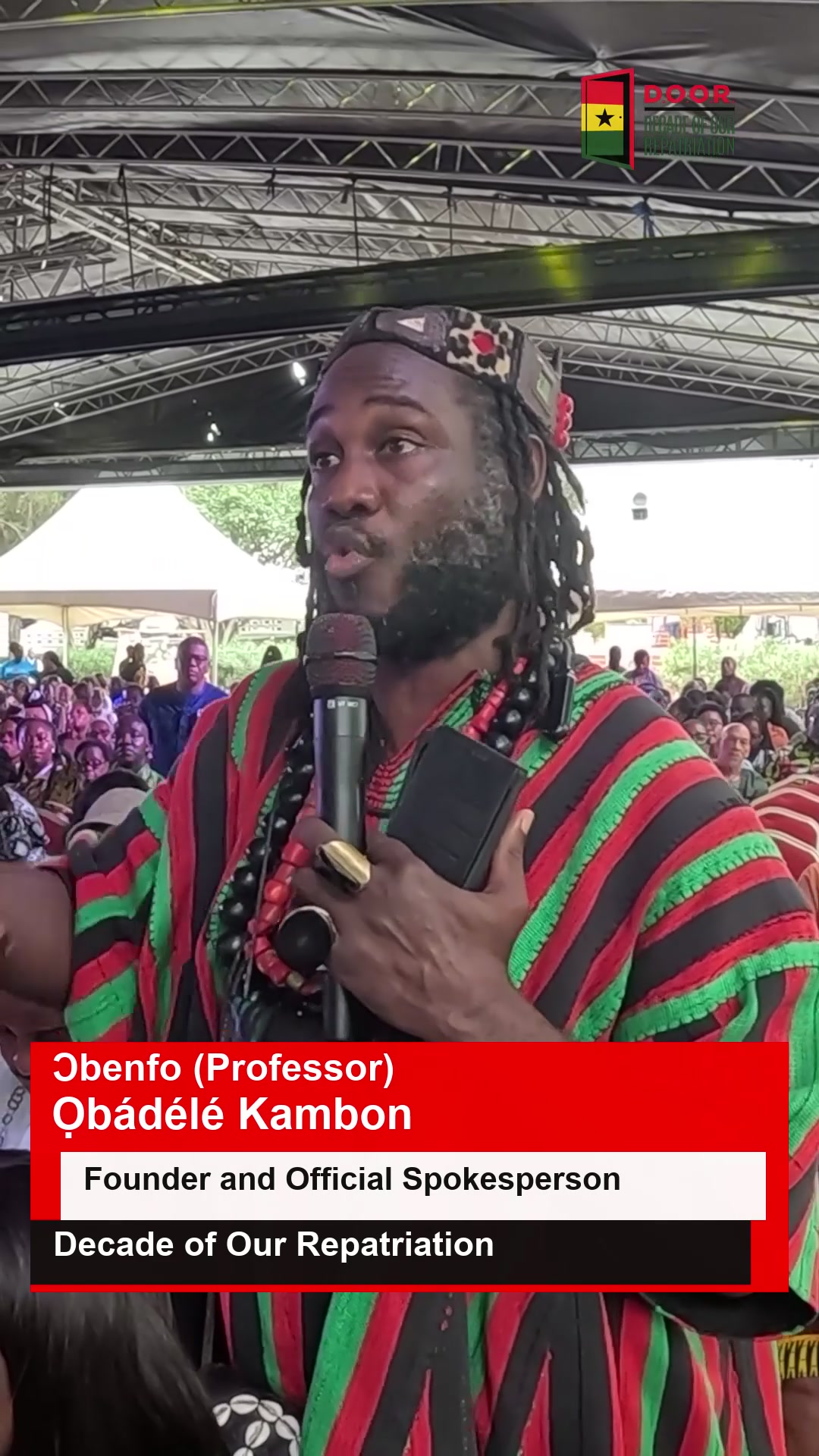


#cheikhantadiop #panafricanism #abonnetoi
apres avoir regardé cette vidéo, votre vision de l’Afrique va changer!
Dr El Hadji Amadou Fall explique les travaux de Cheikh Anta Diop qui vont libérer l’Afrique.


The religious beliefs of Israel were rooted in the shared culture of Canaan. Although it had unique attributes that differed from the Canaanites, it still found expression in shared practices and language. Some traditional practices couldn't be merged with Yahwism, but others like sacred poetry, music, and architecture were adopted and became integral to Israelite religion. The Old Testament's embrace or rejection of these elements means that Canaanite religious influences still affect us today through biblical narratives.Before the findings at Ugarit-Ras Shamra, our knowledge of Canaanite religion was minimal and largely from indirect sources. The Old Testament did mention Canaanite deities and rituals, but these were often in a negative light, making interpretations challenging. Mentions of Canaanite gods and rituals were also found in Egyptian, Mesopotamian, and Phoenician writings, including the Karatepe inscriptions from 1946. However, these weren't enough to form a complete understanding. Greek historians provided accounts of Canaanite beliefs, but it was hard to distinguish authentic traditions from later additions. Excavations at places like Byblos and Megiddo gave us glimpses, but only a fragmentary picture.Now, thanks to discoveries at Ras Shamra (ancient Ugarit) in North Syria, the Canaanites tell their own story. Hundreds of clay tablets found there, written in a dialect close to Biblical Hebrew, offer rich insights. These tablets feature extensive mythological poems, records related to temple services, lists of deities and sacrifices, and details about temple workers and rituals. Additionally, artifacts linked to gods like Baal and Dagon, including temple remains and stelae, have been uncovered.It's crucial to understand that while there was a core Canaanite religious belief, local variations existed. Not every Canaanite city would have worshiped all the gods we know from the texts. Canaanite religion was more of a public affair than a personal one. Its rituals, mostly centered on ensuring fertility, were community events. Though there were individual acts of devotion, as seen in Phoenician inscriptions, the religion was mainly a communal way to connect with nature's forces. This involved practices believed to ensure continued creation and rejuvenation. The prominence of some deities in mythological writings doesn't always reflect their actual popularity among Canaanite devotees. Conversely, some gods, like Dagon, had a minimal role in myths—merely acknowledged as Baal's father—but seemed quite revered, as evidenced by a dedicated temple and two stelae in Ugarit.EL, the hebrew word for GOD, is the Supreme God and creator, and shows up as ALLAH in arabic.YHWH’s revelation is always at a mountain, whether called Sinai or Horeb, pictures the event is a volcanic eruption. As these texts show, volcanism seems to be an essential attribute typically associated with YHWH, linking him to the Craftsman Metalurgy gods I mentioned before. The account of the Sinai revelation, with its volcanic imagery, is meant to show that YHWH himself, and not simply a divine emissary, but a Demiurgic Crafstman.Some believe Mount Sinai might be one of these Arabian volcanoes, which the Israelites approached after departing Egypt. The Kenites seem to have been skilled metalworkers. Genesis 4 discusses Cain's descendant, Tubal-Cain, as a craftsman skilled in molding copper and iron. Semitic cognates of Cain hint that metallurgical activities were integral to its meaning. Hence, Cain might originally have represented the pioneering figure in metallurgy, with the Kenites—both metalworkers and smelters—as his successors. Their association with a volcanic deity like YHWH becomes clearer in this context.00:00:00 - Intro00:02:21 - Chapter 1: Canaanite Religion00:05:33 - Chapter 2: the God EL00:07:14 - Chapter 3: Divine Craftsman00:10:38 - Chapter 4: PTAH, Demiruge00:12:48 - Chapter 5: Elephantine Jews00:17:27 - Chapter 6: Yahweh, Midianite Metallurgy God00:24:59 - Chapter 7: YHWH vs. Ba'al00:32:18 - Chapter 8: Dionysian IAO00:37:54 - Chapter 9: Dionysus of the Desert00:39:57 - Chapter 10: Yahweh Inscriptions00:42:50 - Chapter 11: EL, King of the North00:45:45 - Chapter 12: Saturn, King of ELOHIM00:53:57 - Chapter 13: Old Gods - BAD00:58:00 - Chapter 14: Breasts of Gaia (2 Mountains)01:01:27 - Chapter 15: Jewish Polythesim01:03:22 - Chapter 16: Rise of Monotheism01:19:25 - Chapter 17: Demetrius Phalerius01:26:16 - OUTRO: Plutarch on 'AMEN'#gnosticinformant #judaism #documentary


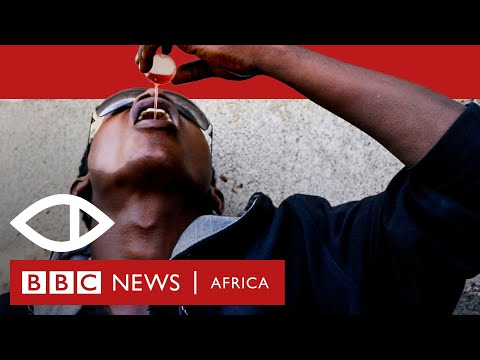

In Nigeria, thousands of young people are addicted to codeine cough syrup – a medicine that’s become a street drug.
The Nigerian senate estimates that 3 million bottles of codeine syrup are drunk every day in just two states – Kano and Jigawa.
But who makes this syrup? And who sells it to Nigeria’s students?
BBC Africa Eye went undercover to investigate.
Subscribe to our channel for more investigative journalism. Nothing stays hidden forever.
Subscribe: http://bit.ly/subscribetoafrica
Website: https://www.bbc.com/africa
Facebook: https://www.facebook.com/bbcafrica/


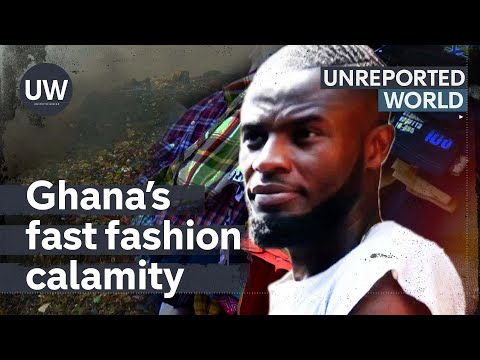
Unreported World is in Ghana which is suffering an environmental disaster caused by the fast fashion items we give away. Reporter Ashionye Ogene travels to the bustling market of Kantamanto in the capital city Accra to meet the traders struggling to sell the disposable clothes we no longer want.
Kantamanto was once home to textile traders making a good living from so-called ‘Dead White Man’s Clothes’, items donated from the West believed to be so good that only dead people would part with them. But the arrival of fast fashion is changing that. In 2019 around 63 million kilograms of clothes were imported into Ghana from the UK, much of it cheap and damaged fast fashion donated by us.
But campaigners are deeply concerned about the impact of plastics found in much of our fast fashion. On the beaches of Accra, Ogene discovers a waterfall of mangled clothing flowing from the city’s sewers straight into the ocean. We meet scientists who believe that well known brands now embedded in the sand shed microfibres into the water. Their research has found clothing related plastics in seafood along the west coast of Africa.
While creative solutions are being found, we meet the government minister tasked with finding a balance between banning imports to safeguard the environment, and protecting the livelihoods of thousands of traders.
Producer/Director: Toby Bakare
Series Producer: Andy Lee
Executive Producer: Ed Fraser
Production Company: Channel 4 News
Subscribe to our channel for more Unreported World episodes https://www.youtube.com/unreportedworld.

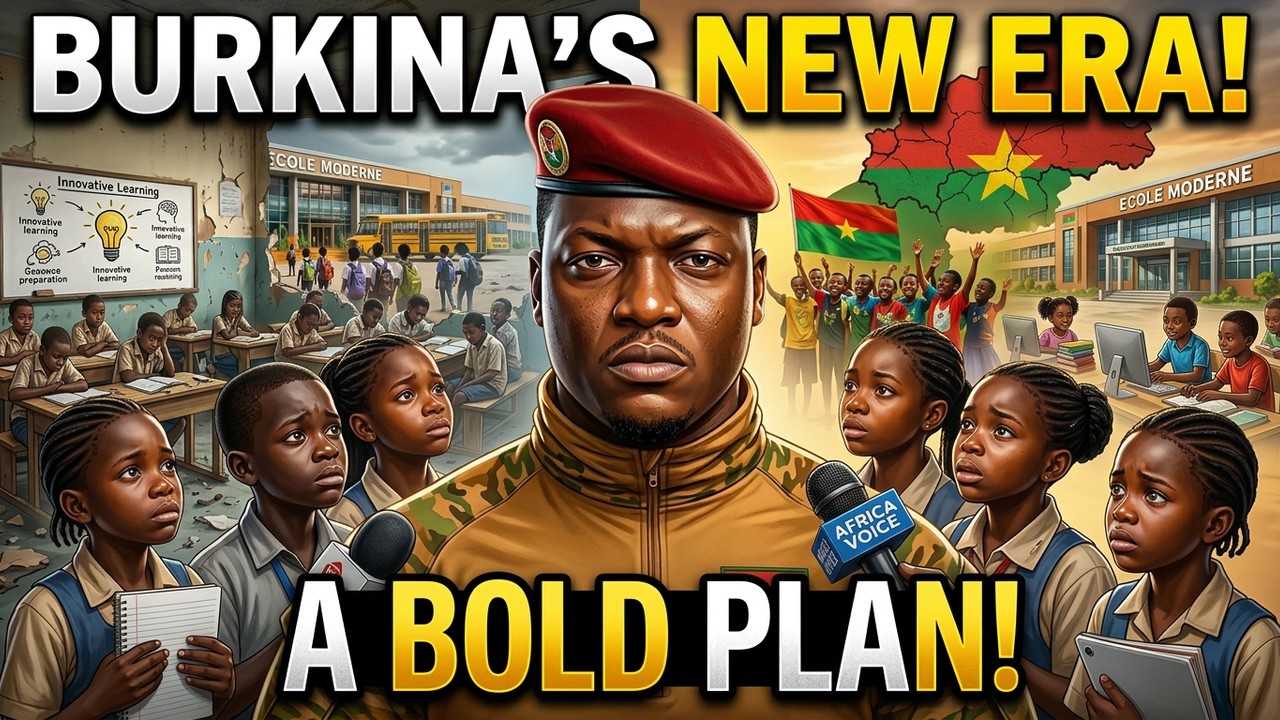
🌍 What happens when the leader of a nation sits down to answer the toughest questions from the next generation? Join Captain Ibrahim Traore in this historic and moving interview as he speaks directly with child journalists about the future of Burkina Faso and the African continent. This unique conversation goes beyond politics, diving into the personal values, struggles, and visions that are shaping a new era for West Africa.🌟 Throughout this special broadcast from the United States of Africa News Network, Captain Traore reflects on his humble beginnings and the discipline instilled by his parents. He addresses the critical challenges facing the nation today, including the fight against terrorism, the reopening of schools for displaced children, and the ambitious move toward a completely free education system. You will hear firsthand accounts of how the government is working to support orphans, include children with disabilities, and protect the fundamental rights of every young citizen.🌾 A powerful segment of the interview focuses on food self-sufficiency and reclaiming the African narrative. The President explains how colonial education often hid the true potential of African soil, and why it is vital to teach children the truth about their own resources. From growing wheat and cocoa to managing mineral wealth, this is a call to action for all Africans to embrace patriotism, integrity, and unity.Chapters0:00 Intro and Mission of Unity3:15 Childhood and Family Values7:50 Lessons from a Military Father12:30 Journey to Becoming an Officer17:00 Reopening Schools After Terrorism21:20 Building Modern and Inclusive Schools25:00 The Vision for Free Education28:15 Children Share Their Dreams32:45 Security Situation and Fighting Terrorism37:10 Supporting Orphans and Displaced Youth41:30 Defining Leadership and Integrity46:00 Cultivating Patriotism in Children50:15 Achieving Food Self-Sufficiency54:40 Debunking Colonial Myths About Resources58:00 Civic Duty and Environmental Hygiene1:00:15 Final Questions on Health and Child Rights1:02:10 Conclusion and Call to Action📢 We want to hear from you! What lessons should other African leaders take from this interview? How can we better work together to protect our children and build a unified continent? Please subscribe, like, and share this video on WhatsApp, Facebook, X, and Telegram to help spread the message of African unity and progress.#burkinafaso #ibrahimtraoré #africanunity #education #panafricanism