




Top videos

Ọbádélé Kambon
34 Views · 6 years ago

Dr. Obadele Kambon - PhD Graduation - University of Ghana 2013 - July 26, 2013

Dr. Obadele Kambon 2013 UG-Legon Vice Chancellor's Award for Outstanding Thesis - Humanities

Comments from the external examiner:
The main findings of the research point to the fact that (a) An overwhelming majority (98%) of Full Lexicalized-Integrated SVCs have nominal counterparts; 2% do not; (b) Only 3% of Partial Lexicalized-Integrated SVCs have nominal counterparts; 97% do not; (c) Clause Chaining Serial Constructions appear to nominalize haphazardly and/or unsystematically as frozen sentences or figures of speech (idioms, proverbs, etc.; (d) The primary function of such forms, he identified, were what Charles Morris (1971) calls denotata and designata; Full Lexicalized-Integrated SVCs behave as lexicalized idioms and because of this, four criteria of idiomaticity namely -- collocability, familiarity, flexibility and compositionality -- are applied to them; and (g) There is systematicity in the pattern of nominalization behavior of serial verb nominal across the main Akan dialects.
This work recapitulates and substantially extends work already done on Akan SVCs Osam, Agyeman and others. A major contribution of the dissertation is the detailed discussion and exemplification of issues relating to nominalization of SVCs. This is the first attempt at such a detailed discussion and exemplification and the candidate deserves commendation. His categorizations are original as is his attention to scholarly detail and to showing the relationship between and among the three major Akan dialects. One could conveniently argue that this is one of the strongest points of the dissertation.
Very little has been done on Akan nominalization in general and little to nothing on SVC nominalization in particular, so this study is a trailblazer or a path-finder! Syntacticians and semanticists will cite this work and continue with the discussion and issues it raises for the next couple of decades. I am impressed with the details and both the candidate and his advisors must be commended for the high degree of systematicity employed in the synthesis and analyses done in the study.
The candidate drew his conclusions based on the actual data collected and on the results (synthesis and analysis of the data) thereby making the analytical claims have functional validity and protecting them from standing insulated from public scrutiny. This is, again, commendable.
The recommendations for future research, especially, his call for comparing SVNs with other types of nominalizations, is in the right direction more especially due to the scantiness and dearth of knowledge about nominalizations in general about Akan and other West African languages in particular.
The dissertation is very well written and I am willing to pass it without any reservation whatsoever. The content is excellent as is its rendition.

Comments from the internal examiner:

The study does a good job of relating the data and findings to broader theoretical debates in the Functional/cognitive linguistic literature. For example, study results suggest that, at least in the Akan data examined, higher degrees of semantic integration in complex forms correlate with lower degrees of iconicity. Further, the subtype categories of serial verb constructions identified by Osam (1994) are "fuzzy" categories in terms of ability to undergo nominalization. This supports the prototype approach to categorization, rather than a classical "sharp-boundary" approach to categorization though the author does not particularly draw it out rhetorically, the study sits squarely within the linguistic sub-field of Lexicography: the study is a detailed investigation of speakers' lexical knowledge of nouns formed (either historically or productively possibly in the moment of speaking) from serial verb constructions. In my view, the lexicographic work, bringing out native-speaker knowledge about the complex forms including in some cases how this may have changed across time and may vary by dialect, may be one of the most enduring contributions of the study. Many of the item-by-item findings could, for example, largely be incorporated into an etymological dictionary of Akan.
The study contributes new information to understanding the cross-linguistic and Akan-internal typology of nominalizations of serial verb constructions. The minute detail on dialect variation is valuable for sociolinguistic variationist studies.

Ọbádélé Kambon
53 Views · 5 years ago

Dukuzumurenyi's land at Asifaw (Lakpa)

Kwabena Ofori Osei
29 Views · 2 years ago

Dr. Kathlyn (Kara) Cooney is a professor of Egyptian Art and Architecture at UCLA. Specializing in craft production, coffin studies, and economies in the ancient world, Cooney received her PhD in Egyptology from Johns Hopkins University. In 2005, she was co-curator of Tutankhamun and the Golden Age of the Pharaohs at the Los Angeles County Museum of Art. Cooney produced a comparative archaeology television series, entitled Out of Egypt, which aired in 2009 on the Discovery Channel and is available online via Netflix and Amazon.https://en.wikipedia.org/wiki/....Kara_Cooneyhttps://w Consider joining my Patreon to help finding scholars to bring on. Any amount helps me. Thank you existing Patrons.Follow me on Twitter:https://twitter.com/NealSendlak1Osiris may have been an early Egyptian king whose triumphs inspired myth and legends that eventually portrayed him as a god who defied death and represented eternal life. For the ancient Egyptians, the story of Osiris is one of tragedy and hope; it is nothing less than the promise of everlasting life. Osiris, god of the dead, was also the “Triumphant” One and the “Lord of Eternity.” John Ray, a reader in Egyptology at the University of Cambridge, writes that Osiris was “Onnofri,” meaning “the perfect or complete being.” According to Plutarch, writing around AD 120, Osiris will eventually rise again to govern Egypt. The Osiris legend is perhaps the oldest resurrection story of the ancient world. The Birth and Death of Osiris According to scholars of Ancient Egyptian religion, Osiris might have been an early king of a small state on the Nile delta. He was credited with introducing early Egyptians to the cultivation of grain, wheat, and barley and ending the practice of cannibalism. Osiris was the law-giver and taught Egyptians how to worship the gods. Osiris was hated by his brother Set who contrived to murder him upon his return to Egypt; after teaching the Egyptians, Osiris traveled to western Asia, teaching other cultures. Along with 72 other conspirators, Set invited Osiris to a party during which he tricked his brother into climbing into a specially made coffin. Once inside, the lid was flung over the coffin and it was sealed, suffocating Osiris. The coffin was then floated down the Nile. Leaving her son, Horus the Younger, under the protection of the cobra goddess, Isis searched for her husband’s body, finding it in Byblos where the coffin had become part of an immense tree that had been cut down and used to build the palace of the king. Securing the coffin, Isis returned to Egypt. The Resurrection of Osiris While Isis retrieved her son, Set found the coffin and tore the body of Osiris to pieces. Some scholars suggest 14, other cite 16 pieces. Isis again traveled the land of Egypt, collecting the body parts yet burying copies of each part in different cities to confuse her enemies. Traditionally, however, the “tomb” of Osiris was considered to be at Abydos, the site of mass pilgrimages by Egyptians desiring to become Osiris in death. Through her magical abilities and the help of Thoth, Isis revived Osiris but as king of the underworld where he ruled and judged the dead in the Hall of Two Truths. Although the story of Osiris may predate the Old Kingdom, John Ray states that the earliest fragmentary accounts come out of the fifth and sixth dynasties Pyramid Texts yet by the First Intermediate Period all Egyptians followed the funerary practices of the story to make them “Osiris,” identifying with the god. According to social anthropologist Sir James Frazer, “In the resurrection of Osiris the Egyptians saw the pledge of a life everlasting for themselves beyond the grave.” (246) The story of Osiris is certainly far more complicated that this overview and readers are encouraged to consult the sources. This includes the lamentation of the god’s death by Isis as well as the yearly celebratory feast – all, in a sense, reenactments of his death and incarnation, often compared to similar rites associated with Dionysus.Read more at: https://www.shorthistory.org/a....ncient-civilizations #osiris #resurrection --Contents:00:00 - Teaser/Intro01:53 - Osiris and Bodily Resurrection06:38 - Mummies and Saints08:36 - "Eternal Life" Egyptian Mimicry11:17 - Egyptian Social Hierarchy18:35 - Christian/Egyptian Magic10:50 - Isis and Osiris (Masturbating Gods)26:15 - Egyptian Trinities27:53 - Horus, Eros, Plato, and Mary31:19 - Churches on Pagan Holy Places35:45 - Osiris's Erections37:50 - Evolution of Egyptian Doctrine40:52 - Diodorus on the Eucharist43:56 - Attis Hymn, Christian Forgery45:30 - Egyptians Invented Satan47:30 - Satan and Set, Yahweh the Storm God52:45 - Set in the Temple?

Kwabena Ofori Osei
70 Views · 3 years ago

“Perhaps half a dozen times a year, Nana [Ampadu] and his [African Brothers] band will hold a dance, sometimes at a small hotel in a residential section of Accra like Kaneshie or Asylum Down, sometimes at a major nightclub like Apollo Theatre or Tiptoe Gardens. It is always necessary to fight the crowd in order to see him. Once one is past the crush at the door, there is often no place to sit. The dance floor is shoulder to shoulder with fans dancing non-stop ...

“Most dancers are involved in projecting themselves into the music, and they dance coolly, perhaps singing the songs to themselves and thinking about the lyrics. Their facial expressions are almost inward-looking, though they are always ready to look up, smile and greet each other...”

“When the African Brothers play live, they really wind it up. When performing at a dance, they stretch out in the instrumental sections of their songs, laying down a solid groove and taking long solos. Nana is a small man, extremely handsome; the expression on his face when he plays looks simultaneously like that of a wise old man and a playful child. He has especially good rapport with his audiences, and when he plays his guitar, he watches his dancers just as a master drummer would, fulfilling all the interlocutor roles of a traditional African musician. When he says something, the audience roars.”

-John Miller Chernoff

Nana Kwame Ampadu is the quintessential songwriter, philosopher and storyteller of Ghanaian highlife music.

Born in 1945 in Adiemmra, Ampadu was known for his storytelling prowess from a young age. He combined those skills with highlife-style guitar, which he learned with the help of P.K. Yamoah.

Ampadu would become the “single most important folk commentator in Ghana’s contemporary history,” according to Kwesi Yankah, forming the African Brothers Band with rhythm guitarist Eddie Donkor in 1963.

Using proverbs, witticisms and idioms, Ampadu’s songs often delivered moral lessons and social or political critiques. That was the case with the African Brothers Band’s breakout hit, 1967’s “Ebi Tie Ye” (“some live well”). Yankah described the song’s story this way:

“Once there was a meeting of all the animals to discuss the concerns of the animal world. All the animals were present, including Leopard and the orphan Antelope. It so happened that Leopard took a seat directly behind orphan Antelope and started mistreating him. He clawed Antelope's tail to the ground, making it impossible for him to actively participate in the discussion. No sooner would orphan Antelope begin to speak than Leopard would silence him, with a warning that the meeting was not meant for skinny creatures. The mistreatment went on until orphan Antelope could bear it no longer. He plucked up courage and made a loud plea to the presiding chairman. ‘Petition on the floor, point of order,’ he said. ‘Mr. Chairman, secretary, elders here assembled. I move for an immediate adjournment of the meeting, because some of us are not favorably positioned. Some are favorably, other are not.’ As soon as the meeting saw through the words of the Antelope, there was an immediate adjournment.”

If you have any additional information about the artists or this album, comment below or email rareafricanvinyl@gmail.com. All music rights belong to their rightful owners. Please support the musicians and buy their music.

FROM RECORD SLEEVE: ALBUM DESCRIPTION AND CREDITS
African Brothers International Band of Ghana led by Nana Ampadu
“Enyimba Di Naba”

SIDE ONE
Onipa nnse Hwe
Anibere Nye
Susu Manonye Wo De

SIDE TWO
Kwabena Amao
Kofi Nkrabea
Masis Maso

Recording Engineers: F. Kwakye J. Archer
Sound Mixer: F. Kwakye
Produced by John Uzoh and Justin Morah
Executive Production coordinator: R. Francis

Manufactured by: Makossa International Records, Inc. New York, New York
Distributed by: African Record Stores Ltd.

SOURCES FOR VIDEO DESCRIPTION:
https://www.google.com/books/edition/West_African_Pop_Roots/ihWr03mTSJYC?hl=en&gbpv=1&dq=nana+ampadu&pg=PA150&printsec=frontcover
https://core.ac.uk/reader/46725220
https://www.oxfordmusiconline.com/search?q=NanaKwameAmpadu&searchBtn=Search&isQuickSearch=true
https://press.uchicago.edu/ucp..../books/book/chicago/
https://www.si.edu/object/siris_sil_962128

ABOUT THIS CHANNEL
Rare African Vinyl is a project dedicated to honoring African artists who recorded music in the 1970s and 80s, and adding to the body of knowledge of this music online. If you are the artist who created any of the music on this channel, a family member or descendant of an artist, or have a personal connection to any of this music, we would love to speak with you. Please comment on the relevant video or email rareafricanvinyl@gmail.com. Requests to remove any content from YouTube by the original artist will be honored.

Kwabena Ofori Osei
22 Views · 1 year ago

Mercury, Venus, and Mars are all super low on water – so where did ours come from and why do we have so much of it? We think our water came from a few unlikely sources: meteorites, space dust, and even the sun.

*****
PBS Member Stations rely on viewers like you. To support your local station, go to http://to.pbs.org/DonateEons
*****

Produced by Complexly for PBS Digital Studios

Super special thanks to the following Patreon patrons for helping make Eons possible:
Amanda Ward, Avery Sanford, Hillary Ryde-Collins, Stephanie Tan, Stephen Patterson, Mark Foster, Karen Farrell, Trevor Long, Raphael Haase, daniel blankstein, Roberto Adrian Ramirez Flores, Jason Rostoker, Jonathan Rust, Mary Tevington, Bart & Elke van Iersel - De Jong, William Craig II, James Dowling-Healey, Irene Wood, Derek Helling, WilCatRhClPPh33, Mark Talbott-Williams, Nomi Alchin, Eric Roberto Rodriguez, Yu Mei, Dan Ritter, 4th_phase, Jayme Coyle, Albert Folsom, Oscar Amoros Huguet, Patrick Wells, Dan Caffee, Nick Ryhajlo, Sean Dennis, Michael McClellan, Tsee Lee, Robert Hill, Ben Cooper, Matt Parker, Jerrit Erickson, MissyElliottSmith, Stefan Weber, Merri Snaidman, Gabriel Cortez, Marcus Lejon, Todd Dittman, Betsy Radley, Anthony, Philip Slingerland, John Vanek, Eric Vonk, Jon Monteiro, James Bording, Miles Chaston, Jeff Graham, Daisuke Goto, Gregory Kintz, Chandler Bass
If you'd like to support the channel, head over to http://patreon.com/eons and pledge for some cool rewards!

Want to follow Eons elsewhere on the internet?
Facebook - https://www.facebook.com/eonsshow
Twitter - https://twitter.com/eonsshow
Instagram - https://www.instagram.com/eonsshow/

Kɔrɔ Naka
27 Views · 3 years ago

⁣The Invisible Threat : Countering Cognitive Warfare

Ambakisye-Okang Dukuzumurenyi
20 Views · 5 years ago

Permaculture expert, John Nzira shares with us how to prepare the soil/land for your household/community food garden.

Kɔrɔ Naka
44 Views · 3 years ago

⁣A group of friends who each have to navigate their own destiny, growing up on the bustling streets and neighborhood of Isale Eko, Lagos.

Nomfundo Bala
50 Views · 2 years ago

Zulu Masikandi music ⁣

Ambakisye-Okang Dukuzumurenyi
71 Views · 5 years ago

Subscribe to Our Channel
For more news visit http://www.ntv.co.ug
Follow us on Twitter http://www.twitter.com/ntvuganda
Like our Facebook page http://www.facebook.com/NTVUganda

Ambakisye-Okang Dukuzumurenyi
72 Views · 5 years ago

#AYEKOO #UTVGhana #DespiteGroup

AYEKOO: Best Farming Practices in Ghana

Ọbádélé Kambon Subscription
15 Views · 5 years ago

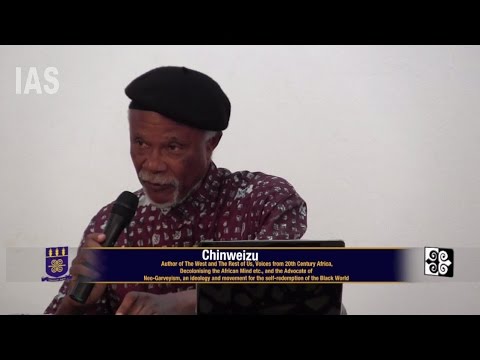
Foundations of African Thought Class #1
Dr. Obadele Kambon
Institute of African Studies
AFST 638
4 February 2016

Ambakisye-Okang Dukuzumurenyi
25 Views · 5 years ago

As droughts occur more frequently in Niger, and access to water has become sparse. The centuries-old nomadic life of Fulani Wodaabe herders is now threatened by climate change.This is the third part of a special report on the Fulani people in Nigeria, Mali and Niger.

Kwabena Ofori Osei
77 Views · 2 years ago

S U P P O R T
Cash App - $NelsonAmadeus
PayPal- GlobalHitsWorld@gmail.com
EMAIL - KingNeferkare@gmail.com
Twitter @NTDessalines
Instagram @NelsonAmadeus
TURN ON POST NOTIFICATIONS.

Ọbádélé Kambon
18 Views · 6 years ago

[ƆFA 2] Abibifahodie Adesuabea - 14 Ogyefuo 2017


Showing 266 out of 298