







- General Videos
- Music
- Economics
- Health
- Travel & Events
- History
- Psychology
- Spirituality
- Movies
- News & Politics
- Kmtyw Combat Sciences
- Ɔbenfo Ọbádélé Kambon Videos
- Ɔbenfoɔ Kamau Kambon: Black Liberation Philosophy
- Science, Tech, Engineering and Math
- Permaculture
- Self-Sustainability
- Living Off Grid
- Yoruba Language Learning
- Education
- Mmɔfra Adesua
- Nana Kamau Kambon Playlist
- Livestream
- Komplementarity Kouples and Revolutionary Singles
- Abibitumi Film Series
- Decade of Our Repatriation
- Kwento xpr
- Live
Top videos


I don't know about you, but I've always appreciated such long, interesting presentations by Neil deGrasse Tyson. Btw, sorry if you watched this video before. It's a reupload of a video I accidentally deleted while taking down a bunch of older videos that didn't fit the channel. Thanks in advance for your understanding.
Music Info: Sad Dramatic Trailer by RomanSenykMusic. Music Link: https://www.youtube.com/watch?v=_1667HsejTE
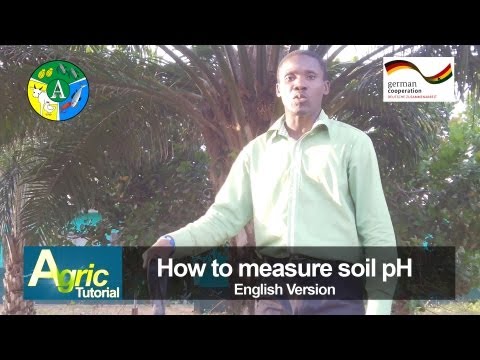


In this video, Robert explains his process for creating a PVC drip irrigation system for his raised square foot garden.
Robert also shows how he is using his rain barrel water system that can be controlled by his smart phone to turn the drip irrigation system on and off.
A comparison between class 200 and schedule 40 PVC is also performed, and Robert explains his thoughts between the two types.
Overall, Robert’s goal was to keep the overall cost low for creating a DIY PVC drip irrigation system but also making the system easy to disassemble, reassemble and flexible for different types of gardens.
Video Links:
►Smart WiFi Relay (Control Rain Barrel Water Pump Remotely): https://youtu.be/cLKAEB7Xl2k
►Rain Barrel Water Pump: https://youtu.be/opgxarh0G9Q
Below you can find the majority of the parts and cut dimensions Robert used in the video.
Parts / Items Used In Video:
► PVC Pipe - https://www.homedepot.com/p/Ch....arlotte-Pipe-3-4-in-
► PVC Ball Valve - https://amzn.to/3f7igVO
► PVC Tee - https://amzn.to/3f5u2jF
►PVC 90 Degree Elbow - https://amzn.to/2QFDeC2
►PVC Male Adapter - https://www.homedepot.com/p/Ch....arlotte-Pipe-3-4-in-
►PVC FNPT x FHT Swivel (Garden Hose Adapter) - https://www.homedepot.com/p/3-....4-in-FNPT-x-FHT-PVC-
►PVC End Cap - https://amzn.to/3oBn899
►Oatey PVC Primer & Cement - https://amzn.to/3bGAU55
►Telfon Tape - https://amzn.to/3oBStYY
►1/16” Drill Bit - https://amzn.to/3f5sN47
►3” Exterior Screws - https://amzn.to/3f72NW8
►EXPO Black Marker - https://amzn.to/3oBRNCU
►Power Drill - https://amzn.to/2SaWYOn
Optional Items:
►Quick Grip Clamps (Kit): https://amzn.to/39Iripd
PVC Cut Dimensions & Quantity
►5x - 68-3/4”
►5x - 2-3/4”
►4x - 10-1/2”
►2x - 2-1/2”

![[COMMANDO] Capt. Ibrahim Traore SHUT DOWN western Culture to Restore African Dignity](https://i.ytimg.com/vi/DL0WacQsPSQ/maxresdefault.jpg)

History has just been written… and the world felt the shockwave. 🌍🔥
When Ibrahim Traoré stood before thousands at the 22nd National Culture Week (SNC 2026), he didn’t just speak… he ignited a movement:
👉🏾 “Culture is not entertainment… it is sovereignty.”
This is NOT just a festival.
This is a continental awakening.
From powerful traditional performances to a vibrant parade of African identity, Burkina Faso sent a message the world can’t ignore:
Africa is reclaiming its soul.
With youth at the center and values being passed down, this moment marks the rise of a new Africa — bold, proud, and UNSTOPPABLE. ✊🏾🔥
Even John Dramani Mahama, represented through Ghana’s culture leadership, recognized the resilience and strength of Burkina Faso.
This is bigger than borders.
This is about identity, unity, and destiny.
💥 Africa is no longer asking for recognition…
🔥 Africa is TAKING IT.
👇🏾 QUESTION FOR YOU:
Is African culture powerful enough to shape the future of the continent — or are we still underestimating its power?
👉🏾 COMMENT.
👉🏾 SHARE.
👉🏾 AWAKEN THE CONTINENT.
#Love
#Peace
#africansolutions
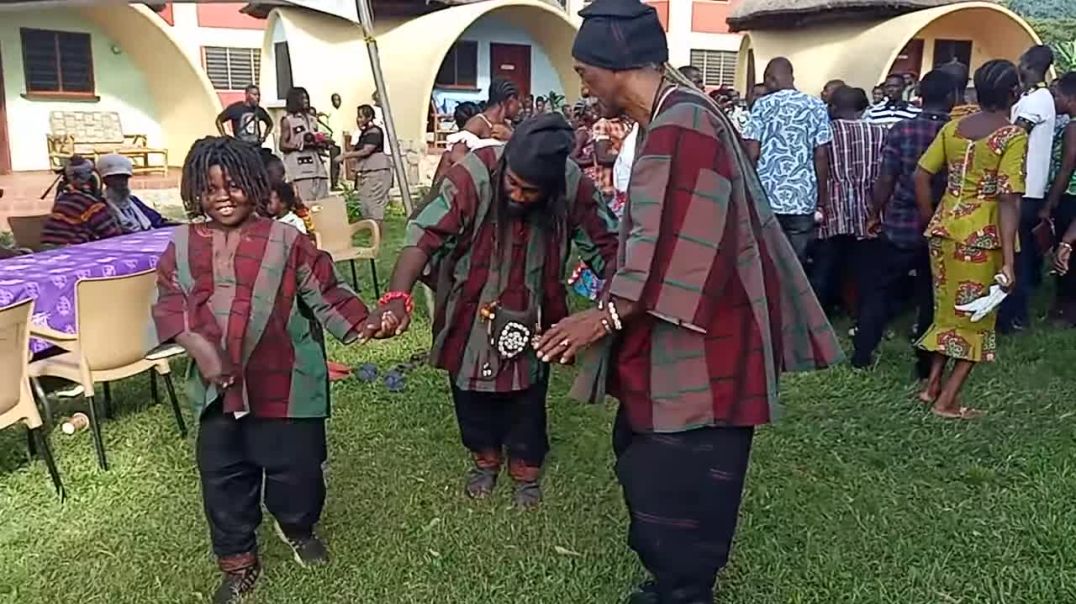

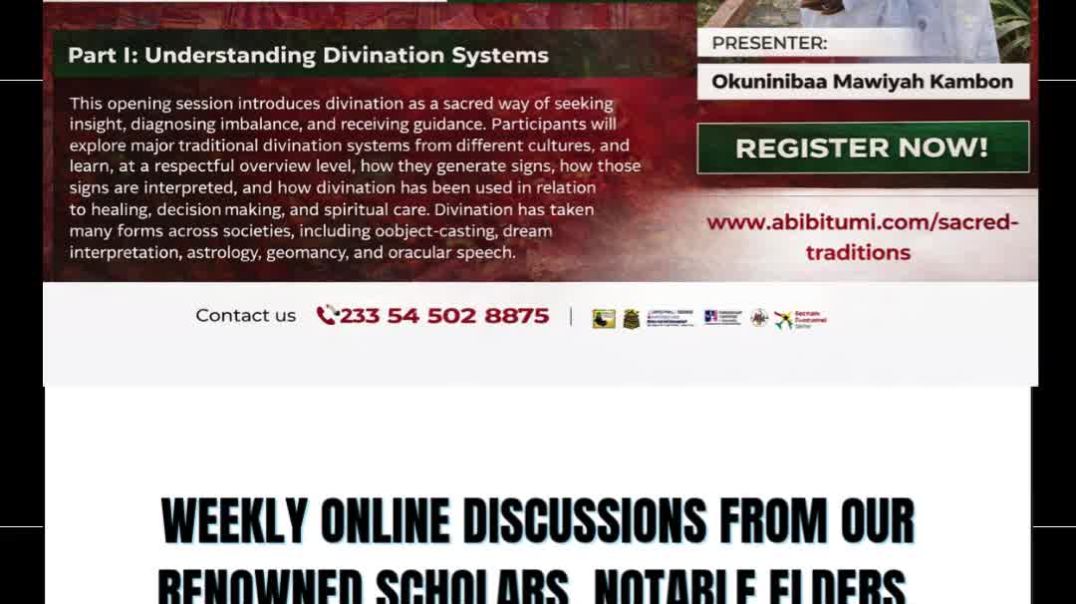
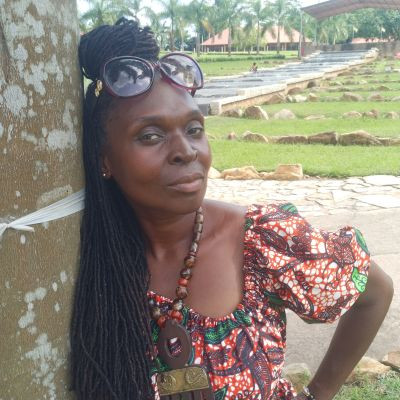
Join Abibitumi Exclusive Seminars (AES), on select Fridays, and Every Saturday and Sunday at 7PM GMT/3PM EST for weekly Online discussions from our renowned scholars, notable Elders, innovative leaders and influencers, who are trailblazing the way towards Abibitumi (Black power) and Abibifahodie (Black Liberation)!
For more information and to Register go to: www.abibitumi.com/abibitumi-seminar-event-page/


Film by Nidhi Dutt and Daniel Boaden
People & Power investigates the environmental consequences of palm oil plantations in equatorial Africa.
There are few products so ubiquitous as palm oil. You can find its derivatives in chocolate, shampoo, toothpaste, detergent, ice cream, floor polish and a host of other products filling supermarket shelves.
Extracted from the fruit of the tropically-grown oil palm tree (Elaeis guineensis), it has become so versatile and sought after that the growing economies of Indonesia and Malaysia, the world's two largest producers, make some $40bn a year from its production and export.
Given that by 2020 global demand for palm oil is expected to double and then triple by 2050, it is no wonder that other developing countries, especially in sub-Saharan West Africa where the tree originates, have been looking enviously at Southeast Asia and hoping to emulate that success.
But palm oil cultivation does not come cost-free. If not done sustainably, say conservationists, it can have disastrous consequences for people and the environment. In Indonesia, for example, it has played a major role in deforestation which has seen the loss of more than 6 million hectares of primary forest over the last 15 years.
As rainforests are home to least half of this planet's species of plants, animals and insects, the negative impact on global biodiversity can only be imagined. In addition, indigenous communities are also destroyed as people who have lived happily off the forest's resources for generations, often do not own the land (at least not in a form recognised by governments, corporations and their lawyers) and are frequently displaced to make way for new plantations.
Boosting Cameroon's economy
It is against this background that the Central and West African state of Cameroon has been trying to get a palm oil industry off - or rather into - the ground. Its President Paul Biya, who has held office since 1982, has been looking for ways to give Cameroon's economy a boost.
His country is not as poverty-stricken as some on the continent. It has some modest oil resources and favourable conditions for agriculture and is comparatively stable politically, but it is not immune from many of the problems associated with developing nations, from chronically high unemployment and an inequitable distribution of income to corruption and inadequate public infrastructure.
Cameroon is also over-reliant on imports, which makes it susceptible to rising prices and food insecurity. According to the UN, more than 40 percent of the population are living under the poverty line, while over one-third of its children are suffering from chronic malnutrition.
Palm oil then, would seem to offer good prospects for additional growth. The tree is native to the region and the climate is perfect for its cultivation. And of course, there are plenty of international agribusiness conglomerates looking for suitable places in West Africa in which to replicate the stellar profits enjoyed by the industry in Asia.
More on our website: http://aljazeera.com
Follow us on Twitter: http://twitter.com/AJEngligh
Subscribe to our channel: http://bit.ly/AJSubscribe
Find us on Facebook: http://facebook.com/aljazeera
#AlJazeeraEnglish #PeopleandPower #Cameroon

Sign up for Curiosity Stream and get Nebula bundled in and SAVE 41%: https://curiositystream.com/thegreatwar
The Somali Dervish movement was a thorn in the British colonial side for 20 years starting at the beginning of the 20th century. The leader Mohammed Abdullah Hassan was able to resist military expeditions and establish his own proto-state in the region.
» SUPPORT THE CHANNEL
Patreon: https://www.patreon.com/thegreatwar
Become a member: https://www.youtube.com/channe....l/UCUcyEsEjhPEDf69RR
» OUR PODCAST
https://realtimehistory.net/podcast - interviews with World War 1 historians and background info for the show.
» BUY OUR SOURCES IN OUR AMAZON STORES
https://realtimehistory.net/amazon *
*Buying via this link supports The Great War (Affiliate-Link)
» SOURCES
Berhe, Simona. “Colonies (Italy) (Version 1.1)” in: 1914-1918-online. International Encyclopedia of the First World War, ed. by Ute Daniel, Peter Gatrell, Oliver Janz, Heather Jones, Jennifer Keene, Alan Kramer, and Bill Nasson, issued by Freie Universität Berlin, Berlin 2020-11-17.
Bosworth, Richard and Giuseppe Finaldi. “The Italian Empire,” in Empires at War 1911-1923, Robert Gerwarth and Ertez Manela, eds. (OUP, 2014): 34-52.
Chester Courant and Advertiser for North Wales. “Somalia Battle.” January 20, 1904.
Hess, Robert L. “The 'Mad Mullah' and Northern Somalia,” in The Journal of African History,
Vol. 5, No. 3 (1964): 415-433.
Jardine, Douglas. “The Mad Mullah of Somaliland” (London: Herbert Jenkins, 1923).
Sheikh-Abdi, Abdi. “Divine Madness: Mohammed Abdulle Hassan, 1856–1920” (London: Zed Books, 1992).
Zollmann, Jakob. „Ethiopia“ in: 1914-1918-online. International Encyclopedia of the First World War, ed. by Ute Daniel, Peter Gatrell, Oliver Janz, Heather Jones, Jennifer Keene, Alan Kramer, and Bill Nasson, issued by Freie Universität Berlin, Berlin 2020-08-26
» MORE THE GREAT WAR
Website: https://realtimehistory.net
Facebook: https://facebook.com/TheGreatWarYT
Instagram: https://instagram.com/the_great_war
Twitter: https://twitter.com/WW1_Series
Reddit: htpps://reddit.com/r/TheGreatWarChannel
» OTHER PROJECTS
16 DAYS IN BERLIN: https://realtimehistory.net/pages/16-days-in-berlin
»CREDITS
Presented by: Jesse Alexander
Written by: Jesse Alexander
Director: Toni Steller & Florian Wittig
Director of Photography: Toni Steller
Sound: Toni Steller
Editing: Toni Steller
Motion Design: Philipp Appelt
Mixing, Mastering & Sound Design: http://above-zero.com
Maps: Daniel Kogosov (https://www.patreon.com/Zalezsky)
Research by: Jesse Alexander
Fact checking: Florian Wittig
Channel Design: Yves Thimian
Contains licensed material by getty images
All rights reserved - Real Time History GmbH 2021

Immediately Enroll in Dr. Oba T'Shaka’s Free Six-Fold Stages of Mental Freedom 6-Day Video eCourse https://goo.gl/mVNzhC
-------------
Dr. T’Shaka is a warrior scholar, renowned public speaker, professor, workshop leader, author, leader, organizer and visionary of exceptional influence who addresses audiences in the United States, Britain, France, Rotterdam and Africa.
For 38 years Dr. T’Shaka was a Professor at San Francisco State University, where he is now Professor Emeritus. Dr. Nathan Hare says, “Oba T’Shaka (is) one of the key social philosophers in the Afro-American race today.” The late Dr. Asa Hilliard, a great educator and scholar said of Dr. Oba T’Shaka, “he is one of the most powerful deep thinkers in the world today.
RELATED:
Introducing the Six-Fold Stages of Mental Freedom with Dr. Oba T'Shaka and Professor Kaba Hiawatha Kamene http://bit.ly/2NmaGud
Oba T'Shaka talks PTSS, Vacant Esteem vs. Post 1968 Hostile Forces https://goo.gl/zqyJ1z
Dr. Oba T'Shaka Shares His Private Study with Philippe SHOCK Matthews https://goo.gl/Ls8zqK
#KemeticConversations - Dr. Oba T'Shaka's Birthday Remarks and Thanks https://goo.gl/rvae69
The Role of Religions in the African Slave Trade: Ancient and Modern Featuring: Dr. Leonard Jeffries, Dr. Oba T’Shaka and Professor Kaba Hiawatha Kamene http://bit.ly/2Di7ri3
#ObaTShaka



1. Zelle: akyeame.kwame@gmail.com
2. Cash App: $obenfoobadele
3. Bitcoin (bc1qtkma7kc8say5rnqtgkrafs65kthqlsan28axf5)
4. MTN Mobile Money (+233247146063)
5. Credit card/paypal using https://www.abibitumi.com/crowdfund
6. Paypal: me@obadelekambon.com