- General Videos
- Music
- Economics
- Health
- Travel & Events
- History
- Psychology
- Spirituality
- Movies
- News & Politics
- Kmtyw Combat Sciences
- Ɔbenfo Ọbádélé Kambon Videos
- Ɔbenfoɔ Kamau Kambon: Black Liberation Philosophy
- Science, Tech, Engineering and Math
- Permaculture
- Self-Sustainability
- Living Off Grid
- Yoruba Language Learning
- Education
- Mmɔfra Adesua
- Nana Kamau Kambon Playlist
- Livestream
- Komplementarity Kouples and Revolutionary Singles
- Abibitumi Film Series
- Decade of Our Repatriation
- Kwento xpr
- Live
Top videos


Brought to you by: The Dr. Oba T'Shaka Library https://amzn.to/2DZe7Sy and Dr. Oba T'Shaka’s Free Six-Fold Stages of Mental Freedom 6-Day Video eCourse https://goo.gl/mVNzhC
--------
Malcolm X His Transformations and a introduction to Malcolm through reviewing some of the critical scholarship on Malcolm X.
DR. ASA HILLIARD, III The former Fuller E. Callaway Professor of Urban Education has said the following about Dr. Oba T'Shaka's book The Political Legacy of Malcolm X "Oba T'Shaka has written a book which dwarfs all other writings on Malcolm X. Both Alex Haley and George Breitman suggest that Malcolm made fundamental changes in his position toward the end. It is T'Shaka's contention, and it is this contention that his work documents, that the substance of Malcolm's thought did not change, even though the form may have changed. A careful reading of T'Shaka's book will show that he has eclipsed both of these writers, one of whom has an international reputation."
Dr. Nathan Hare, Clinical Psychologist, Sociologist and Innovator of the Discipline of Black Studies, said ot Dr. Oba T'Shaka's book The Political Legacy of Malcolm X: "For Oba T'Shaka's good work in the organization and uplift of African and African American peoples, he has achieved both national and international eminence. Had I not already regarded Oba T'Shaka as one of the key social philosophers in the Afro-American race today, a reading of this manuscript on the life and death of Malcolm X would have been instructive to me. Its careful even meticulous scholarship is reminiscent of W.E.B. Dubois', The Philadelphia Negro."
Dr. Michael Eric Dyson, noted author, scholar and public intellectual in The New York Times Book Review section, reviewed all the major books on Malcolm X, and ranked The Political Legacy of Malcolm X number one In his review of Dr. T'Shaka's book he wrote: "The Political Legacy of Malcolm X is a clear exposition of Malcolm's political ideas as a revolutionary black nationalist."
RELATED:
Dr. Oba T’Shaka - Profile of An Intellectual Activist https://goo.gl/Jb2LYY
Dr. Oba T'Shaka Channel https://goo.gl/gMtFNB
Oba T'Shaka talks PTSS, Vacant Esteem vs. Post 1968 Hostile Forces https://goo.gl/zqyJ1z
Introducing the Six-Fold Stages of Mental Freedom with Dr. Oba T'Shaka and Professor Kaba Hiawatha Kamene http://bit.ly/2NmaGud
The Role of Religions in the African Slave Trade: Ancient and Modern Featuring: Dr. Leonard Jeffries, Dr. Oba T’Shaka and Professor Kaba Hiawatha Kamene http://bit.ly/2Di7ri3
#KemeticConversations - Dr. Oba T'Shaka's Birthday Remarks and Thanks https://goo.gl/rvae69
Dr. Oba T'Shaka Shares His Private Study with Philippe SHOCK Matthews https://goo.gl/Ls8zqK
#ObaTshaka #MalcolmX #BlackHistory


Stream here: [a]www.fuseodg.com[/a]
Happy Africa Day
Afrobeats pioneer and legend, Fuse ODG is back with a brand new single from his forthcoming album. This time with the final part of his ground-breaking trilogy, "Spirit of New Africa" (S.O.N.A) out on Friday 20th June 2025
Following the success of part 1 and 2, "This Is New Africa" (T.I.N.A) and "New Africa Nation" (N.A.N.A), this third album is a heartfelt homage to the soul of Africa, designed to resonate deeply with people both in the diaspora and on the continent.
Fuse ODG will also be celebrating this release with a major headline show on July 26th at Southbank London, bringing the Spirit of New Africa to life on stage for the first time! This unmissable event will showcase the full power of the movement, uniting fans in celebration of culture, identity, and the music that’s redefining Africa’s image globally. Tickets Available Here: [a]www.fuseodg.com[/a]
@fuseodg
@sulibreaks
Produced by: @itzcj_made_it
Mixed by: @damage_mix_bus
Mastered by: @mixed_by_authentic
Artist: Fuse ODG
Featuring: Suli Breaks
Executive Producers: Fuse ODG Andre Hackett
ODG Management:
Nana Abiona
Andre Hackett
Caroline Osobowale
Stefan Frimpong
Jade Avia
Ezekiel Quaye
R.Dee
Macarthy Dennis
Artist Stylist: Charlie Van Purpz
Director: Christian Saint
Dop: Hal Pilkington
Screenplay/ Writer: Christian Saint
Project Manager: Héléna Miléna
Head of Production: Brian Gogoe
Production Company: New Saint Corporation
1st AC: Sein Faisal
2nd AC: Kweku Sekyi Yeboah
3rd AC: Daniel Attoh
4th AC: Louis Mcholly
1st AD: Eben Amen
2nd AD: Jones Martey
BTS Videographer: Kevin Ghansah
BTS Photographer: Erica Aryee
Steadicam 1: Mel Arthur
Steadicam 2: Key Grip Francis kwapong
Assistant Grip 1: Offei kwapong
Assistant Grip 2: Kofi Francis
Gaffer: Ibrahim Yakubu
Spark 1: Alex Newton
Spark 2: Dennis Bodza
Electrician: Emanuel Tometi
Best Boy: Daniel Agoe
Producer: Christian Saint
Technical Producer: Kobe outta
Rental Company: Outta Rentals
Costume Stylist: Mohammed Osumanu
Art Department: penthauz creatives
Production Designer: Douglas Baiden
Art Director: Thomas Dogba
ROLES
1 Props Master: Victor Sowah
Set Dresser: Prince Agboshie
Set Dresser 2: Mercy Narte
Art Coordinator: Emmanuel Annan
Cast Director: Augustus Luttrotte
Location Manager: Augustus Luttrotte
Runner 1: Amadu Kuunaa
Runner 2: Dunamis
Runner 3: Desmond Nii Tageo
Transportation Company: Mr Philip Catering Eben Amen
Makeup (SFX): Lydia Ashitey
Security Company: Augustine Lamar
DIT: Wis Dee Studios
Sound Recorder: Maizin
Editor: Abdul Majeed
Sound: Designer
VFX: Nurudeen
Graphic Designer: Adobe Messiah
Colorist: Cutncolor
CAST
Young Diaspora Kid: Oliver Senam Kodzo Dufe
GrandMa: Nana Esther
Mother: Twin 1 Grace
Mother Twin 2: Glory
2 month old Baby: Hakim
3 yrs old: Daymia Lamptey
Father: Glenn Sam
13yr Boy: Zion Soumaro Steven Setor
Grown Sundiata: Kojo Boakye
Masquerade1: Yaaro
Masquerade 2: Dunamis
Masquerade 3: Desmond
Mid Wife: Mariama
Dead Soldier 1: Yaaro
Dead Soldier 2: Desmond
Priestess: Kuba
Young Kid 1: Benard Bentil
Young Kid 2: Kenneth Etrue
Young Kid 3: Geshone Adetey Sowah
Training Man 1: Oshuu
Training Man 2: Jojo Asare
Baptism Extra 1: Mary Entsie
Baptism Extra 2: Victor Akweley Hoffman
Baptism Extra 3: Prince Armah Baptism
Extra 4: Emmanuel Essel
Baptism Extra 5: Mr Addy
Angel 1: Issac
Angel 2: Rasford Bentil
Angel 3: Abraham Lartey
Angel 4: Prince Armah
GrandMother: Fohfoh
Horse Stunt Rider 1: Fahad
Horse Stunt Rider 2: iddrisu
Woman Braider 1: Mariama Woman
Braider 2: Maabena
Young Runner: Nii Boi
Motor Stunt Rider 1: Star Boy
Motor Stunt Rider 2: Spartan
Motor Stunt Rider 3: Paa Nii
Motor Stunt Rider 4: Gasper
Motor Stunt Rider 5: Shatta
Motor Stunt Rider 6: Paa Fio
Motor Stunt Rider 7: Felix
Motor Stunt Rider 8: One way
Motor Stunt Rider 9: Stopper
Motor Stunt Rider 10: Fear me
Elders 1: Issac Aryee
Elders 2: Peter Doodo
Elders 3: Joseph
Elders 4: Nii Kpakpo
Elders 5: Mr Sackey
Elders 6: Mr Nee Quaye
Elders 7: Jackson
Elders 8: Mr Arye
Soldiers 1: Asendua
Soldiers 2: Amadu
Soldiers 3: Prince Morgan
Soldiers 4: Desmond
Soldiers 5: Kelvin
Soldiers 6: Thomas
Soldiers 7: Razak
Soldiers 8: El Dunamis
Soldiers 9: Nyanya
Soldiers 10: Bongo
Soldiers 11: Savage
Soldiers 12: King
Soldiers 13: Dancehall
Soldiers 14: Marley
Soldiers 15: Majesty


Welcome back to the 2nacheki channel. Here is your latest #AfricanNews:
Britain's non-recognition of Africa-administered vaccines regrettable - AU.
Kenya government dampens speculation about Asian visitors.
Algeria to start producing Sinovac Covid jabs.
France slashes visas for Algeria, Morocco, Tunisia in migrant row.
Nigerian airstrike kills civilians near Lake Chad.
Uganda opposition stage walk-out over detained MPs.
Ethiopia to close embassies in Egypt, over financial strain.
Thank you for watching!
Have you liked this video yet? This is the greatest thing you can do to support our channel. Also please subscribe and share this video with friends and family.
Buy our Official Merchandise here https://www.2nacheki.shop/
Visit our Links: https://linktr.ee/2nacheki
2nacheki pronounced tunacheki which means 'We Are Watching ' in Swahili slang. Our goal is to educate, inform & entertain you all about the real Africa while showing the World that Africa is Watching.
We create numerous videos every day on African topics like Africa Lists Africa News Africa Music Africa Dances Africa Speeches Africa Entertainment Africa History Africa Interviews Africa Documentaries Panafricanism Africapop-culture African culture African Politics and more
Please contact us for tips, content submission, Ads, Takedowns, Collabos, Complaints, Reporting, and Inquiries #Africa #Africanews #2nacheki

Police want answers after a local hospital discharged a sick man and left him alone on the sidewalk. Read the full story at https://bit.ly/2XoDZmd
SUBSCRIBE: youtube.com/subscription_center?add_user=channel2actionnews
ABOUT WSB-TV CHANNEL 2 ACTION NEWS:
WSB-TV Channel 2 Action News is your home for breaking news, live video, traffic, weather and your guide to everything local for Atlanta and North Georgia.
CONNECT WITH WSB-TV:
Visit the WSB-TV Channel 2 Action News WEBSITE: wsbtv.com
Like WSB-TV Channel 2 Action News on FACEBOOK: facebook.com/wsbtv/
Follow WSB-TV Channel 2 Action News on TWITTER: twitter.com/wsbtv
Follow WSB-TV Channel 2 Action News on INSTAGRAM: instagram.com/wsbtv/

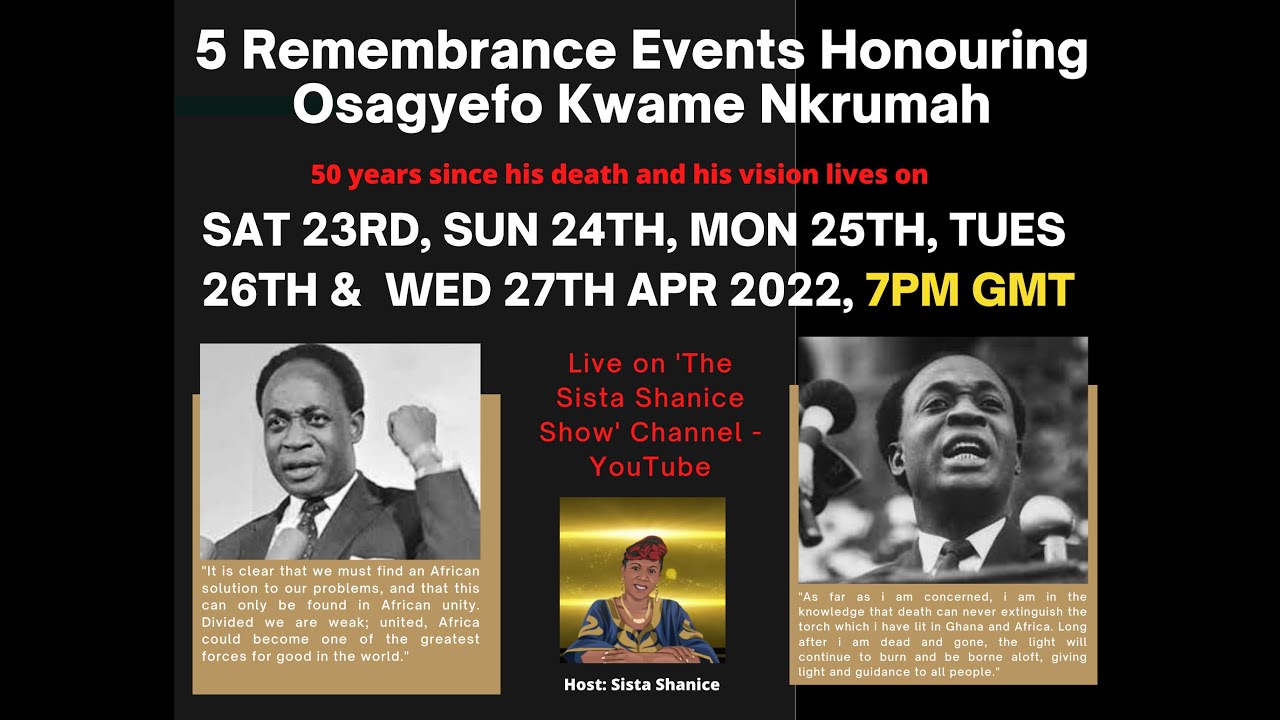

#Nkrumahism is so powerful mainstream colonial educationalists are intent on demonising and exorcising him from the curriculum.
Knowledge of Nkruhamism will expose why the urgent need exist to decolonise the national curriculum both in Africa and the diaspora and will lead to the abandonment of a colonial education. Nkrumah's philosophy and ideology of decolonising and developing Africa in its own interest and in its own image is so powerful that 50 years on, Ghana continues to wrestles to keep his teachings out of academia.
Indulge in the teachings the West is afraid Africans will get hold of and want to apply across the continent in its struggle for total liberation.
If you would like to support the works of Sista Shanice you can do so via Patreon. Heres the link https://www.patreon.com/SistaShanice
If you would like to join Sista Shanice on her weekly radio shows at 10am GMT every Wednesday, then heres the link to listen live https://zeno.fm/radio/galaxyafiwe-net/
Here's the tel no to call in and join the debate +44 20 3289 6504